6-Day Gym Workout Schedule (2026): PPL and Upper/Lower Plans
Two 6-day workout splits for intermediate lifters, PPL twice a week and upper/lower plus arms/core, with day-by-day tables, sets and reps, recovery and deload tips.

A good 6-day gym workout schedule trains each muscle group twice a week and keeps one full rest day. The two splits that do this best for intermediate lifters are push pull legs (PPL) run twice and an upper/lower split plus an arms-and-core day. Both are laid out below as day-by-day tables with sets and reps.
This is a gym workout plan for intermediate lifters: people who have already been lifting consistently for a while and want more weekly volume. If you are newer to the gym, or looking for a women’s plan with built-in cardio, see the notes on who should not train six days before you start.
Quick summary: the two 6-day workout splits
- Split 1, PPL x2 (heavy + volume): Push, Pull, Legs, Push, Pull, Legs, Rest. The first three days use heavier compound lifts in lower rep ranges; the second three use moderate weights and higher reps.
- Split 2, Upper/Lower + Arms/Core: Upper, Lower, Arms/Core, Upper, Lower, Conditioning/Core, Rest. Good if your legs recover slowly or you want extra arm and abs work.
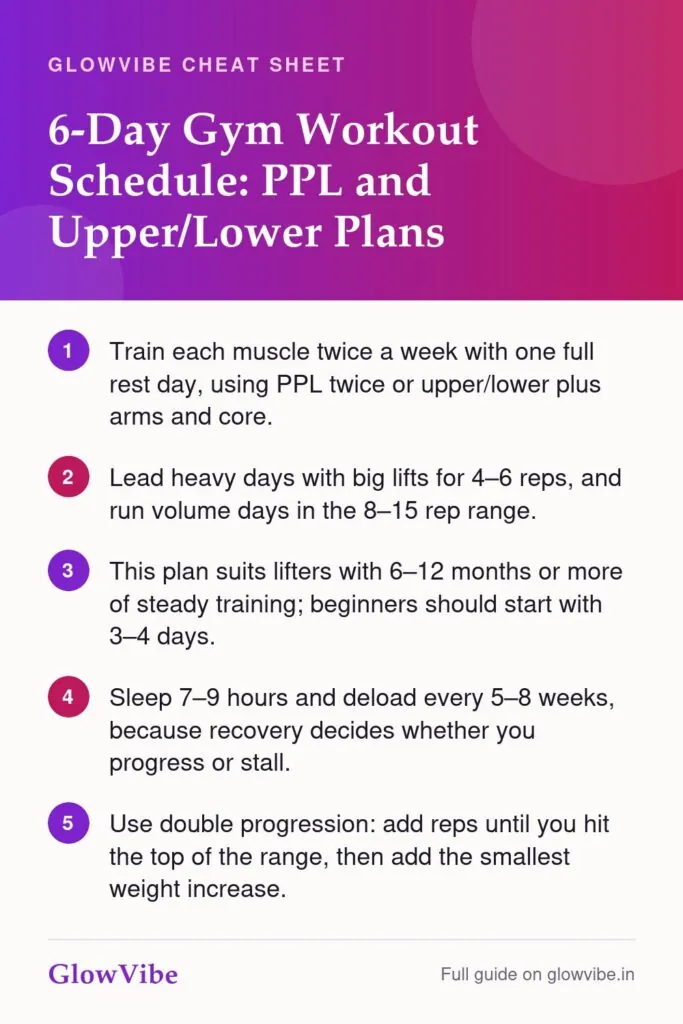
- Who it suits: lifters with roughly 6–12 months or more of steady training, who can spare 60–75 minutes a session and sleep 7–9 hours.
- Who should wait: beginners, people returning after a long break, and anyone with poor sleep or a very physical job. Start with 3–4 days instead.
6-day workout split comparison
| Feature | PPL x2 | Upper/Lower + Arms/Core |
|---|---|---|
| Frequency per muscle | 2x a week | 2x a week (arms and core 3x) |
| Leg days per week | 2 full leg days | 2 lower days |
| Session length | 60–75 minutes | 50–70 minutes |
| Best for | Overall size and strength | Busy weeks, arm and core focus, slower leg recovery |
| Main downside | Missing one day throws the order off | Lower days can feel long |
If you want the full breakdown of PPL itself, including a 3-day version and home variations, read our push pull legs workout routine. The 6-day PPL below is a more advanced take on it, built around heavy and volume days.
Split 1: 6-day push pull legs (heavy and volume days)
Days 1–3 are your heavy days: lead with one big compound lift for 4–6 reps, leaving 1–2 reps in reserve. Days 4–6 are volume days: swap in variations and work in the 8–15 range. This gives each muscle two different kinds of stimulus a week instead of repeating the same session.
| Day | Focus | Exercises | Sets x reps |
|---|---|---|---|
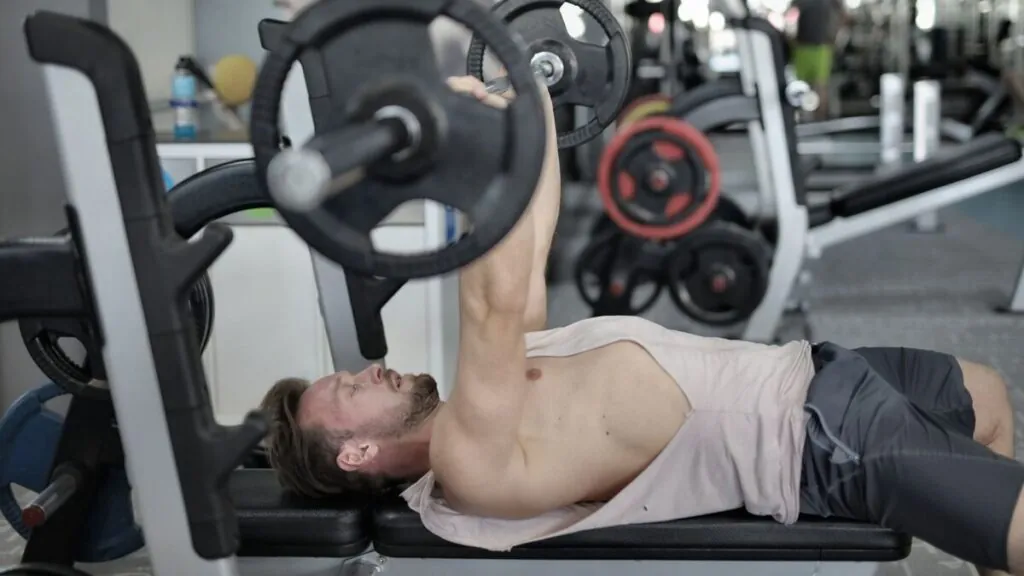
| Mon | Push (heavy): chest, shoulders, triceps | Barbell bench press Standing overhead press Incline dumbbell press Cable or dumbbell lateral raise Close-grip bench press or dips | 4 x 4–6 3 x 6–8 3 x 8–10 3 x 12–15 3 x 8–10 |
| Tue | Pull (heavy): back, rear delts, biceps | Deadlift or rack pull Weighted pull-up or lat pulldown Barbell row Face pull Barbell curl | 3 x 4–5 4 x 6–8 3 x 6–8 3 x 15 3 x 8–10 |
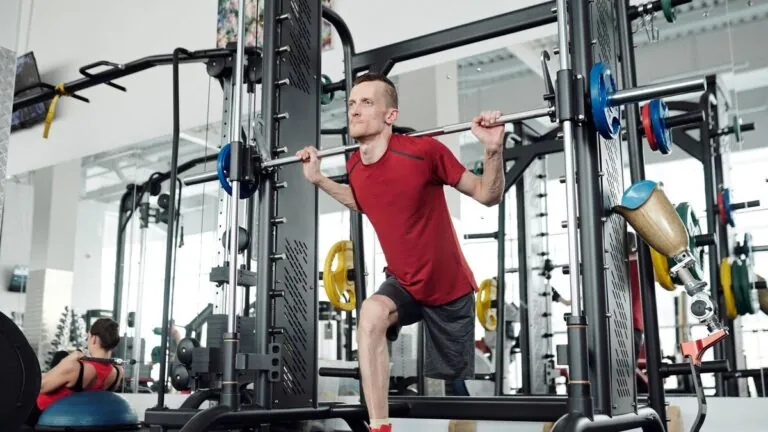
| Wed | Legs (heavy): quads, hamstrings, glutes, calves | Back squat Romanian deadlift Leg press Lying or seated leg curl Standing calf raise | 4 x 4–6 3 x 6–8 3 x 10–12 3 x 10–12 4 x 10–12 |
| Thu | Push (volume) | Incline barbell or Smith press Seated dumbbell shoulder press Pec deck or cable fly Lateral raise (drop set on last set) Overhead triceps extension | 4 x 8–10 3 x 10–12 3 x 12–15 4 x 12–20 3 x 12–15 |
| Fri | Pull (volume) | Chest-supported or seated cable row Lat pulldown (close grip) Single-arm dumbbell row Reverse pec deck Incline dumbbell curl + hammer curl | 4 x 10–12 3 x 10–12 3 x 10–12 3 x 15 3 x 10–12 each |
| Sat | Legs (volume) | Front squat, hack squat or goblet squat Walking lunge or Bulgarian split squat Hip thrust Leg extension Seated calf raise + hanging knee raise | 3 x 8–10 3 x 10 per leg 3 x 10–12 3 x 12–15 3 x 15 each |
| Sun | Rest | Walk, light stretching or mobility | — |
Rest 2–3 minutes between heavy compound sets and 60–90 seconds on isolation work. For more back and shoulder exercise options to rotate in, see our guides to back exercises in the gym and shoulder exercises in the gym.
Split 2: upper/lower plus arms and core
This split hits the upper and lower body twice each, then uses two shorter days for arms, core and conditioning. Many lifters find it easier on the lower back and knees than two hard PPL leg days, and the short days fit well on weeks when office hours run late.
| Day | Focus | Exercises | Sets x reps |
|---|---|---|---|
| Mon | Upper (strength) | Barbell bench press Barbell or T-bar row Overhead press Pull-up or lat pulldown Lateral raise | 4 x 5–6 4 x 6–8 3 x 6–8 3 x 8–10 3 x 12–15 |
| Tue | Lower (strength) | Back squat Romanian deadlift Walking lunge Leg curl Standing calf raise | 4 x 5–6 3 x 6–8 3 x 10 per leg 3 x 10–12 4 x 10–12 |
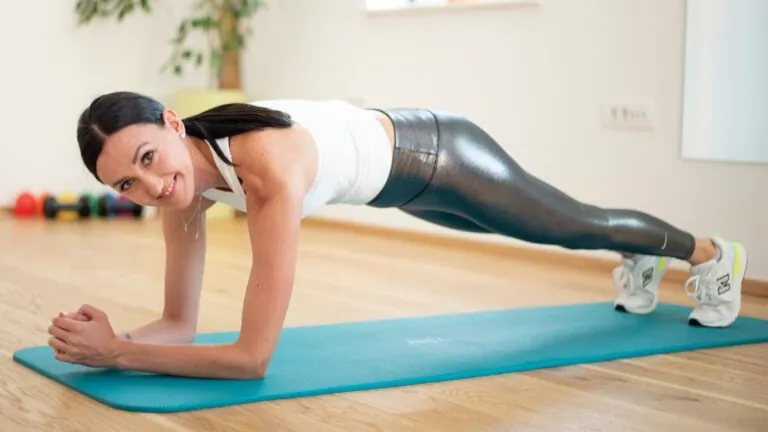
| Wed | Arms and core | EZ-bar curl Cable triceps pushdown Hammer curl Overhead triceps extension Cable crunch Plank | 3 x 8–10 3 x 10–12 3 x 10–12 3 x 10–12 3 x 12–15 3 x 30–45 sec |
| Thu | Upper (volume) | Incline dumbbell press Seated cable row Dumbbell shoulder press Close-grip lat pulldown Cable fly + face pull | 4 x 8–10 4 x 10–12 3 x 10–12 3 x 10–12 3 x 12–15 each |
| Fri | Lower (volume) | Leg press or hack squat Hip thrust Bulgarian split squat Leg extension Seated calf raise | 4 x 10–12 3 x 8–12 3 x 8–10 per leg 3 x 12–15 3 x 15 |
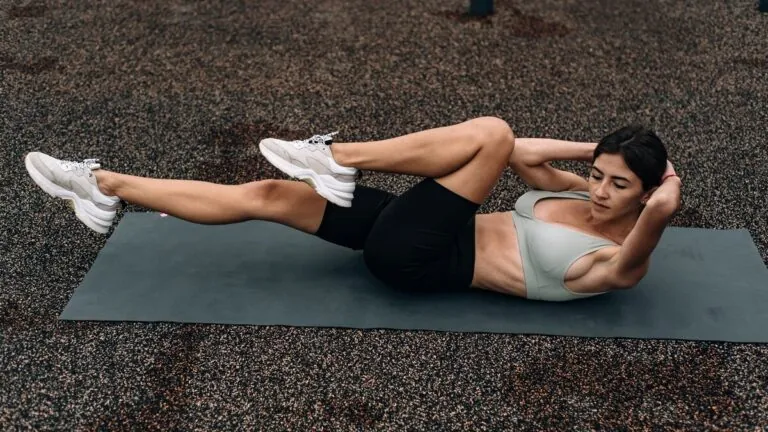
| Sat | Arms, core and conditioning | Preacher curl + dips (superset) Hanging leg raise Pallof press Farmer’s carry Easy cycling, incline walk or rowing | 3 x 10–12 each 3 x 10–12 3 x 10 per side 3 x 30–40 m 15–20 min |
| Sun | Rest | Walk, light stretching or mobility | — |
Keep the Wednesday and Saturday sessions to 45–50 minutes. Their job is to add useful work without eating into recovery for the next upper or lower day. If you want more ab ideas, our core workout plan has moves that work just as well in the gym.
How this differs from a 7-day women’s schedule
This is a strength and muscle-building plan with six lifting days and higher weekly volume. Our 7-day gym workout schedule for women is built differently: four strength days, dedicated cardio and active rest, and beginner-friendly options. Women who are experienced lifters can absolutely follow either split here; the exercises and rep ranges work the same way.
Who should not train 6 days a week
Six days is a lot of training, and more days do not automatically mean more progress. A well-run 3-day or 4-day plan will build muscle faster for most beginners because they can recover fully and practise good form on every session.
- Beginners (under about 6 months of regular lifting): start with 3 full-body days or a 4-day upper/lower split. Move to six days once progress on that plan slows.
- Anyone sleeping under 6–7 hours: fix sleep first, or train 4 days. Poor sleep makes recovery from six sessions very hard.
- People with physically demanding jobs or long commutes: standing all day or long travel is extra load. Four or five days may serve you better.
- Those returning after injury, illness or a long break: rebuild over a few weeks at lower frequency before ramping up.
Recovery, sleep and deload weeks
On a six-day plan, recovery is the part that decides whether you progress or stall. Muscles grow between sessions, not during them, so treat rest as part of the programme.

- Sleep 7–9 hours at fairly consistent times. If you train early in the morning, an earlier bedtime matters more than any supplement.
- Keep Sunday truly easy: a walk, light stretching or mobility work. Skip intense sport on your rest day if you can.
- Deload every 5–8 weeks: for one week, cut your sets roughly in half and lighten the load slightly, or drop to 3–4 sessions. Take one sooner if joints ache, lifts drop for two weeks in a row, or you feel drained.
- Watch for signs of overreaching: constant fatigue, a resting heart rate that stays higher than usual, poor sleep, low motivation or nagging joint pain. These mean you need more rest, not more effort.
Indian summers and humid monsoon months add their own strain. Drink water through the session, add a pinch of salt or an electrolyte drink if you sweat heavily, and be honest with yourself about cutting a session short on very hot days in a gym without proper cooling.
Progressive overload on a 6-day split
Progressive overload means doing slightly more over time: more weight, more reps or cleaner reps. The simplest method for this plan is double progression.
- Pick a weight you can lift for the bottom of the rep range with good form (for example, 3 x 8 on a 3 x 8–10 exercise).
- Add reps each week until you hit the top of the range on every set (3 x 10).
- Then add the smallest available weight, usually 2.5 kg on barbell lifts or the next dumbbell up, and start back at the bottom of the range.
- Log every session in a notebook or app so you know exactly what to beat next time.
Intermediate lifters progress more slowly than beginners, so a few reps more per month on the big lifts is normal. Do not chase a new personal best every session; aim for a steady upward trend over several weeks.
Adjusting the plan for home or a small Indian gym
Many neighbourhood gyms in India have one squat rack, a few benches, a cable station and a dumbbell rack that tops out at 25–30 kg. Peak hours (6–9 am and 6–9 pm) are crowded too. You can still run this weekly gym schedule with a few swaps.
| If you don’t have | Use instead |
|---|---|
| Squat rack (or it’s always busy) | Goblet squat, leg press, Smith machine squat or Bulgarian split squat |
| Cable machine | Resistance bands for face pulls, pushdowns and flys; dumbbell lateral raises |
| Heavy dumbbells | Slower tempo (3 seconds down), pauses, and higher reps close to failure |
| Leg curl machine | Single-leg Romanian deadlift, glute bridge, or sliding leg curl on a towel |
| Pull-up bar or lat pulldown | Band-assisted pull-ups at home, or extra dumbbell rows |
At home, a pair of adjustable dumbbells, a sturdy bench, a doorway pull-up bar and a few bands cover most of both splits. Use a timer, keep rest periods honest, and push sets closer to failure to make up for lighter loads. Supersetting two exercises also helps you finish on time when the gym is packed.
A short note on diet
Six training days need enough food to recover. Aim for protein at every meal from sources like dal, paneer, curd, eggs, chicken, fish, soya chunks or tofu, eat enough carbohydrates (rice, roti, poha, fruit) around your sessions, and avoid training on an empty stomach if it leaves you weak. For full veg and non-veg meal plans, see our muscle gain diet plan.
Common mistakes on a 6-day workout split
- Taking every set to failure: on six days a week, this piles up fatigue fast. Leave 1–2 reps in reserve on most sets, especially heavy compounds.
- Adding too many exercises: five or six well-chosen moves per session is plenty. More is not better if quality drops.
- Skipping leg days: the plan only works if lower-body sessions get the same effort as chest and arms.
- Turning the rest day into a training day: a long run or a hard football match on Sunday cuts into recovery.
- Never deloading: pushing hard for months without a lighter week is a common route to stalled lifts and sore joints.
- Skipping the warm-up: spend 5–10 minutes on light cardio and mobility, then do 2–3 lighter ramp-up sets before your first heavy lift.
Safety first
Use a spotter or safety bars for heavy bench presses and squats, and never ego-lift with poor form. Sharp or joint pain (as opposed to normal muscle soreness) is a signal to stop that exercise, not push through it.
If you have high blood pressure, a heart condition, diabetes, a past back or knee injury, or are pregnant, check with your doctor or a physiotherapist before starting an intense programme. Stop immediately and seek medical help if you feel chest pain, dizziness or unusual breathlessness during a session.
Results vary with your training history, sleep, diet, stress and genetics, so no plan can promise a set amount of muscle or strength in a set time. What these splits give you is a clear, balanced structure to work with consistently.
Frequently Asked Questions
Yes, for intermediate lifters who recover well. It lets you train each muscle twice a week with shorter, focused sessions. The key is managing fatigue with sensible volume, good sleep and regular deloads.
Both work well. Choose 6-day push pull legs if you want slightly more volume for chest, back and legs. Choose upper/lower plus arms/core if your legs recover slowly, you want extra arm and ab work, or you need two shorter sessions in the week.
It is better not to. Most beginners make faster, safer progress on 3–4 days a week while they learn technique. Move to a 6-day plan once you have trained consistently for several months and your progress on fewer days has slowed.
Plan for 60–75 minutes including warm-up on the main days, and 45–50 minutes on the arms and core days of Split 2. If you regularly go past 90 minutes, cut an exercise or shorten rest on isolation moves.
Some light cardio helps heart health and recovery. Add 10–20 minutes of incline walking or cycling after upper-body sessions, or walk on your rest day. Keep hard intervals away from the day before a heavy leg session.
Just pick up where you left off and let the rest day move. Don’t try to squeeze two sessions into one day. If you often miss days, a 4- or 5-day plan may suit your schedule better.
Run it for 8–12 weeks with a deload in between, as long as your lifts are moving up. After that, swap a few exercise variations or rep ranges while keeping the same weekly structure.
Pick your split and start this week
Choose PPL x2 if you want maximum volume, or upper/lower plus arms/core if you want a slightly gentler week with extra arm and core work. Log your lifts, sleep well, eat enough protein and take a deload when your body asks for one. If you’re not ready for six days yet, a solid 3–4 day plan now will set you up for this one later.