7-Day Gym Workout Schedule for Women (2026): Beginner Plan, Rest Days
A balanced 7-day gym workout schedule for women with strength, cardio and rest days, sets and reps, beginner and intermediate options, and simple Indian diet tips.

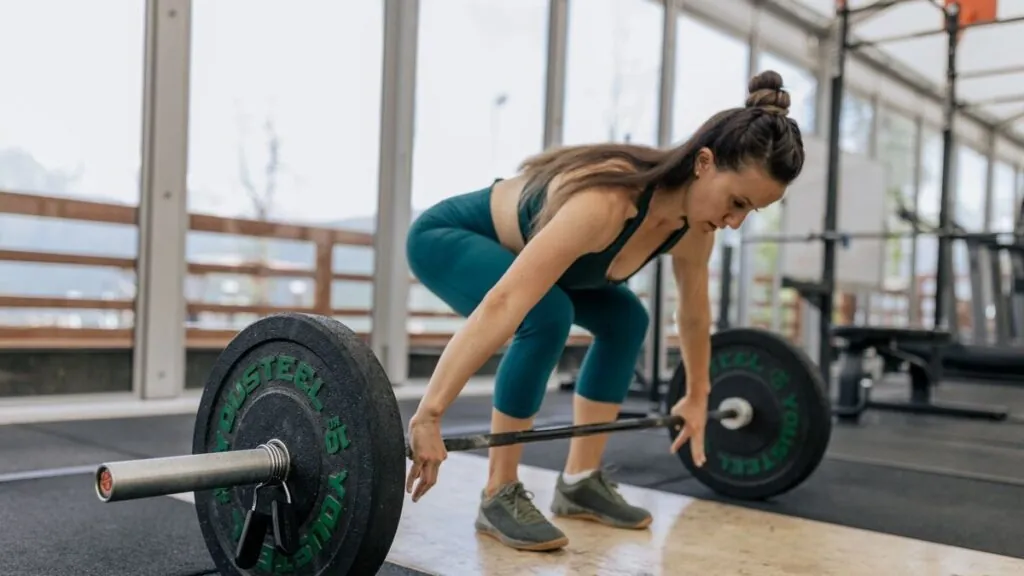
A good 7-day gym workout schedule for women has four strength days, one cardio-and-core day and two rest or active-recovery days. That mix lets you train every major muscle group twice a week, recover properly and still have energy for work, college or home.
Below you will find the full weekly plan, each day’s exercises with sets and reps, a simple way to progress, a beginner and intermediate version, and Indian diet basics to support your training. Save it, take it to the gym and tick off each day.
Who this gym workout plan for women is for
This plan suits women who are new to the gym or returning after a long break, and those who have trained casually but never followed a structured routine. It works whether your goal is to get stronger, tone up, improve stamina or support fat loss alongside a sensible diet.
- Time needed: 45–60 minutes on training days, including warm-up and cool-down.
- Equipment: dumbbells, a cable machine, a leg press, a bench and a treadmill or cycle. Any regular Indian gym will have these.
- Not ideal for: anyone who is pregnant, recovering from surgery or managing an injury without a doctor’s go-ahead (see the safety section).
If you prefer a split built around movement patterns, our push pull legs workout routine is a good next step once this plan feels easy.
7-day gym workout schedule for women (at a glance)
The plan alternates lower and upper body so no muscle group is worked on back-to-back days. You can shift the days to suit your week; just keep at least one rest or recovery day between every two hard sessions.
| Day | Focus | Main exercises | Sets x reps | Time |
|---|---|---|---|---|
| Monday | Lower body (quads and glutes) | Goblet squat, leg press, walking lunge, leg curl | 3 x 10–12 | 50 min |
| Tuesday | Upper body (push and pull) | Lat pulldown, dumbbell press, seated row, shoulder press | 3 x 10–12 | 50 min |
| Wednesday | Cardio and core | Incline walk or cycle, plank, dead bug, bird dog | 20–30 min cardio + 3 rounds core | 45 min |
| Thursday | Rest / active recovery | Easy walk, yoga or stretching | — | 20–30 min |
| Friday | Lower body (glutes and hamstrings) | Romanian deadlift, hip thrust, step-up, glute bridge | 3 x 10–12 | 50 min |
| Saturday | Upper body (back, shoulders) and core | Assisted pull-up or pulldown, dumbbell row, lateral raise, Pallof press | 3 x 12–15 | 50 min |
| Sunday | Full rest | Light walk if you feel like it | — | — |
Day-by-day workouts
Rest 60–90 seconds between sets on the main lifts and 45–60 seconds on the smaller exercises. Pick a weight where the last two reps of each set feel hard but your form stays clean.
Day 1 (Monday): Lower body – quads and glutes
- Goblet squat: 3 x 10–12. Hold a dumbbell at your chest, sit back and down, keep your chest up.
- Leg press: 3 x 10–12. Feet shoulder-width apart; do not lock your knees at the top.
- Walking lunge (dumbbells): 3 x 8 per leg.
- Lying or seated leg curl: 3 x 12.
- Standing calf raise: 2 x 15.
Day 2 (Tuesday): Upper body – push and pull
- Lat pulldown: 3 x 10–12. Pull the bar to your upper chest, elbows down and back.
- Dumbbell bench press (flat or incline): 3 x 10–12.
- Seated cable row: 3 x 10–12. Squeeze your shoulder blades together.
- Seated dumbbell shoulder press: 3 x 10.
- Dumbbell biceps curl and cable triceps pushdown: 2 x 12 each.
Day 3 (Wednesday): Cardio and core
- Cardio: 20–30 minutes of incline treadmill walking, cycling or the cross-trainer at a pace where you can talk but not sing.
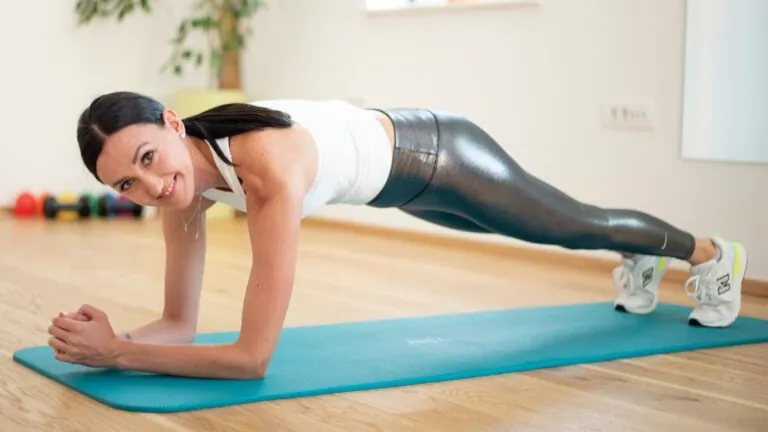
- Core circuit, 3 rounds: forearm plank 20–40 seconds, dead bug 8 per side, bird dog 8 per side, side plank 15–30 seconds per side.
- Optional finisher: 5 rounds of 30 seconds faster pace, 90 seconds easy on the cycle, once you have a few weeks of training behind you.
Want more core options you can also do at home? Try this core workout plan at home.
Day 4 (Thursday): Active recovery
- A 20–30 minute easy walk, gentle yoga or a full-body stretch.
- Foam roll your thighs, glutes and upper back if your gym has a roller.
- Keep it easy. The point is to move blood around, not to add another workout.
Day 5 (Friday): Lower body – glutes and hamstrings
- Dumbbell Romanian deadlift: 3 x 10. Push your hips back, keep the dumbbells close to your legs and your back flat.
- Hip thrust (barbell or machine): 3 x 10–12. Pause for one second at the top.
- Dumbbell step-up onto a bench: 3 x 8 per leg.
- Cable kickback or hip abduction machine: 2 x 15.
- Glute bridge hold: 2 x 30 seconds.
Day 6 (Saturday): Upper body – back, shoulders and core
- Assisted pull-up machine or wide-grip pulldown: 3 x 10–12.
- Single-arm dumbbell row: 3 x 12 per arm.
- Push-ups (on a bench or the floor): 3 x as many good reps as you can, up to 15.
- Dumbbell lateral raise and face pull: 2–3 x 12–15 each.
- Pallof press: 3 x 10 per side, an anti-rotation move that builds a strong, stable core.
For more ideas and form cues, read our guides on back exercises in the gym for beginners and shoulder exercises in the gym.
Day 7 (Sunday): Full rest
Take the day off. Sleep well, eat proper meals and drink enough water. Muscles get stronger while you recover, not while you train, so this day is part of the plan, not a break from it.
Warm-up and cool-down
Spend 8–10 minutes warming up before every gym session. It raises your body temperature, loosens your joints and helps you lift with better control.
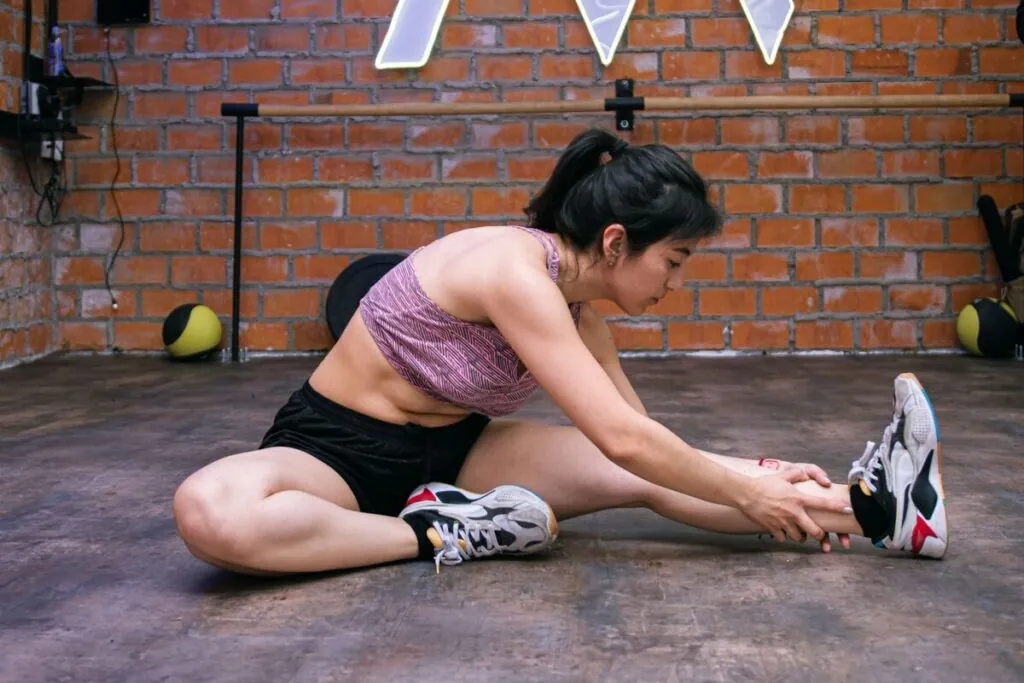
- 5 minutes of easy cycling or brisk walking.
- Arm circles, leg swings and hip circles, 10 each.
- 10 bodyweight squats and 10 glute bridges.
- One or two light sets of your first exercise before your working sets.
Cool down for 5–10 minutes after training. Walk slowly for a few minutes until your breathing settles, then hold static stretches for your hamstrings, hip flexors, quads, chest and upper back for 20–30 seconds each.
Progressive overload, explained simply
Progressive overload means asking your body to do slightly more over time. If you lift the same weight for the same reps for months, your body has no reason to change. Small, steady increases are what keep results coming.
The easiest method is the “double progression” rule. Pick a rep range, say 10–12. When you can do all three sets of 12 with good form, increase the weight a little (usually 1–2.5 kg on dumbbells) and work back up from 10.
- Note your weights and reps in a notebook or phone app every session.
- Add reps first, then weight. Never add both at once.
- Other ways to progress: an extra set, slower lowering (3 seconds down) or shorter rest.
- Every 6–8 weeks, take a lighter week with about half the sets to let your body catch up.
Gym workout for beginners (female) vs intermediate
The same weekly structure works at both levels. What changes is the volume and how hard you push.
| Element | Beginner (first 8–12 weeks) | Intermediate |
|---|---|---|
| Strength days | 3 (drop Saturday or make it a walk) | 4, as written |
| Sets per exercise | 2–3 | 3–4 |
| Effort | Stop 3–4 reps before failure | Stop 1–2 reps before failure |
| Exercise choice | Machines, goblet squat, dumbbells | Add barbell squat, barbell RDL, heavier hip thrust |
| Cardio | 20 minutes, steady pace | 30 minutes, or intervals once a week |
As a beginner, your first month is about learning the movements. Ask a trainer at your gym to check your squat, deadlift and row form in the first week; it saves months of bad habits.
Using this plan for weight loss
If your main goal is a gym workout for weight loss, keep the strength days. Lifting helps you hold on to muscle while you lose fat, which helps you look toned rather than just smaller. Fat loss itself mostly comes from a moderate, consistent calorie deficit, not from extra hours of cardio.
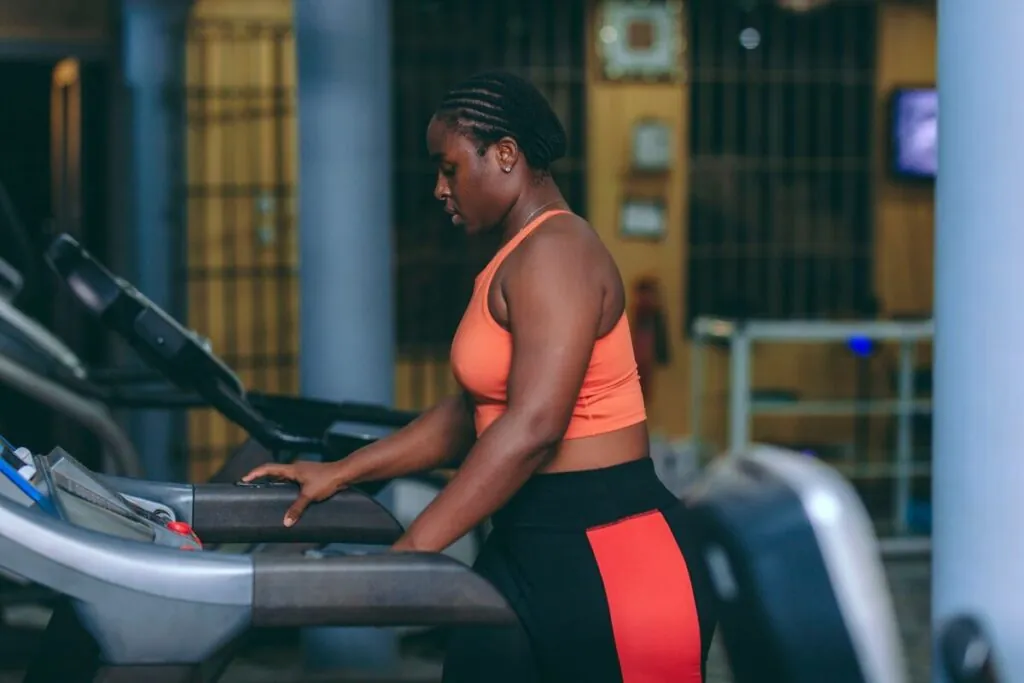
- Aim for 7,000–10,000 steps on most days, including rest days.
- Add a second cardio session on Thursday if you have the energy, but keep it easy.
- Judge progress by strength, how your clothes fit and photos, not just the scale. Results vary from person to person.
For a plan built specifically around fat loss, see our 4-week workout plan for weight loss for females.
Simple Indian diet basics for gym days
Most Indian women eat far less protein than their training needs, because typical meals lean heavily on rice, roti and sabzi. Try to include a protein source in every meal and keep the rest of your plate balanced.
- Vegetarian protein: dal, rajma, chole, paneer, curd or hung curd, buttermilk, soya chunks, tofu, sprouts and besan chilla.
- Eggs and non-veg: boiled eggs or egg bhurji, chicken, and fish.
- Carbs for energy: roti, rice, poha, oats, millets like ragi and jowar, and fruit before training.
- Healthy fats: a handful of nuts or seeds, and cooking oil or ghee in sensible amounts.
- Hydration: drink water through the day, and more in summer; Indian gyms can get hot and humid.
A simple pre-workout snack could be a banana with a few almonds. After training, try paneer bhurji with roti, curd with sprouts, or eggs with toast. For more options, read our list of protein-rich foods for weight loss.
Common mistakes to avoid
- Only doing cardio: the treadmill alone will not give you a stronger, more shaped body. Lifting does that.
- Fearing heavy weights: lifting challenging weights will not make you “bulky”. Building noticeable muscle takes years of focused effort.
- Skipping rest days: training hard seven days a week often leads to fatigue, poor sleep and niggling injuries.
- Changing the plan every week: stick to the same exercises for at least 6–8 weeks so you can measure progress.
- Ego lifting: half reps with heavy weight do less than full reps with a lighter one.
- Under-eating protein: if you feel sore for days and your strength stalls, look at your meals first.
Safety: form, periods, PCOS and when to check with a doctor
- Form first: stop a set if you feel sharp pain, if your lower back rounds or if your knees cave in. Muscle effort is normal; joint pain is not.
- During your period: there is no rule that says you must stop training. Many women feel fine; others prefer lighter weights, walking or stretching on heavy or crampy days. Go by how you feel.
- PCOS: regular strength training and activity are commonly recommended as part of PCOS lifestyle management, but your plan should fit your situation. Follow your gynaecologist’s or endocrinologist’s advice alongside this routine.
- Pregnancy and postpartum: do not start this plan without your doctor’s approval. After delivery, get cleared by your doctor before returning to lifting.
- Injuries and health conditions: if you have back, knee or shoulder problems, high blood pressure, a heart condition or any other medical issue, consult a doctor or physiotherapist first.

Frequently Asked Questions
You can be active every day, but you should not train hard every day. This weekly workout plan for women uses four strength days, one cardio day and two easy or rest days. That balance gives your muscles and joints time to recover.
Start with three full or upper/lower sessions a week using machines and dumbbells, 2–3 sets per exercise. Focus on learning the squat, hip hinge, push and pull patterns. After 8–12 weeks, move to the four-day version of this schedule.
Around 45–60 minutes is enough for most women, including the warm-up and cool-down. Longer sessions are not automatically better. Focused training with good effort beats two hours of chatting between sets.
For the vast majority of women, no. Building large muscles takes years of heavy, specific training and a calorie surplus. What most women notice instead is a firmer, more toned look and better strength.
Many women feel stronger and more energetic within the first few weeks. Visible changes in shape usually take longer and depend on your diet, sleep, consistency and starting point. Track your lifts and take monthly photos so you can see progress the scale may miss.
No. You can meet your protein needs with dal, paneer, curd, eggs, soya, chicken and fish. Protein powder is simply a convenient option if you struggle to get enough from meals; check with a doctor first if you have kidney issues or other health conditions.
Yes. Do the four strength days (Monday, Tuesday, Friday and Saturday) and add brisk walks on other days. If you only have three days, do lower body, upper body and a full-body day that mixes the main lifts from both.
Start this week
This 7-day gym workout schedule for women gives you a clear plan: lower body, upper body, cardio and core, then rest, repeated in a way that lets you recover. Start at the beginner level, log every session and add a little weight or a few reps when the work feels easier.
Pair the plan with protein at every meal, good sleep and enough water, and give it at least eight weeks before you judge it. Consistency matters far more than any single workout.