Eye Primer: What It Does, When You Need It and How to Use It
Many looks don't need eye primer. Here is when it helps, how to apply it on oily or hooded lids in humid weather, and when concealer or powder can do the job.

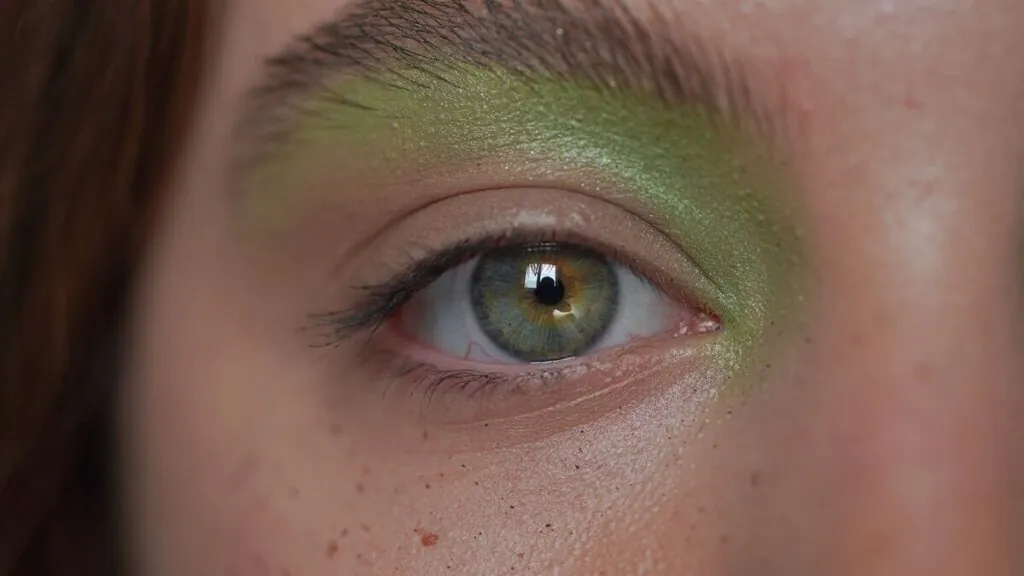
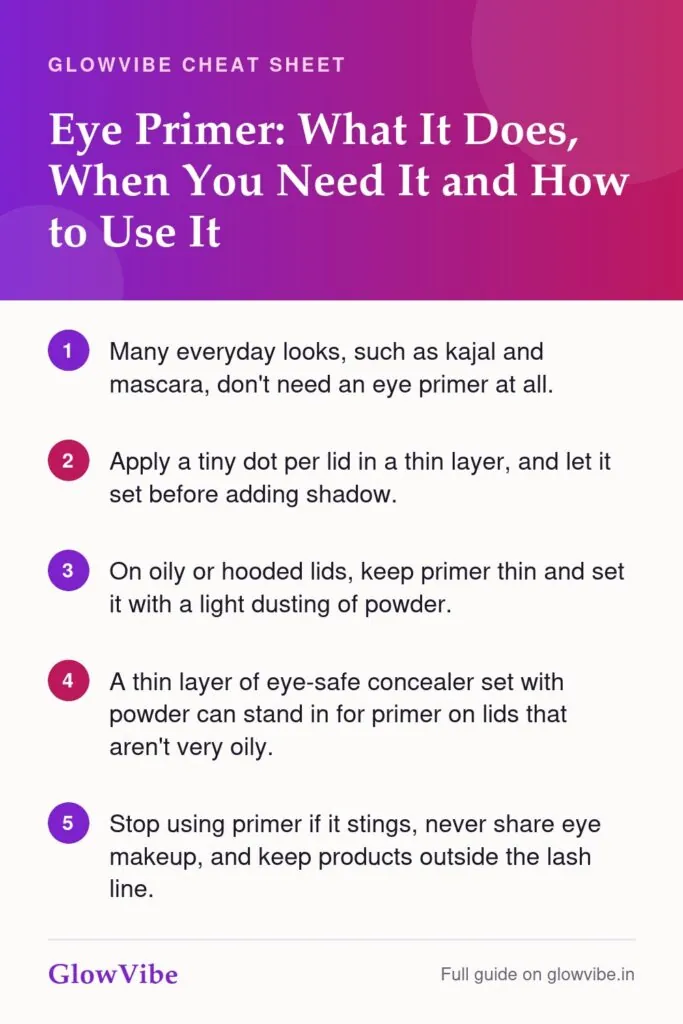
To use eye primer, tap a very thin layer onto clean, dry lids, let it set until it no longer feels wet, then apply your shadow and liner on top. Many everyday looks don’t need one at all, so it is worth checking whether your lids actually have a problem for primer to solve.
This guide stays on the eyelid. It covers when primer earns its place, how to apply it on oily or hooded lids in humid weather, and when concealer or a dab of powder can do the job instead. If you are choosing a base for the rest of your face, the guide to water-based and oil-based face primers covers that.
The quick answer
- What it does: it gives shadow and liner a smoother, less slippery surface than bare lid skin, which can help slow fading and creasing.
- Skip it if: you wear only kajal and mascara, or your shadow already looks the same at the end of the day.
- Use it if: shadow gathers in your lid fold within hours, liner prints onto your upper lid, or you need your makeup to last through a long, hot event.
- How much: a tiny dot per lid, enough for one thin layer. Too much can cause the very creasing you are trying to stop.
What eye primer does, and what it can’t do
Your eyelids make oil through the day, and every blink folds the skin. Oil loosens powder and softens cream products, and the fold then collects whatever has come loose. That is what a crease line is.
An eye primer sits between your lid and your makeup. Matte and long-wear formulas are usually suggested for oily lids because they leave a less slippery surface for shadow to grip. Colour can also go on more evenly, since you are no longer working over small patches of oil or dryness.
It has limits, though. Most advice on eye primer comes from brands and makeup artists rather than independent studies, so treat it as practical guidance and not a guarantee. It won’t change how your lids are shaped, stop your skin making oil, or keep shadow perfect through a day of sweat and rubbing. It only buys you more time.
Do you need one? A simple test
Before buying anything, do one normal workday with your usual shadow and no base. Check your lids in a mirror at lunch and again in the evening, keeping your eyes open and then closed. What you see tells you what to do next.
| What you notice | What to try |
|---|---|
| Shadow looks about the same in the evening | You don’t need a primer for daily wear |
| Colour has faded but there are no lines | Try a light dusting of powder under your shadow |
| A thin line of colour sits in your lid fold | Try a light dusting of powder first, then primer if that fails |
| Liner has stamped onto the skin above it | Use primer and powder, and switch to a long-wear liner |
| Shadow slides or disappears within a few hours | Use primer and powder together |
Everyday looks often need very little. Kajal, mascara and a sweep of one matte shade on a short workday may never crease enough to matter. A simple routine also leaves less room for error, and this list of everyday makeup mistakes is worth a look if your daily face keeps going wrong elsewhere.
When concealer or powder can do the job
| Base | Works well for | Watch out for |
|---|---|---|
| Translucent or matte skin-tone powder alone | Mildly oily lids, kajal-and-shadow days, quick touch-ups | Can catch on dry or flaky lids and look patchy |
| Thin concealer set with powder | Evening out lid colour, making a shade show truer | Can add to creasing, especially in a thick or creamy layer |
| Eye primer | Very oily or hooded lids, long events, heat and humidity | Too much can crease, turn patchy or feel heavy |
| Matte shadow in your lid’s colour | Light everyday wear, setting cream products | Gives little extra hold when lids are very oily |
Treat concealer as a stand-in for when you have no primer, and don’t skip the powder. Pat on the thinnest layer you can, press it in with your fingertip, then dust powder over it before any shadow. A compact powder for oily skin can work at a pinch, though a loose powder on a small fluffy brush is easier to keep light.
Use only concealers and powders that are labelled safe for the eye area. Lids are thin and close to the eye, and the US Food and Drug Administration advises using only cosmetics made for that purpose around your eyes.
How to use eye primer, step by step
Follow this order for any lid type, then add the adjustments in the next section. Keep foundation and face primer off your lids, or blot them away first, so they don’t add slip underneath.
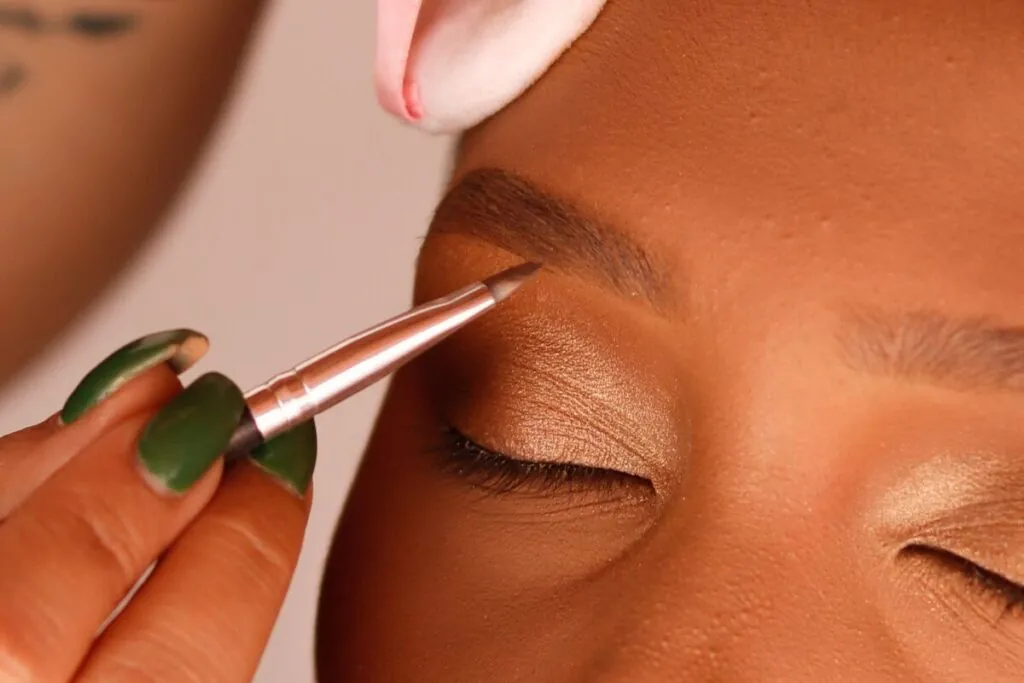
- Start with clean, dry lids. Wash your hands and clean your lids, then pat dry. Keep eye cream and moisturiser off the lid itself, or blot it with a tissue if some has travelled there.
- Take a tiny amount. Put a tiny dot on the back of your hand rather than straight on the lid, and use it for one eye. You can always add more.
- Tap, don’t rub. With your ring finger or a small flat brush, press it from just above your lashes up to your fold. Take it up to the brow bone only if your shadow goes that high.
- Let it set. Wait until it no longer feels wet. Shadow placed on a wet base tends to go patchy and shift.
- Dust on powder if your lids are oily. One light pass of translucent powder or a matte shade close to your lid colour is enough.
- Pat on shadow. Press colour on with a flat brush and blend the edges afterwards. Build thin layers instead of one heavy one. The eyeshadow kit guide covers palettes and how to use them.
- Add liner last. Draw it outside the lash line and keep your eyes open, looking down, until it dries so it doesn’t stamp onto the skin above.
Adjustments for oily and hooded lids
Oily lids
The natural instinct is to add more primer, but less often lasts longer. Keep the layer thin and use the powder step every time. Matte or long-wear formulas tend to suit oily lids better than dewy or hydrating ones.
Cut back on creams too. Stacking primer, concealer and cream shadow gives oil plenty of soft layers to shift. Pick one cream product at most and set it with powder.
Hooded lids
Hooded lids are a normal eye shape, and nothing needs correcting. The practical difference is that skin folds down onto the lid, so wet or cream products transfer more easily. Do your eye makeup with your eyes open and looking straight ahead, so you can see where the fold sits.
Take the primer slightly above that fold, since this is the area that shows when your eyes are open. Let every layer dry before you blink hard, and use a quick-drying liner, because anything still wet will print upward. Keep the base thin here too, as extra product has nowhere to go but into the fold.
Making it last in Indian heat and humidity
Monsoon days and summer afternoons are the hardest conditions for eye makeup. Sweat adds to the oil on your lids, and moving between air conditioning and sticky outdoor air doesn’t help. A few habits matter as much as the primer itself.
- Stay with powder shadows and long-wear liner. Choose them over creamy, slow-drying textures when it is humid.
- Blot before you touch up. Press a folded tissue or blotting paper gently on your closed lid, then pat on a little powder. Adding colour over oil usually makes creasing worse.
- Fix lines without rubbing. Run a clean fingertip or small brush across the fold to soften a crease, then set it with powder.
- Dab sweat, don’t wipe. Wiping drags shadow and liner sideways, and it also means more rubbing near your eyes.
Long functions are where primer is most likely to pay off. A daytime haldi or a crowded reception can mean hours of heat, so it is worth using there even if you skip it the rest of the week. The wedding guest makeup guide has full looks for each function.
Choosing a type that suits your lids
You don’t need a specific brand so much as the right finish, so read the label for these:
- Clear or matte: a practical start for oily lids and everyday use.
- Skin-toned or tinted: gives some coverage over lid colour. Pick a shade near your own, because a very pale base can look ashy under sheer colour on medium and deep skin tones.
- Hydrating or creamy: kinder to dry lids, and less suited to very oily ones.
- Sticky glitter base: made to hold loose sparkle only. The American Academy of Ophthalmology notes that glitter eye makeup is a common cause of corneal irritation, especially for contact lens wearers, so use it carefully.
Darker lids are common and need no fixing. A tinted base is only useful if you want a light or pastel shadow to show closer to its pan colour.
Keeping your eyes safe
Primer goes close to your eye, and this part matters more than any technique. Stop using it straight away if it stings, burns or makes your eyes water. Rinse it off, and see a doctor if the irritation continues.
- Don’t share. Both the FDA and the American Academy of Ophthalmology say not to share eye makeup, even with a close friend.
- Patch testTrying a small amount of a new product behind the ear or on the inner arm for a few days to check for a reaction before using it widely.See glossary first. Try a small amount on your inner arm for a few days before using a new formula near your eyes, since a reaction may not show straight away. Introduce only one new eye product at a time, so you can tell what caused any reaction.
- Keep it off the waterline. The Academy advises applying makeup outside the lash line so it doesn’t block the oil glands that protect the eye’s surface. This applies to primer, and it’s worth knowing if you usually wear kajal on the inner rim.
- Replace it regularly. The Academy suggests replacing eye makeup after three months, since bacteria grow easily in creamy or liquid products.
- Throw it out after an infection. If you get an eye infection such as pink eye, discard the eye makeup you were using and wear none until it clears.
- Take it all off at night. Remove eye makeup before bed without scrubbing. These makeup removal steps walk you through it.
If you have a recurring stye, blepharitis or any other eye condition, or you have recently had eye surgery, ask your eye doctor before using primer. The same goes during pregnancy if you have concerns about a product.
Common mistakes
- Using too much. A thick layer stays soft, collects in the fold and can make shadow crease or go patchy.
- Applying shadow too soon. A still-wet base grabs colour unevenly and turns patchy.
- Priming over eye cream. Any leftover slip sits under the primer and works against it.
- Skipping powder on oily lids. Primer alone may not be enough when your lids get very shiny.
Frequently Asked Questions
It can in a pinch, if your lids are not very oily. Use a thin layer of an eye-safe concealer and always set it with powder. Makeup artists disagree here, and some find concealer adds to creasing, so try a dedicated eye primer if yours still creases.
Yes. A thin layer under eyeliner may help reduce transfer on oily or hooded lids, and a tinted one can even out lid colour. For most kajal-and-mascara days, though, there is little reason to add it.
It is better not to rely on one. The FDA advises using only cosmetics made for the eye area around your eyes, and a face primer may not be. If you want to keep your kit small, an eye-safe concealer and powder is the safer swap.
The usual causes are too much primer, not letting it set, or too many cream layers underneath. Try a smaller amount, add a light dusting of powder, and blot during the day. Very oily lids in humid weather may still crease a little, and that is normal.
It can be, provided your lids and eyes feel comfortable and you remove it fully each night. Stop if you notice stinging, redness, itching or swelling, and see a doctor if it doesn’t settle. If your daily look doesn’t need it, there is no reason to wear it.
Quick poll
How much do you usually spend on one beauty product?
The bottom line
Eye primer isn’t something everyone needs. Test your lids first, try powder or a thin layer of concealer, and bring in primer when oily lids, hooded lids or long humid days keep beating those. When you use it, keep it thin, let it set, stay outside the lash line, and stop at once if it stings.