L’Oréal vs BBlunt Hair Serum for Frizz: Which Suits Your Hair?
L'Oréal Extraordinary Oil vs BBlunt Intense Moisture serum: ingredients, humidity frizz, how to apply, build-up and heat claims, and which suits your hair.


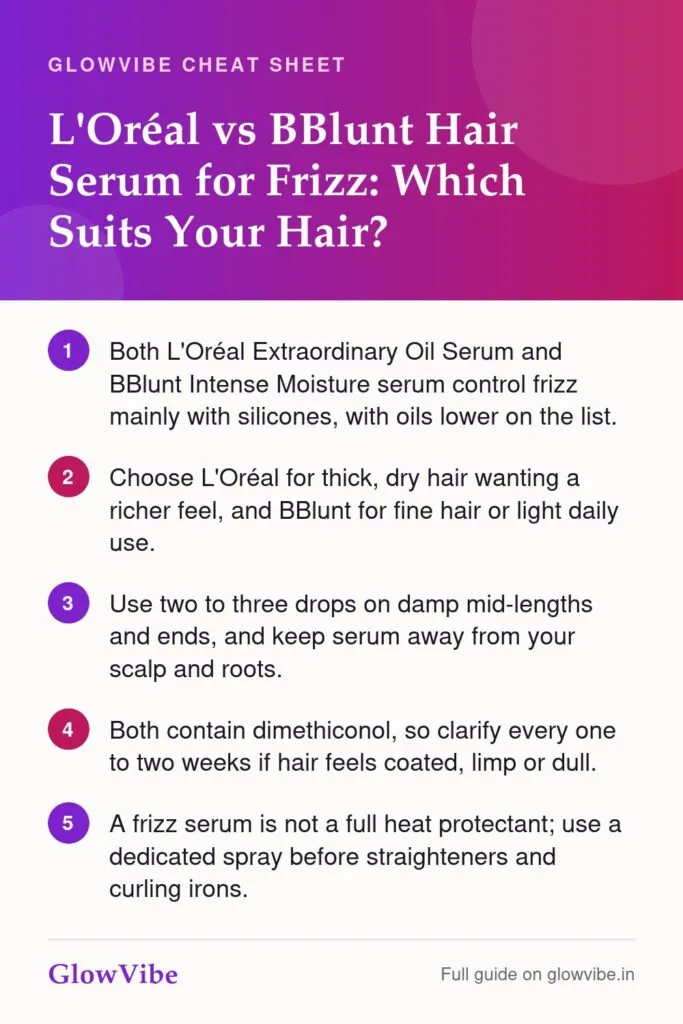
In the L’Oréal vs BBlunt hair serum for frizz choice, pick L’Oréal Paris Extraordinary Oil Serum if your hair is dry and thick and you want a richer, oil-blend serum you use a few times a week; pick BBlunt Intense Moisture Hair Serum if you want a lighter, multi-silicone serum that the brand says suits daily use on wet or dry hair. Both are silicone-first serums that tame frizz in humidity by coating the hair, so the real difference is weight, fragrance, how often you use it and how you wash it out.
GlowVibe has not tested these serums. This guide compares the two formulas from the ingredient lists on each brand’s Indian website, explains what those ingredients do, and shows you how to use either one without greasy ends or build-up. Formulas and pack sizes change from time to time, so always check the current label before you buy.
Quick verdict
- Choose L’Oréal Paris Extraordinary Oil Serum if your hair is thick, coarse, dry or chemically treated, you like a nourishing feel with plant oils, and you don’t mind a noticeable fragrance.
- Choose BBlunt Intense Moisture Hair Serum if your hair is fine to medium, gets flat easily, or you want a serum the brand says you can use every day, on wet or dry hair.
- Either works if you have straight or wavy hair that puffs up in humid weather and you mainly want smoother ends and shine.
- Be careful with both if you have tight curls that weigh down easily, a sensitive scalp, or you only use very mild shampoos. Both contain non-water-soluble SiliconesIngredients like dimethicone that coat hair (and skin) for slip, shine and frizz control. Heavier ones can build up and need a clarifying wash.See glossaryRead the guide and fragrance.
Side-by-side comparison
Here is how the two compare, based on the product pages on lorealparis.co.in and bblunt.com.
| Feature | L’Oréal Paris Extraordinary Oil Serum | BBlunt Intense Moisture Hair Serum |
|---|---|---|
| First ingredients | Cyclopentasiloxane, dimethiconol | Cyclopentasiloxane, phenyl trimethicone, caprylyl methicone |
| Silicones listed | 2 (cyclopentasiloxane, dimethiconol) | 5, including dimethiconol and a shine copolymer the brand calls “Shine Tonic” |
| Oils and extracts | Coconut, sunflower and soybean oils; chamomile, lotus, flax flower, tiare and rose extracts (the brand’s “six flower oils”) | Avocado, jojoba and argan oils; Vitamin E (tocopherol)An antioxidant and moisturising ingredient. It is often paired with vitamin C to make it more stable.See glossary acetate |
| Fragrance | Parfum, plus listed fragrance allergens (cinnamal, linalool) and benzyl alcohol | Perfume |
| Brand’s suggested amount | 2–3 drops | 1–2 pumps |
| Wet or dry use | On damp hair after washing; also before shampoo, before styling or overnight | On wet or dry hair |
| Daily use | Brand FAQ advises against daily use (can get greasy, weigh down fine hair) | Brand FAQ says it can be used daily |
| Heat claim | Brand says it gives protection from heat when used before blow-drying (no temperature stated) | No heat-protection claim on the serum page |
| Frizz claim | Disciplines frizz, leaves hair soft and smooth | “30X frizz reduction for up to 72 hours”, based on an instrumental study against a non-conditioning shampoo |
| Hair types (brand says) | All hair types | All hair types, including colour-treated |
How a silicone serum tames frizz in humidity
Frizz in a Mumbai monsoon or a Chennai summer happens because dry, porous hair pulls water out of humid air. Strands swell unevenly, the cuticle lifts, and each hair bends its own way. Damaged ends, bleached lengths and curly hair (where the cuticle lifts more easily at each bend) frizz first.
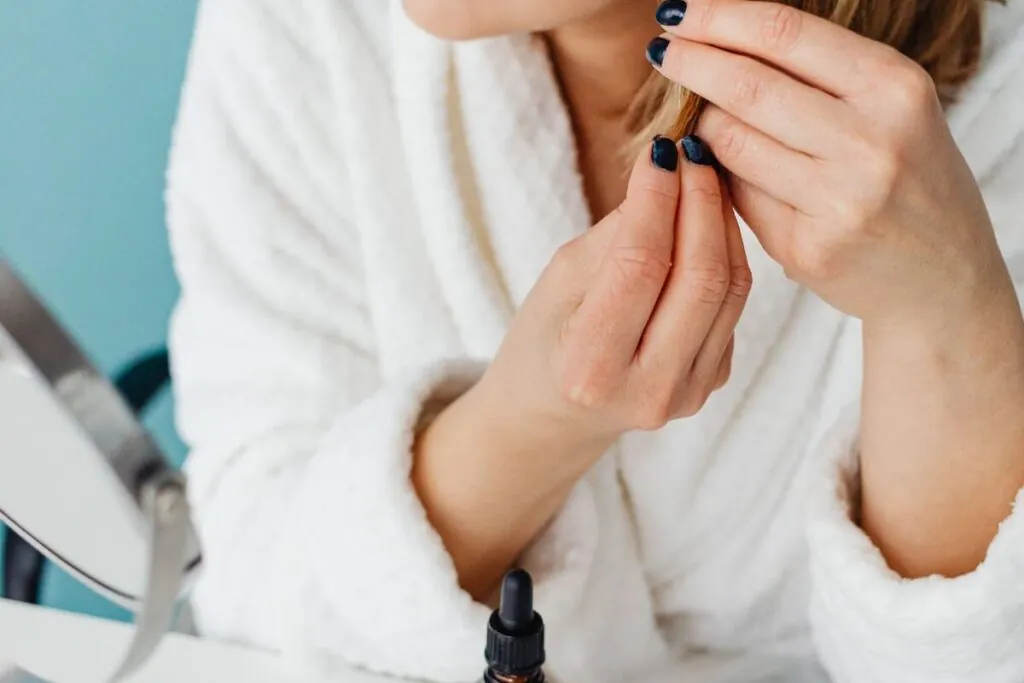
A silicone serum spreads a thin, water-repelling film over the hair. That film slows how fast moisture moves in, flattens the cuticle so light reflects evenly (that is the shine), and reduces friction so strands slide past each other instead of tangling. It does not repair hair; it acts as a raincoat that lasts until your next wash.
What the silicones in each bottle do
- Cyclopentasiloxane (first in both): a volatile silicone that gives the slip as you apply, then largely evaporates. It is why both serums feel lighter than their oil content suggests.
- Dimethiconol (in both): a heavier silicone that stays behind and forms the lasting anti-frizz film. This is the part that can build up.
- Phenyl trimethicone and caprylyl methicone (BBlunt only): lighter silicones used for gloss and a non-greasy finish. Together with the shine copolymer, they explain BBlunt’s focus on shine and a “weightless” feel.
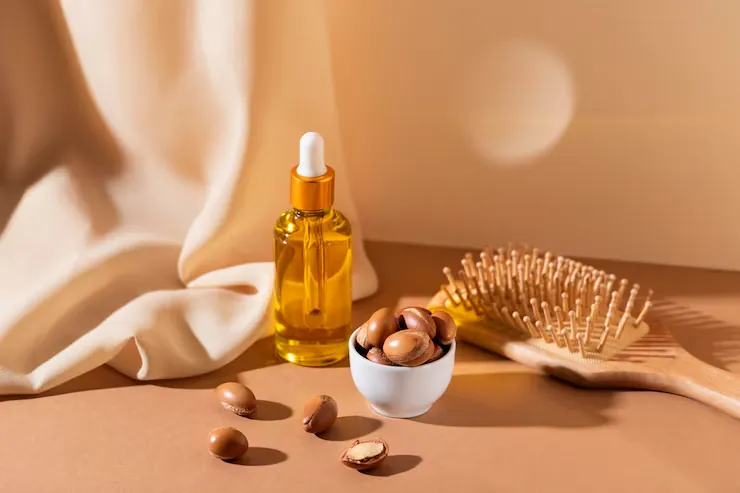
The oils sit lower on both ingredient lists, after the silicones and fragrance. They add a softer, more conditioned feel, but in small amounts. Don’t buy either one expecting the benefits of a pure oil treatment.
How much serum to use
Too much serum is the number one reason people say a serum “made my hair oily”. Start with less than you think, and add a drop only where frizz remains.
- Short or fine hair: 1 drop of L’Oréal or 1 pump of BBlunt, mostly on the ends.
- Shoulder-length, medium-thick hair: 2 drops or 1–2 pumps.
- Long, thick or very dry hair: 3 drops or 2 pumps, split into two rounds so you don’t overload one section.
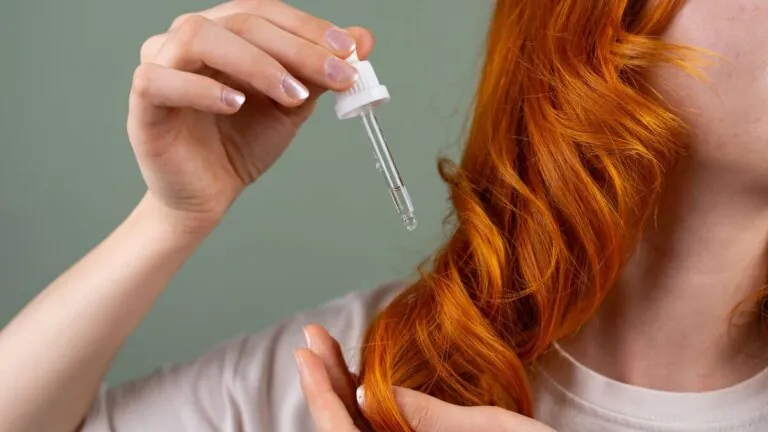
Rub the serum between your palms until your hands look glossy, then press it into the mid-lengths and ends. Keep it off the scalp; both brands say so, and serum near the roots makes hair look flat and greasy by evening.
Wet vs dry application
On damp hair (best for all-day frizz control)
- Wash and condition, then squeeze out water with a cotton T-shirt or microfibre towel instead of rubbing.
- Within 5 minutes, while hair is damp but not dripping, smooth serum over the lengths and ends.
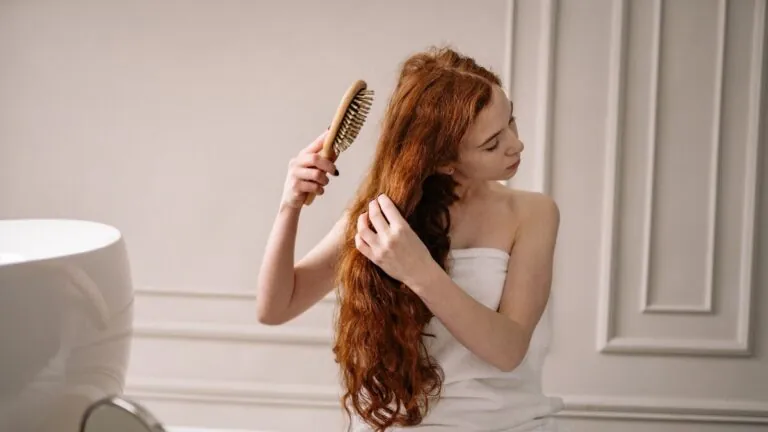
- Comb through with a wide-tooth comb so the film spreads evenly.
- Air-dry or blow-dry on medium heat. Sealing hair while it is still damp locks the shape before humidity gets in.
On dry hair (best for touch-ups and shine)
Use half your usual amount. Warm it in your palms and lightly glide over the surface layer and ends, or over flyaways along the parting. This is the step for a quick fix before office or a wedding function, when your hair has puffed up during the commute. BBlunt says its serum works wet or dry; L’Oréal suggests it before styling too, so either fits this job.
Heat protection claims: what to believe
This is where the two differ most on paper. L’Oréal’s India product page says the Extraordinary Oil Serum gives protection from heat when used before blow-drying, but it doesn’t state a temperature. BBlunt’s Intense Moisture serum page makes no heat claim at all. BBlunt sells a separate product for that job, the Hot Shot Heat Protection Mist, which the brand says protects up to 230°C.
A silicone film does reduce friction and can soften how fast heat reaches the hair, which is why many Heat protectantA spray, cream or serum applied before blow-drying, straightening or curling to reduce heat damage to the hair.See glossary are silicone-based. But a frizz serum isn’t a substitute for a product made and tested as a heat protectant. If you straighten or curl with irons several times a week, use a proper heat protectant spray, keep tools on a lower setting, and add serum as the finishing step. Our guide to choosing hair styling tools for your hair type covers safe temperature ranges.
Build-up and when to clarify
Dimethiconol does not dissolve in water. A regular shampoo usually removes it, but very mild Sulfate-freeShampoo made without strong sulfate cleansers like SLS. Gentler on dry, curly or colour-treated hair, though it may lather less.See glossaryRead the guide or “low-poo” shampoos may leave some behind. Over a few weeks that can show up as:
- hair that feels coated or waxy even right after washing
- limp, flat lengths and curls that won’t clump
- oil treatments and conditioners that seem to “sit on top” and stop working
- needing more and more serum for the same result
The fix is simple. Once every 1–2 weeks, or whenever you notice these signs, wash with a clarifying shampoo or any regular shampoo with a stronger cleanser, lathering twice on the lengths. Follow with conditioner, since clarifying can leave dry hair feeling rough. Hard water adds mineral film on top of silicone, so clarifying matters more if your tap water leaves white marks. For gentle and clarifying options by hair type, see our guide to the best shampoo for curly hair in India.
Hair serum vs hair oil: which does what?
Serums and oils solve different problems, and Indian routines often need both.
- Hair oil works best before washing. Coconut oilA common Indian hair oil that can soak into the hair shaft, which may reduce protein loss during washing. It can feel heavy on fine hair.See glossary in particular can soak into the hair shaft and helps reduce dryness and breakage over time.
- Serum works best after washing. It stays on the surface for smoothness, shine and humidity control until the next wash.
A practical routine: oil your lengths 1–2 hours before shampoo (or overnight), wash, condition, then use a few drops of serum on damp hair. If you want the right method and amount for a pre-wash champi, read how to oil your hair correctly. Be realistic about what either can do: oils and serums reduce dryness and breakage, but evidence that any oil regrows hair is limited. If you are losing more hair than usual, our hair loss treatment guide explains options that actually have evidence, and a dermatologist can find the cause.
Curly vs straight hair: how to use each serum
Straight and wavy hair
Straight hair shows grease fastest, so the lighter feel of BBlunt may suit fine straight hair better, while L’Oréal suits thick straight hair with dry, split-looking ends. Apply mostly to the bottom few inches and the top layer, where flyaways show. Wavy hair can take a damp-hair application, then scrunch rather than comb so the waves don’t drop.

Curly and coily hair
Curls are the most frizz-prone and the most likely to be weighed down. If your curls are loose and thick, a small amount of either serum on soaking wet hair, applied by “praying hands” (smoothing palms down each section) and then scrunching, can boost clumps and humidity resistance. If you follow a curly routine that avoids non-water-soluble silicones, skip both, since each lists dimethiconol.
Many curly heads get better results from a curl cream for moisture plus a gel for hold, using serum only as a second-day frizz fix on the surface. You’ll find creams, gels and leave-ins for every curl pattern in our round-up of the best curly hair products in India, and a full wash-day plan in our curly hair routine for Indian weather.
Can you use both?
Yes, though not together on the same day; layering two silicone serums just doubles the weight. A sensible split is BBlunt on regular days, when you want a light daily finish, and L’Oréal on very dry or very humid days, or the night before a function as a smoothing treatment on the ends. Keep the total amount the same as you would use of one serum, and clarify a little more often if you use both.
Common mistakes
- Applying on the scalp or roots. It flattens volume and can make the scalp feel oily.
- Using it on soaking wet, dripping hair (straight hair). The serum slides off with the water; towel-blot first.
- Treating serum as a heat protectant before flat ironing. Use a dedicated heat protectant and lower heat.
- Never clarifying. Silicone plus hard-water minerals slowly dulls hair, the opposite of what you bought serum for.
- Skipping a Patch testTrying a small amount of a new product behind the ear or on the inner arm for a few days to check for a reaction before using it widely.See glossary. Both contain fragrance, and L’Oréal lists fragrance allergens such as cinnamal and linalool. If your skin reacts to perfumes, test on the inner arm and keep serum off your neck and hairline.
Frequently Asked Questions
Neither is better for everyone. L’Oréal Extraordinary Oil Serum suits thick, dry hair that wants a richer feel. BBlunt Intense Moisture suits finer hair or anyone who wants a light serum for daily use. Both control frizz the same basic way, with a silicone film.
BBlunt says its serum can be used daily. L’Oréal’s FAQ advises against daily use because it may make hair greasy or weigh down fine hair. If you use any serum daily, use a small amount and clarify every week or two.
Silicones do not damage hair. They coat it, which reduces friction and breakage from combing. The only real issue is build-up, which a regular or clarifying shampoo removes.
L’Oréal says its serum protects from heat when used before blow-drying, without naming a temperature. BBlunt makes no heat claim for this serum and sells a separate heat protection mist. For irons and curling tongs, use a dedicated heat protectant.
Damp hair gives longer-lasting frizz control because you seal hair before it dries. Dry hair is better for small touch-ups and shine. BBlunt says its serum works on both; L’Oréal’s main directions are for damp hair after washing.
Not really. They do different jobs. Oil is a pre-wash treatment for dryness and breakage, while serum is a post-wash finisher for smoothness and humidity. Most frizzy Indian hair does best with both, used at different steps.
Quick poll
How much do you usually spend on one beauty product?
The bottom line
Both serums are silicone-led frizz fighters, so pick by your hair, not the hype. Thick, dry hair that likes a richer finish leans towards L’Oréal Paris Extraordinary Oil Serum; fine or easily flattened hair that wants a light daily serum leans towards BBlunt Intense Moisture. Use a few drops on damp ends, keep it off your scalp, clarify every week or two, and use a real heat protectant before hot tools.