Best Hair Styling Tools for Your Hair Type: 2026 Guide
How to pick a hair dryer, straightener, curling iron, wand, diffuser and brush for fine, thick or curly hair, with safe heat settings and tips for Indian voltage and humidity.

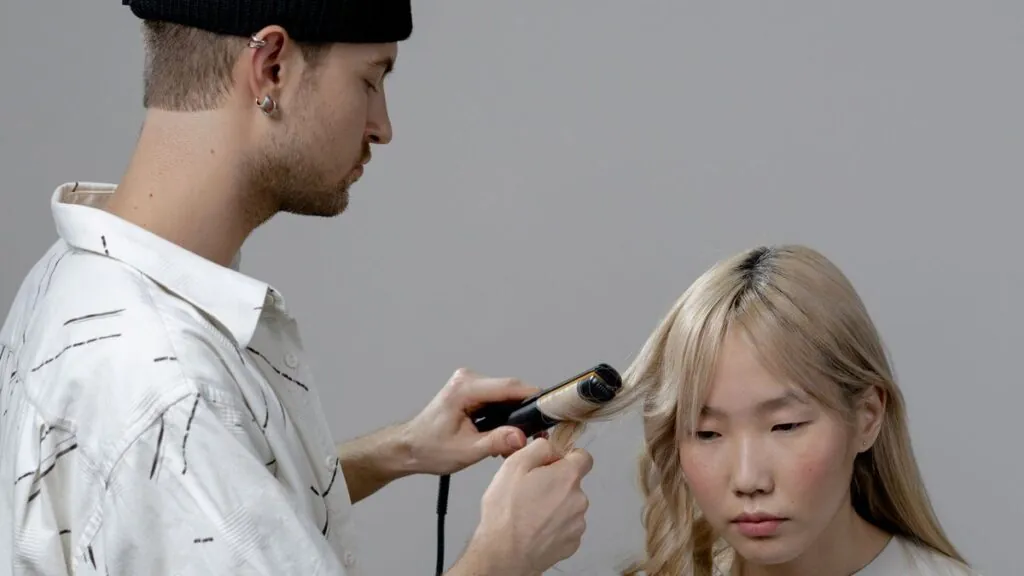
The best hair styling tools for your hair type are the ones that match its thickness and texture: low, controllable heat for fine or damaged hair, more power for thick or coarse hair, and a diffuser instead of a straightener-first approach for curls. If you get that match right and always use a Heat protectantA spray, cream or serum applied before blow-drying, straightening or curling to reduce heat damage to the hair.See glossary, you can style at home without frying your ends.
Below you will find each tool worth owning, the plate materials and heat settings that suit your hair, and what Indian voltage and humidity mean for your purchase.
Quick answer: the right tool for each hair type
- Fine or thin hair: a lightweight ionic dryer with a cool-shot button, a ceramic straightener you can set at 150 to 180°C, and a large round brush for volume.
- Normal, medium-thick hair: a 1,600 to 2,000 W dryer with two heat and two speed settings, a ceramic or tourmaline straightener, and a 25 mm curling wand for everyday waves.
- Thick or coarse hair: a high-wattage dryer with a narrow concentrator nozzle, a titanium straightener with wider plates, and a paddle brush for faster detangling.
- Wavy and curly hair: a dryer with a diffuser attachment, a wide-tooth comb, and a curling wand only for touch-ups on stray sections.
- Damaged, coloured or chemically treated hair: the lowest heat that works, ceramic plates, and fewer heat sessions a week.
Hair styling tools compared
| Tool | Best for | Look for | Heat range | Watch out for |
|---|---|---|---|---|
| Hair dryer | All hair types | Ionic or ceramic, cool shot, 2+ heat settings, diffuser and nozzle | Low to high (dryer settings) | Holding it too close to the scalp |
| Straightener (flat iron) | Smooth, sleek styles and flicks | Ceramic, tourmaline or titanium plates, adjustable temperature | 150 to 230°C | Passing over damp hair or the same section repeatedly |
| Curling iron | Defined, uniform curls | Barrel size to suit curl, clamp, adjustable heat | 150 to 210°C | Holding too long on fine hair |
| Curling wand | Loose, beachy waves | Tapered or straight barrel, heat glove included | 150 to 210°C | Burning fingers without a glove |
| Diffuser | Wavy and curly hair | Wide bowl, fits your dryer’s nozzle | Low heat, low speed | High speed that blows curls apart |
| Brushes and combs | Detangling and blow-drying | Wide-tooth comb, paddle brush, round brush | No heat (round brush used with dryer) | Brushing wet curly hair with a fine brush |
| Hot rollers | Volume and soft curls on limp hair | Several sizes, velvet or ceramic coating | Fixed heat | Leaving them in thin, fragile hair too long |
Hair dryers: the one tool everyone needs
With the right attachments a dryer smooths, adds volume and defines curls, so it is the first tool to buy. For most people, a dryer between 1,600 and 2,000 watts dries hair quickly without needing the hottest setting.
What to look for
- Ionic technology: helps water break up and evaporate faster, which means less time under heat and a smoother, less frizzy finish.
- Ceramic or tourmaline elements: spread heat more evenly, so you get fewer hot spots.
- At least two heat and two speed settings, plus a cool shot: the cool button sets your style once you finish.
- A concentrator nozzle and a diffuser: the nozzle directs airflow for sleek blow-dries; the diffuser spreads it for curls.
Good options sold in India
On a budget, compact dryers such as the Philips HP8100 are fine for quick drying of short to medium hair, though they have limited settings. Mid-range dryers from Philips, Havells and similar brands add ionic care, more settings and a diffuser. At the premium end, the Dyson Supersonic offers strong airflow with heat control, which helps if you blow-dry often or have very long, thick hair.
How to use it
- Towel-blot (do not rub) and let hair air-dry until it is about 70 percent dry.
- Apply a heat protectant through mid-lengths and ends.
- Dry on medium heat, pointing the nozzle down the hair shaft from root to tip to flatten the cuticle.
- Finish each section with a blast of cool air.
Pros: versatile, quick, works on every hair type. Cons: daily high-heat use dries out hair; cheaper models can run very hot.
Straighteners (flat irons): pick the plate, then the temperature
A straightener gives sleek, glossy hair but causes the most damage when misused. What matters most is the plate material and whether you can set the temperature.
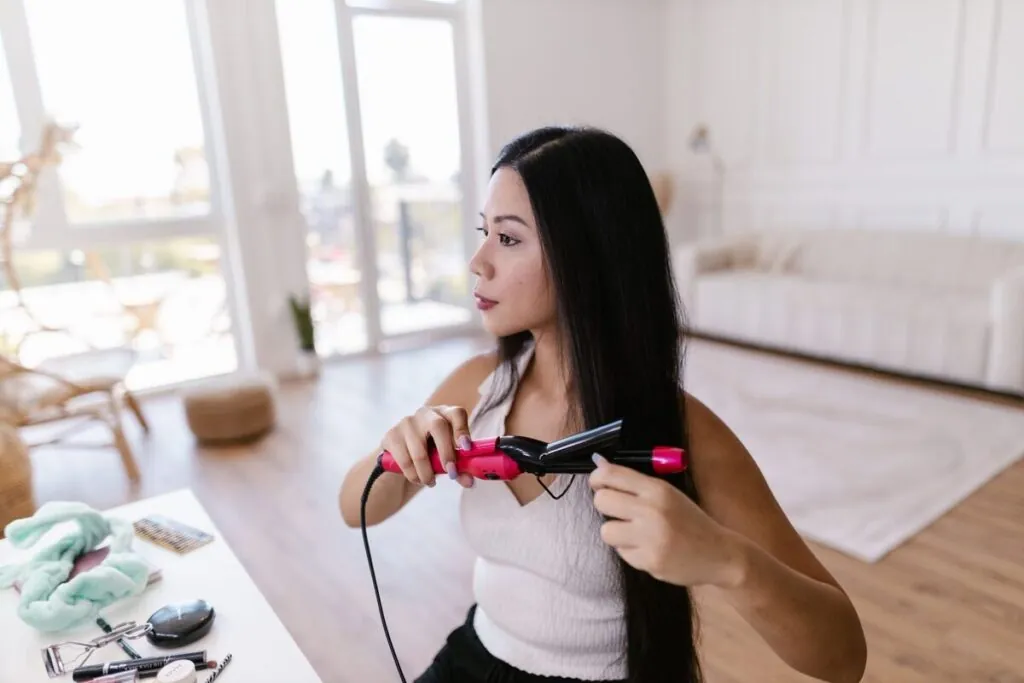
Plate materials explained
- Ceramic: heats evenly and gently. The safest pick for fine, thin, damaged or coloured hair.
- Tourmaline (usually ceramic coated with tourmaline): adds ionic action for extra smoothness and less frizz. A great all-rounder for normal to thick hair.
- Titanium: heats up fast and holds high temperatures well. Best for thick, coarse or very curly hair that needs fewer passes; too harsh for fine hair.
Heat settings by hair type
- Fine, thin, damaged or bleached hair: 150 to 180°C.
- Normal or medium-thick hair: 180 to 200°C.
- Thick, coarse or tightly curled hair: 200 to 230°C, and only as hot as you need for a smooth result in one or two passes.
Start at the lowest setting and go up only if a slow, single pass leaves the hair unsmooth. If your iron has no temperature dial, replace it; fixed-heat irons often run far hotter than fine hair can handle.
Good options sold in India
Philips straighteners, including its KeraShine range with keratin-infused ceramic plates, are widely available and offer adjustable heat on most models. Wider plates (around 2.5 cm or more) speed things up on long, thick hair; narrow plates are easier for short hair, fringes and flicks.
Pros: sleek results, waves and flicks. Cons: high damage risk on wet hair or at maximum heat.
Curling irons and curling wands
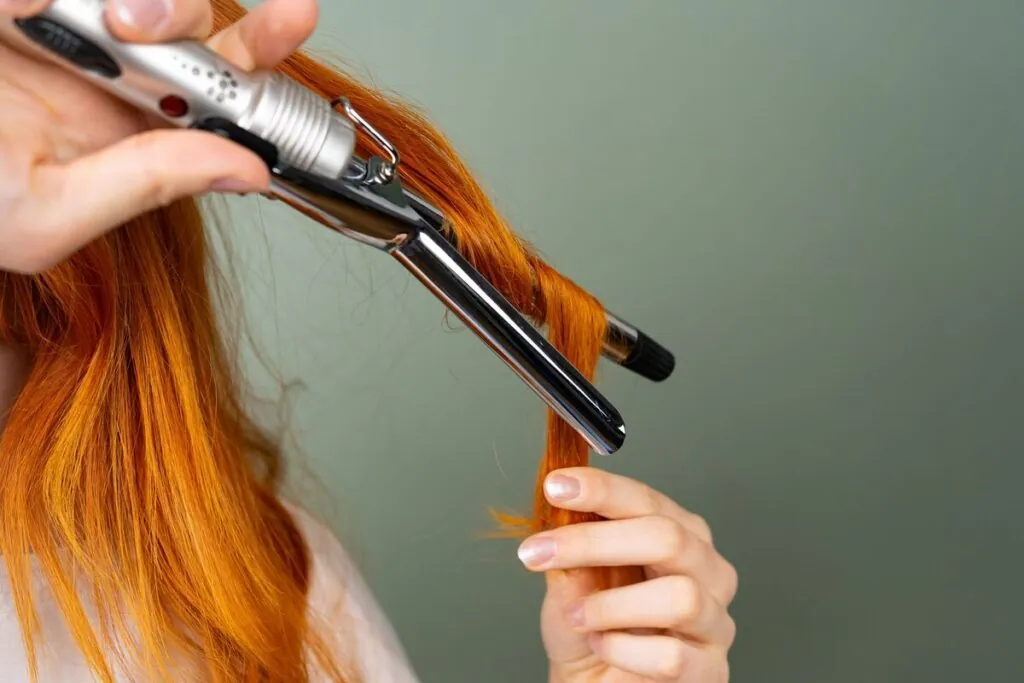
Both create curls, but they work differently. A curling iron has a clamp that holds the hair, giving uniform, polished curls. A curling wand has no clamp; you wrap hair around the barrel yourself, which gives looser, more natural-looking waves.
Choosing the barrel size
- 13 to 19 mm: tight ringlets and defined curls; good for short hair.
- 25 mm: the most versatile size for classic curls on medium to long hair.
- 32 to 38 mm: loose, bouncy waves and blowout-style volume on long hair.
- Tapered wand: curls that are tighter at the ends and looser at the roots, which looks natural.
Fine hair curls easily, so use lower heat and hold for about 5 to 8 seconds. For thick hair, take smaller sections rather than raising the temperature. If you want curling, drying and smoothing in one premium tool, the Dyson Airwrap uses airflow instead of very high direct heat, though it costs far more than separate tools.
Tip for Indian weddings and festivals: curl hair a few hours before the event, let each curl cool fully before touching it, and finish with a light hairspray. For updo inspiration, see our guide to easy saree hairstyles for Diwali and weddings.
Pros: long-lasting curls, many looks from one tool. Cons: takes practice; wands can burn fingers without a heat glove.
Diffusers: the curly-hair essential
If your hair is wavy or curly, a diffuser is more useful than any straightener. It spreads airflow over a wider area so curls dry in their natural shape instead of being blown into frizz.
To use one, apply your Leave-in conditionerA light conditioner you do not rinse out. It helps with detangling, frizz and moisture, especially for curly or dry hair.See glossaryRead the guide or curl cream on soaking-wet hair, then cup sections of hair into the diffuser bowl and lift towards the scalp. Use low speed and low to medium heat, and avoid touching your hair until it is fully dry. Our guide to the best curly hair products in India covers creams and gels to pair with diffusing, and how to apply hair creams for curly hair explains the technique step by step.
Brushes, combs and hot rollers
The right brush cuts down on breakage and makes heat styling faster.
- Wide-tooth comb: the safest way to detangle wet hair, especially curly or long hair. Start at the ends and work up.
- Paddle brush: quick detangling of dry, straight or wavy hair and smooth blow-drying for thick hair.
- Round brush: builds volume and bends ends during a blow-dry. Smaller barrels give more curl; larger ones give smoother, bigger volume.
- Hot rollers: a gentle way to add body to limp or fine hair while you do your makeup. Choose a set with mixed sizes and a velvet or ceramic coating.
Seamless elastics, spiral ties and claw clips also cause far less breakage than tight rubber bands.
How to choose hair styling tools in India
Check voltage and safety marks
India uses 230 V at 50 Hz. Buy tools made for the Indian market, and look for the BIS standard mark on the product or box. Tools bought in the US are often built for 110 to 120 V and can overheat or fail here, even with an adapter. If you travel, a dual-voltage straightener is handy, but confirm the switch is set correctly before plugging in.
Plan for humidity
Humid monsoon and coastal weather quickly undoes straightened or curled hair, and it is tempting to raise the heat to compensate. A better plan is to dry hair fully before styling, use an anti-humidity or smoothing serum afterwards, and finish with a cool shot to seal the cuticle. Ionic dryers and tourmaline plates also help reduce frizz. Our summer hair care tips cover sweat and humidity in more detail.
Factor in hard water and heat
Hard water leaves hair rough and more likely to snap under heat. Use a nourishing conditioner, consider a shower filter, and keep heat styling to two or three times a week.
Match the tool to your hair, not the advert
- Fine hair: lighter dryer, ceramic plates, lower temperatures, and volumising tools such as round brushes and hot rollers. Gentle wash products help too; see our picks of hair care products for fine hair.
- Thick or coarse hair: higher wattage, titanium or tourmaline plates, wider plates and smaller sections.
- Curly hair: diffuser first; straighten only occasionally and at moderate heat.
- Damaged or coloured hair: lowest effective heat, ceramic plates, and more rest days.
How to heat style safely: a simple routine
- Start with clean, conditioned hair. Product build-up and oil heat up and leave hair dull.
- Apply a heat protectant. Spray or cream, worked through mid-lengths and ends. Widely available options include TRESemmé Thermal Creations Heat Tamer Spray; any protectant you will use every time is better than none.
- Dry hair completely before using a straightener or curler. Never use an iron on damp hair.
- Section your hair. Clip it into four to six sections and work on small pieces, about 2 to 3 cm wide.
- Use the lowest heat that works. One slow pass beats three fast ones.
- Let the style cool, then finish. A drop of serum on the ends adds shine and fights humidity.
- Clean your tools. Wipe plates with a damp cloth once the tool is unplugged and cool, and clear lint from the dryer’s back filter regularly.
Common mistakes to avoid
- Using maximum heat by default. Most hair does not need the top setting.
- Straightening damp hair. The sizzle you hear is water boiling inside the hair strand.
- Passing over the same section again and again. Take smaller sections instead.
- Ignoring wear and tear. Chipped plates, frayed cords and dryers that smell of burning should be replaced.
- Daily heat styling with no rest days. Alternate with heatless styles like braids or buns.
Frequently Asked Questions
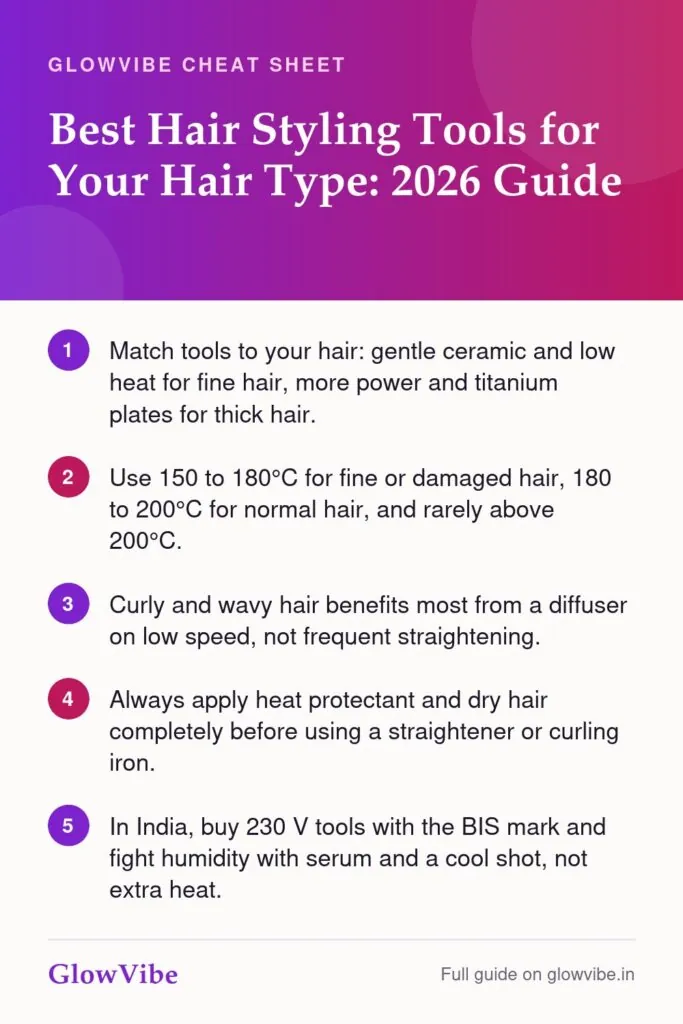
Fine or damaged hair suits a lightweight ionic dryer and a ceramic straightener used at 150 to 180°C. Thick or coarse hair does better with a high-wattage dryer and titanium or tourmaline plates. Curly hair benefits most from a diffuser and a wide-tooth comb, with straighteners used only occasionally.
As a guide, use 150 to 180°C for fine or damaged hair, 180 to 200°C for normal hair, and up to 230°C only for very thick or coarse hair. Always start low and increase only if one slow pass does not smooth the hair.
Ceramic heats gently and evenly, so it is better for fine, thin, coloured or damaged hair. Titanium heats faster and stays very hot, which suits thick, coarse or curly hair that needs fewer passes. Tourmaline-coated ceramic sits in between and works well for most people.
No. Using hot irons on wet or damp hair can boil the water inside the strand and cause breakage. Blow-dry on medium heat or let hair air-dry fully, apply heat protectant, then style.
Only if they are rated for 230 V. Many US tools run on 110 to 120 V and can overheat on Indian sockets, even with a plug adapter. Buy Indian-market models with the BIS mark, or dual-voltage tools set to the correct voltage.
There is no fixed timeline, but replace any tool with a frayed cord, chipped plates, uneven heating or a burning smell. Regular cleaning helps tools last longer.
Moisture in the air re-enters the hair and lifts the cuticle. Dry hair fully before styling, finish with a cool shot and use an anti-humidity serum; more heat only adds damage.
Quick poll
How often do you wash your hair?
The final word
The best hair styling tool is the one that suits your hair type and is used at the lowest heat that works. Start with a good dryer, add a straightener or curler with adjustable temperature, choose plates that match your texture, and never skip heat protectant. Buy tools rated for Indian voltage, plan for humidity, and give your hair regular heat-free days to keep it healthy.