Shiny Black Hair: 7 Tips for Glossy, Naturally Dark Indian Hair
Why black and dark-brown Indian hair turns dull, and a simple routine for real shine: gentle washing, hard-water clarifying, light oils, heat and sun protection.


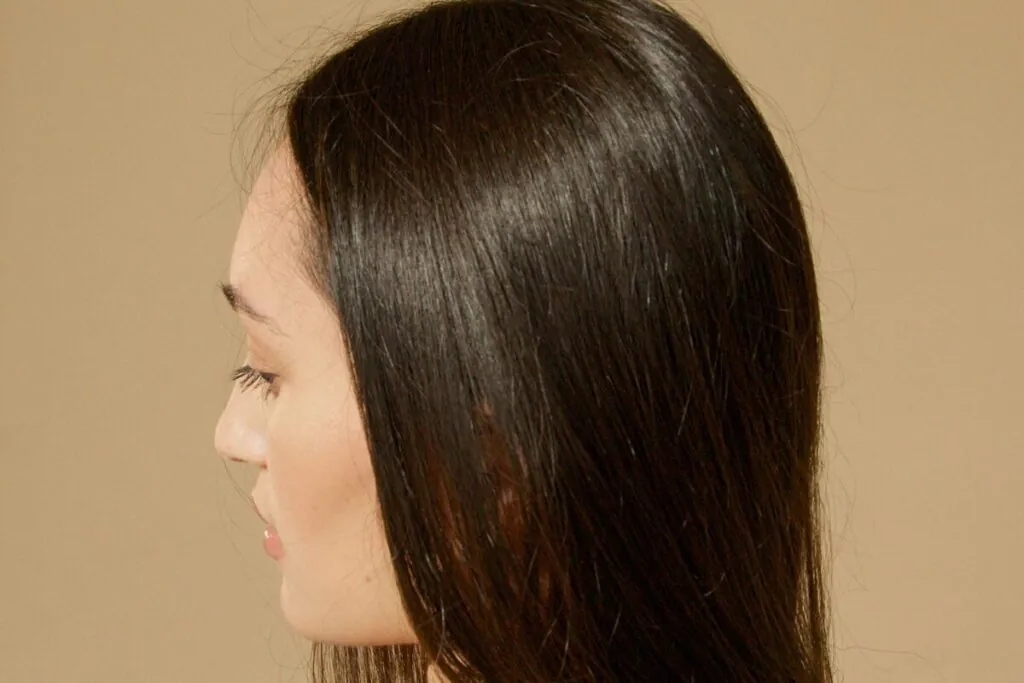
To get shiny black hair, you need a smooth, flat cuticle, so light bounces off each strand evenly. Wash gently, condition every time, clear hard-water build-up every week or two, use only a drop or two of light oil or serum, and protect your hair from heat and sun.
Naturally black and dark-brown hair has an advantage here. Against a dark background, even a little smoothness shows up as real gloss. The flip side is that dark hair also shows dust and white residue more clearly.
Shiny black hair: the quick checklist
- Shampoo the scalp, condition the lengths, every single wash.
- Finish with lukewarm or cool water instead of very hot water.
- Clarify every 1–2 weeks if you have hard water, or if your hair feels rough and looks chalky.
- Use 1–2 drops of a light oil or SiliconesIngredients like dimethicone that coat hair (and skin) for slip, shine and frizz control. Heavier ones can build up and need a clarifying wash.See glossaryRead the guide serum on damp or dry ends, never the scalp.
- Use a Heat protectantA spray, cream or serum applied before blow-drying, straightening or curling to reduce heat damage to the hair.See glossary and keep styling tools at moderate settings.
- Cover your hair in strong sun with a dupatta, scarf or cap.
- Eat enough protein, iron and B12, and get blood tests if your hair suddenly changes.
Why black hair looks dull
Shine is a mirror effect. Each hair is covered by overlapping cuticle scales, a bit like roof tiles. When the scales lie flat and the strands run parallel, light reflects in one direction and you see a bright band of shine. When the scales are lifted, chipped or coated, light scatters and hair looks flat, ashy or slightly grey even when it isn’t.
Here are the usual culprits for Indian hair, with the sign to look for and the fix.
| Cause | What you notice | What helps |
|---|---|---|
| Raised, worn cuticle | Rough feel, frizz, ends look lighter than roots | Conditioner every wash, gentle drying, regular trims |
| Hard-water build-up | Stiff, squeaky or straw-like hair, white film, lather that won’t foam well | Clarifying or chelating shampoo every 1–2 weeks |
| Product and oil build-up | Greasy but dull, hair clumps, scalp itches | Thorough shampoo, less product, clarify occasionally |
| Sun exposure | Reddish or rusty tint on the top layer, dry ends | Cover hair, UV-filter Leave-in conditionerA light conditioner you do not rinse out. It helps with detangling, frizz and moisture, especially for curly or dry hair.See glossaryRead the guide, condition well |
| Heat styling | Burnt smell, crunchy ends, split ends | Heat protectant, lower temperature, fewer passes |
| Dryness | Frizz, tangles, hair snaps when combed | Richer conditioner, a weekly mask, light oil on ends |
Texture matters too. Straight hair reflects light most easily, while wavy and curly black hair has a softer, natural sheen. That’s healthy, so aim for softness and definition rather than glassy shine.
A wash-day routine for glossy dark hair
Most dark Indian hair does well with two or three washes a week, or more if your scalp gets oily or you sweat a lot. This routine takes about 20 minutes.
Step 1: Pre-wash oil (optional, 30–60 minutes before)
If your lengths are dry, smooth a little oil onto the mid-lengths and ends before you wash. This softens tangles and helps the hair lose less moisture during shampooing. You don’t need to drench your scalp. Follow our step-by-step guide on how to oil hair correctly for how much to use and how long to leave it on.
Step 2: Shampoo the scalp only (2–3 minutes)
Wet your hair well with lukewarm water. Rub a coin-sized amount of shampoo between your palms and massage it into the scalp with your fingertips, not your nails. Let the lather run down the lengths as you rinse. Piling hair on top of your head and scrubbing it roughens the cuticle, so avoid that. If you oiled first, shampoo twice.
Step 3: Condition the lengths (2–3 minutes)
This is the single biggest step for shine. Conditioners carry a slight positive charge and cling to the damaged, negatively charged parts of the hair, smoothing the cuticle down. Squeeze excess water out first, then apply from the ears down. Comb through with a wide-tooth comb while it’s in, so the strands line up neatly.
Step 4: The cool rinse (30 seconds)
Rinse the conditioner out with lukewarm water, then finish with a cooler splash. To be honest, the popular claim that cold water “seals the cuticle shut” is overstated. The scales don’t snap shut with temperature. But very hot water dries hair and scalp, so a cooler finish helps a little. You don’t need ice-cold water.
Step 5: Dry gently
Squeeze, don’t rub. Wrap hair in an old cotton T-shirt or a microfibre towel for 10 minutes. If you blow-dry, point the nozzle downwards, from roots to ends, so the cuticle is pushed flat.
Step 6: Finish with one or two drops
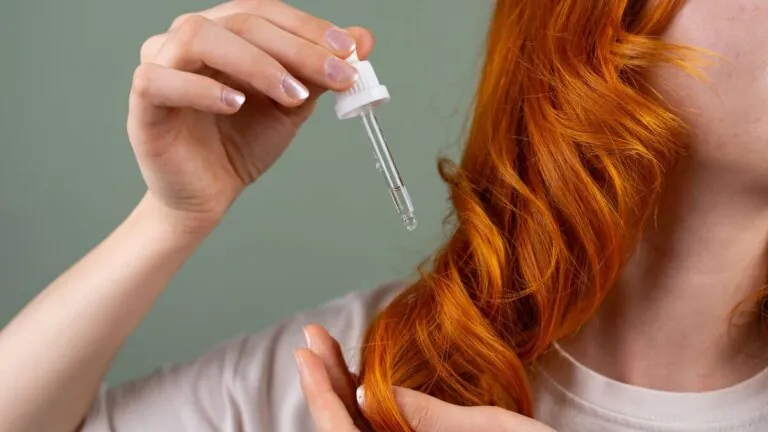
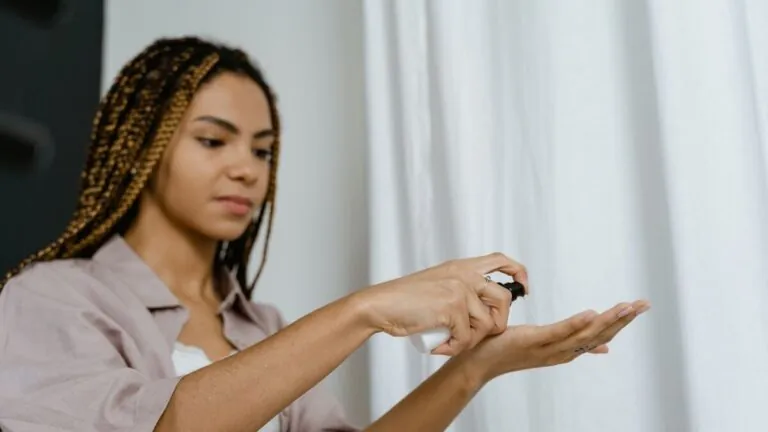
On damp or dry ends, apply a small amount of light oil or serum (more on choosing below). Rub it between your palms, then glide it over the ends. On black hair, too much product doesn’t look shinier. It looks wet, greasy and stringy.
Light oils and serums: which gives real shine
- Silicone serums (look for dimethicone, cyclopentasiloxane or amodimethicone on the label) give the most instant, visible gloss. They coat the strand in a thin, smooth film that reflects light and fights humidity, and they wash out with regular shampoo.
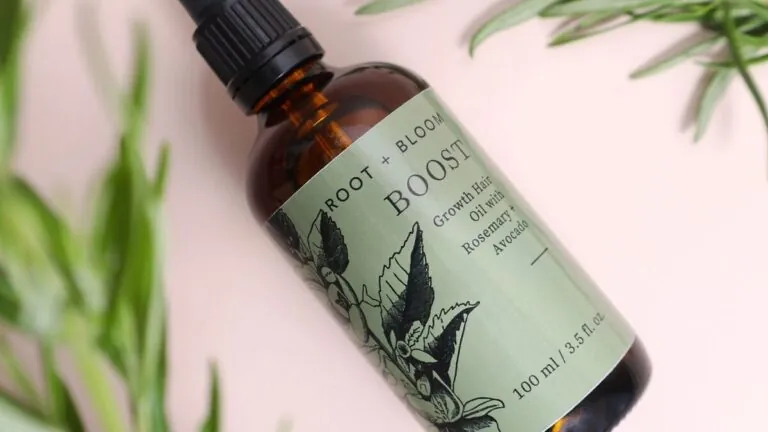
- Light oils such as argan, almond or jojoba add softness and a natural sheen. Use them on ends after styling or as a pre-wash treatment.
- Coconut oilA common Indian hair oil that can soak into the hair shaft, which may reduce protein loss during washing. It can feel heavy on fine hair.See glossary is best as a pre-wash treatment. Lab research suggests it can soak into the hair shaft and reduce protein loss during washing. It’s heavy as a finishing product on fine hair, though.
One honest note: oils reduce dryness and breakage, which keeps hair looking healthier and longer. But the evidence that any oil makes hair grow faster is limited. If you’re choosing an oil for growth as well as shine, our guide to the best hair oil for hair growth in India explains what the research really shows. For noticeable thinning or patchy hair loss, see our guide to hair loss treatment in India and talk to a dermatologist. Men with short hair can find serum picks and tips in our hair shine serum for men guide.
Hard water: the hidden reason Indian hair looks dull
Water in many Indian cities, and from most borewells, is hard. That means it’s rich in calcium and magnesium. These minerals leave a film on hair that makes it feel rough and look chalky. On black hair the film can show up as a dull, greyish cast, and it also stops conditioner and oil from working well.
How to clarify
- Once every one to two weeks, swap your usual shampoo for a clarifying or chelating shampoo. Chelating formulas list ingredients such as disodium EDTA, tetrasodium EDTA or sodium citrate, which bind to minerals so they rinse away.
- Massage it into the scalp and lengths, leave it on for one to two minutes, and rinse well.
- Always follow with conditioner or a mask, because clarifying can leave hair feeling squeaky and dry.
A diluted vinegar rinse is a popular home option. Mix about one tablespoon of apple cider vinegar in a mug of water, pour it over clean hair and rinse after a minute. Its mild acidity can make hair feel smoother. The evidence is mostly anecdotal, though, so never use vinegar undiluted, and skip it if your scalp is broken or sensitive.
Protect your shine from heat and sun
Heat styling
Straighteners and curling tongs slowly wear away the cuticle. Always use a heat protectant spray or cream on dry hair before styling. Keep the temperature moderate (many hair types manage well below the highest setting), and do one slow pass rather than several fast ones.
Sun
UV light breaks down hair proteins and the melanin that gives hair its colour. That’s why the top layer of black hair can turn reddish or rusty after a summer of bike rides or beach trips. Cover your hair with a dupatta, scarf or cap in strong midday sun. A leave-in conditioner with UV filters can help on long outdoor days. Before swimming, wet your hair with fresh water and apply a little conditioner, so it soaks up less chlorine or salt water.
Foods that matter for healthy, shiny hair
No food makes hair glossy overnight, because shine is about the surface of hair you already have. But a poor diet can lead to weak, dry or thinning hair over the following months. Focus on these:
- Protein at every meal: dal, paneer, curd, eggs, chicken, fish, soya, chana and rajma.
- Iron: green leafy vegetables, legumes, millets such as ragi and bajra, and meat. Pair them with Vitamin CAn antioxidant that brightens dull skin, helps fade the look of dark spots and supports sunscreen against daily damage. Best used in the morning.See glossaryRead the guide foods such as AmlaIndian gooseberry, used in Ayurvedic hair oils, powders and packs. It is valued for conditioning hair and adding shine.See glossaryRead the guide, lemon or guava to help absorption. Low iron is common in Indian women.
- Vitamin B12: dairy, eggs, fish and meat. Strict vegetarians and vegans are often low and may need a supplement, so ask your doctor.
- Zinc and healthy fats: pumpkin seeds, nuts, flaxseed, walnuts and oily fish.
Take supplements only when a test shows you need them. BiotinA B vitamin (B7) common in hair supplements. It tends to help mainly when someone is actually low in it; it can also affect some blood test results.See glossary is heavily marketed, but true deficiency is rare, and high-dose biotin can interfere with some blood test results. If you take it, tell your doctor before any lab work.
Keeping hair naturally dark: the honest truth about greying
What premature greying really is
Hair turns grey when the pigment cells in the follicle slow down and stop making melanin. For people of Indian and other Asian backgrounds, greying is usually called premature when it starts before about age 25. Genetics is the biggest factor. If your parents greyed early, you probably will too.

Some causes are worth checking. Vitamin B12 deficiency, thyroid problems and smoking are linked with early greying, and low iron and vitamin D have also been studied. If you’re greying fast in your teens or twenties, ask a doctor about blood tests. Fixing a real deficiency helps your overall health, and occasionally colour improves, but that isn’t guaranteed.
What doesn’t work: no oil, curry-leaf mix, amla paste or shampoo has been shown to turn grey hairs back to black. Plucking greys won’t make more grow, but it can damage the follicle over time, so trim them instead.
Henna and indigo vs hair dye
If you want to cover greys, you have two honest options. Both work, and both have trade-offs.
| Henna + indigo | Chemical dye | |
|---|---|---|
| Result on grey | Henna (mehendi)A plant dye that stains hair reddish-brown and coats strands for a glossy feel. Pure henna is different from "black henna", which can contain harsh dyes.See glossaryRead the guide alone gives orange-red; indigo applied after turns it brown to black | Even, predictable shade in one step |
| Effort | Two steps, several hours, messy | About 30–45 minutes |
| Feel | Coats the strand; can add body and gloss, can feel dry for some | Smooth if you condition well; ammonia types can be harsh |
| Main risk | “Black henna” packs may hide PPD; compound henna may contain metallic salts | PPD allergy, which can be severe |
| Switching later | Hard to colour or lighten over; very slow to grow out | Easier to change shade |
Whichever you choose, do a patch test 48 hours before every application, because allergies can develop over time. Avoid any “instant black henna” product that colours in minutes, because pure henna and indigo never do. For full methods, see our guide to natural hair dyes you can use at home.
Common mistakes that dull black hair
- Skipping conditioner because your scalp is oily. Keep conditioner off the scalp, but use it on the lengths.
- Leaving heavy oil in for days, which attracts dust and looks greasy, not glossy.
- Rough towel-drying and brushing hair hard while it’s soaking wet.
- Putting off trims. Split, frayed ends scatter light, so trim every 8–12 weeks.
Frequently Asked Questions
A little oil on the lengths adds sheen and softness. Heavy oiling left on all day makes black hair look greasy and dull, because it traps dust. Use oil as a pre-wash treatment, and only a drop or two as a finish.
Usually it’s sun exposure and wear. UV breaks down melanin, and older, rougher ends reflect light differently, so they look lighter. Cover your hair in strong sun, condition well and trim regularly.
Usually not, especially when greying runs in the family. If it’s linked to a deficiency such as low vitamin B12, treating it may help a little in some people. See a doctor for tests rather than relying on oils or packs.
No. Silicones are safe, they reduce friction and frizz, and they give the most visible shine. They wash out with a regular shampoo, and a clarifying wash now and then clears any build-up.
Pure henna coats the surface and can add gloss. On black hair it shows as a reddish tint in sunlight, and greys turn orange unless you follow with indigo.
Quick poll
What is your biggest hair concern?
The bottom line
Shiny black hair comes from a smooth surface, not from piling on products. Wash gently, condition every time, clear hard-water film regularly, use oil and serum sparingly, and protect your hair from heat and sun. Eat well for long-term hair health, and if you’re greying early, get checked by a doctor before trying miracle fixes. Your naturally dark hair already reflects light beautifully, so it just needs a smooth surface to show it.