Baby Haircut Style for Girls (2026): 6 Easy Cuts and Safe Trim Tips
Easy, low-maintenance baby and toddler girl haircuts, when to do the first cut, practical mundan tips, safe home trimming and gentle hair care.

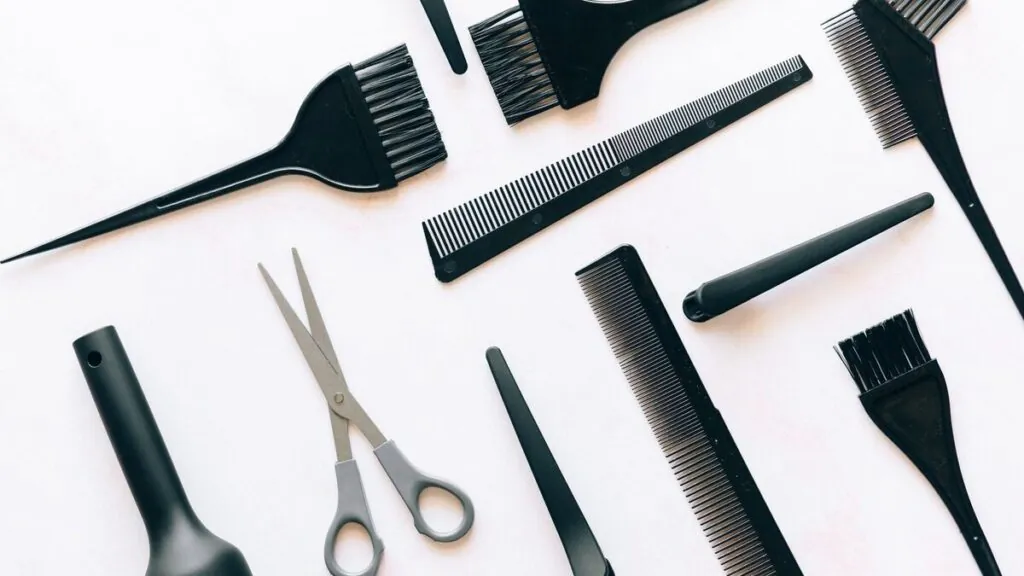
The best baby haircut styles for girls are simple, soft and easy to keep: a light tidy-up trim, a short baby bob, a bob with a soft fringe, or a short layered crop for curly hair. Pick a cut that keeps hair out of her eyes and needs no products, because at this age comfort and safety matter more than a “look”.
Below you’ll find easy cuts by age and hair type, first-haircut and mundan tips, safe home trimming, and gentle care for little hair in Indian heat.
Quick answer: easy haircut styles for baby girls
- Tidy-up trim (6–18 months): just evens out wispy or uneven hair and clears the eyes. The easiest first cut.
- Short baby bob (1–3 years): a rounded, ear-to-chin length bob that grows out neatly.
- Bob with a soft fringe (18 months+): the classic toddler look; the fringe stops hair falling into her eyes.
- Short pixie-style crop (any age): the lowest-maintenance option for hot weather and very active toddlers.
- Layered curly bob (2 years+): light layers so curls don’t form a heavy triangle shape.
- Shoulder-length blunt cut (3 years+): for girls whose hair has grown thick enough to tie up in a soft ponytail.
Baby girl haircut comparison table
| Cut | Best age | Best hair type | Maintenance | Trim roughly every |
|---|---|---|---|---|
| Tidy-up trim | 6–18 months | Fine, wispy, uneven | Very low | When hair reaches the eyes |
| Short baby bob | 1–3 years | Straight, wavy | Low | 8–10 weeks |
| Bob with soft fringe | 18 months+ | Straight, thick | Medium (fringe grows fast) | Fringe 3–5 weeks, bob 8–10 weeks |
| Pixie-style crop | Any age | All, great for thick hair | Very low | 6–8 weeks |
| Layered curly bob | 2 years+ | Curly, coily, very thick | Low | 10–12 weeks |
| Shoulder-length blunt cut | 3 years+ | Straight, wavy | Medium (needs combing, tying) | 8–12 weeks |
When should a baby girl get her first haircut?
There is no fixed age. Some babies are born with a full head of hair and need a trim within months; others have barely any hair until after their first birthday. Let her hair, not the calendar, decide.
Good signs that it’s time for a first haircut:
- Hair keeps falling into her eyes or sticking to her face with food and sweat.
- The back has grown long and tangly from rubbing on the pillow, while the top is still short.
- She’s getting sweaty and itchy at the neck in summer.
Many babies shed some hair in the first months, often at the back, and regrowth can look uneven for a while. That’s usually normal. If you’re curious about how quickly it comes back, our guide to how fast human hair grows explains the growth cycle.
The mundan custom: practical tips for families
In many Indian families, a baby’s first haircut is the mundan (also called chudakarana or mottai in different regions), when the head is shaved as part of a family or community ceremony. Timing and rituals vary between families, and that’s a decision for you and your elders. Here’s how to keep the day comfortable and safe for your baby.
- Choose an experienced barber who regularly shaves babies and has a steady hand.
- Insist on a new blade opened in front of you, and clean, sterilised tools. This is the single most important hygiene step.
- Time it well: after a feed and a nap, so she’s calm. Have a parent hold her securely on the lap.
- Check the scalp afterwards for small nicks. Rinse with plain lukewarm water and keep it clean; if a cut looks red, swollen or oozy, show it to your paediatrician.
- Protect the bare scalp from strong sun with a soft cotton cap, and keep her cool, since a shaved head can feel the heat.
One common belief is that shaving makes hair grow back thicker. Shaving doesn’t change the hair follicles, so regrowth looks the same as it would have anyway; it may simply feel coarser at first because the hair tips are blunt. If your family doesn’t follow this custom, a simple trim is a perfectly good first haircut.
Easy, low-maintenance haircut styles for baby girls
1. The tidy-up trim
This isn’t really a “style”: you or a stylist simply snip the longest wisps so everything is roughly even and clear of the eyes. It’s ideal for a first haircut because it takes a few minutes and keeps most of her length.
- Pros: quick, easy to do at home, no styling needed.
- Cons: fine baby hair may still look uneven as it grows.
2. Short baby bob
A rounded bob that sits somewhere between the ears and the chin is probably the most popular toddler girl haircut. It’s short enough to stay off the neck in summer and grows out into a longer bob without looking messy.
Ask for soft rather than razor-sharp ends so it stays neat as she plays.
- Pros: suits straight and wavy hair, needs only a quick comb.
- Cons: very fine hair can look flat; very thick hair can puff out unless lightly layered.
3. Bob with a soft fringe (bangs)
Adding a fringe is the easiest way to stop hair falling into her eyes while keeping length at the sides. Keep it soft and slightly wispy, ending just above the eyebrows, not a heavy, blunt curtain.
- Pros: classic, sweet look; keeps the face clear.
- Cons: fringes grow fast and need a trim every few weeks; can get sweaty on the forehead in humid weather.
4. Short pixie-style crop
A short, even crop all over is the most practical cut for Indian summers, for babies with heat rash at the neck, and for toddlers who refuse to sit still for combing. It also tidies uneven regrowth after a mundan.
- Pros: almost zero upkeep, dries fast, cool in the heat.
- Cons: needs regular trims to keep its shape; no length for clips or ponytails.
5. Layered curly bob
Curly hair grows outwards, so a one-length cut can turn triangle-shaped. A few light layers give a rounder shape. Curly hair should usually be cut a little longer than you want it, because it shrinks as it dries.
Many of the same curl-care principles for little boys apply to girls too, as covered in our guide to curly hairstyles and gentle curl care for kids.
- Pros: curls look defined, fewer tangles at the back.
- Cons: best done by a stylist who knows curly hair; tricky to DIY.
6. Shoulder-length blunt cut
Once she’s three or older and her hair is thicker, a simple straight cut at the shoulders gives enough length for a soft ponytail or two small pigtails on hot days. A side-swept or slightly longer fringe can be added if she likes hair off her face. For older girls ready for more length, our medium haircut ideas show how mid-length cuts grow out.
- Pros: versatile, easy to tie up for school, play or functions.
- Cons: needs daily combing; tangles more in the humid monsoon months.
What to skip at this age: edgy cuts like mohawks, sharp V-cuts or heavily textured shags. They look like grown-up styles, need frequent shaping and usually rely on products a toddler shouldn’t have on her scalp.
How to choose the right cut for your baby girl
- Fine or thin hair: keep it short and even (tidy-up trim or short bob). Length makes fine hair look thinner and wispier.
- Thick, straight hair: a bob with a fringe or a shoulder-length cut, with the stylist removing a little bulk at the back.
- Curly or coily hair: a layered curly bob, cut dry or with curls in their natural shape.
- Hot, humid cities: shorter cuts that clear the neck, such as a pixie crop or short bob, keep her cooler and reduce sweat rash.
- Hard water areas: hard water can leave hair feeling dry and tangly, which is another reason to keep length manageable. A final rinse with filtered or boiled-and-cooled water can help.
- Her temperament: if she hates combing, choose the shortest cut you’re happy with. A cut that causes daily tears isn’t worth it.
How to cut a baby girl’s hair safely at home
A simple trim is easy at home if you go slowly. The main risk is a sudden head movement near scissors, so plan for it.
- Use the right scissors. Choose small, blunt (rounded) tip baby or grooming scissors. Never use a razor or clippers near a baby’s face at home.
- Pick the right moment. After a feed and a nap, when she’s calm and content.
- Get a helper. One adult holds and distracts her with a toy, song or cartoon; the other cuts.
- Dampen lightly. Mist straight hair with a little plain water so it’s easier to cut evenly. Leave curly hair dry so you can see how it naturally falls.
- Keep your fingers between scissors and skin. Hold a small section between two fingers and cut below them, so your fingers protect her scalp, ears and eyes.
- Cut less than you think. Take off a few millimetres at a time. Wet hair springs up as it dries, especially curls.
- Stop when she’s had enough. It’s fine to finish the back another day. Brush away loose hairs from her neck and face so she doesn’t get itchy or put them in her mouth.
If you prefer a salon, choose a stylist used to children, check that tools are cleaned between clients, and keep the first visit short.
Gentle hair care for babies and toddlers
A baby’s scalp is delicate, so less is more. Most babies need nothing more than water and an occasional mild baby wash.
- Wash two or three times a week with lukewarm water and a small amount of mild, tear-free baby shampoo, such as Johnson’s Baby Shampoo or Himalaya Gentle Baby Shampoo. On other days, plain water is enough.
- No adult products on infants: skip hair gels, sprays, serums, dyes, straightening treatments and scented adult shampoos. For toddlers, a light baby-safe detangler is the most you need.
- Oil massage, gently: many Indian families do a light oil massage. If you do, use a small amount of a mild oil like Coconut oilA common Indian hair oil that can soak into the hair shaft, which may reduce protein loss during washing. It can feel heavy on fine hair.See glossary, patch-test on a small area first, keep it away from her eyes, and wash it out so it doesn’t clog the scalp.
- Use a soft brush or wide-tooth comb and work from the ends upwards to ease tangles.
- Keep hairstyles loose: tight ponytails and braids pull on the hairline and can cause tenderness or thinning over time.
- Be careful with clips: small clips, beads and bows can be a choking hazard for babies. Use soft headbands for infants and save small accessories for supervised wear with older toddlers.
Yellow, greasy or scaly patches on the scalp (often called cradle cap) are common in babies. Ask your paediatrician before trying any treatment, and see them promptly for patches that spread, bleed, look infected or come with hair loss. For more mild, kitchen-cupboard ideas suitable for the whole family, see our natural hair care tips at home, and use our summer hair care tips to keep little heads cool in the hottest months.
Common mistakes to avoid
- Cutting too much in one go, especially a fringe, which can spring up far shorter than planned.
- Trimming when she’s hungry, tired or unwell, and then fighting a wriggling baby near sharp scissors.
- Using a used blade, or unclean salon tools, for a shave or trim.
- Tying hair tightly to keep it “neat” for the whole day.
- Comparing her hair with other babies; thickness and growth vary a lot early on.
Frequently Asked Questions
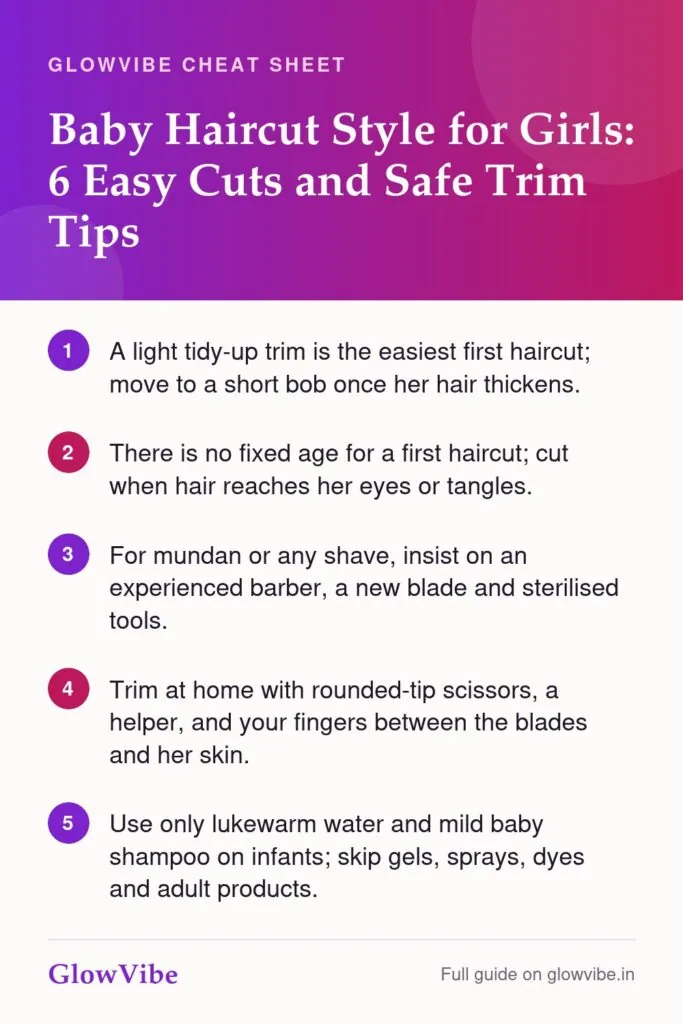
A simple tidy-up trim is the best first haircut for most baby girls. It evens out wispy or uneven hair and clears her eyes without changing her look much. Once her hair thickens, move to a short bob.
Roughly every 8–12 weeks keeps most toddler cuts neat. A fringe grows into the eyes faster and may need a quick trim every three to five weeks.
No. Shaving cuts hair at the surface and doesn’t change the follicles, so hair grows back with the same thickness it would have had anyway. Many families still do mundan for traditional reasons, which is a personal choice.
Yes, a soft fringe is practical because it keeps hair out of her eyes. Keep it wispy and just above the eyebrows, and be ready for frequent trims.
Infants only need water and a mild baby shampoo. A light massage with a small amount of mild oil is fine for many babies if you patch-test first and wash it out. Avoid gels, sprays, dyes and adult hair products, and check with your paediatrician if her scalp is dry, flaky or irritated.
Choose a time after a feed and nap, sit her on a helper’s lap or in a high chair, and give her a favourite toy, snack or song. Work in short bursts and stop if she gets upset. Always use rounded-tip scissors.
Quick poll
How much do you usually spend on one beauty product?
The bottom line
The cutest baby girl haircut is the one that keeps her comfortable: a light trim for a first cut, then a short bob, soft fringe, pixie crop or layered curly bob as her hair grows. Cut little and often, use rounded-tip scissors, keep products to a mild baby shampoo, and treat milestones like the mundan as a chance to focus on hygiene and comfort.