Summer Hair Care Tips: 10 Essentials for Indian Weather (2026)
Ten practical summer hair care tips for Indian heat and humidity: control sweat and dandruff, fight frizz, protect hair from sun and chlorine, and keep it healthy.


The best summer hair care comes down to five habits: keep your scalp clean without stripping it, condition lightly, shield your hair from sun and pool chlorine, cut back on heat styling, and wear styles that keep sweat off your lengths. In an Indian summer, where April heat, sweaty commutes and sticky monsoon humidity all hit the same head of hair, those habits matter more than any single product.
Below are ten practical summer hair care tips that work for straight, wavy and curly Indian hair, plus a quick problem-and-fix table, a simple weekly routine, the mistakes that undo your effort, and answers to the questions people ask most.
Summer hair care tips at a glance
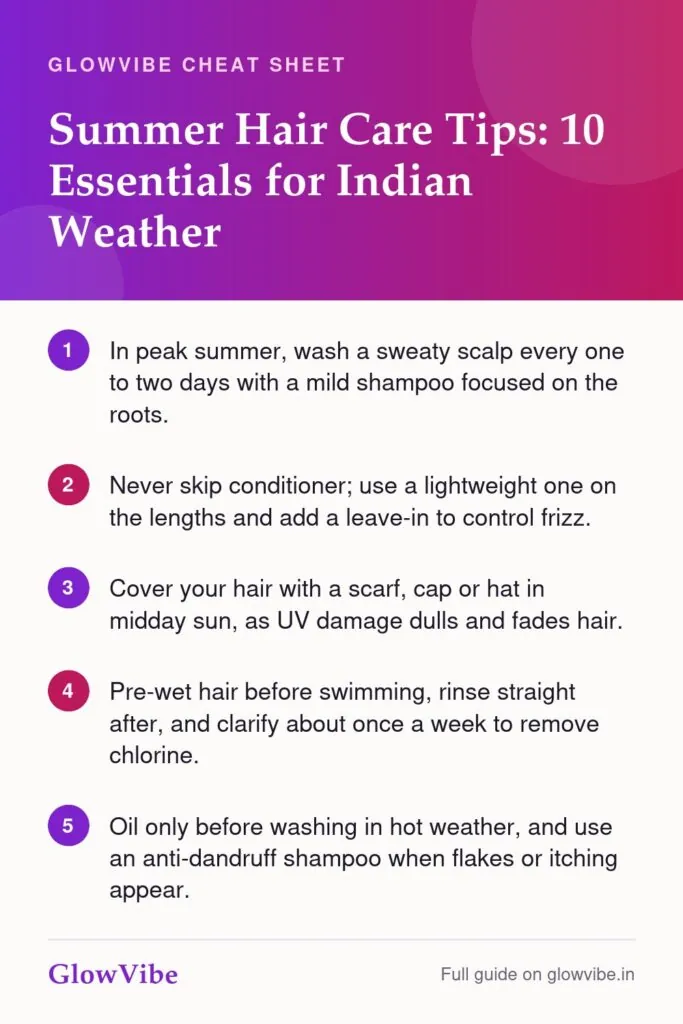
- Wash a sweaty scalp more often, using a mild shampoo on the scalp only.
- Never skip conditioner; switch to a lighter one and keep it off the roots.
- Use a lightweight Leave-in conditionerA light conditioner you do not rinse out. It helps with detangling, frizz and moisture, especially for curly or dry hair.See glossaryRead the guide on the lengths to control dryness and frizz.
- Cover up in strong sun with a scarf, cap or dupatta between 11 am and 4 pm.
- Pre-wet and protect before swimming, and rinse straight after the pool.
- Oil before a wash, not for days, so sweat and dust don’t build up.
- Keep dandruff in check with an anti-dandruff shampoo when flakes and itch appear.
- Air-dry and cut down on heat tools; use a Heat protectantA spray, cream or serum applied before blow-drying, straightening or curling to reduce heat damage to the hair.See glossary when you do style.
- Choose protective styles like loose braids and buns that keep hair off a sweaty neck.
- Trim, drink water and eat enough protein to support hair through the season.
Why summer is hard on hair in India
Summer brings several stressors at once. Strong UV light breaks down the protein and natural pigment in the hair shaft, which shows up as dullness, roughness and colour fading, especially on dyed or henna-treated hair. Heat makes you sweat, and sweat mixed with SebumThe natural oil your skin and scalp make. Some is essential for a healthy barrier; too much can feel greasy and clog pores.See glossary, dust and pollution sits on the scalp, which is why many people notice itching, odour and greasy roots by evening.
Then there is humidity. Hair absorbs moisture from damp air, the cuticle lifts, and you get frizz and puffiness, particularly with wavy and curly hair. Add hard water, pool chlorine and frequent washing, and you can end up with an oily scalp and dry ends at once.
Summer hair problems and quick fixes
| Problem | Main cause | What to do |
|---|---|---|
| Oily, itchy scalp by evening | Sweat plus sebum and dust | Wash every 1–2 days with a mild shampoo; rinse thoroughly |
| Dandruff and flakes | Yeast that thrives on oily, sweaty scalps | Anti-dandruff shampoo 2–3 times a week; leave it on 3–5 minutes |
| Frizz and puffiness | Humidity lifting the cuticle | Light conditioner, leave-in or serum on damp lengths; avoid rough towelling |
| Dry, rough ends and fading colour | UV exposure and heat | Cover up outdoors; leave-in on ends; trim split ends |
| Green tinge or straw-like texture | Pool chlorine and minerals | Pre-wet, cap, rinse immediately, clarify once a week |
| Limp, greasy roots | Heavy oils and creams left on too long | Use lighter products; keep conditioner off the scalp |
10 essential hair care tips for summer
1. Wash a sweaty scalp more often, but gently
If you sweat daily, from a commute, gym or outdoor work, washing two or three times a week may not be enough. Sweat and oil left on the scalp feed itching and flakes. It is fine to shampoo every day or every other day in peak summer, as long as the shampoo is mild and you focus it on the scalp.
Lather on the roots, let the foam run through the lengths as you rinse, and don’t scrub the ends. If your water is very hard, a final rinse with filtered or stored RO water, or a clarifying wash once a week, helps remove mineral build-up that makes hair feel coated and dull.
2. Keep conditioning, just lighter
Skipping conditioner because your scalp feels greasy is one of the most common summer mistakes. Your scalp may be oily, but your mid-lengths and ends are still dry from sun and washing. Use a lightweight conditioner from the ears down, leave it on for two to three minutes, and rinse with cool water.
If you have fine hair, look for products labelled “lightweight” or “volumising” and avoid rich butters near the roots. Our guide to hair care products for fine hair lists gentle options that won’t weigh it down.
3. Add a lightweight leave-in conditioner
A leave-in is the easiest way to keep summer frizz and dryness under control between washes. Spray or smooth a small amount into damp hair after you wash, concentrating on the ends, then comb through with a wide-tooth comb.
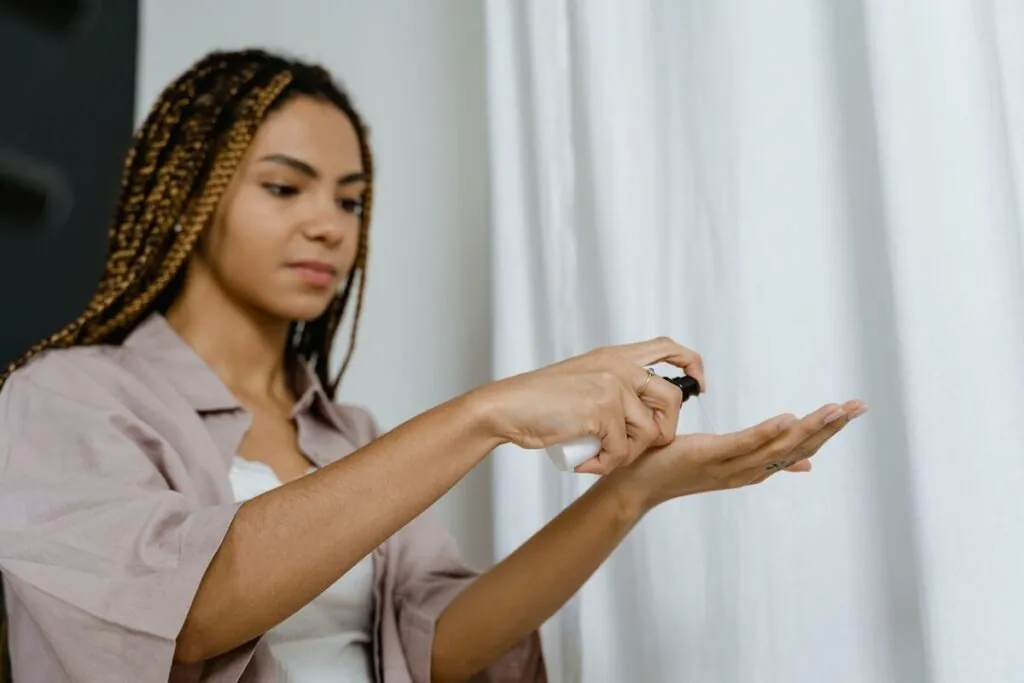
Wavy and curly hair usually needs a little more: a leave-in followed by a curl cream or gel helps hold curls together in humid weather. See our roundup of curly hair products in India if frizz is your main summer battle.
4. Protect your hair from the sun
UV damage is cumulative. It roughens the cuticle, makes hair feel straw-like and fades both natural and dyed colour. The most reliable protection is physical: a cotton scarf, cap, wide-brimmed hat, umbrella or dupatta when you are out in the midday sun.
Sprays and leave-ins with UV filters can help a little on the lengths, but treat them as a bonus, not a replacement for covering up. Your parting can sunburn too.
5. Rinse with cool water
Very hot water dries the hair and irritates an already oily, itchy scalp. Wash with lukewarm water and finish with a cool rinse, which is gentler on the cuticle and leaves hair feeling smoother.
6. Guard against chlorine and salt water
Pool chlorine and minerals dry out hair and can leave light or bleached hair with a greenish tinge. Hair works like a sponge: if it is already soaked with clean water, it absorbs less pool water. So shower and wet your hair thoroughly before you get in, and smooth a little conditioner or a few drops of Coconut oilA common Indian hair oil that can soak into the hair shaft, which may reduce protein loss during washing. It can feel heavy on fine hair.See glossary on the lengths.
- Wear a SiliconesIngredients like dimethicone that coat hair (and skin) for slip, shine and frizz control. Heavier ones can build up and need a clarifying wash.See glossaryRead the guide swim cap if you swim regularly; it is the single most effective step.
- Rinse with plain water as soon as you get out, then shampoo and condition the same day.
- Use a clarifying or swimmer’s shampoo about once a week, not daily, as it can be drying.
- Follow with a deep-conditioning mask once a week during swimming season.
7. Use oil smartly in the heat
Oiling is a much-loved Indian ritual, and it can keep lengths soft. In summer, though, leaving heavy oil on the scalp for a day or two traps sweat and dust and may worsen flakes and itching. Apply a light oil like coconut oil, mostly to the lengths, 30 minutes to an hour before you wash, then shampoo it out.
If you oil the scalp, keep it to the pre-wash window and skip it altogether if you are fighting dandruff. For help choosing an oil, read our honest guide to hair oils in India.
8. Keep dandruff and an oily scalp under control
Sweat and humidity create the warm, oily conditions in which the yeast linked to dandruff thrives. If you notice flakes, itching or redness, use an anti-dandruff shampoo with ingredients such as zinc pyrithione, ketoconazole, selenium sulfide or Salicylic acidThe most common BHA. It dissolves oil inside pores, which helps with blackheads, whiteheads and oily skin. Usually used at 0.5 to 2%.See glossaryRead the guide. Massage it into the scalp, leave it on for three to five minutes, then rinse well. Two to three times a week is usually enough, with your regular mild shampoo in between.
Always rinse sweat off after workouts rather than letting it dry on the scalp, and wash caps, helmet liners and pillow covers often. Our dandruff care guide goes deeper. If flakes are thick, the scalp is very red or sore, or nothing improves after four weeks, see a dermatologist, as conditions like seborrhoeic dermatitis, psoriasis or a fungal infection need proper diagnosis.
9. Cut down on heat styling and choose protective styles
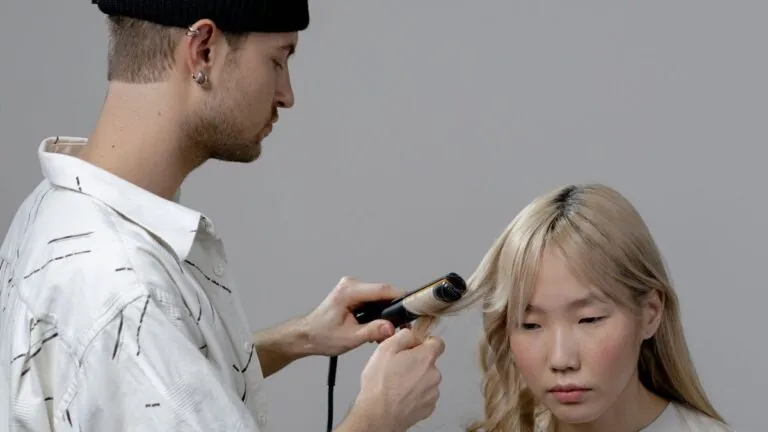
Blow-dryers, straighteners and curling tongs on top of summer sun is a lot of heat for one season. Let hair air-dry where you can, gently squeezing water out with a soft cotton T-shirt or microfibre towel instead of rubbing. If you do style, always use a heat protectant and the lowest temperature that works for your hair; our guide to styling tools for your hair type explains which settings suit you.
Protective styles are your summer friend. Loose braids, low buns and soft plaits keep hair off a sweaty neck, reduce wind tangles and limit sun exposure on the lengths.

Avoid scraping hair into very tight ponytails day after day, though. Constant tension on the hairline can cause breakage and, over time, traction hair loss. Use soft scrunchies or spiral ties rather than thin elastic bands, and switch the position of your bun or braid.
10. Trim, sleep smart and nourish from within
Sun and salt water roughen the ends first, so a trim every eight to twelve weeks keeps split ends from travelling upward. At night, a satin or silk pillowcase creates less friction than rough cotton, which means fewer tangles and less breakage, particularly for curly hair.
Include protein at each meal (dal, paneer, curd, eggs, fish, chicken or soya), drink enough water for the heat, and eat iron- and zinc-rich foods like leafy greens and seeds. If you notice sudden or heavy hair shedding, speak to a doctor, as low iron, thyroid problems and stress can all play a part.
A simple summer hair care routine
- Before washing (optional, 1–2 times a week): light oil on the lengths for 30–60 minutes.
- Wash (every 1–2 days in peak heat): mild shampoo on the scalp; anti-dandruff shampoo 2–3 times a week if needed.
- Condition: lightweight conditioner from mid-lengths to ends, 2–3 minutes, cool rinse.
- Dry: blot with a cotton T-shirt or microfibre towel; air-dry where possible.
- Leave-in: a small amount of leave-in or serum on damp ends; curl cream or gel for curly hair.
- Outdoors: cover up in midday sun; tie hair in a loose braid or bun.
- Weekly: a deep-conditioning mask, plus a clarifying wash if you swim or use hard water.
Patch-test any new product or home remedy, such as a curd or aloe vera mask, on your inner arm for 24–48 hours first.
Common summer hair care mistakes
- Leaving oil on a sweaty scalp for days.
- Skipping conditioner because the roots feel greasy.
- Letting gym or commute sweat dry on the scalp instead of rinsing.
- Swimming without pre-wetting your hair or rinsing afterwards.
- Using a clarifying shampoo every day, which leaves hair dry and rough.
- Tying wet hair in a tight bun, which causes breakage and a damp, itchy scalp.
- Relying on a UV spray alone and skipping a hat or scarf in strong sun.
Frequently Asked Questions
Most people do well washing every one to two days in peak Indian summer, especially if they sweat a lot. Use a mild shampoo on the scalp and always follow with conditioner on the lengths. If your scalp is dry rather than oily, two to three washes a week may still be enough.
Yes, but timing matters. Apply a light oil to the lengths 30 minutes to an hour before washing, then shampoo it out. Leaving oil on a sweaty scalp for a day or more can trap dirt and make dandruff and itching worse.
Use a conditioner every wash, then apply a lightweight leave-in or a little serum to damp hair and let it dry without rubbing. Curly and wavy hair benefits from a curl cream or gel to hold the pattern. Avoid brushing dry hair, which breaks up the strands and adds frizz.
Wet your hair with clean water before swimming and wear a silicone cap if you can. Rinse as soon as you get out, then shampoo and condition the same day. Use a clarifying shampoo about once a week and a deep-conditioning mask to restore softness.
Heat and humidity make you sweat, and sweat combined with scalp oil creates conditions where the yeast linked to dandruff grows easily. Wash more often and use an anti-dandruff shampoo two to three times a week. See a dermatologist if flakes are thick, the scalp is inflamed, or there is no improvement after a month.
Hair doesn’t take regular sunscreen, but sprays and leave-ins with UV filters can add some protection to the lengths. A scarf, cap or hat is far more effective, and it also protects your scalp and parting, which can burn. Apply regular sunscreen to any exposed scalp along a wide parting if you won’t be covered.
Many people notice a little more shedding in summer and monsoon, often from breakage, a sweaty or inflamed scalp, or tight hairstyles. Keeping the scalp clean and handling hair gently usually helps. If shedding is sudden, heavy or patchy, consult a dermatologist or trichologist; our overview of hair loss treatments in India explains the options.
Quick poll
How much do you usually spend on one beauty product?
The bottom line
Summer hair care in India is about balance: keep a sweaty scalp clean, keep dry lengths conditioned, and protect your hair from sun, chlorine and excess heat. Start with a mild shampoo, a light conditioner, a leave-in and a scarf or cap, then add anti-dandruff care, swim protection or curl products only if you need them. Done consistently, these habits keep hair soft and manageable right through the monsoon.