Hair Care Routine for Men: A Simple Daily and Weekly Guide (2026)
A simple, practical hair care routine for men in India: wash schedules by hair type, shampoo and conditioner tips, gentle drying, styling and weather fixes.


A good hair care routine for men needs just four habits: wash with a shampoo that suits your scalp, condition the lengths, dry gently, and style with a small amount of the right product. Get those right, add a weekly oil or scalp check, and most hair problems (greasy roots, dandruff, frizz, a dull look) get easier to manage within a few weeks.
This guide gives you a simple daily and weekly men’s hair care routine built for Indian conditions: humid summers, sweaty commutes, helmets, hard water and dry winters. No ten-step regimen, no expensive gadgets, just steps that fit into a normal morning.
The simple hair care routine for men at a glance
- Every day: rinse or refresh if you sweat, comb gently, use a pea-sized amount of styling product.
- 2–4 times a week: shampoo the scalp, condition the lengths, rinse with lukewarm water, pat dry.
- Once a week: pre-wash oil massage (optional), check your scalp for flakes or itching, wash combs and caps.
- Every 4–8 weeks: a trim to keep the shape clean and remove rough ends.
Men’s hair care routine by hair type
Your scalp type decides how often you wash; your hair texture decides what you put on afterwards. Use this table as a starting point and adjust after two or three weeks.
| Hair / scalp type | How often to shampoo | Conditioner | Styling product |
|---|---|---|---|
| Oily scalp, straight hair | Every day or alternate days | Light, on ends only | Clay or matte paste |
| Normal scalp, wavy hair | 3 times a week | Every wash, mid-lengths to ends | Light cream or paste |
| Dry scalp, thick or coarse hair | 2 times a week | Every wash, leave for 2 minutes | Hair cream or serum |
| Curly or coily hair | 1–2 times a week | Generous, plus Leave-in conditionerA light conditioner you do not rinse out. It helps with detangling, frizz and moisture, especially for curly or dry hair.See glossaryRead the guide | Curl cream or light gel |
| Dandruff-prone scalp | Anti-dandruff shampoo 2–3 times a week | On lengths, not scalp | Water-based, easy to wash out |
| Short crop or buzz cut | 3–4 times a week | Optional | Usually none, or a little matte paste |
Step 1: Pick the right shampoo and conditioner
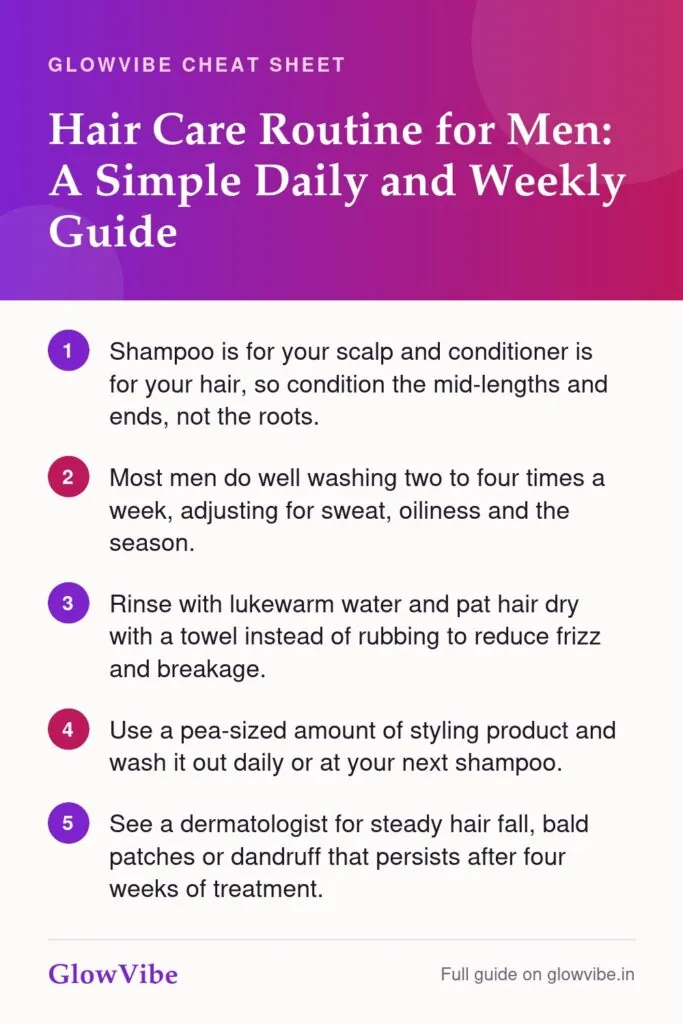
Shampoo is for your scalp, conditioner is for your hair. Many men use one strong shampoo for everything and skip conditioner, which is why hair ends up dry at the ends and greasy at the roots at the same time.
Choosing a shampoo
- Oily scalp: a clarifying or “daily clean” shampoo that lathers well and rinses clean.
- Dry scalp or frequent washing: a mild, Sulfate-freeShampoo made without strong sulfate cleansers like SLS. Gentler on dry, curly or colour-treated hair, though it may lather less.See glossaryRead the guide or “gentle” formula that won’t leave the scalp tight.
- Flakes and itching: an anti-dandruff shampoo with zinc pyrithione (for example Head & Shoulders) or ketoconazole (for example Nizoral). Leave it on the scalp for 3–5 minutes before rinsing so it can actually work.
Do men really need conditioner?
If your hair is longer than a couple of centimetres, yes. Conditioner smooths the outer layer of each strand, cuts down tangles and makes hair easier to style. Apply it from the middle of your hair to the ends, leave it for one to two minutes, then rinse. If you have an oily scalp, keep it off the roots or choose a lightweight formula.
Step 2: Wash on the right schedule
There is no single “correct” number of washes. A man who rides a bike to work in Chennai heat with a helmet on needs a different schedule from someone who works in an air-conditioned office in Bengaluru. The goal is a scalp that feels clean, not squeaky and not itchy.
- If your hair looks flat and greasy by evening, wash more often, even daily, with a mild shampoo.
- If your scalp feels tight or flaky after washing, cut back to two or three washes a week and use a gentler shampoo.
- After the gym or a sweaty day, a plain water rinse plus conditioner on the lengths is often enough between shampoo days.
Use about a coin-sized amount of shampoo for short hair. Lather it twice if you use a lot of styling product or oil: the first wash lifts the build-up, the second actually cleans the scalp.
Step 3: Massage your scalp while you wash
Work the shampoo in with your fingertips, not your nails, using small circular movements across the whole scalp for about a minute. This loosens sweat, oil and flakes far better than just rubbing the top of your head.
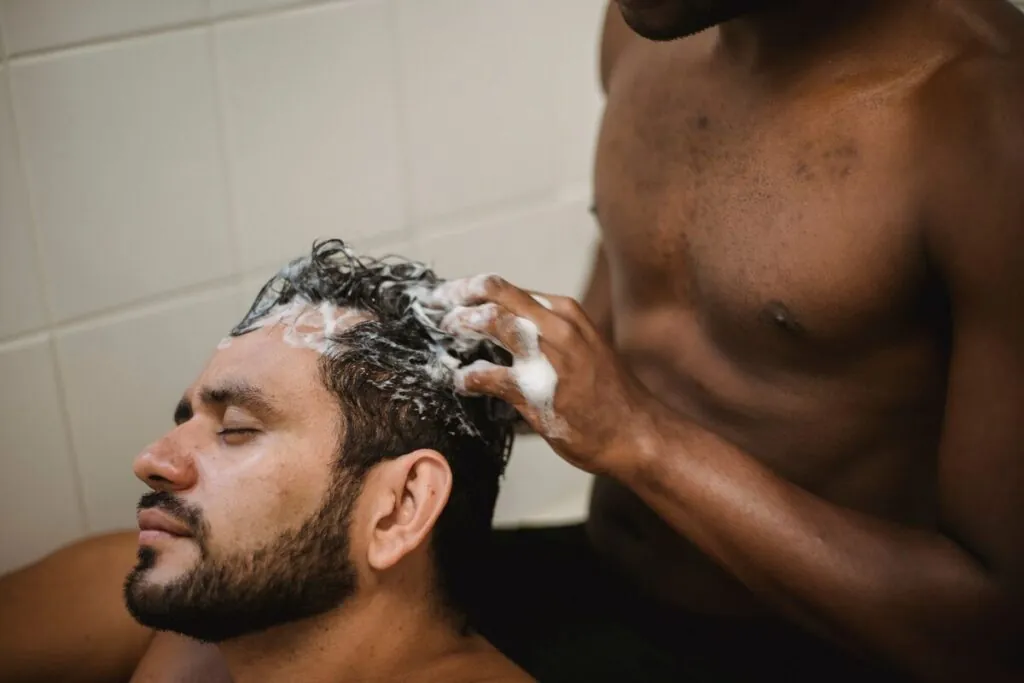
A scalp massage also feels relaxing, which makes the routine easier to stick to. Scratching with nails, on the other hand, can irritate the skin and make itching worse.
Step 4: Rinse with lukewarm water
Very hot water feels great in a Delhi winter but strips the scalp and leaves hair rough and dry. Lukewarm water cleans just as well and is kinder to both scalp and strands. A cooler final rinse is fine if you like it, but it is a comfort choice, not a must.
If you live in an area with hard water, you may notice dull, stiff hair and a filmy feel even after washing. Rinsing thoroughly, using conditioner every time and an occasional clarifying wash help. A shower filter is an option if the problem is severe.
Step 5: Pat dry, don’t rub
Wet hair is weaker and stretches easily, so rough towel-drying causes frizz and breakage. Press and squeeze the water out with a soft towel instead, then let hair air-dry for a few minutes before styling.

If you use a hair dryer, keep it on a medium setting, hold it a hand’s length away and keep it moving. Stop when your hair is about 80% dry; finishing the last bit in the air prevents over-drying.
Step 6: Style with the right product, and less of it
Most men use too much product. Start with a pea-sized amount, warm it between your palms and work it through from the back to the front so the front doesn’t get a heavy clump.
- Clay or matte paste: natural, textured look with hold; best for oily scalps and humid weather.
- Hair cream: soft hold and frizz control for thick, wavy or dry hair. See our guide to the best hair styling cream for men in India.
- Serum: a few drops on the lengths for shine and smoothness; keep it away from the roots so hair doesn’t look greasy.
- Gel: strong, wet-look hold; choose water-based gels that wash out easily.
Always wash styling product out at the end of the day or at your next shampoo. Product left on the scalp for days, mixed with sweat and pollution, is a common trigger for itching and flakes.
Step 7: Add weekly extras (optional)
These aren’t essential, but they help if your hair is dry, thick or curly.
- Pre-wash oiling: massage a little coconut or other light oil into the lengths (and scalp, if it isn’t dandruff-prone) 30–60 minutes before shampooing. Overnight oiling is not necessary. Our hair oil guide covers which oils suit which hair.
- Clean your tools: wash combs, brushes, caps and helmet liners weekly; they collect oil and dead skin.
- Regular trims: every 4–6 weeks for short styles, 6–8 weeks for longer hair. Need a new look? Browse our men’s haircut style guide.
Adjusting your routine for Indian weather
Humid summers and monsoon
Sweat and humidity make the scalp oilier and hair frizzier. Wash more often, switch to lighter, matte products and avoid heavy creams on the roots. During the monsoon, rinse and dry your hair properly if you get caught in the rain, as a damp scalp under a helmet or cap can get itchy.
Dry winters
Cold air and hot showers dry out the scalp, and many people notice more flakes in winter. Wash a little less often, keep the water lukewarm and use conditioner every time. Our guide to winter hair fall and dandruff has a full seasonal routine.
Common hair care mistakes men make
- Using body soap or 2-in-1 body wash on hair: it is often harsher than shampoo and leaves hair rough.
- Skipping conditioner entirely, then fighting frizz with more and more product.
- Rinsing anti-dandruff shampoo off immediately, before the active ingredient has had time to work.
- Sleeping with gel or wax in your hair night after night.
- Very hot showers and high-heat blow-drying every day.
- Ignoring steady hair fall or a receding hairline and hoping a new oil or shampoo will fix it.
When to see a dermatologist
A good routine keeps hair and scalp in better shape, but it cannot treat medical hair loss. Male pattern hair loss, patchy bald spots, sudden heavy shedding, or a scalp that stays red, painful or scaly despite anti-dandruff shampoo all need a dermatologist or trichologist. Early advice gives you more options; our overview of hair loss treatments in India explains what is available.
Whenever you try a new shampoo, oil or hair colour, do a Patch testTrying a small amount of a new product behind the ear or on the inner arm for a few days to check for a reaction before using it widely.See glossary on a small area of skin first, and stop using anything that causes burning, rashes or swelling.
Frequently Asked Questions
Most men do well with shampoo two to four times a week. If your scalp gets oily quickly or you sweat a lot, washing daily with a mild shampoo is fine. If your scalp feels dry or tight, wash less often and use conditioner every time.
Shampoo the scalp, condition the lengths, rinse with lukewarm water, pat dry and use a small amount of styling product. Add a weekly scalp check and a trim every month or two. That covers what most men need.
Yes, especially if your hair is medium length, thick, curly or dry. Keep it on the mid-lengths and ends rather than the scalp, and pick a lightweight formula if your hair goes flat easily.
Oiling is optional. A light pre-wash oil massage can soften dry or coarse hair, but it is not a treatment for hair loss. If you have dandruff, avoid leaving oil on the scalp for long periods, as it can make flaking worse for some people.
Use an anti-dandruff shampoo with zinc pyrithione or ketoconazole two to three times a week, leaving it on the scalp for a few minutes before rinsing. Wash out styling products regularly and keep caps and combs clean. If flakes, redness or itching continue after four weeks, see a dermatologist.
Wearing a helmet does not cause pattern baldness. A very tight helmet worn daily may cause some friction, and a sweaty scalp under it can get itchy. Wear a clean cotton liner or scarf underneath, keep the helmet clean and let your scalp breathe when you can.
Lukewarm water is the best choice. Hot water strips natural oils and can leave both scalp and hair dry, while cold water alone may not rinse out oil and product properly. A cool final rinse is fine if you enjoy it.
Quick poll
How much do you usually spend on one beauty product?
Keep it simple and stay consistent
The best men’s hair care routine is one you will actually follow. Match your shampoo to your scalp, condition the lengths, dry gently and go easy on styling product. Tweak the schedule with the seasons, and if hair fall or scalp problems don’t settle, get a dermatologist’s opinion early. For the rest of your grooming, our face skincare routine for men follows the same simple approach.