Hair Loss Treatment in India: 6 Options Ranked by Evidence (2026)
Minoxidil, finasteride, PRP, GFC, laser and hair transplant compared by evidence, with the causes, blood tests and warning signs to check before you choose.

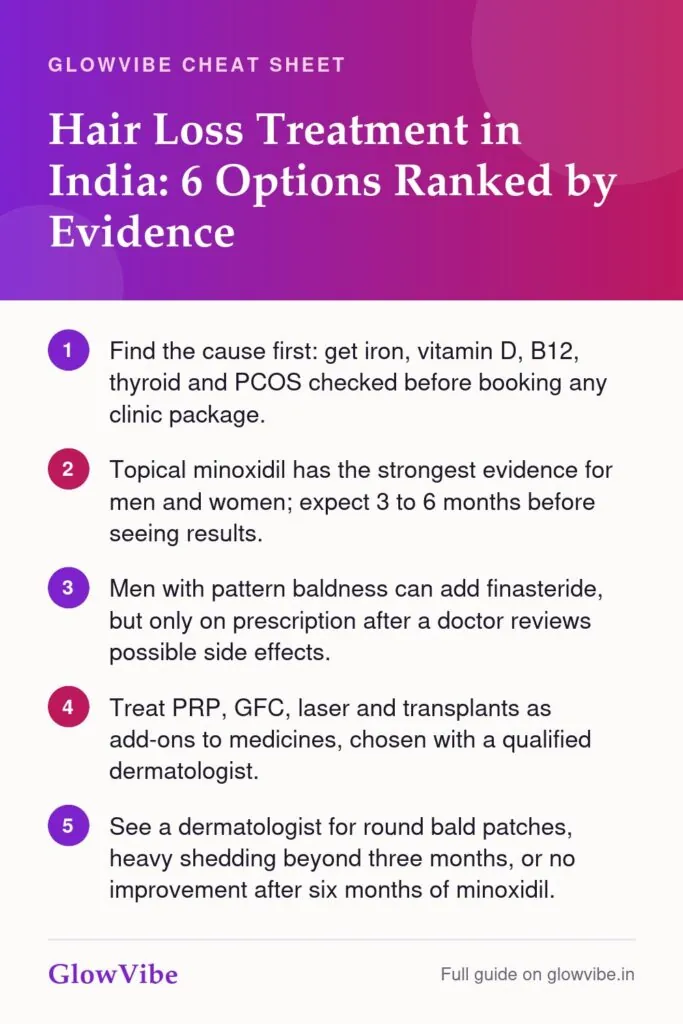
The hair loss treatments in India with the strongest evidence are topical MinoxidilA topical drug used for pattern hair loss. It needs ongoing use to keep results, so check with a dermatologist before starting.See glossary and, for men, prescription finasteride, while PRP, GFC, low-level laser and hair transplant are useful add-ons for the right person. The best hair fall treatment for you, though, depends on the cause, so the first step is finding out why your hair is falling, not picking a clinic package.
This guide explains the common causes first, then walks through each treatment in order of how well it is supported by research. It is general information, not medical advice.
Quick answer: hair loss treatments ranked by evidence
- Topical minoxidil: sold widely at chemists, but some Indian labels say prescription only, so ask a dermatologist first. The most studied option for men and women.
- Finasteride: prescription only, for men with male pattern baldness, after a doctor reviews side effects.
- PRP and GFC: clinic procedures with repeat sessions. PRP has moderate, mixed evidence; GFC has much less.
- Low-level laser therapy: modest supporting evidence.
- Hair transplant: a surgical option for stable, advanced pattern baldness with a healthy donor area.
- Supportive care: fixing deficiencies, thyroid or PCOS, and gentle hair care.
What causes hair loss? Know this before choosing a treatment
Losing around 50 to 100 strands a day is normal. Treatment only makes sense when shedding is clearly more than usual, your parting is widening, or you can see patches. These are some of the common causes.
Androgenetic alopecia (pattern hair loss)
This is the most common type in both men and women. It runs in families. In men it is driven by the effect of the hormone DHT on genetically sensitive follicles, which slowly shrink and produce thinner hair; in women the role of hormones is less clear. Men see a receding hairline or thin crown; women, a wider centre parting.
Telogen effluvium (sudden shedding)
Heavy, diffuse shedding that starts about two to three months after a trigger: high fever such as dengue or typhoid, surgery, childbirth, a crash diet, or major stress. It often settles within six to nine months once the trigger is gone. Seasonal shedding, covered in our guide to hair fall in winter and dandruff, is a milder version of the same process.
Iron, vitamin D, B12 and thyroid problems
Low iron stores, very low vitamin D and B12 deficiency are common in India, especially among women and vegetarians. An underactive or overactive thyroid can also cause diffuse thinning. Correcting them is part of treatment, though research on how much iron or vitamin correction helps regrowth is limited.
PCOS and hormonal changes
Polycystic ovary syndrome can raise androgen levels, leading to thinning on the top of the scalp along with irregular periods, acne or facial hair. Treating the hormonal side with your gynaecologist is part of the hair plan.
Alopecia areata (patchy hair loss)
Round, smooth bald patches on the scalp, beard or eyebrows usually point to alopecia areata, an autoimmune condition. It needs a dermatologist, who may use steroid injections, topical treatments or newer prescription medicines.
Hair loss treatments compared
| Treatment | How it works | Who it suits | Typical time to see results |
|---|---|---|---|
| Topical minoxidil (ask a dermatologist first) | Prolongs the growth phase and enlarges shrinking follicles | Men and women with early to moderate pattern hair loss | 3–6 months; full effect around 12 months |
| Finasteride (prescription) | Lowers DHT, slowing follicle shrinkage | Men with male pattern baldness, after doctor assessment | 3–6 months to slow loss; 6–12 months for regrowth |
| PRP | Concentrated platelets from your blood release growth factors in the scalp | Early thinning, usually as an add-on to medicines | Around 3–6 months, after several sessions |
| GFC | A processed growth-factor preparation from your blood, injected into the scalp | Similar to PRP; early to moderate thinning | Around 3–6 months, after several sessions |
| Low-level laser therapy | Red light may stimulate follicle activity | Mild thinning; people who want a non-drug add-on | 4–6 months of regular use |
| Hair transplant | Moves DHT-resistant follicles from the back to thin areas | Stable, advanced pattern baldness with a good donor area | Early growth at 3–4 months; final look at 9–12 months or more |
| Supportive care | Corrects deficiencies, thyroid or hormonal issues | Everyone, especially telogen effluvium and deficiency-related loss | Often 6–9 months after the cause is corrected |
1. Minoxidil for hair loss
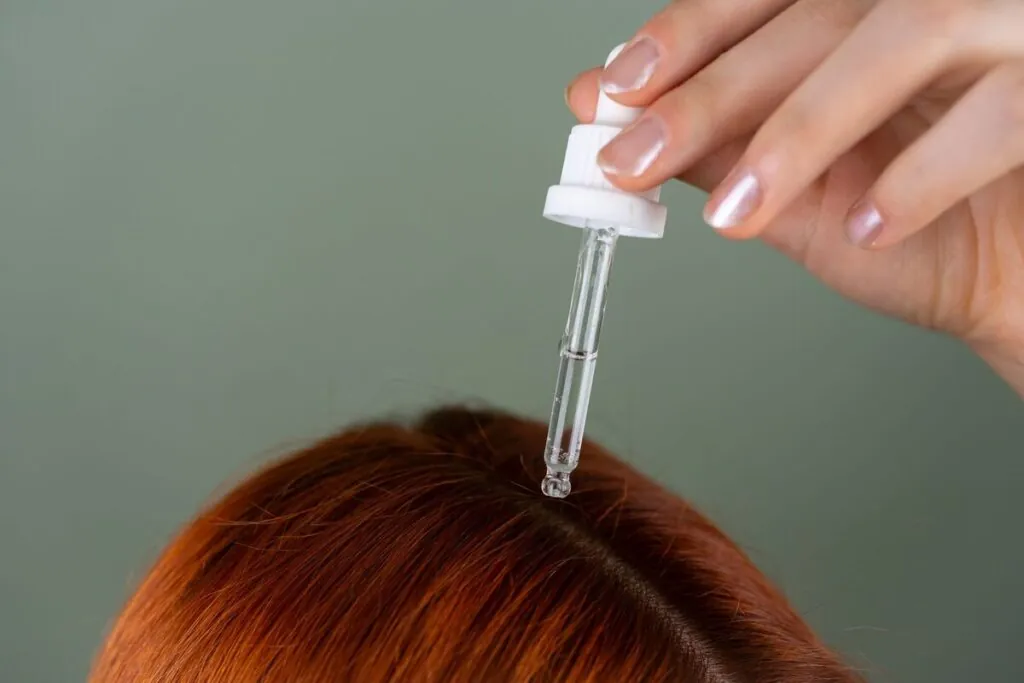
Topical minoxidil is the most widely used and best-studied treatment for pattern hair loss, and it is approved for both men and women, though not every brand or strength is labelled for women. It comes as a solution or foam that you apply to a dry scalp, and it is easy to find at chemists across India. Even so, some brand labels here say it should be sold only on a dermatologist’s prescription, and pharmacy websites list it inconsistently, so ask a dermatologist first. Use the strength and amount your dermatologist or the pack directs, every day.
Some dermatologists also prescribe low-dose oral minoxidil for selected patients. That is strictly a prescription medicine, taken as prescribed, never self-started.
Who it suits: men with a thinning crown, and women with a widening parting. It may also help a receding hairline, but the evidence is thinner, and the US label says it is not meant for that area.
- Pros: strong evidence, no clinic procedures, works for both sexes, combines well with other treatments.
- Cons: must be used daily for as long as you want the benefit; can cause scalp itching or dryness; extra shedding in the first weeks is common; unwanted facial hair can occur, especially in women.
Patch testTrying a small amount of a new product behind the ear or on the inner arm for a few days to check for a reaction before using it widely.See glossary on a small area first, keep it off your face, and avoid it in pregnancy or breastfeeding unless a doctor advises otherwise. Labels also say not to use it under 18, and some say not to use it with high blood pressure or heart disease, so check with a doctor first. Stop and see a doctor if you get chest pain, a fast heartbeat, dizziness or swollen hands or feet.
2. Finasteride (prescription only, for men)
Finasteride is a tablet that reduces the conversion of testosterone to DHT, the hormone behind male pattern baldness. In studies it slows further loss in most men. It is a prescription medicine and should only be taken as prescribed.
A doctor must assess you before you start, because a small number of men report side effects such as reduced libido, erectile problems or mood changes, including depression. Regulators in the US, EU and UK also list suicidal thoughts as a possible side effect, and in some men sexual problems have continued after stopping. Discuss your medical history and any history of low mood openly. If you develop low mood or suicidal thoughts, stop the tablets and contact your doctor straight away. Women who are or could become pregnant must not take or even handle broken tablets, as it can affect a male foetus.
- Pros: targets the root cause of male pattern hair loss; strong evidence; pairs well with minoxidil.
- Cons: prescription and follow-up needed; possible side effects; benefit fades if stopped.
For women with pattern hair loss or PCOS, dermatologists may consider other hormonal medicines. These too are prescription-only decisions.
3. PRP hair treatment and GFC hair treatment
PRP (platelet-rich plasma) is one of the most advertised treatments in Indian clinics. A small amount of your blood is drawn and spun to concentrate the platelets, which are then injected into thinning areas of the scalp.
GFC (growth factor concentrate) is a variation where the blood is processed to extract growth factors rather than platelets themselves. Clinics often call it more advanced, but GFC has far less published research than PRP.
The evidence for PRP is moderate and mixed. Several studies show improved density, but methods vary between clinics. Both procedures need a course of repeat sessions followed by maintenance, and they usually work best as an add-on to minoxidil or finasteride rather than a replacement.
- Who it suits: early to moderate pattern thinning in people who still have active follicles.
- Pros: uses your own blood, low allergy risk, no daily routine.
- Cons: mixed evidence, multiple sessions, temporary pain, swelling or headache, and protocols are not standardised.
Choose a clinic where a qualified dermatologist examines you and performs or supervises the procedure in sterile conditions. Avoid anyone promising guaranteed regrowth. You may also see QR678 offered; it is an Indian-developed peptide-based scalp therapy, but published independent evidence is still limited, so ask your doctor what data supports it before committing to a course. Mesotherapy (nutrient injections into the scalp) has similarly thin evidence.
4. Low-level laser therapy
Low-level laser or LED devices shine red light on the scalp, which may stimulate follicles. Some home-use caps and combs are cleared as medical devices in the US, and small studies show modest improvements in density for pattern hair loss.
- Pros: drug-free, painless, few side effects.
- Cons: modest results, needs regular use for months, quality of devices varies a lot.
5. Hair transplant in India
A hair transplant moves follicles from the back of the scalp, which is naturally resistant to DHT, to thin or bald areas. The two main methods are FUE (individual follicles extracted) and FUT (a strip of skin removed and divided). Surgeon quality in India varies widely, so research carefully.
It suits people whose hair loss has stabilised and who have a healthy donor area. It does not stop future loss of your native hair, so most surgeons advise continuing minoxidil or finasteride after the procedure. Make sure a qualified dermatologist or plastic surgeon does the surgery, not a technician working alone.
- Pros: transplanted hair is usually long-lasting; natural results in skilled hands.
- Cons: surgical risks, recovery time, limited donor hair, and not suitable for alopecia areata or active shedding.
6. Supportive care that helps every treatment
- Eat enough protein and iron: dal, eggs, paneer, curd, soy, green leafy vegetables and millets like ragi.
- Supplement only what tests show you lack: BiotinA B vitamin (B7) common in hair supplements. It tends to help mainly when someone is actually low in it; it can also affect some blood test results.See glossary helps only in true deficiency, which is rare, and high doses can distort thyroid and other blood test results.
- Treat dandruff: an inflamed, flaky scalp may add to shedding.
- Be gentle: avoid tight buns and ponytails, frequent heat styling and harsh chemical treatments.
- Manage stress and sleep: stress can trigger shedding, and poor sleep may play a part.
Oils and home masks can improve shine and reduce breakage, as explained in our honest guide to the best hair oil for hair growth in India, but they are not a substitute for medical treatment of pattern baldness.
Blood tests a doctor may order
Your dermatologist will decide which tests you need. Common ones include:
- Complete blood count (CBC) and serum ferritin, to check for anaemia and low iron stores
- Vitamin D (25-hydroxy) and vitamin B12
- Thyroid tests such as TSH, sometimes with T3 and T4
- Blood sugar or HbA1c
- For women with irregular periods, acne or facial hair: hormone tests such as testosterone, DHEAS and prolactin, and sometimes a pelvic ultrasound for PCOS
See a dermatologist when
- You notice round bald patches, or hair loss in the beard or eyebrows
- Shedding is heavy and lasts more than about three months
- Your scalp is red, scaly, painful, itchy or has pus bumps
- Hair loss comes with tiredness, weight change, irregular periods, acne or facial hair
- You are a woman with noticeable thinning, or a young man losing hair quickly
- You are considering minoxidil, finasteride, oral medicines, PRP, GFC or a transplant
- You have used minoxidil for six months or more without improvement
How to choose the right hair fall treatment
- Sudden shedding after illness, delivery or dieting: get blood tests, fix the trigger, eat well and wait a few months before considering procedures.
- Men with a receding hairline or crown thinning: minoxidil, plus finasteride if your doctor agrees, though results on a receding hairline are less certain; PRP or a transplant later if needed.
- Women with a widening parting: minoxidil and a check for iron, thyroid and PCOS; hormonal treatment only under a doctor.
- Patches: straight to a dermatologist.
Indian conditions matter too. In humid cities, sweat and oil can make a scalp itchy under daily minoxidil, so a foam or keeping the scalp clean may help. Hard water can leave hair rough and prone to breakage, which people often mistake for hair fall. After festival-season smog, a gentle cleansing routine like the one in our post-Diwali skin and hair care guide keeps the scalp calm.

A simple daily routine while on treatment
- Wash with a mild shampoo as often as your scalp needs; oily scalps in Indian summers may need it daily.
- Dry your scalp fully, then apply minoxidil or any prescribed topical exactly as directed.
- Take prescribed tablets or supplements at the same time each day.
- Take monthly photos in the same light to track progress honestly.
Men who want a no-fuss base routine can follow our simple hair care routine for men, and our natural hair care tips at home cover gentle everyday habits.
Common mistakes to avoid
- Booking a costly PRP or GFC package before anyone has checked the cause.
- Stopping minoxidil in the first month because of early shedding.
- Buying finasteride or oral minoxidil without a prescription.
- Judging results in weeks; most treatments need three to six months.
Wondering about hair oils? Our breakdowns of Indulekha Bringha Oil and Mamaearth Onion Hair Oil explain what they can and can’t do for hair fall.
Frequently Asked Questions
There is no single best treatment for everyone. For pattern hair loss, topical minoxidil and, for men, prescription finasteride have the strongest evidence. PRP, GFC, laser and transplants are add-ons that a dermatologist can recommend once the cause is confirmed.
PRP has moderate but mixed evidence. Some people see better density after a course of sessions, while others notice little change. It tends to work best for early thinning and alongside medicines, and it needs repeat maintenance sessions.
Clinics often market GFC as an upgrade, but there is less published research on it than on PRP. Good-quality trials comparing the two directly are limited. Ask your dermatologist what evidence supports the option they suggest for your type of hair loss.
Most people need about 3–6 months of daily use to see a difference, and the full effect can take around a year. Extra shedding in the first few weeks is common and usually settles. Benefits fade if you stop using it.
Transplanted follicles usually keep growing long term because they come from a DHT-resistant area. However, your existing hair can keep thinning, so many people continue medical treatment afterwards. Results depend heavily on the surgeon’s skill and your donor area.
Quick poll
What is your biggest hair concern?
The bottom line
Effective hair loss treatment in India starts with a diagnosis, not a package. Rule out deficiencies, thyroid and hormonal causes, start with the options that have the best evidence, and add clinic procedures only if a dermatologist thinks they will help. Then give any treatment three to six months before judging it.