Skin Polishing Treatment: What It Does, Risks and Aftercare
What skin polishing really means in Indian salons and clinics, what results to expect, who should skip it, and how to avoid dark patches on brown skin.

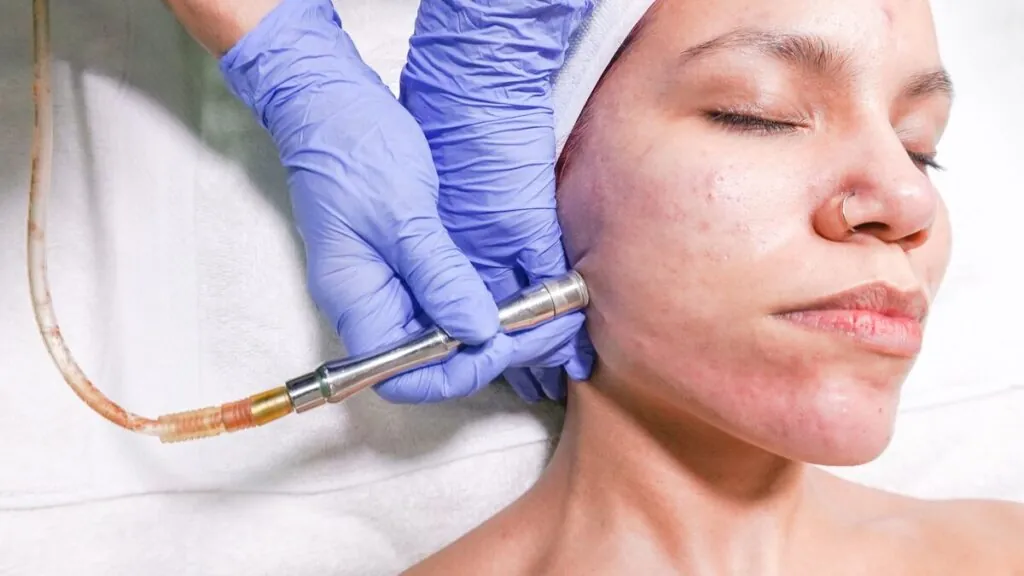
A skin polishing treatment is a professional ExfoliationRemoving dead skin cells from the surface, either with acids and enzymes (chemical) or scrubs and tools (physical). Two to three times a week is plenty for most people.See glossary that removes the top layer of dead skin cells, usually with microdermabrasion in a clinic or a scrub-and-mask facial in a salon. Done well, it leaves skin smoother and gives it a fresh, even-looking glow for a week or two, but it will not permanently change your skin tone or erase deep scars.
Because “polishing” is used loosely in India, two places can sell very different treatments under the same name. This guide covers what each involves, who should skip it, how to protect brown skin from dark marks, pre-wedding timing and a gentler home option.
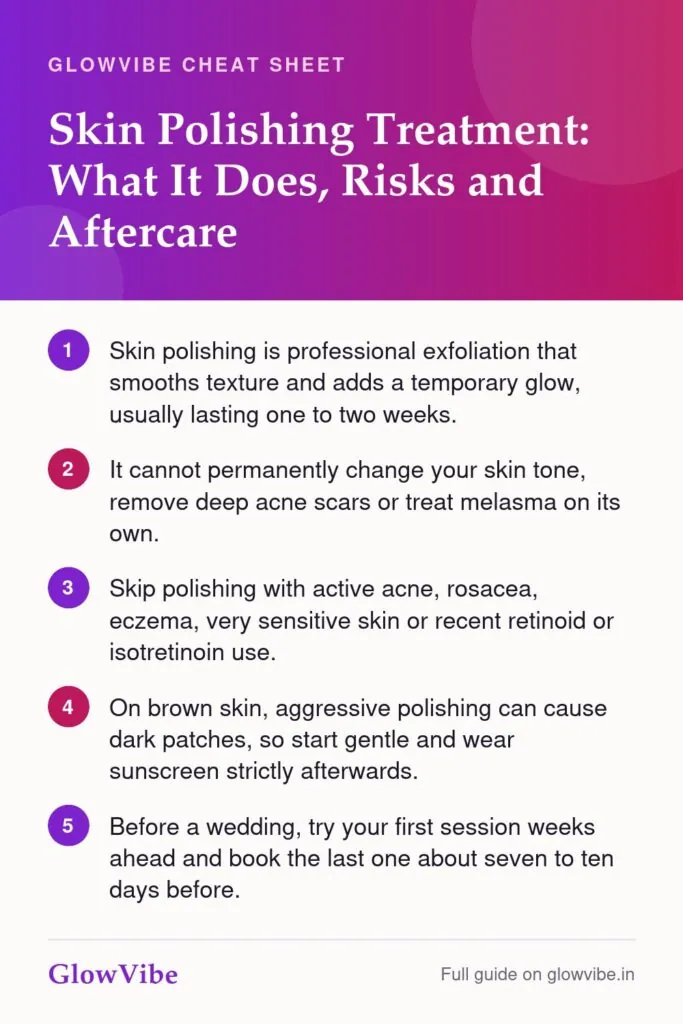
Skin polishing at a glance
- What it is: controlled exfoliation of the outermost skin layer, by machine or by hand.
- What it does well: smoother texture, softer rough patches, a temporary glow and better-looking makeup.
- What it can’t do: permanently lighten skin, remove deep acne scars or fix melasma on its own.
- Skip it if: you have active acne, rosacea, eczema, a sunburn, very sensitive skin, or recent retinoid or isotretinoin use.
- Biggest risk on brown skin: post-inflammatory HyperpigmentationPatches of skin that are darker than the surrounding skin, such as acne marks, sun spots or tanning. Very common on Indian skin tones.See glossary (dark patches after irritation).
- Aftercare that matters most: no actives for a few days, a plain moisturiser and Broad spectrumA sunscreen label meaning it protects against both UVB rays (which cause burning) and UVA rays (which cause tanning and ageing).See glossaryRead the guide sunscreen every day.
What salons and clinics mean by skin polishing
Ask three places what their skin polishing includes and you may get three answers. Before you book, ask which method they use and who performs it.
1. Crystal microdermabrasion
This is the older machine method. A handpiece sprays fine crystals (often aluminium oxide) across the skin while gentle suction lifts them away along with loosened dead cells. Stray crystals can irritate the eyes, so your eyes should be covered.
2. Diamond-tip (crystal-free) microdermabrasion
Here the handpiece has a tip coated with tiny diamond particles that buffs the skin while suction clears the debris. There is no loose powder, and the tip and suction can be adjusted, so many clinics now prefer it.
3. Hydradermabrasion or “aqua” polishing
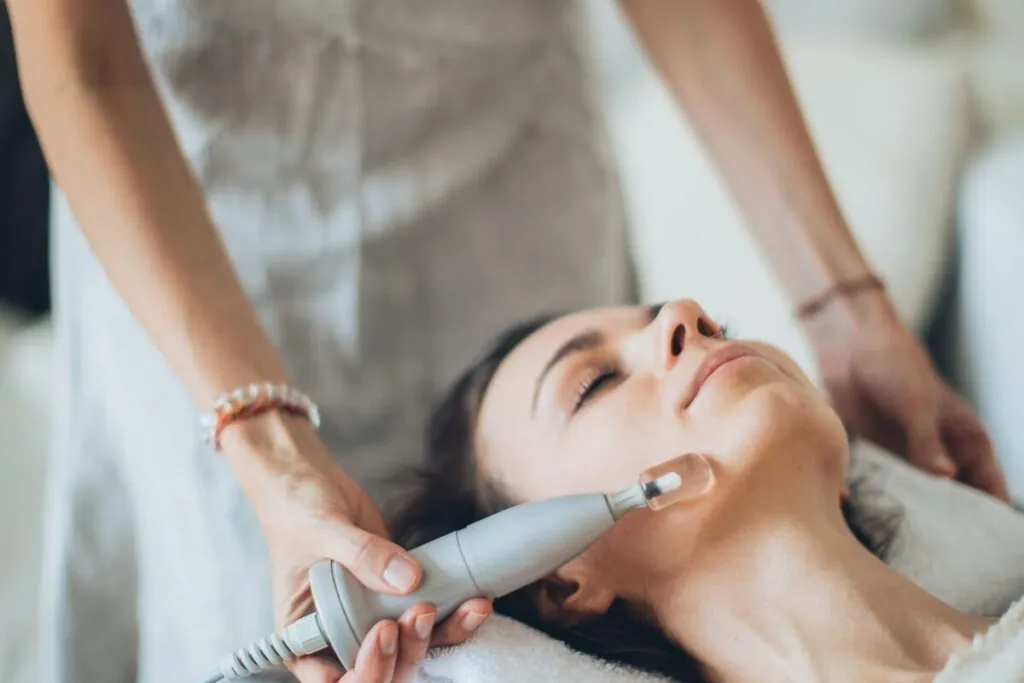
Some clinics use a device that exfoliates with a spiral tip while flushing the skin with liquid serums and suctioning at the same time. It usually feels milder, though that still depends on the settings.
4. The salon “polishing” facial
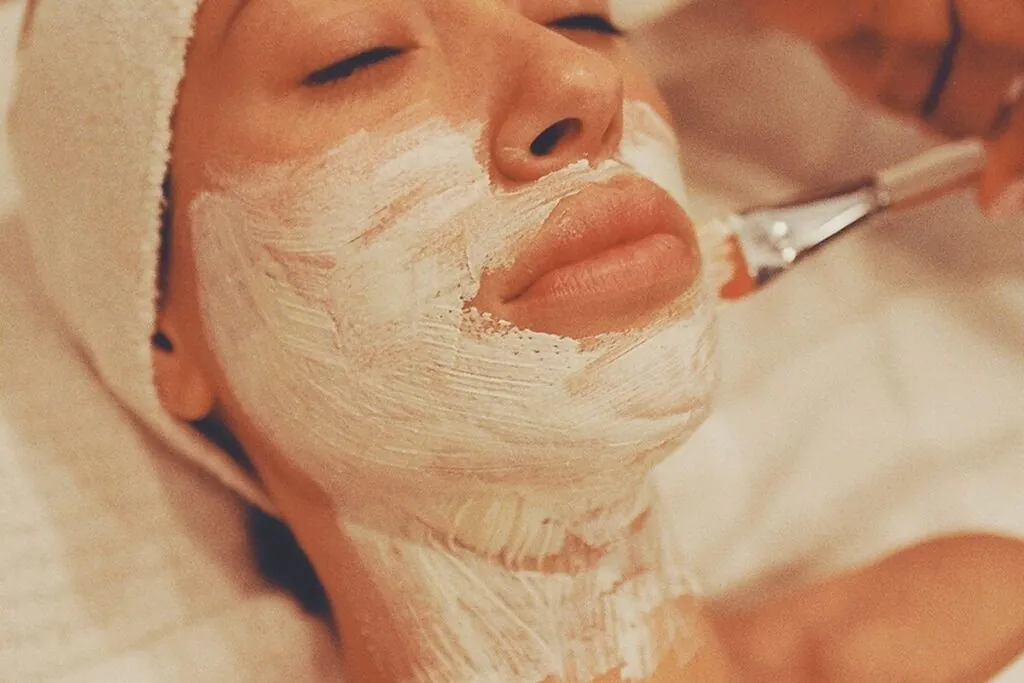
Many beauty salons use the name for a facial: cleanse, a granular scrub or exfoliating gel, a massage, a peel-off or clay mask, and sometimes steam. Some packages also add face bleach or a “brightening” pack. Harsh scrubbing, long steaming and bleach in one sitting is a lot for your skin, so feel free to ask them to leave steps out.
| Type | How it exfoliates | Feels like | Best for | Watch out for |
|---|---|---|---|---|
| Crystal microdermabrasion | Sprayed crystals plus suction | Mild sandpaper, light pulling | Rough texture, dull surface | Crystals near eyes; redness for a few hours |
| Diamond-tip microdermabrasion | Diamond-coated tip plus suction | Buffing, light pulling | Texture, mild uneven tone | Over-aggressive settings on thin or brown skin |
| Hydradermabrasion | Tip plus liquid serums and suction | Cool, wet, gentle | Dehydrated or dull skin | Unknown serums if you are sensitive |
| Salon polishing facial | Scrub, gel or mask by hand | Varies a lot | A pampering refresh | Harsh scrubs, long steam, bleach add-ons |
What skin polishing can and can’t do
What you can realistically expect
Removing a thin layer of dead cells makes the skin surface flatter, so it reflects light more evenly. That is the glow people talk about. Rough patches feel softer and makeup sits more smoothly for a few days.
A course of sessions may make mild dullness and very light marks look a little more even. It does not shrink pores permanently.
What it can’t do
Skin polishing does not change your natural skin colour, and it shouldn’t be sold as a way to do that. Your skin tone is set by melanin in deeper layers, which a surface treatment barely touches. The extra brightness is a fresh surface, and it fades within weeks.
It also won’t fix deep or pitted acne scars (ice-pick or boxcar scars), deep wrinkles, or stubborn pigmentation such as melasma. Those need a dermatologist and treatments like prescription creams, chemical peels, microneedling or lasers, chosen for your skin type. If a salon promises “permanent whitening” or “scar removal in one sitting”, that is a reason to walk out.
Who should avoid skin polishing
Polishing is friction on skin, so it is a bad idea whenever your skin is already inflamed or fragile. Skip it, or get a dermatologist’s okay first, if any of these apply to you.
- Active acne: rubbing over red, inflamed pimples can spread bacteria, worsen breakouts and leave darker marks. Treat the acne first.
- Rosacea or easy flushing: suction and friction can trigger redness and visible broken capillaries.
- Eczema, psoriasis or dermatitis on the face: these conditions already mean a weak barrier, and polishing can cause a flare.
- Recent topical retinoid use: tretinoin, AdapaleneA retinoid used in acne gels to keep pores from clogging. It can cause dryness at first, so it is usually started a few nights a week with moisturiser and daily sunscreen.See glossaryRead the guide and RetinolA vitamin A derivative that speeds up skin renewal for smoother texture, fewer clogged pores and fewer visible fine lines. Use at night and wear sunscreen by day.See glossaryRead the guide thin the outer layer. Most clinics ask you to stop them about a week before and after a session.
- Recent isotretinoin: many dermatologists still ask you to wait about six months after finishing a course before any resurfacing. Newer guidance is less strict for light procedures, so ask the doctor who prescribed it.
- Very sensitive or reactive skin: if your skin stings with most products, polishing is likely to push it over the edge.
- Sunburn, cold sores, cuts or a fresh wax: wait until the skin has healed.
If your skin already feels tight, stings or looks red and flaky, it may be dealing with a compromised barrier. Read our guide on how to repair a damaged skin barrier and come back to exfoliation once your skin feels comfortable again.
Brown skin and the risk of dark patches
Indian skin tones, from wheatish to deep brown, have active melanin-producing cells that react quickly to injury. When skin is irritated, scraped or inflamed, it can respond by making extra pigment. The result is post-inflammatory hyperpigmentation (PIH): brown or grey-brown patches that can take weeks or months to fade.
That’s why “more is better” thinking is risky here. Aggressive suction, too many passes over one spot, scrubbing straight after waxing, or heat and steam on already-red skin all raise the chance of PIH.
To lower your risk:
- Choose a clinic or a trained therapist who works on brown skin regularly, and ask them to start on the gentlest setting.
- Use sunscreen strictly for at least two weeks afterwards, because UV light darkens fresh PIH.
Aftercare: the first week after skin polishing
Mild pinkness and warmth for a few hours is normal. For the next few days, keep skin calm, hydrated and protected.
The first 24 to 48 hours
- Wash with lukewarm water and a gentle, soap-free cleanser. Pat dry, don’t rub.
- Apply a plain, Fragrance-freeA product with no added perfume or essential oils for scent. Often the safer pick for sensitive or reactive skin. "Unscented" can still contain masking fragrance.See glossary moisturiser with ingredients such as CeramidesFats that naturally hold skin cells together like mortar between bricks. Moisturisers with ceramides help support a dry or damaged skin barrier.See glossaryRead the guide, GlycerinOne of the most common and effective humectants. It draws water into the skin and is found in most moisturisers and cleansers.See glossary or panthenol.
- Avoid the gym, hot yoga, saunas, steam and swimming pools, as heat and sweat can sting and irritate.
Days 3 to 7
- Keep retinoids, AHAs, BHAs, scrubs and high-strength vitamin C on pause for three to five days, or for as long as your therapist advises.
- Don’t thread, wax or bleach your face for about a week.
Sunscreen every day
Freshly exfoliated skin burns and tans more easily. Use a broad-spectrum sunscreen of SPF 30 or higher with a good PA rating every morning, use about two finger-lengths for the face and neck, and reapply if you are outdoors. Winter is no exception; our guide to wearing sunscreen in winter in India explains why UV still matters on cool, hazy days.
If you notice burning, swelling, oozing, crusting or dark patches forming, stop all actives and see a dermatologist rather than waiting it out.
How often should you get skin polishing?
Your skin renews its surface roughly every few weeks, and it needs that time to recover between sessions. For most people, once every three to four weeks is plenty. Clinics often suggest a course of four to six sessions spaced a few weeks apart, followed by occasional maintenance.
Dry or sensitive skin does better with longer gaps. Weekly polishing is too frequent for almost everyone and is a common route to a damaged barrier.
Skin polishing before your wedding: a timeline
Polishing can be a nice part of bridal prep, but it should never be your first experiment in the final days. Fit it into a wider plan like our 30-day pre-bridal skin care routine, and use this timeline as a guide.
| When | What to do |
|---|---|
| 8 to 12 weeks before | Book a dermatologist or clinic consultation. Treat any active acne first. Try one gentle polishing session to see how your skin reacts. |
| 6 to 8 weeks before | If the first session went well, schedule a second. Lock in your sunscreen and moisturiser habit. |
| 3 to 4 weeks before | A third session if needed. Settle your facial hair removal plan so it doesn’t clash with polishing. |
| 10 to 7 days before | Last polishing session, only with the same clinic and settings you have already tried. Stop retinoids about a week before. |
| The final week | No new treatments, no bleach, no new products. Gentle cleanser, moisturiser, sunscreen and sleep. |
| The day before and on the day | Hydrate, use a simple sheet mask or your regular moisturiser, and let your makeup artist prep the skin. |
If you have never had skin polishing before and the wedding is under two weeks away, skip it. A flare that close to the date is hard to calm in time.
A gentle home alternative: chemical exfoliants
You don’t need a machine to get smoother, brighter-looking skin. Leave-on chemical exfoliants loosen the bonds between dead cells instead of scraping them off, which many people with brown skin find easier to control.
Which exfoliant suits you
- Lactic acid (around 5 to 10%): a mild AHA that also helps hold water in the skin. A good first choice for dry or normal skin.
- Mandelic acid: a larger AHA molecule that penetrates more slowly, often suggested for sensitive or acne-prone brown skin.
- PHAs such as gluconolactone: the gentlest of the group, worth trying if other acids sting.
- Salicylic acid (around 1 to 2%): a BHA that works inside oily pores. Better for blackheads and oily skin than for dryness.
How to use them safely
- Patch test on the side of your jaw for two or three nights first.
- Start with one or two nights a week, on clean, dry skin at night.
- Follow with a plain moisturiser. Skip retinoids and other acids on the same night.
- Wear sunscreen every morning, because acids make skin more sun-sensitive.
- Back off at the first sign of stinging, tightness or peeling that lasts.
A structured plan such as a beginner skin cycling routine builds rest nights in between exfoliation and retinoid nights, which makes overdoing it much harder. Before combining products, check our list of skincare ingredients you should not mix.
Skip gritty home scrubs made from crushed walnut shells, apricot kernels, sugar or coarse salt on the face. Their sharp edges are easy to overdo and can trigger dark patches.
Common skin polishing mistakes
- Booking it the week of an event without ever having tried it before.
- Saying yes to every add-on in one sitting: polishing, bleach, steam and a peel.
- Skipping sunscreen because “it’s just a facial”.
Frequently Asked Questions
Not always. In a clinic it usually means microdermabrasion with a machine, while many salons use the name for a facial with a scrub and a mask.
Microdermabrasion usually feels like light scratching and pulling, not pain. You may feel warm and look pink for a few hours. Real stinging or burning during the session means the settings are too strong, so say so straight away.
Usually around one to two weeks, depending on your skin and how well you care for it afterwards. No single session gives permanent results.
It can make light surface tan and mild dullness look more even over a few sessions. It does little for deeper pigmentation such as melasma, and on brown skin it can even cause new dark patches if done roughly. For stubborn pigmentation, see a dermatologist.
Not while you have active, inflamed breakouts. Polishing over them can make acne worse and leave marks. Get the acne under control with a dermatologist first; mild blackheads alone may be fine with gentle settings.
Quick poll
What is your biggest skin concern right now?
The bottom line
Skin polishing is a surface treatment: it can make skin smoother and give it a short-lived glow, especially before a big event, as long as your skin is calm and healthy to begin with. Pick a trained professional, start gentle, protect your skin from the sun afterwards and leave several weeks between sessions. Or try a mild chemical exfoliant once or twice a week at home.