Sensitive Skin Products: A Complete Guide for Indian Skin (2026)
The best sensitive skin products for Indian skin: gentle cleansers, barrier-repair moisturisers and sunscreens, ingredients to avoid, patch testing and a simple routine.


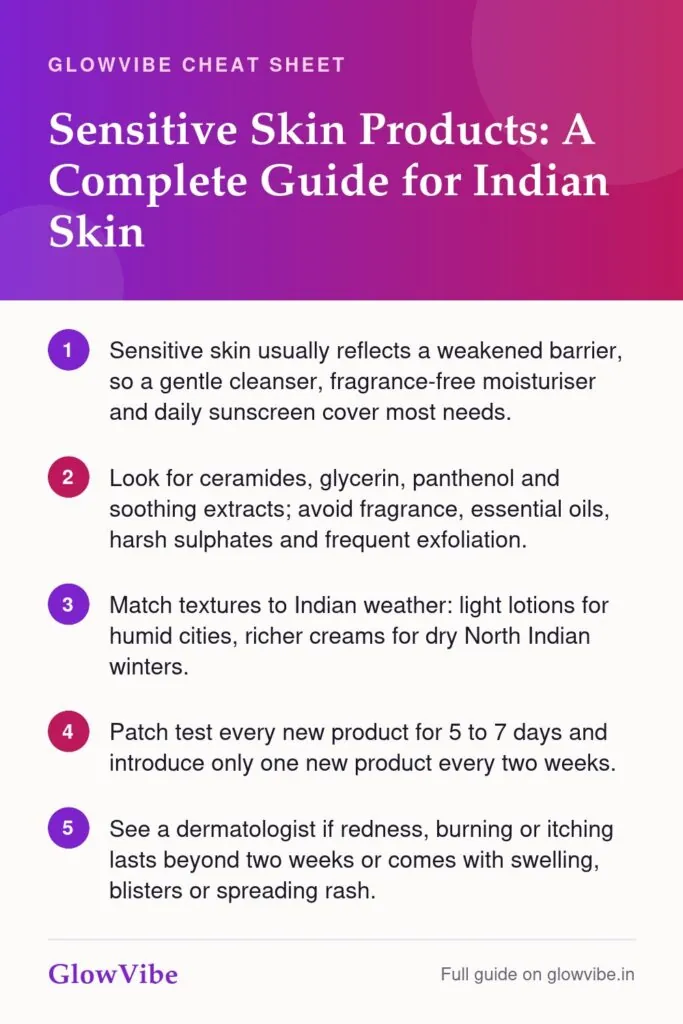
The best sensitive skin products are short, Fragrance-freeA product with no added perfume or essential oils for scent. Often the safer pick for sensitive or reactive skin. "Unscented" can still contain masking fragrance.See glossary formulas that clean, moisturise and protect without stripping your Skin barrierThe outermost layer of skin that keeps water in and irritants out. A damaged barrier feels tight, stings and reacts more easily.See glossaryRead the guide: a mild cleanser, a CeramidesFats that naturally hold skin cells together like mortar between bricks. Moisturisers with ceramides help support a dry or damaged skin barrier.See glossaryRead the guide or PanthenolPro-vitamin B5, a soothing and hydrating ingredient used in skin and hair products to calm and soften.See glossary moisturiser and a Broad spectrumA sunscreen label meaning it protects against both UVB rays (which cause burning) and UVA rays (which cause tanning and ageing).See glossaryRead the guide sunscreen. Get those three right, Patch testTrying a small amount of a new product behind the ear or on the inner arm for a few days to check for a reaction before using it widely.See glossary everything new, and most stinging, redness and tightness settle down.
This guide walks you through each product category, the ingredients worth looking for, the ones to avoid, and a simple routine that works in Indian heat, humidity and hard water.
What sensitive skin actually means
Sensitive skin is not a medical diagnosis. It describes skin that reacts more easily than average, with stinging, burning, itching, redness or tightness after using a product, stepping into the sun or washing with hot water. It can show up on dry, oily or combination skin.
Most of the time, the cause is a weakened skin barrier, the outer layer that holds in water and keeps irritants out. When that barrier is damaged by harsh cleansers, over-exfoliation or too many actives, everyday things start to sting. Common triggers in India include:
- Fragrance and essential oils in creams, face washes and mists
- Harsh foaming face washes and soap bars
- Strong sun, heat and sweat in summer; dry, cold air in North Indian winters
- Hard water and city pollution
- Layering several actives (acids, RetinolA vitamin A derivative that speeds up skin renewal for smoother texture, fewer clogged pores and fewer visible fine lines. Use at night and wear sunscreen by day.See glossaryRead the guide, Vitamin CAn antioxidant that brightens dull skin, helps fade the look of dark spots and supports sunscreen against daily damage. Best used in the morning.See glossaryRead the guide) at the same time
If your skin also flakes in patches, develops bumps or stays red for days, it may be eczema, rosacea or contact dermatitis rather than simple sensitivity. Those need a dermatologist, not just gentler products.
Quick answer: sensitive skin products worth knowing
- Cleanser: Cetaphil Gentle Skin Cleanser or CeraVe Hydrating Cleanser
- Makeup remover: Bioderma Sensibio H2O micellar water
- Moisturiser: CeraVe Moisturising Cream for dry skin, Simple Kind to Skin Hydrating Light Moisturiser for oily or combination skin
- Soothing repair balm: La Roche-Posay Cicaplast Baume B5+
- Sunscreen: La Roche-Posay Anthelios UVMune 400 Invisible Fluid SPF50+
- Lips and dry patches: Vaseline Original Petroleum Jelly
Comparison table
| Product | Category | Best for | Price range |
|---|---|---|---|
| Cetaphil Gentle Skin Cleanser | Cleanser | Dry, normal and reactive skin | Mid-range |
| CeraVe Hydrating Cleanser | Cleanser | Dry, tight-feeling skin | Mid-range |
| Bioderma Sensibio H2O | Micellar water | Removing makeup and sunscreen gently | Mid-range |
| CeraVe Moisturising Cream | Moisturiser | Dry and very dry skin, winter | Mid-range |
| Simple Kind to Skin Hydrating Light Moisturiser | Moisturiser | Oily and combination skin, humid weather | Budget |
| La Roche-Posay Cicaplast Baume B5+ | Repair balm | Flaky, irritated or over-exfoliated patches | Premium |
| La Roche-Posay Anthelios UVMune 400 Invisible Fluid SPF50+ | Sunscreen | Daily high UV protection, all skin types | Premium |
| Vaseline Original Petroleum Jelly | Occlusive | Chapped lips, dry patches, sealing in moisture | Budget |
Key ingredients to look for (and avoid)
Labels matter more than brand names. A product marketed as “natural” or “herbal” can still be packed with fragrance, while a plain-looking pharmacy cream may be exactly what your skin needs.

Ingredients that usually help
- Ceramides: lipids that are a natural part of your barrier; they help it hold water.
- Glycerin and hyaluronic acid: humectants that draw water into the skin without feeling heavy.
- Panthenol (vitamin B5): softens and soothes rough, irritated areas.
- Aloe vera, chamomile (bisabolol), oat extract and centella asiatica: calming plant ingredients that many sensitive skins tolerate well.
- Niacinamide at a modest strength: supports the barrier, but high percentages can cause flushing in some people.
- Zinc oxide and titanium dioxide: mineral UV filters that are often easier on reactive skin.
Ingredients to avoid or use with care
- Fragrance (listed as “parfum” or “fragrance”) and essential oils such as lavender, tea tree, peppermint and citrus
- Drying denatured alcohol high on the ingredient list
- Strong sulphate cleansers like sodium lauryl sulphate
- Gritty scrubs and frequent use of AHAs, BHAs or retinoids
- Bleach and strong de-tan packs, which often sting reactive skin (see our guide to face bleach for sensitive skin before trying one)
If you do use actives, introduce one at a time and check which skincare ingredients you should not mix, because stacking them is one of the quickest ways to irritate sensitive skin.
Best cleansers for sensitive skin
Your face wash should leave skin comfortable, never squeaky or tight. Creamy, low-foam or soap-free cleansers are the safest place to start.
1. Cetaphil Gentle Skin Cleanser
A long-standing dermatologist favourite in India. It is a mild, low-lather lotion cleanser that suits dry, normal and easily irritated skin, and it can be used with water or wiped off.
- Pros: very gentle, widely available, works for most ages
- Cons: does not remove heavy makeup or water-resistant sunscreen on its own
2. CeraVe Hydrating Cleanser
A creamy, non-foaming wash with ceramides and hyaluronic acid. It is a good choice if your skin feels tight after washing, especially in winter or in air-conditioned offices.
- Pros: fragrance-free, leaves skin soft
- Cons: may feel too light a cleanse for very oily skin in humid weather
3. Bioderma Sensibio H2O micellar water
Made for sensitive skin, this micellar water lifts makeup and sunscreen on a cotton pad without rinsing. Press the pad on your skin for a few seconds instead of rubbing, then follow with your regular cleanser. If you wear a lot of makeup, a gentle oil cleanser for sensitive skin is another low-friction option.
- Pros: no rubbing or rinsing needed, good for eyes
- Cons: needs cotton pads; best followed by a rinse-off cleanser
Best moisturisers and repair creams for sensitive skin
Moisturiser is the step that rebuilds a damaged barrier. Pick the texture by your skin type and season, not by how “rich” the jar looks.
4. CeraVe Moisturising Cream
A thick, fragrance-free cream with ceramides and hyaluronic acid. It suits dry and very dry sensitive skin on the face and body, and it is especially useful in Delhi, Punjab or hill-station winters.
- Pros: strong barrier support, one tub covers face and body
- Cons: can feel heavy on oily skin in coastal humidity
5. Simple Kind to Skin Hydrating Light Moisturiser
A light, budget-friendly lotion from a brand built around skipping perfume and harsh colours. It works well for oily and combination skin in Mumbai, Chennai or Kolkata weather.
- Pros: lightweight, easy to find, affordable
- Cons: not enough for very dry skin in winter
6. La Roche-Posay Cicaplast Baume B5+
A soothing balm with panthenol and madecassoside (from centella). Use it as a spot treatment on flaky, red or over-exfoliated areas, around the nose during a cold, or as a night layer when your skin feels raw.
- Pros: very comforting on irritated patches, a small tube lasts long
- Cons: premium price; slightly white and tacky as an all-over day cream
Sunscreen and lip care for sensitive skin
UV exposure worsens redness and pigmentation, and Indian sun is strong for most of the year. Daily sunscreen is not optional, even indoors near windows and even in winter, as our winter sunscreen guide for India explains.
7. La Roche-Posay Anthelios UVMune 400 Invisible Fluid SPF50+
A thin, fast-absorbing fluid with high UVA and UVB protection that sits well under makeup. If chemical filters sting your eyes or skin, try a mineral sunscreen with zinc oxide instead and see which you tolerate better.
- Pros: lightweight, no white cast, good for daily wear
- Cons: premium price; some very reactive skins prefer mineral-only formulas
8. Vaseline Original Petroleum Jelly
Plain petroleum jelly is one of the least irritating products you can buy. Use a thin layer on chapped lips, dry patches on cheeks or around the nostrils, and over moisturiser at night to seal in hydration. Flavoured or tinted lip balms are more likely to sting.
- Pros: very low irritation risk, budget, multi-use
- Cons: greasy; avoid on acne-prone areas
How to choose sensitive skin products for Indian weather
By skin type
- Sensitive and dry: cream cleanser, ceramide cream, a balm for flaky spots.
- Sensitive and oily: gentle gel or low-foam cleanser, light lotion or gel moisturiser, fluid sunscreen. Do not skip moisturiser; dehydrated oily skin often gets more reactive.
- Sensitive and combination: light lotion all over, an extra layer of cream only on dry cheeks.
By climate
In humid coastal cities and during the monsoon, lighter textures prevent the sticky, clogged feeling that leads to rubbing and breakouts. In dry North Indian winters, switch to a richer cream and keep showers lukewarm, not hot.
Heat and sweat can make even good products sting. Blot sweat with a soft tissue instead of wiping hard, and carry sunscreen to reapply on long days outdoors.
Hard water
Hard water leaves mineral residue that can make skin feel tight and itchy. Use a non-soap cleanser, rinse well, pat dry, and apply moisturiser within a minute or two while skin is still slightly damp.
A simple skincare routine for sensitive skin
A minimalist skincare routine of three products covers most sensitive skin needs.

Morning
- Rinse with lukewarm water, or use your gentle cleanser if your skin is oily.
- Apply moisturiser to slightly damp skin.
- Finish with sunscreen, using about two finger-lengths for the face and neck.
Night
- Remove makeup and sunscreen with micellar water or an oil cleanser.
- Wash with your gentle cleanser and pat dry with a clean towel.
- Apply moisturiser, plus a repair balm on any rough or red spots.
Toners are optional. If you want one, pick an alcohol-free, fragrance-free hydrating toner; our cleanser, toner, moisturiser guide explains when that step is worth adding.
How to patch test a new product
Patch testing is the single best habit for sensitive skin. Apply a small amount behind your ear or on the side of your jaw once or twice a day for 5 to 7 days, using it the way you normally would.
If you notice redness, itching, burning or bumps, wash it off and stop. If there is no reaction, start on your full face a few times a week before using it daily. Add only one new product every two weeks so you always know what caused a problem.
Makeup tips for sensitive skin
Look for fragrance-free, non-comedogenic foundations and powders, and patch test them like skincare. Mineral powders are often well tolerated. Keep brushes and sponges clean, since dirty tools can irritate skin and spread bacteria.
Removal matters as much as the makeup itself. Never sleep in it, and avoid scrubbing with wipes. Dissolve makeup with micellar water or a cleansing oil first, then wash.
Common mistakes that make sensitive skin worse
- Over-exfoliating: scrubs, peels and acid toners several times a week strip the barrier.
- Using too many products at once: a ten-step routine makes it impossible to find your trigger.
- Trusting “natural” labels blindly: lemon, raw garlic, toothpaste, baking soda and undiluted essential oils can burn skin.
- Hot water and rough towels: both worsen redness and dryness.
- Skipping sunscreen because it stings: switch formulas instead of dropping the step.
- Ignoring early signs: mild stinging that you push through often turns into a full flare.
Handling a flare-up
When your skin suddenly burns or turns red, strip your routine back. Stop all actives, exfoliants and new products, and use only a gentle cleanser, a plain moisturiser or balm, and sunscreen until things calm down.
Cool (not ice-cold) compresses can ease the heat. Simple home ingredients like colloidal oatmeal or plain aloe vera gel suit some people, but patch test them too, because natural does not automatically mean gentle.
Lifestyle helps in the background. Stress, poor sleep and very hot, spicy meals can make flushing worse for some people, so notice your own patterns. A balanced diet with fruit, vegetables and enough water supports overall skin health, though no food cures sensitivity.
When to see a dermatologist
Book an appointment if redness, burning or itching lasts more than two weeks despite a gentle routine, if you get swelling, oozing, blisters or a spreading rash, or if you suspect eczema, rosacea or an allergy. A dermatologist can confirm the cause and, if needed, arrange patch testing to identify the exact ingredient you react to.
Frequently Asked Questions
Start with three basics: a mild cleanser such as Cetaphil Gentle Skin Cleanser, a fragrance-free moisturiser such as CeraVe Moisturising Cream or Simple Kind to Skin Hydrating Light Moisturiser, and a daily broad-spectrum sunscreen. Add anything else only after your skin has been calm for a few weeks.
Yes. Over-exfoliation, strong actives, hormonal changes, pregnancy, a move to a new climate or pollution exposure can all make previously tolerant skin more reactive. Simplifying your routine and repairing the barrier usually helps, but see a dermatologist if it persists.
No. “Hypoallergenic” and “dermatologist tested” are marketing terms without a strict standard. Read the ingredient list for fragrance and essential oils, and always patch test, because any ingredient can bother someone.
Some are, such as plain aloe vera gel, colloidal oatmeal or honey masks, but many popular home remedies like lemon juice, raw onion or undiluted essential oils can cause burns. Treat a home remedy like any new product and patch test it first.
Many people notice more flushing, itching or breakouts during stressful weeks. Good sleep, regular exercise and a stable, gentle routine help, though stress management supports your skin rather than treating a skin condition.
Both can work. Mineral sunscreens with zinc oxide are often gentler on very reactive skin, while modern chemical fluids feel lighter in humid weather. Try one, patch test it, and stick with whichever you can wear comfortably every day.
Quick poll
How many steps are in your skincare routine?
The bottom line
Sensitive skin does best with less: a gentle cleanser, a barrier-friendly moisturiser and a sunscreen you actually enjoy wearing. Choose fragrance-free formulas, adjust textures for the season, introduce products one at a time, and let a dermatologist step in when redness or itching does not settle.