How to Get Glowing Skin Naturally: Habits That Work (2026)
Glowing skin is mostly habits: sleep, hydration, balanced meals, sun protection and gentle cleansing. Plus gua sha honestly rated, DIY remedies to skip and quick pre-event glow steps.


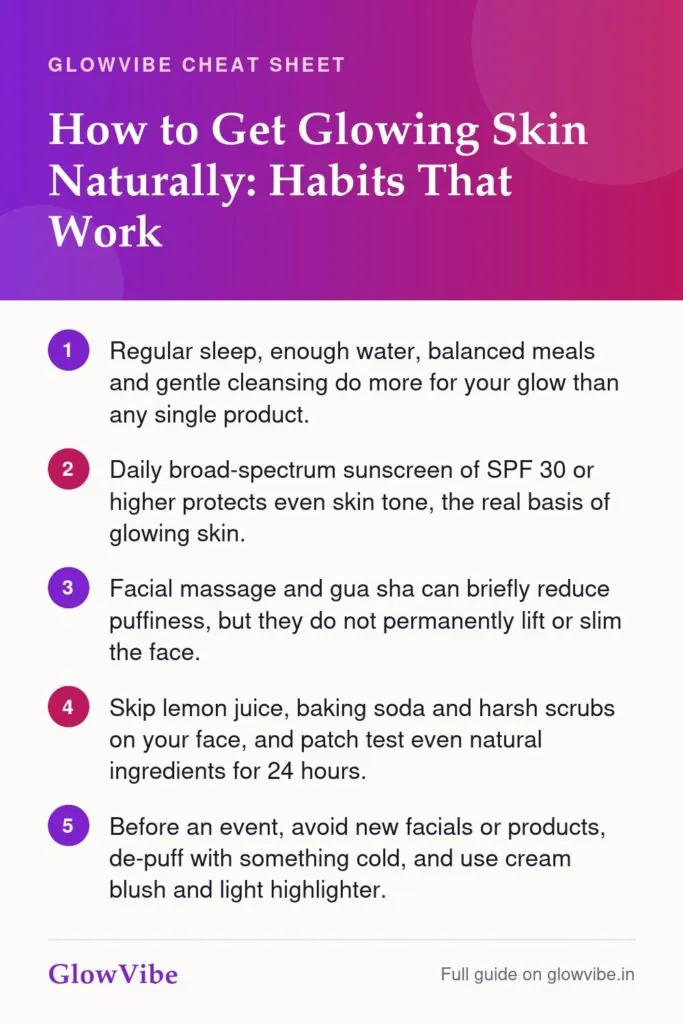
To get glowing skin naturally, focus on the habits that change how your skin looks day to day: steady sleep, enough water, balanced meals, daily sun protection and a gentle cleanse. Products help, but most of the “glow” you see on a good skin day comes from a calm, hydrated, well-rested face rather than from any single jar.
This guide covers those habits, honestly rated. You will also find what facial massage and gua sha can and cannot do, which kitchen remedies to skip, a quick routine for the morning of an event, and how to use makeup for a natural glow. If you want the ingredient side (Vitamin CAn antioxidant that brightens dull skin, helps fade the look of dark spots and supports sunscreen against daily damage. Best used in the morning.See glossaryRead the guide, NiacinamideA form of vitamin B3 that helps with oiliness, the look of large pores, uneven tone and barrier support. Gentle and easy to pair with most ingredients.See glossaryRead the guide, exfoliating acids) and a full AM/PM routine, read our radiant skin ingredients and routine guide alongside this one.
Glowing skin tips: the quick answer
- Sleep 7–9 hours on a regular schedule; tired skin looks dull and puffy.
- Drink water through the day, more in Indian summers and after exercise.
- Eat a mix of fruit, vegetables, dal, nuts and some healthy fat rather than chasing “glow foods”.
- Wear sunscreen every morning and avoid the strongest midday sun; tanning and pigmentation are the biggest glow-killers.
- Cleanse gently and stop over-scrubbing.
- Move your body most days and find a stress outlet that you will actually stick with.
- Treat massage, gua sha and DIY packs as extras, not fixes.
Glow habits compared
| Habit | What it does for your skin | Effort | How soon you notice |
|---|---|---|---|
| Regular sleep | Less puffiness and dark-circle shadow, fresher tone | Medium | A few days |
| Hydration | Supports overall health; very dehydrated skin looks dull | Low | A few days, if you were under-drinking |
| Balanced diet | Supplies the nutrients skin needs; no single food “brightens” | Medium | Weeks |
| Daily sunscreen | Prevents tanning, pigmentation and early lines | Low | Weeks to months |
| Gentle cleansing | Keeps the Skin barrierThe outermost layer of skin that keeps water in and irritants out. A damaged barrier feels tight, stings and reacts more easily.See glossaryRead the guide calm, so skin reflects light evenly | Low | 1–2 weeks |
| Exercise | Temporary flush from better circulation; helps sleep and stress | Medium | Same day (flush) |
| Facial massage / gua sha | Short-term de-puffing and a relaxed feel | Low | Same day, temporary |
1. Sleep: the cheapest glow there is
Skin that has not had enough sleep tends to look flatter, with more noticeable under-eye shadows and puffiness. Research on sleep-deprived volunteers has found that other people rate their faces as more tired and less healthy-looking, so this is not just a feeling.
Aim for 7–9 hours, and keep your bedtime and wake-up time roughly the same, including weekends. A few small changes help:
- Put the phone away 30 minutes before bed; late scrolling is the usual reason for short sleep.
- Change pillow covers once or twice a week, especially if you have acne-prone skin or oily hair.
- If you wake up puffy, sleep with your head slightly raised and cut back on salty late dinners.
2. Hydration: drink enough, but don’t expect miracles
Water will not erase pigmentation or acne, and drinking huge amounts adds nothing over drinking enough. But if you genuinely under-drink, common in hot Indian summers and AC offices, skin and lips can look dull and feel tight.

A practical target: drink regularly through the day so your urine stays pale yellow, and add extra in heat, during travel and after workouts. Nimbu pani without too much sugar, buttermilk, coconut water and water-rich fruit like watermelon and cucumber all count.
Outside, hydration means a moisturiser suited to your skin type. Oily skin in humid weather may need only a light gel; dry skin in a North Indian winter needs something richer. Skin that feels tight after washing or flakes around the nose is often a sign of a damaged skin barrier, which no amount of drinking water will fix on its own.
3. Diet basics for glowing skin (without the hype)
There is no food that “detoxes” your face or gives you glowing skin overnight. What a balanced diet does is give your skin the protein, vitamins, minerals and fats it needs to repair itself, and that shows over weeks, not days.
- Fruit and vegetables daily: AmlaIndian gooseberry, used in Ayurvedic hair oils, powders and packs. It is valued for conditioning hair and adding shine.See glossaryRead the guide, guava, oranges, papaya, tomatoes, carrots and leafy greens supply vitamin C, vitamin A and antioxidants.
- Enough protein: dal, rajma, chana, paneer, curd, eggs, fish or chicken; skin is built from protein.
- Some healthy fats: a handful of nuts or seeds (walnuts, almonds, flaxseed), and fish if you eat it.
- Go easier on sugar and refined snacks: some people notice more breakouts with a high-sugar diet and heavy dairy; it varies, so watch your own pattern.
Be wary of supplements sold as “glow” or “skin whitening” capsules. If you suspect a deficiency, such as iron or vitamin D (both common in India), ask your doctor for a blood test rather than self-prescribing.
4. Sun habits: protect the glow you have
Sun exposure is the main reason Indian skin looks uneven: tanning, dark spots, and pigmentation that gets worse with heat. Glowing skin is mostly even-toned skin, so sun habits matter more than any brightening product.
- Apply a Broad spectrumA sunscreen label meaning it protects against both UVB rays (which cause burning) and UVA rays (which cause tanning and ageing).See glossaryRead the guide sunscreen of SPF (sun protection factor)A measure of protection against UVB rays, which cause sunburn. SPF 30 blocks about 97% of UVB and SPF 50 about 98%, if you apply enough and reapply.See glossaryRead the guide 30 or higher every morning, about two finger-lengths for face and neck.
- Reapply every two to three hours if you are outdoors, sweating or near a window all day.
- Use a cap, umbrella, sunglasses or a dupatta for the 11 am to 4 pm window, especially on two-wheelers.
- Keep wearing it on cloudy days and in winter; UV still gets through. Our guide on sunscreen in winter in India explains why.
5. Stress, exercise and your skin
Long-term stress can make acne, eczema and rosacea flare, and it often brings poor sleep and skipped routines. You cannot remove stress, but you can give it an outlet: slow breathing, a phone-free walk or gentle yoga before bed.
Exercise is one of the best. The rosy look after a brisk walk, yoga session or workout is real, from increased blood flow, though it fades within an hour or two. The longer-term benefit is better sleep and mood. Two tips: wash or at least rinse your face after a sweaty workout, and don’t exercise outdoors in heavy makeup.
6. Cleanse gently and stop over-exfoliating
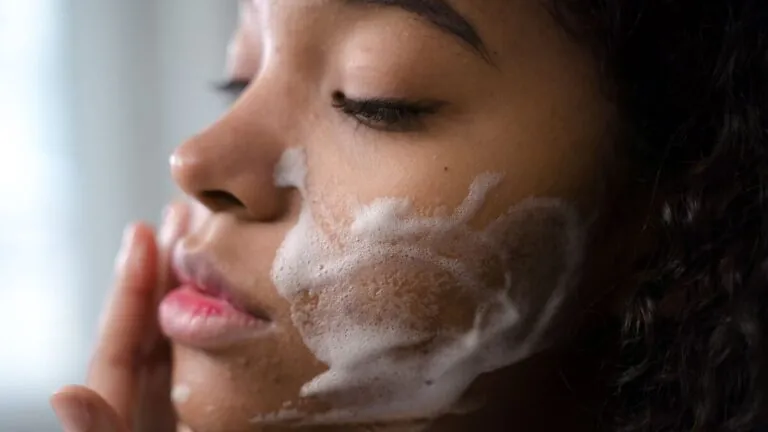
Many dull complexions are actually irritated ones. Scrubbing hard, washing the face five times a day, or using harsh soap leaves skin red, tight and patchy, and that surface reflects light unevenly instead of glowing.
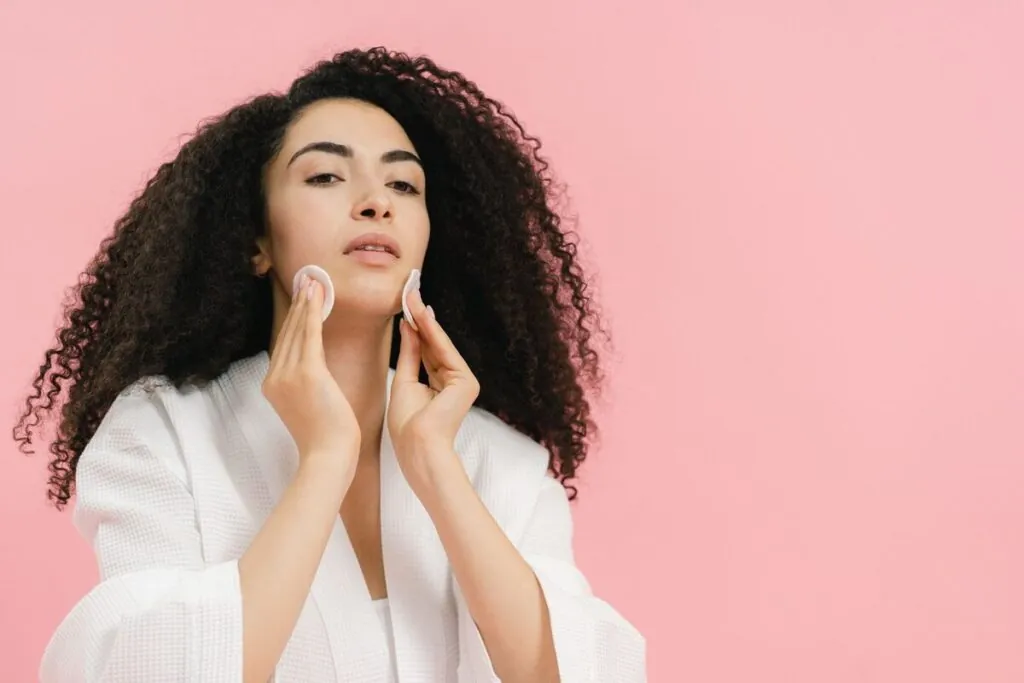
- Cleanse twice a day with a mild face wash; once in the morning is enough for dry skin.
- Use lukewarm water, not hot, and pat dry with a clean towel.
- Exfoliate one to three times a week at most, and choose either a scrub or an acid, not both.
- Keep the routine short. A minimalist skincare routine of cleanser, moisturiser and sunscreen is enough for most people to start with.
7. Facial massage and gua sha: honestly assessed
Facial massage, jade rollers and gua sha stones are popular, and they can feel lovely. Here is what they realistically do:
- What works: a few minutes of gentle upward and outward strokes can reduce morning puffiness by moving fluid, and brings a short-lived flush. It is also relaxing, which has its own value.
- What is not proven: lasting facial “lifting”, a slimmer jaw, removing toxins, or fixing pigmentation. The effects you see are temporary.
- How to do it: work on clean skin with a few drops of face oil or a thick moisturiser so the tool glides. Use light pressure, hold the gua sha nearly flat, and stroke from the centre of the face outward and from the neck downward. Five minutes is plenty.
- Skip it over active acne, broken skin, sunburn or rosacea flares, and clean the tool after every use.
8. DIY remedies: what to keep and what to skip
Some popular kitchen remedies do more harm than good on the face.
- Fine to try: plain aloe vera gel for a soothing feel, honey as a short mask, curd or oatmeal mixed into a gentle pack, and besan in place of a scrub for oily skin if you use it lightly.
- Avoid on the face: lemon juice (acidic, can irritate and make skin more sensitive to sun), baking soda (far too alkaline for skin), toothpaste on pimples, and coarse sugar or coffee scrubs that cause tiny tears.
- Always Patch testTrying a small amount of a new product behind the ear or on the inner arm for a few days to check for a reaction before using it widely.See glossary: apply a little on your inner arm or behind the ear and wait 24 hours, even for “natural” ingredients. Turmeric, essential oils and raw fruit can all cause reactions.
Quick glow before an event
When you have a wedding, party or photo shoot coming up, plan two layers: the week before and the morning itself. For a longer festive plan, see our 7-day pre-Diwali skin care routine.
The week before
- Prioritise sleep and water, and go light on salt and alcohol.
- Do not try a new facial, peel, bleach or product within 7–10 days of the event.
- Exfoliate gently once, three or four days before, not the night before.
On the day
- Cleanse with a mild face wash and splash with cool water.
- Hold a cold roller, chilled spoon or ice wrapped in a cloth on puffy areas for a minute.
- Apply a hydrating serum or moisturiser and give it five minutes to sink in.
- Finish with sunscreen if you will be outdoors in daylight.
- Drink a glass of water and eat a proper meal, so you are not running on tea alone.
Makeup for a natural glow
Makeup can give the glow a helping hand, as long as the skin underneath is prepped. The goal is to let some skin show through, not to cover it completely.
- Prep: moisturise well; on dry skin, a drop of face oil mixed into moisturiser adds sheen.
- Base: use a skin tint, BB cream or a sheer layer of foundation mixed with moisturiser, and conceal only where you need it.
- Cream products: cream blush and cream highlighter melt into the skin and look more natural than heavy powder.
- Highlight sparingly: tops of the cheekbones, bridge of the nose and the cupid’s bow. Choose golden or peach tones for Indian skin rather than icy silver.
- Powder only the T-zone in humid weather, and keep blotting paper in your bag instead of adding layer after layer.
For a full step-by-step, our natural makeup routine for beginners walks you through it.
Adjusting for Indian weather and water
- Humid summers and monsoon: lighter gel moisturisers, gel or fluid sunscreen, and a mid-day rinse if you sweat a lot.
- Dry winters: richer creams, a gentler cleanser, and lip balm; don’t skip sunscreen.
- Hard water: it can leave skin feeling tight. Rinse with lukewarm water and moisturise straight after washing; a micellar water or filtered final rinse helps some people.
Common mistakes that dull your skin
- Chasing overnight results with harsh peels, bleach or scrubs.
- Layering many active products at once and irritating your skin.
- Skipping sunscreen because you are “only indoors” or it is cloudy.
- Sleeping in makeup, or touching and picking at the face.
- Trusting viral DIY hacks like lemon or baking soda.
When to see a dermatologist
Lifestyle habits improve how healthy skin looks, but they are not treatment. See a dermatologist if you have acne that leaves marks or scars, patches of pigmentation such as melasma, persistent redness, itching or flaking, a sudden change in your skin, or a mole that changes shape or colour.
Frequently Asked Questions
Start with the basics: regular sleep, enough water, balanced meals, daily sunscreen and a gentle cleanse twice a day. Add a moisturiser that suits your skin type and avoid over-scrubbing.
No. Drinking enough water supports your overall health and helps if you were dehydrated, but it will not clear acne or pigmentation by itself.
Gua sha and facial massage can temporarily reduce puffiness and give a short-lived flush, and many people find them relaxing. There is no good evidence that they permanently lift the face or slim the jawline. Use light pressure on clean, oiled skin and skip it over active acne.
No single food makes skin glow, but a diet with plenty of fruit and vegetables, enough protein and some healthy fats gives your skin what it needs. Amla, guava, citrus, leafy greens, dal, curd, nuts and seeds are easy Indian choices. Cutting back on sugary snacks helps some people with breakouts.
Cleanse, splash with cool water, de-puff with a cold roller or chilled spoon, then apply a hydrating moisturiser. Use a light base with cream blush and a touch of highlighter. Avoid trying a new facial or product right before the event.
Applying lemon juice directly to your face is not recommended. It is acidic, can irritate and darken sensitive skin, and makes skin more prone to reacting in the sun. Choose gentle, well-formulated vitamin C products instead if you want brightening.
Sleep and hydration changes can show within days, while gentle-cleansing and barrier repair usually take one to two weeks. Even-toned skin from daily sunscreen and a steady routine builds over one to three months, as skin renews itself roughly monthly.
Quick poll
What is your biggest skin concern right now?
The bottom line
Glowing skin is mostly the result of ordinary habits done every day: sleeping well, drinking enough, eating a varied diet, protecting your skin from the sun, cleansing gently and managing stress. Treat massage, DIY packs and makeup as enjoyable extras, keep your routine simple, and give it a few weeks. When you are ready to add targeted ingredients, our radiant skin guide picks up where this one leaves off.