Minimalist Skincare Routine: The 3-Step Guide for Indian Skin (2026)
A minimalist skincare routine needs just a cleanser, moisturiser and sunscreen, plus one treatment if you need it. Here's how to build yours for Indian skin.


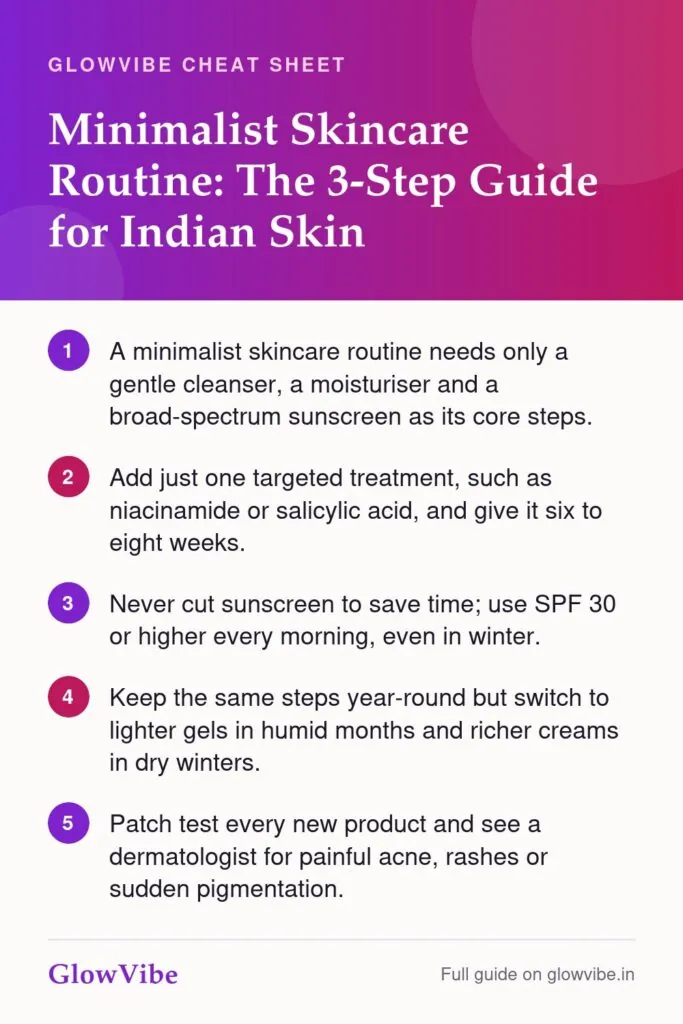
A minimalist skincare routine uses three to five well-chosen products instead of ten: a gentle cleanser, a moisturiser and a sunscreen in the morning, plus one targeted treatment at night if your skin needs it. That is genuinely enough for most people, and in India’s heat and humidity, fewer layers often means fewer breakouts and less irritation.
This guide shows you how to build that routine for your skin type, which ingredients earn a place in it, which affordable products widely sold in India fit the approach, and the mistakes that quietly undo a simple routine.
What is minimalist skincare?
Minimalist skincare (sometimes called “skinimalism”) means keeping only the steps that do a clear job and dropping the rest. Every product has to answer one question: what problem does this solve for my skin? If you cannot answer it, the product goes.
It is not about buying the cheapest thing or skipping sunscreen. It is about consistency. A short routine you follow every single day will do more for your skin than a twelve-step routine you abandon by Thursday.
Why fewer products often works better
- Less irritation: every extra product adds fragrance, preservatives and actives your skin has to tolerate. Layering several acids or strong actives is a common cause of redness and a damaged skin barrier.
- Easier to troubleshoot: if you break out or sting, you can find the culprit quickly when there are only four products on your shelf.
- Better for humid weather: heavy layering under Indian summer or monsoon humidity can feel greasy and clog pores.
- Saves time and money: you finish bottles before they expire and stop buying products that do the same job twice.
The 3 essentials of a minimalist skincare routine
Strip any routine down and three steps are left standing. Get these right before you add anything else.
1. A gentle cleanser
Your cleanser should remove sweat, sunscreen and pollution without leaving your face tight or squeaky. That tight feeling means the cleanser has stripped your natural oils, and oily skin often responds by producing more oil.
Oily and acne-prone skin usually does well with a mild gel or foaming cleanser. Dry and sensitive skin prefers a cream or lotion cleanser. If you need help picking one, our guide to the best face wash by skin type covers the options.
2. A moisturiser that suits your skin type
Moisturiser keeps your Skin barrierThe outermost layer of skin that keeps water in and irritants out. A damaged barrier feels tight, stings and reacts more easily.See glossaryRead the guide comfortable and helps every other step work better. Oily skin still needs one; it simply needs a lighter gel texture rather than a rich cream.
Look for barrier-friendly ingredients such as GlycerinOne of the most common and effective humectants. It draws water into the skin and is found in most moisturisers and cleansers.See glossary, Hyaluronic acidA humectant that holds water in the skin for a plump, hydrated look. Despite the name, it is not an exfoliating acid. Apply on damp skin.See glossaryRead the guide, CeramidesFats that naturally hold skin cells together like mortar between bricks. Moisturisers with ceramides help support a dry or damaged skin barrier.See glossaryRead the guide, PanthenolPro-vitamin B5, a soothing and hydrating ingredient used in skin and hair products to calm and soften.See glossary (vitamin B5) and NiacinamideA form of vitamin B3 that helps with oiliness, the look of large pores, uneven tone and barrier support. Gentle and easy to pair with most ingredients.See glossaryRead the guide. In a minimalist routine, a moisturiser that already contains one of these can replace a separate hydrating serum or toner.
3. A broad-spectrum sunscreen every morning
Sunscreen is the one step you should never cut. Indian UV levels are high for most of the year, and sun exposure is a major driver of tanning, pigmentation and early lines. Choose SPF (sun protection factor)A measure of protection against UVB rays, which cause sunburn. SPF 30 blocks about 97% of UVB and SPF 50 about 98%, if you apply enough and reapply.See glossaryRead the guide 30 or higher with Broad spectrumA sunscreen label meaning it protects against both UVB rays (which cause burning) and UVA rays (which cause tanning and ageing).See glossaryRead the guide (UVA) protection, and apply about two finger-lengths for your face and neck.
Many people drop sunscreen in the cooler months, but UV does not take a holiday. Read why in our guide to sunscreen in winter in India.
Optional fourth step: one targeted treatment
Add a single active only if you have a specific concern. Pick one, use it for at least six to eight weeks, and judge it before adding anything else.
- Oil control and enlarged-looking pores: niacinamide.
- Blackheads and mild acne: salicylic acid (BHA), a few nights a week to start.
- Dullness and uneven tone: vitamin C in the morning, under sunscreen.
- Fine lines and texture: a gentle retinoid at night, introduced slowly.
Minimalist skincare routine by skin type
Use this table as your starting point. The morning routine is the same three steps for everyone; only the textures change. The night routine is where your optional treatment goes.
| Skin type | Cleanser | Moisturiser | Sunscreen | Optional night treatment |
|---|---|---|---|---|
| Oily / acne-prone | Gel or mild foaming | Light, oil-free gel | Gel or fluid, matte finish | Niacinamide or salicylic acid |
| Dry | Cream or lotion, non-foaming | Richer cream with ceramides | Lotion or cream | Retinoid (slowly) or none |
| Combination | Gel or mild foaming | Light lotion; extra on dry patches | Lightweight fluid | Niacinamide |
| Sensitive | Fragrance-free cream cleanser | Fragrance-free barrier cream | Mineral or gentle formula | None until skin is calm |
| Normal | Any gentle cleanser | Light lotion | Any texture you will reapply | Vitamin C (AM) or retinoid (PM) |
Minimalist skincare products available in India
You do not need a single brand or a premium price tag. The options below are widely sold in India and fit the “one job, done well” idea. Check the label for your skin type and always patch test first.
Cleansers
- Cetaphil Gentle Skin Cleanser (mid-range): a soft, low-lather lotion cleanser often suggested for dry and sensitive skin.
- CeraVe Hydrating Cleanser (mid-range to premium): a creamy cleanser with ceramides and hyaluronic acid for dry or normal skin.
- Simple Kind to Skin Refreshing Facial Wash (budget): a light gel wash that suits normal, combination and oily skin.
Moisturisers
- Neutrogena Hydro Boost Water Gel (mid-range): a water-light hyaluronic gel that sits well under sunscreen in humid weather.
- CeraVe Moisturising Cream (premium): a rich ceramide cream for dry skin and winter months.
- Minimalist Vitamin B5 10% Moisturizer (budget): a light, gel-cream texture with panthenol, popular for oily and combination skin.
Sunscreens and treatments
- Re’equil Ultra Matte Dry Touch Sunscreen Gel (mid-range): a matte gel that suits oily and acne-prone skin.
- La Shield Sunscreen Gel (mid-range): a long-standing pharmacy favourite for oily skin.
- Minimalist Niacinamide 10% Face Serum (budget): a simple single-active serum for oil control and the look of pores.
- Minimalist Salicylic Acid 2% Face Serum (budget): a BHA serum for blackheads and congestion; start two or three nights a week.
“Minimalist skincare” the philosophy vs Minimalist the brand
If you searched “minimalist skincare” in India, you may have meant the Jaipur-born brand Minimalist, known for plain packaging and labels that name the main active and its strength. Its products can fit a minimalist routine well, but the approach does not depend on any one brand.
- Pros: clear ingredient labelling, budget pricing, single-active formulas that are easy to slot into a short routine.
- Cons: the huge range tempts people to stack several actives at once, which is the opposite of minimalism.
How to build your minimalist skincare routine, step by step
Morning (AM) routine
- Cleanse with lukewarm water, or just rinse with water if your skin is dry and you cleansed well the night before.
- Moisturise with a pea-to-almond-sized amount while skin is still slightly damp.
- Apply sunscreen as the last step, and reapply every two to three hours if you are outdoors or sweating.
Night (PM) routine
- Cleanse thoroughly to remove sunscreen, makeup and city grime. If you wear heavy makeup or water-resistant sunscreen, a quick oil cleanse or micellar water first helps.
- Treat with your one active, if you use one, on clean, dry skin.
- Moisturise to lock in hydration and cushion the active.
If you are wondering whether toner belongs here, it is optional. Our cleanser, toner, moisturiser guide explains when a toner is worth it and when your moisturiser already covers the job.
Adapting a minimalist routine to Indian weather and water
A minimalist routine is not fixed for life. The same three steps stay, but you swap textures as the seasons change.
- Summer and monsoon humidity: switch to a gel moisturiser and a gel or fluid sunscreen. Blot sweat rather than washing your face five times a day.
- North Indian winters and air-conditioned offices: move to a richer cream at night and consider a cream cleanser. Dry air pulls water out of skin fast.
- Hard water: mineral-heavy water can leave skin feeling tight. A non-foaming cleanser, lukewarm water and moisturising within a minute of washing all help.
- Pollution: a proper night cleanse matters more than any anti-pollution serum. Double cleansing is useful on high-smog days.
Common minimalist skincare mistakes
- Cutting sunscreen to save a step. It is the most important product in the routine, not the most optional.
- Skipping moisturiser because your skin is oily. Dehydrated oily skin often looks shinier and breaks out more.
- Replacing many products with many actives. Three serums is not minimalism. If you want to use more than one active, alternate nights, as in skin cycling, and check which skincare ingredients you should not mix.
- Switching products every two weeks. Most treatments need six to eight weeks to show results. Give each product a fair trial.
- Skipping the patch test. Apply a new product on your jawline or behind your ear for two or three days before using it on your whole face.
- Using a simple routine to manage a medical problem. Painful cystic acne, sudden pigmentation, rashes or persistent redness need a dermatologist, not a new serum.
Picking a serum for your routine? See Minimalist vs The Derma Co niacinamide serum.
Frequently Asked Questions
The most basic routine is cleanser, moisturiser and sunscreen in the morning, and cleanser plus moisturiser at night. That covers cleansing, hydration and sun protection, which are the foundations of healthy skin. Everything else is optional.
For mild acne, a gentle cleanser, oil-free moisturiser, sunscreen and one active like salicylic acid or niacinamide is often enough. Using fewer products also reduces irritation that can make breakouts worse. If acne is painful, cystic or leaving marks, see a dermatologist for proper treatment.
Most minimalist routines have three to five products in total: a cleanser, a moisturiser, a sunscreen and up to one or two targeted treatments. If your shelf has two products doing the same job, such as two hydrating serums, keep the one your skin likes best.
No, neither is essential. A serum is only worth adding when it targets a specific concern, such as niacinamide for oiliness or vitamin C for dullness. A hydrating toner can help very dry skin, but a good moisturiser usually does the same job.
They can be, because the labels clearly state the main active and the range is budget-friendly. Beginners should start with one product, such as a moisturiser or a niacinamide serum, rather than buying several actives at once. Patch test first, especially with acids and retinoids.
Many people notice calmer, less irritated skin within two to four weeks of cutting back. Changes from a treatment like niacinamide or a retinoid usually take six to twelve weeks of consistent use. Taking a photo in the same light every few weeks helps you judge progress honestly.
Quick poll
How many steps are in your skincare routine?
The bottom line
Minimalist skincare is about doing a few things well and doing them every day. Start with a gentle cleanser, a moisturiser that matches your skin type and a sunscreen you actually enjoy wearing. Add one treatment only when you have a clear reason, and adjust textures with the seasons.
Your skin does not need more products. It needs the right ones, used consistently.