Nail Polish Shades for Indian Skin: Best Colours by Undertone
Find your undertone, then pick nudes, reds, berries, corals and yellows that flatter fair, wheatish and dusky skin, for office days and weddings alike.

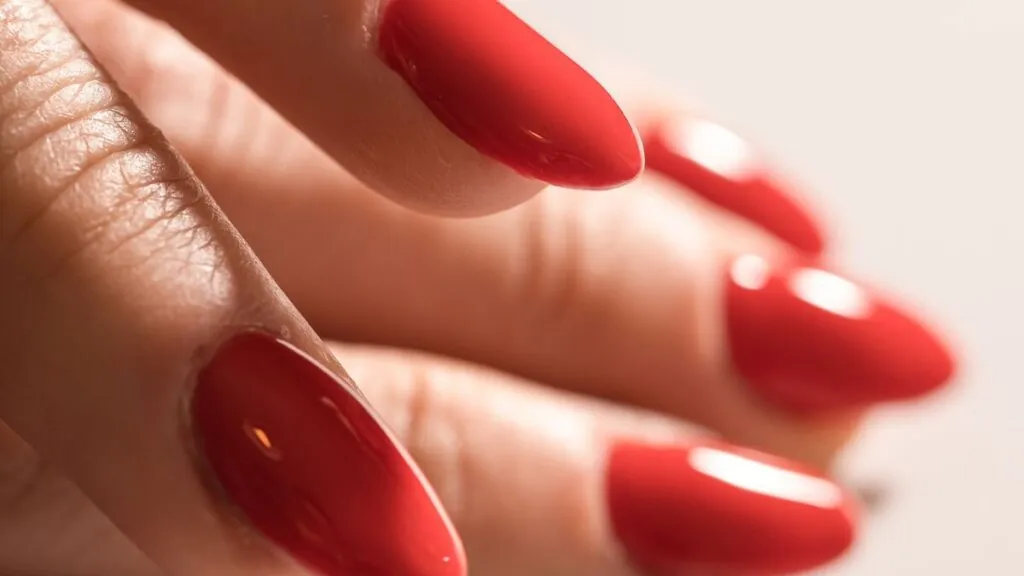
The best nail polish shades for Indian skin depend on your undertone more than on how light or deep your skin is: warm undertones glow in corals, terracotta and golden yellows, cool undertones suit berries, blue-reds and mauves, and neutral undertones can wear almost anything. Start by finding your undertone with the quick tests below, then use the shade guide for light, wheatish and dusky skin to build a polish wardrobe that works for office days, festivals and weddings.
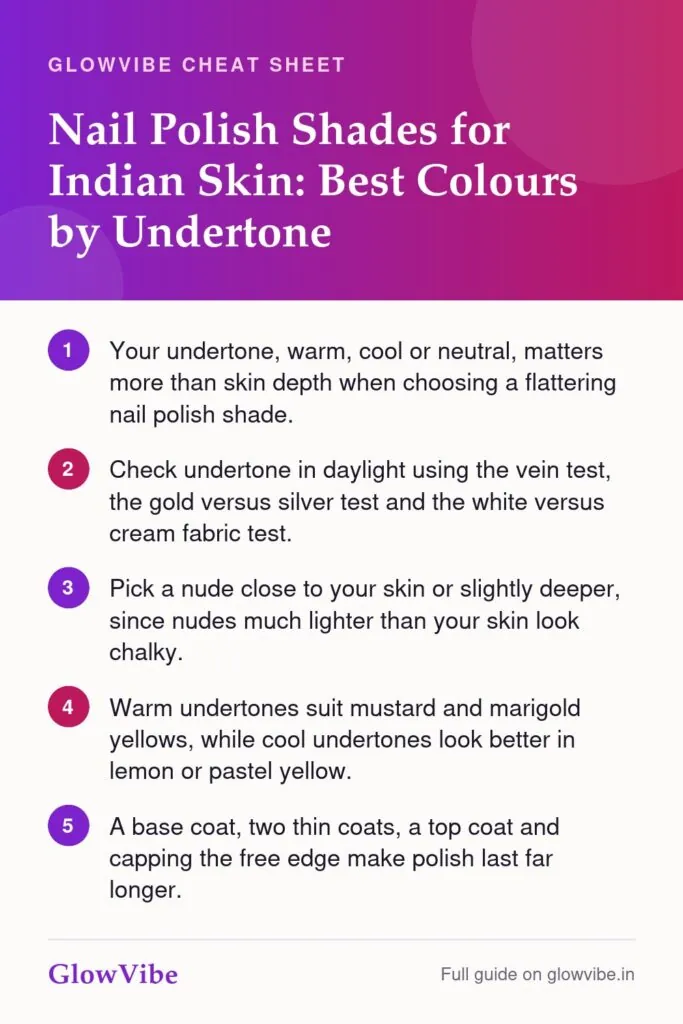
One thing first: every skin tone can wear every colour. These are starting points to make shopping easier, not rules. If a shade makes you happy, it suits you.
Quick summary: your nail shade cheat sheet
- Warm undertone: coral, peach, terracotta, brick red, mustard and golden yellow, warm nudes with a caramel base.
- Cool undertone: blue-red, berry, plum, mauve, pink nudes, lavender and lemon or pastel yellow.
- Neutral undertone: true red, rose, soft taupe, most nudes and most yellows.
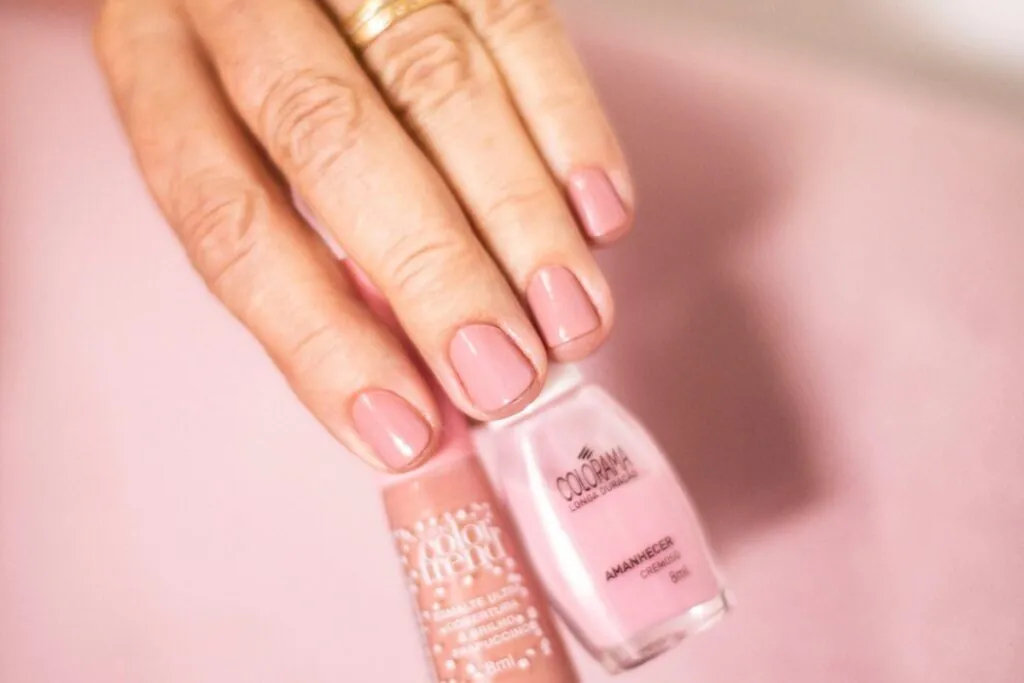
- Nudes: pick one a shade or two deeper than your skin, or close to the colour of your lips, so fingers don’t look washed out.
- To make polish last: clean, dry nails, a base coat, two thin colour coats, a top coat, and cap the free edge.
Warm, cool or neutral: how to find your undertone
Your skin tone is the surface colour (light, wheatish, dusky, deep). Your undertone is the subtle colour beneath it, and it stays the same even when you tan. Most Indian skin leans warm or neutral, but plenty of people have cool or olive undertones, so it’s worth checking rather than assuming.
Do these tests in natural daylight, near a window, with no makeup on your hands or face.
1. The vein test
Look at the veins on the inside of your wrist. Greenish veins usually mean a warm undertone, bluish or purple veins suggest cool, and a mix you can’t decide on often means neutral. On deeper skin, veins can be harder to see, so use the next two tests as well.
2. The gold vs silver test
Hold a gold bangle and a silver one against your wrist. If gold makes your skin look brighter and more even, you probably lean warm. If silver looks better, you lean cool. If both look equally good, you’re likely neutral.
3. The white vs cream fabric test
Drape a stark white dupatta and an off-white or cream one near your face and hands. Warm undertones tend to look better against cream, cool undertones against pure white. Neutral skin handles both.
Olive undertones are common in India too. If your skin has a slight greenish or grey cast and none of the tests feel clear, you may be olive. Olive skin looks lovely in deep greens, plum, wine, bronze and warm browns.
Best nail polish shades by skin tone
Use this table as a shortcut, then read the notes for each tone. Combine it with your undertone: a light-skinned person with a warm undertone will usually prefer the warmer picks in each row.
| Shade family | Light / fair skin | Wheatish / medium skin | Dusky / deep skin |
|---|---|---|---|
| Nude | Pink-beige, soft peach, sheer rose | Caramel, warm beige, rose-brown | Mocha, cocoa, deep toffee, chocolate |
| Red | Cherry or blue-red | True red, brick red, tomato red | Oxblood, wine, deep brick |
| Berry | Raspberry, soft plum | Berry, fuchsia, magenta | Plum, aubergine, blackberry |
| Coral and orange | Soft coral, peach | Coral, burnt orange, terracotta | Bright orange, tangerine, rust |
| Yellow | Pastel or lemon yellow | Mustard, marigold, sunflower | Bright canary, saffron, gold shimmer |
Light or fair skin
Soft pinks, peach and blue-based reds look crisp and clean on light skin. Choose nudes with a hint of pink or peach rather than chalky beige. Deep colours like oxblood or navy create a striking contrast and work well for evenings.
Wheatish or medium skin
This is the most common skin tone range in India, and it’s one of the most flexible for polish. Caramel and rose-brown nudes look polished for work. Corals, terracotta and brick reds bring out the warmth in the skin, while fuchsia and magenta look vivid and festive.
Dusky or deep skin
Rich, saturated colours look stunning on deeper skin, from wine and plum to bright orange and canary yellow. For nudes, skip the pale beiges made for lighter skin and look for mocha, cocoa and toffee shades that match or sit slightly deeper than your skin. Metallic gold and bronze also look beautiful against deep skin for festive wear.
A closer look at each shade family
Nudes: the everyday workhorse
The trick with nudes is matching depth, not just picking “beige”. Hold the bottle against the back of your hand: if the polish looks much lighter than your skin, it will look like correction fluid once it’s on. A nude that’s close to your skin, or close to your natural lip colour, makes fingers look longer and tidier.
Reds: pick your base
Reds come in two main bases. Orange-based reds (tomato, brick) suit warm undertones, while blue-based reds (cherry, crimson, wine) suit cool undertones. A true, balanced red flatters almost everyone. If you love matching your lips and nails, our guide to red velvet lipstick shades for Indian skin uses the same warm-vs-cool logic.
Berries and plums
Berry shades are the easiest way to look put-together in winter. Lighter raspberry tones suit light skin, true berry and magenta suit wheatish skin, and deep plum or aubergine look rich on dusky skin.
Corals and oranges
Corals sit between pink and orange, which makes them flattering on warm and neutral undertones. On deeper skin, brighter oranges and tangerine look joyful rather than loud. If your undertone is cool and corals feel off, try a pink-leaning coral or watermelon shade instead.
Yellow: bolder than you think, easier than you fear
Yellow has a reputation for being hard to wear on Indian skin, but the right yellow is simply about undertone. Warm undertones look great in mustard, marigold and golden yellows. Cool undertones do better with lemon or pastel butter yellow. Bright canary and saffron yellow look especially vivid on dusky and deep skin.
Yellow is a natural fit for haldi ceremonies, Basant Panchami and summer outfits. Two tips: yellow polish is often sheer, so you may need three thin coats, and a white base coat underneath makes it look more opaque. If a full yellow mani feels too much, try it on one accent nail or as a French tip over a nude.
Nail shades for weddings and festivals vs office
For the office and everyday wear
Choose shades that look neat even with a small chip: your best nude, a sheer pink or peach, soft taupe, mauve or a muted rose-brown. Keep nails short to medium and evenly shaped. If you work with food, in healthcare or in a lab, check your workplace rules, as some settings don’t allow nail polish at all.
For Diwali, pujas and festive dinners
Festivals are the time for deep reds, wine, gold shimmer, bronze and jewel tones like emerald and sapphire. Match the polish to the strongest colour in your outfit, or go for metallic gold if you’re wearing a lot of gold jewellery. For a full festive look to go with it, see our Diwali makeup looks for Indian skin.
For weddings: haldi, mehendi, sangeet and reception
- Haldi: yellow, marigold, coral or a clear coat, since turmeric can stain light polish. Darker shades hide staining best.
- Henna (mehendi)A plant dye that stains hair reddish-brown and coats strands for a glossy feel. Pure henna is different from "black henna", which can contain harsh dyes.See glossaryRead the guide: many people skip polish so the henna on the fingertips shows. If you wear it, pick a green, olive or nude that sits well beside the henna colour, and paint after the henna is done.
- Sangeet: fun is welcome here. Try fuchsia, metallics, glitter tips or a bold orange.
- Wedding and reception: classic red, maroon, wine or a rich nude with a gold accent nail always look elegant in photos.
Want your nails, lips and eyes to tie together across every function? Our wedding guest makeup guide from haldi to reception walks through each event.
Matching nails to lips
You don’t need an exact match. Keeping lips and nails in the same family (both warm or both cool) looks intentional without being too matchy. Pairing a bold nail with a soft lip, or the other way round, also works well. To find lip shades on the same undertone, browse our guide to the best lipstick shades for Indian skin tones.
How to make nail polish last longer
Most chipping comes from prep and thick coats, not from the polish itself. Follow these steps for a manicure that lasts several days longer.
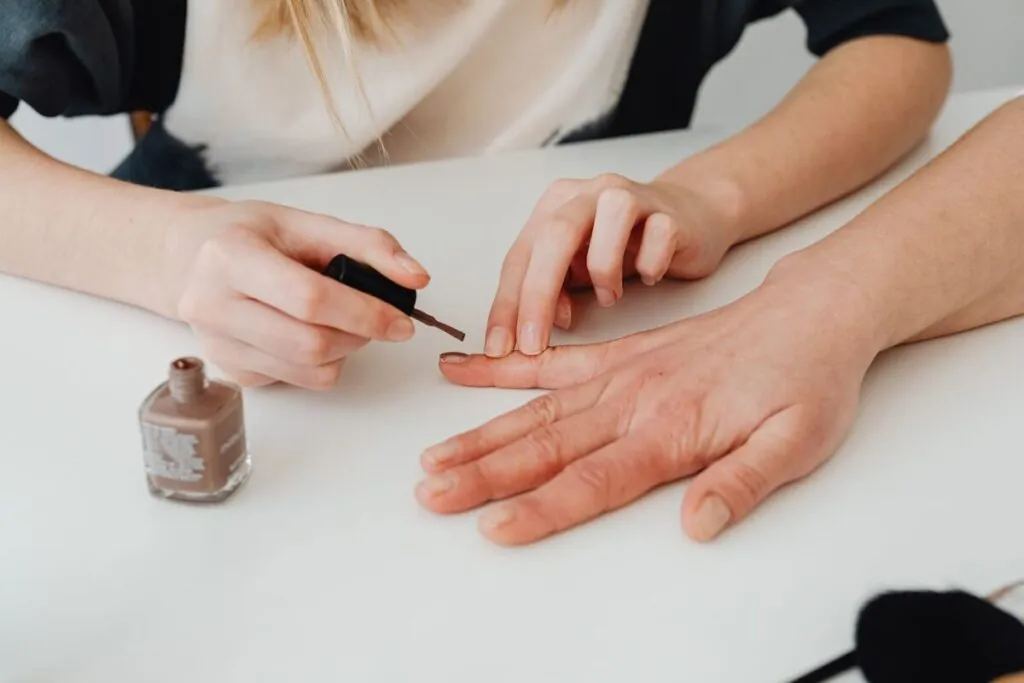
- Prep the nail (5 minutes): shape with a file in one direction, gently push back cuticles after a shower, and don’t cut them. Wipe each nail with polish remover to clear oil and lotion, even if they look clean.
- Apply a base coat: one thin layer helps colour grip the nail and reduces staining from dark shades like red, wine and navy. Let it dry for a minute or two.
- Paint thin coats: wipe one side of the brush on the bottle neck, then use three strokes per nail: centre, left, right. Two thin coats dry harder and last longer than one thick coat. Wait two to three minutes between coats.
- Cap the free edge: after each coat, run the brush lightly along the tip of the nail. This seals the edge, which is where chips usually start.
- Finish with a top coat: it adds shine and protects the colour. Cap the edge again with it. Reapplying a thin top coat every two to three days refreshes the shine and extends wear.
- Let it set properly: polish can feel dry in ten minutes but stays soft underneath for longer. Avoid hot water, washing up and hand cream for the first hour or so if you can.
Wear gloves for dishes and cleaning. A drop of cuticle oil at night keeps the skin around your nails soft, which makes the whole manicure look fresher.
Common mistakes to avoid
- Choosing by skin tone alone: two people with wheatish skin can have different undertones, so a shade that suits your friend may not suit you.
- Swatching under shop lights: yellow or white store lighting changes how colours look. Check the bottle against your hand in daylight before you buy.
- Nudes that are too pale: a nude much lighter than your skin can look chalky. Go a shade deeper.
- Skipping the base coat with dark shades: this is the main cause of yellow-stained nails.
- Shaking the bottle hard: it adds air bubbles. Roll it between your palms instead.
- Painting the morning of an event: paint the night before so the polish has hours to harden.
Frequently Asked Questions
Rich, saturated shades like wine, plum, oxblood, bright orange, canary yellow and metallic gold look striking on dusky skin. For everyday wear, choose a mocha or toffee nude that matches your skin depth instead of a pale beige.
Yes. Pick a yellow that matches your undertone: mustard and marigold for warm undertones, lemon or pastel yellow for cool ones. Bright canary and saffron yellow look vivid on deeper skin. A white base and three thin coats help sheer yellows look even.
Caramel, warm beige and rose-brown nudes usually flatter wheatish skin. Test the shade against the back of your hand in daylight. It should look close to your skin or slightly deeper, never noticeably lighter.
The usual causes are oil on the nail, thick coats, no base or top coat, and not capping the free edge. Hot water and household chores soon after painting also shorten wear. Fixing your prep and switching to thin coats makes the biggest difference.
For most people, regular polish is fine, but a few polish-free days now and then let you check your nails and moisturise them well. Use a gentle remover and avoid peeling polish off, which lifts layers of the nail. If your nails become brittle, discoloured or sore, or the skin around them reacts, see a dermatologist.
Always use a base coat under reds, wines, navies and other deep shades. When removing, press a remover-soaked cotton pad on the nail for a few seconds before wiping, so the colour lifts off instead of smearing across the nail and cuticle.
Quick poll
What does your everyday makeup look like?
Find your shades and have fun with them
Work out your undertone first, then use the skin tone table to shortlist a nude, a red, a berry and one fun shade like coral or yellow. Prep well, keep coats thin and cap every edge, and your manicure will stay fresh for days. And if a colour “breaks the rules” but you love it, wear it anyway.