Face Oil for Makeup: How to Use It Without Sliding (2026)
Can you wear face oil under makeup? Yes. Here is how to pick the right oil for your skin type and apply it so foundation looks smooth and stays put.

Yes, you can wear face oil under makeup. A few drops of the right oil, pressed in and given time to settle, gives foundation a smoother base and a soft, healthy sheen instead of a flat, cakey finish.
The catch is in the details: which oil, how much, and when you apply it. Get those wrong and your base slides off by lunchtime, especially in Indian heat and humidity. This guide walks you through choosing a face oil for your skin type, where it fits in your routine, and how to stop it from breaking down your makeup.
Why use face oil before makeup?
Foundation and concealer cling to dry patches and flaky skin. When the surface is dehydrated, makeup settles into fine lines and looks patchy within a couple of hours. A light layer of oil softens that surface so your base goes on evenly.
Face oils are mostly EmollientAn ingredient that softens and smooths skin or hair by filling gaps between cells, such as squalane, shea butter or plant oils.See glossary. They fill the tiny gaps between skin cells and slow down water loss from the top layer. They do not add water themselves, which is why they work best on top of a hydrating serum or moisturiser rather than on bare, dry skin.
Used well, a face oil can help with:
- Smoother application: foundation glides instead of dragging, so you need less product.
- Less flaking: dry patches around the nose, chin and brows are less likely to show through.
- A natural glow: a dewy, skin-like finish without a highlighter.
- Comfort in dry weather: useful in North Indian winters and air-conditioned offices, where skin feels tight by afternoon.
If your skin is very dry, also read our guide on a winter skincare routine for dry skin, because oil alone will not fix dehydration.
Face oils at a glance: which oil suits which skin
Different oils feel very different on the skin. Lighter oils sink in quickly and sit well under makeup. Richer oils are better for very dry skin or for night use.
| Oil | Texture | Best for | Under makeup? |
|---|---|---|---|
| SqualaneA light, stable oil similar to the oils your skin makes. It moisturises without feeling heavy and suits most skin types.See glossary | Very light, fast-absorbing | Oily, combination, sensitive | Excellent |
| Jojoba | Light, close to natural SebumThe natural oil your skin and scalp make. Some is essential for a healthy barrier; too much can feel greasy and clog pores.See glossary | Combination, normal | Very good |
| Rosehip | Light “dry” oil | Normal, dry, dull skin | Good |
| Grapeseed | Thin, non-greasy | Oily, combination | Good |
| Argan | Medium, nourishing | Dry, mature | Good in small amounts |
| Marula | Medium-rich | Very dry, winter skin | Best mixed into moisturiser |
Popular face oils for makeup prep, explained
You do not need a fancy blend. A single, well-chosen oil usually works better under makeup than a heavily fragranced mix of ten.
Squalane: the safest all-rounder
Squalane is a lightweight, stable oil that mimics a component of your skin’s own sebum. It absorbs fast, leaves almost no slip and rarely clogs pores, which makes it the easiest oil to wear under foundation. A widely available example in India is The Ordinary 100% Plant-Derived Squalane.
- Best for: oily, combination, normal and sensitive skin.
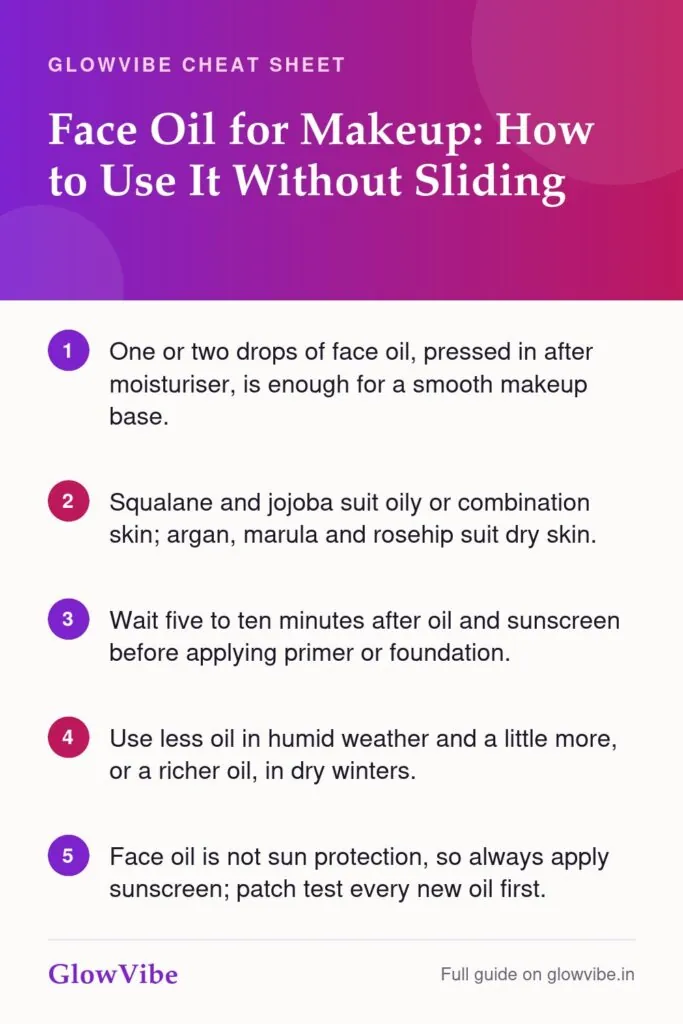
- How to use under makeup: 1 to 2 drops pressed over moisturiser.
- Pros: feather-light; Fragrance-freeA product with no added perfume or essential oils for scent. Often the safer pick for sensitive or reactive skin. "Unscented" can still contain masking fragrance.See glossary options; works in humid weather.
- Cons: may feel too light for very dry winter skin.
Jojoba oil: good for combination skin
Jojoba is technically a liquid wax, and its texture is close to natural sebum. It feels slightly richer than squalane but still absorbs well, so it suits skin that is oily in the T-zone and dry on the cheeks.
- Best for: combination and normal skin.
- How to use under makeup: 1 to 2 drops, mostly on the cheeks and jawline.
- Pros: easy to find in pure form; gentle; budget-friendly.
- Cons: can feel a little slick if you overdo it.
Rosehip oil: for dull, uneven-textured skin
Rosehip seed oil is a “dry” oil rich in fatty acids that absorbs quickly. Many people like it for skin that looks dull or rough. The Ordinary 100% Organic Cold-Pressed Rose Hip Seed Oil is one widely sold option.
- Best for: normal to dry skin that looks tired.
- How to use under makeup: 1 to 2 drops; let it sit for a few minutes.
- Pros: lightweight for its richness; gives a soft glow.
- Cons: spoils faster than other oils once opened; store it away from heat and sunlight.
Argan and marula oil: for dry skin
Argan and marula oils are richer and more cushioning. They are good choices if your skin feels tight within an hour of moisturising or if you live in a dry, cold climate.
- Best for: dry and mature skin, and winter months.
- How to use under makeup: 1 drop mixed into your moisturiser instead of layering on top.
- Pros: very comforting; reduces flaking under foundation.
- Cons: too heavy for oily skin or for humid Mumbai or Chennai summers.
Grapeseed oil: a light, budget option
Grapeseed oil is thin and quick to absorb. It suits oily skin that still feels dehydrated, though it is less stable than squalane, so buy small bottles and use them up.
- Best for: oily and combination skin.
- Pros: light, non-greasy, affordable.
- Cons: shorter shelf life; quality varies between brands.
How to choose a face oil for makeup
Start with your skin type, then adjust for the weather where you live and the finish you want.
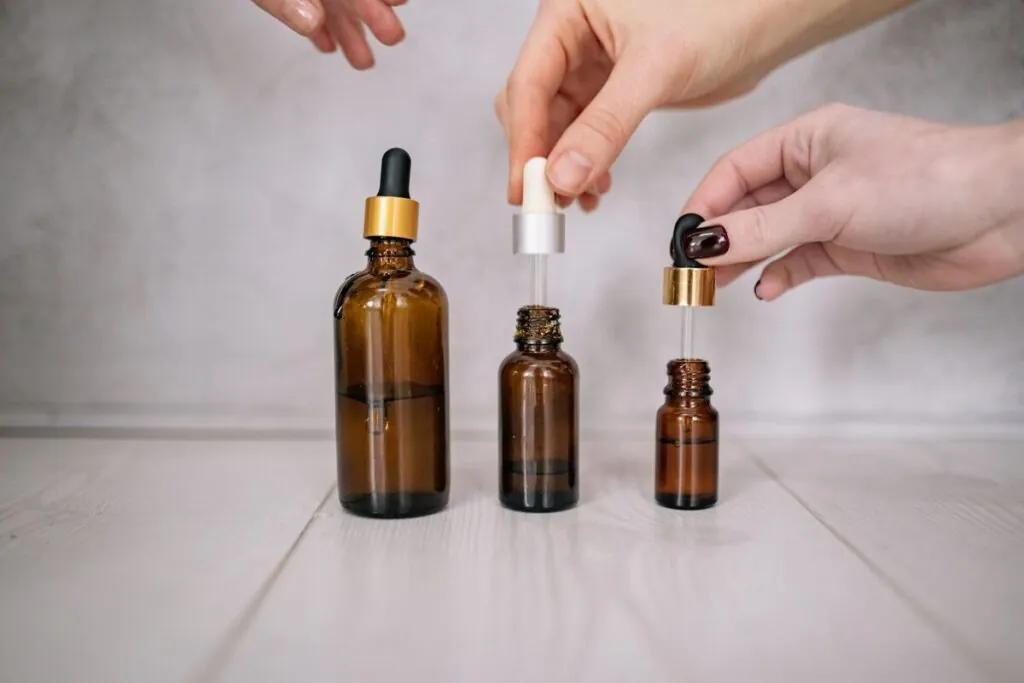
By skin type
- Oily or acne-prone: squalane or grapeseed, 1 drop only, or skip oil entirely on hot days. If you break out easily, introduce one new product at a time.
- Combination: jojoba or squalane on the cheeks and around the mouth; skip the T-zone.
- Normal: squalane, jojoba or rosehip, depending on how much glow you want.
- Dry or mature: argan, marula or rosehip, ideally mixed into moisturiser.
- Sensitive: plain, fragrance-free squalane or jojoba. Avoid oils with added essential oils.
By Indian climate
In humid coastal cities and during the monsoon, most people need less oil, not more. One drop, or oil only on dry patches, is plenty. In dry North Indian winters or in heavily air-conditioned spaces, you can use slightly more or switch to a richer oil.
In peak summer heat, consider saving your face oil for night and using a gel moisturiser and a water-based primer in the morning instead.
Check the label
- Look for a short ingredient list, ideally a single oil.
- Avoid heavy fragrance and essential oils if your skin reacts easily.
- Pick dark glass or opaque bottles, which protect the oil from light.
- Ignore marketing about “whitening” or changing your skin colour. A good face oil is there to nourish and smooth, not to make skin fairer.
How to apply face oil under makeup: step by step
Order and timing matter more than the oil you pick. Follow these steps for a base that stays put.

- Patch testTrying a small amount of a new product behind the ear or on the inner arm for a few days to check for a reaction before using it widely.See glossary first. Apply a small amount to the side of your neck or behind the ear for 24 to 48 hours before using a new oil on your face.
- Cleanse. Wash with a gentle cleanser and pat your face dry.
- Hydrate. Apply a hydrating serum or toner, then a light moisturiser. Oil seals in water; it cannot replace it.
- Warm 1 to 2 drops between your palms. That is enough for the whole face. More than three drops is the most common reason makeup slides.
- Press, don’t rub. Gently press your palms onto your cheeks, forehead and jaw, focusing on dry areas.
- Apply sunscreen. In the morning, sunscreen still goes on after your skincare. Let it set for a few minutes.
- Wait 5 to 10 minutes. Do your hair or brows while the skin settles. Your face should feel soft, not wet.
- Blot if needed. If your skin still feels slippery, press a tissue lightly over the T-zone before primer or foundation.
- Apply makeup in thin layers. A sponge helps press foundation in without disturbing the oil layer.
Other ways to use face oil with makeup
- Mix into foundation: add one drop to a matte foundation on the back of your hand to make it more sheer and dewy.
- Revive dry patches: warm a tiny amount on your fingertip and press it over flaky areas after makeup.
- Glow on high points: a dab on the tops of the cheekbones gives a subtle sheen without highlighter.
- Remove makeup: massage oil over dry skin to dissolve makeup, then follow with a gentle cleanser.
Common mistakes when using face oil before makeup
- Using too much. Four or five drops will break down foundation, especially long-wear formulas.
- Applying makeup immediately. Without a few minutes to absorb, oil mixes with your base and it pills or separates.
- Putting oil on bare, dry skin. Hydrate first; oil on dehydrated skin can still look flaky.
- Skipping sunscreen. A face oil is not sun protection, even if it contains antioxidants.
- Oiling the T-zone if you shine there. Keep oil to the areas that actually feel dry.
- Pairing a rich oil with a silicone-heavy primer. Some combinations pill. If your base balls up, change one product at a time.
For more base fixes, see common foundation mistakes and how to fix them.
When face oil is not the right choice
Face oil is optional. If you have active acne, frequent clogged pores or very oily skin, a lightweight gel moisturiser or a hydrating makeup serum may do the same job with less risk. If your skin stings, stays red or breaks out after using an oil, stop and give your skin a break.
Persistent redness, itching, painful breakouts or rashes need a dermatologist, not another product. If your skin feels tight and irritated all the time, our guide to repairing a damaged skin barrier is a good place to start.
Frequently Asked Questions
Yes, if your skin likes it. Most people do well with 1 to 2 drops each morning. On hot, humid days you may prefer to use it only on dry areas or save it for night.
Usually after, as the last skincare step before sunscreen. Oils seal in the water from your serum and moisturiser. If you prefer, you can mix a drop directly into your moisturiser instead.
It can if you use too much or apply makeup too soon. Stick to 1 to 2 drops, wait 5 to 10 minutes, and blot the T-zone if it still feels slick. Long-wear and matte foundations are less forgiving, so use the lightest possible layer under them.
Squalane is the easiest choice because it is light and rarely clogs pores. Grapeseed oil is another light option. Use a single drop and keep it away from the T-zone.
Yes. One drop mixed with foundation on the back of your hand makes a matte formula sheerer and more dewy. Mix just enough for one application rather than adding oil to the bottle.
No. Face oil does not protect against UV, so sunscreen is still essential every morning. It can replace a hydrating primer for some people, but you may still want a primer if you need longer wear.
Some oils can clog pores for some people, especially richer ones on oily skin. Patch test, introduce one new product at a time, and stop if you notice new bumps. See a dermatologist if breakouts persist.
Quick poll
What is your biggest skin concern right now?
The bottom line
A face oil can make your makeup look smoother and more like skin, as long as you keep it light. Pick an oil that suits your skin type, apply 1 to 2 drops after moisturiser, give it a few minutes, then go in with sunscreen and makeup.
Adjust for the season: less in humid weather, a little more or a richer oil in dry winters. If your skin reacts, stop and keep your routine simple.