Face Skin Problems in India: Causes, Signs and Safe Fixes (2026)
A plain-English guide to common face skin problems in India, from acne and melasma to fungal acne and eczema: what they look like, causes, safe first steps and when to see a dermatologist.


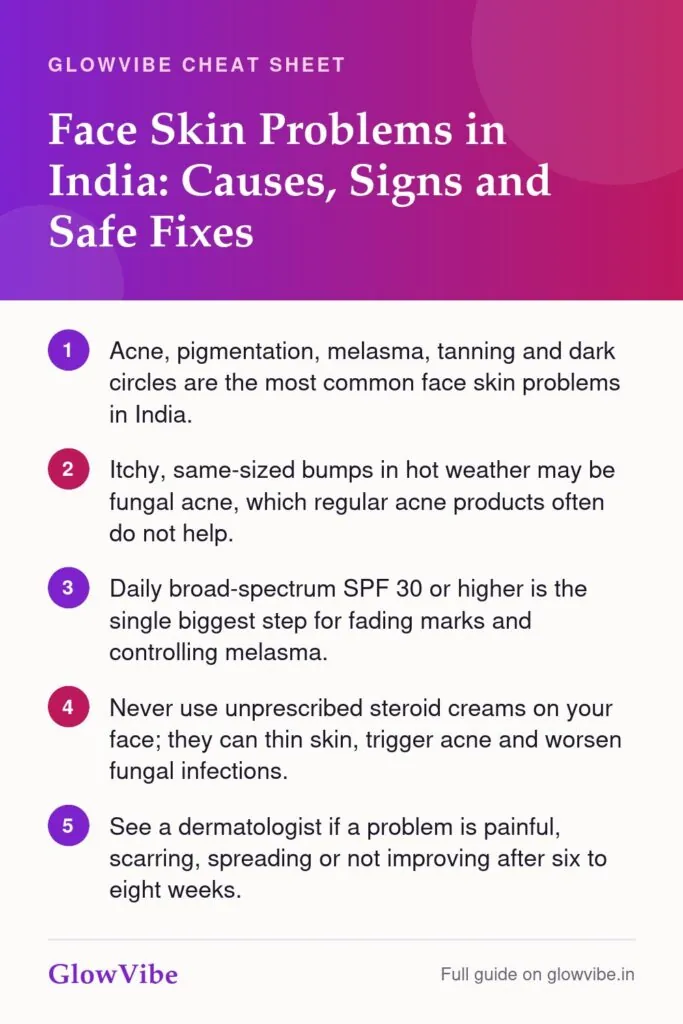
The most common face skin problems in India are acne, pigmentation (dark spots and melasma), tanning, dark circles, dryness, fungal acne, rosacea and eczema. Most mild cases settle with a gentle routine, daily sunscreen and patience, but anything painful, spreading, scarring or not improving in 6–8 weeks needs a dermatologist.
This guide walks you through each problem one by one: what it looks like, what usually causes it, what you can safely try first, and the signs that it is time for a professional. For skin types and building a full routine, see our face skin care guide. This is general information, not a diagnosis.
Common face skin problems at a glance
| Problem | What it looks like | See a dermatologist if |
|---|---|---|
| Acne | Blackheads, whiteheads, red bumps, pus-filled pimples, deep lumps | Painful lumps, scarring, or no change after 8 weeks |
| Fungal acne | Tiny, uniform, itchy bumps on forehead, hairline, chest | Itch and bumps keep returning |
| Pigmentation / dark spots | Brown or dark marks left after pimples, cuts or burns | Spots grow, change shape or bleed |
| Melasma | Symmetrical brown patches on cheeks, forehead, upper lip | Always worth a diagnosis; it is easy to worsen |
| Tanning | Even darkening on sun-exposed areas | Rarely needed, unless it does not fade at all |
| Dark circles | Brown, bluish or hollow-looking under-eyes | Sudden puffiness, swelling or eye symptoms |
| Dryness / damaged barrier | Tightness, flaking, stinging when products go on | Cracking, bleeding or constant burning |
| Rosacea | Flushing, persistent redness, visible vessels, bumps | Redness stays or eyes feel gritty |
| Eczema / dermatitis | Itchy, dry, rough, sometimes oozing patches | Itch disturbs sleep, or skin oozes or crusts |
How to tell what you are dealing with
Before you buy anything, look closely at your skin in daylight and note four things: where the problem sits, whether it itches or hurts, how long it has been there, and what makes it worse. Itch points towards fungal acne, eczema or an allergy; pain and pus point towards acne. A weekly photo in the same light shows honestly whether things are improving.
1. Acne and pimples
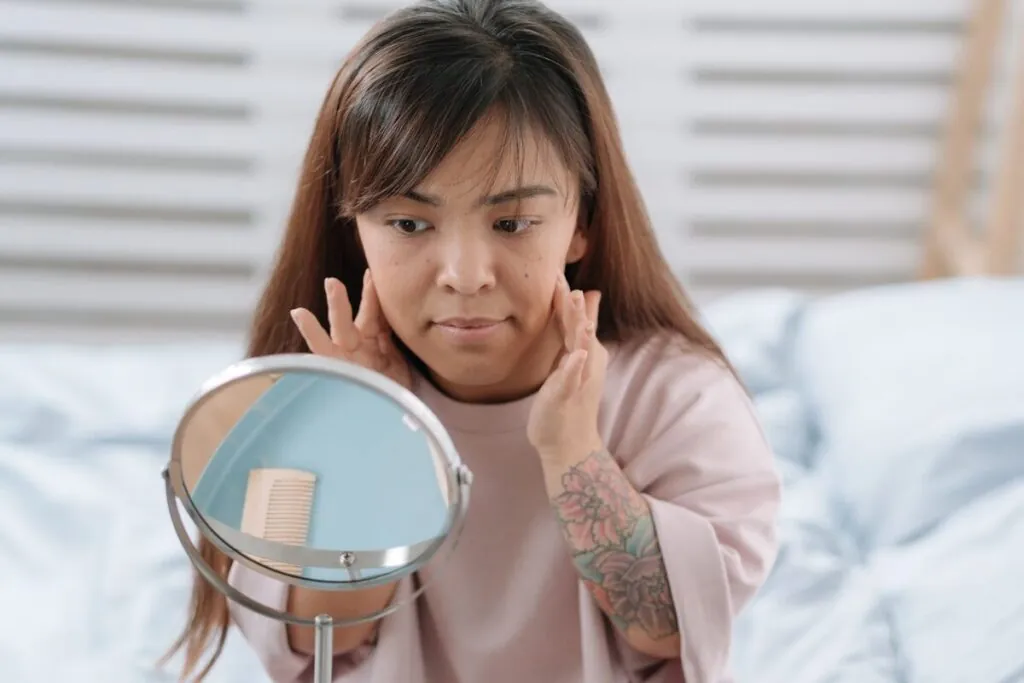
What it looks like: blackheads and whiteheads (comedones), red tender bumps, pus-filled pimples, and in more severe cases deep, painful lumps under the skin.
Likely causes: pores get clogged with oil and dead skin, bacteria multiply, and the area becomes inflamed. Hormones (puberty, periods, PCOS), heavy creams, helmet sweat and stress all play a part.
Safe first steps:
- Wash twice a day with a gentle, non-stripping cleanser; a Salicylic acidThe most common BHA. It dissolves oil inside pores, which helps with blackheads, whiteheads and oily skin. Usually used at 0.5 to 2%.See glossaryRead the guide face wash suits oily, congested skin.
- Use a light, Non-comedogenicA label meaning a product is formulated not to clog pores. Useful for acne-prone skin, though it is not a regulated or guaranteed claim.See glossaryRead the guide gel moisturiser so your skin does not overproduce oil.
- NiacinamideA form of vitamin B3 that helps with oiliness, the look of large pores, uneven tone and barrier support. Gentle and easy to pair with most ingredients.See glossaryRead the guide serums can help with oil and redness for many people; introduce one new product at a time.
- Do not pop or squeeze pimples. This is the main reason acne leaves dark marks on Indian skin.
See a dermatologist if you have deep or painful lumps, any scarring, acne along with irregular periods or unusual hair growth, or no real improvement after about 8 weeks of a steady routine. Early treatment helps prevent scars.
2. Fungal acne (Malassezia folliculitis)
What it looks like: clusters of small bumps that are all roughly the same size, usually on the forehead, hairline, chest and upper back. Unlike regular acne, they tend to itch, and they rarely form blackheads.
Likely causes: it is not true acne but an overgrowth of a yeast that normally lives on skin. Indian summers and monsoons feed it: heat, humidity, trapped sweat and rich oils.
Safe first steps: shower and change out of sweaty clothes soon after workouts or travel, switch to light gel textures, and pause face oils and heavy creams.
See a dermatologist if the bumps keep coming back or you are not sure whether it is fungal or bacterial. Regular acne products often do nothing for it.
3. Pigmentation and dark spots
What it looks like: flat brown, dark brown or greyish marks where a pimple, bite, cut, wax burn or rash used to be. This post-inflammatory HyperpigmentationPatches of skin that are darker than the surrounding skin, such as acne marks, sun spots or tanning. Very common on Indian skin tones.See glossary is very common in Indian skin tones.
Likely causes: any inflammation tells the skin to make extra melanin, and sun exposure keeps those marks dark for longer. Picking at spots makes it much worse.
- Wear Broad spectrumA sunscreen label meaning it protects against both UVB rays (which cause burning) and UVA rays (which cause tanning and ageing).See glossaryRead the guide SPF (sun protection factor)A measure of protection against UVB rays, which cause sunburn. SPF 30 blocks about 97% of UVB and SPF 50 about 98%, if you apply enough and reapply.See glossaryRead the guide 30 or higher every day, including cloudy days and indoors near windows. Reapply if you are outdoors.
- Treat the cause first (acne, eczema), or new marks will keep appearing.
- Gentle brightening ingredients such as niacinamide, Vitamin CAn antioxidant that brightens dull skin, helps fade the look of dark spots and supports sunscreen against daily damage. Best used in the morning.See glossaryRead the guide or Azelaic acidA gentle acid that helps with redness, bumps and uneven tone. It is usually well tolerated by sensitive and acne-prone skin.See glossary may help marks fade over a few months. Check our list of skincare ingredients you should not mix before layering actives.
See a dermatologist if a spot is raised, growing, changing colour or shape, itching or bleeding.
4. Melasma
What it looks like: brown to grey-brown patches with blurry edges, usually on both cheeks, the forehead, nose bridge or upper lip, often in a mirror-image pattern. It is especially common in Indian women in their 20s to 40s.
Likely causes: sun and heat exposure, hormonal changes (pregnancy, contraceptive pills), and family history.
Safe first steps: strict daily sunscreen (tinted mineral sunscreens can help with visible light), a hat or dupatta outdoors, and a gentle routine with no scrubbing. Skip home bleach, lemon juice and harsh peels, which irritate the skin and can make melasma darker.
See a dermatologist for a proper diagnosis early on. It is long-term, tends to come back, and is often worsened by unprescribed “fairness” or steroid creams (see below).
5. Sun tanning
What it looks like: an even darkening on the areas the sun reaches: forehead, cheeks, nose, neck and the backs of the hands, often with a visible line where your collar or watch sits.
Likely causes: UV exposure. Two-wheeler commutes and outdoor sport are common culprits, and a pea-sized dab of sunscreen is never enough.
Safe first steps: use about two finger-lengths of sunscreen for face and neck, reapply every 2–3 hours outdoors, and keep exfoliation gentle (once or twice a week at most). A tan usually fades on its own over weeks once you stop adding to it. Sun protection matters all year, as we explain in our guide to sunscreen in winter in India.
See a dermatologist if you get blistering sunburns, a rash after sun exposure or darkening that never fades.
6. Dark circles
What it looks like: brown pigmentation under the eyes (very common in Indian skin), a bluish or purple tinge from visible veins, or shadows from hollowness and puffiness.
Likely causes: genetics is the biggest one. Rubbing, allergies, sun, poor sleep and late nights add to it.
Safe first steps: stop rubbing, treat allergies, take sunscreen right up to the under-eye area (carefully), sleep on a regular schedule, and use a simple, fragrance-free eye cream or your regular moisturiser. Genetic dark circles soften but rarely disappear.
See a doctor if dark circles appear suddenly, come with swelling, or you also feel very tired, as a basic check-up (including for anaemia or thyroid issues) can be worthwhile.
7. Dryness and a damaged skin barrier
What it looks like: tight skin after washing, flaky patches around the nose and mouth, a dull look, and stinging or burning when even mild products go on.
Likely causes: harsh soaps, very hot water, scrubbing, stacking too many acids or retinoids, dry North Indian winters and air-conditioning.
Safe first steps: cut back to a gentle cleanser, a ceramide or glycerin-rich moisturiser and sunscreen for two to four weeks, and pause all exfoliants and actives. Our guide to a damaged skin barrier has a full step-by-step repair plan.
See a dermatologist if the skin cracks, bleeds, oozes or keeps burning despite a stripped-back routine.
8. Rosacea
What it looks like: easy flushing, persistent redness across the cheeks and nose, fine visible blood vessels, and sometimes acne-like bumps without blackheads. On brown skin the redness can look more like a dusky, warm patch and is often missed or mistaken for acne.
Likely triggers: heat, sun, hot drinks, spicy food, alcohol, intense workouts, stress and harsh products. A trigger diary helps.
Safe first steps: a very gentle, fragrance-free routine, mineral sunscreen, and avoiding scrubs, toners with alcohol and menthol-type cooling products.
See a dermatologist for diagnosis, as rosacea is a long-term condition that responds best to a doctor-guided plan. Go sooner if your eyes feel gritty.
9. Eczema and contact dermatitis
What it looks like: itchy, dry, rough patches, sometimes red or darker than the surrounding skin. Contact dermatitis appears where a product or material touched, such as hair dye along the hairline, a new face cream, or nickel in earrings.
Likely causes: atopic eczema runs in families with asthma or allergies. Contact dermatitis is triggered by irritants or allergens: fragrance, preservatives, hair dye (especially PPD), home remedies like raw lemon or garlic, and some essential oils.
Safe first steps: stop any new product immediately, wash with plain lukewarm water, moisturise with a bland fragrance-free cream, and patch test every new product on your inner arm or behind the ear for 48 hours before using it on your face.
See a dermatologist if the itch disturbs your sleep or the skin oozes, crusts or swells. Swelling of the lips, eyes or throat after a product is an emergency.
Other face skin conditions worth knowing
- Seborrhoeic dermatitis: greasy, flaky, slightly red skin around the eyebrows, sides of the nose and hairline, often alongside dandruff.
- Ringworm (tinea) on the face: an itchy, ring-shaped patch that spreads outwards. It is very common in India’s humid weather and is often made worse by steroid creams.
Both need a dermatologist’s diagnosis rather than guesswork.
Warning: never use unprescribed steroid creams on your face
In India, many creams sold over the counter for “fairness”, pimples, itching or fungal rashes contain strong topical steroids, sometimes combined with antifungals, antibiotics or skin lighteners. They often seem to work brilliantly at first, which is exactly why they are dangerous.
Used on the face without a doctor’s advice, these creams can cause:
- Thinning of the skin, visible blood vessels and easy redness.
- Steroid-induced acne and rosacea-like rashes.
- Fungal infections that spread and become harder to treat.
- A rebound flare of burning and redness when you stop, which pushes people to keep using them.
If a cream was recommended by a chemist, friend or social media and you do not know what is in it, check the label for a steroid ingredient. Common ones include clobetasol, betamethasone, mometasone and fluticasone. If you have already been using one, see a dermatologist rather than carrying on, as stopping can cause a flare that they can help you manage.
A simple routine for problem-prone skin in Indian weather
A short, steady routine beats a shelf of actives. Humidity, heat, pollution and hard water already stress your skin, so keep things gentle.

- Morning: rinse or gently cleanse, apply a moisturiser suited to your skin type, then a broad-spectrum sunscreen of SPF 30 or more.
- Night: cleanse properly (double cleanse if you wore makeup or heavy sunscreen), then moisturise. Add one targeted product only if your skin is calm.
- Weekly: change pillow covers, clean phone screens and makeup brushes, and exfoliate gently at most once or twice.
If you like the idea of fewer products, our minimalist skincare routine shows how to keep it to three steps.
Common mistakes that make face skin problems worse
- Popping pimples and picking at scabs, which leads to dark marks and scars.
- Trying several new products at once, so you cannot tell what helped or what caused a reaction.
- Rubbing raw lemon, toothpaste, baking soda or undiluted essential oils on the face.
- Using face bleach or harsh scrubs on pigmentation, melasma or sensitive skin.
- Skipping sunscreen, then wondering why marks will not fade.
- Giving up on a routine after one week. Most changes take 6–12 weeks to show.
Frequently Asked Questions
Acne, post-acne dark spots, melasma, tanning and dark circles top the list, followed by dryness, fungal acne, eczema and rosacea. Heat, humidity, strong sun and pollution make pigmentation and sweat-related breakouts especially common.
Fungal acne usually shows up as many tiny, same-sized, itchy bumps on the forehead, hairline or chest, and it often flares in hot, sweaty weather. Regular acne has a mix of blackheads, whiteheads and pimples of different sizes and is usually tender rather than itchy. A dermatologist can confirm which one you have.
Post-acne marks often fade fully with time, sun protection and gentle care. Melasma is a long-term condition that can be lightened and controlled but tends to return with sun, heat or hormonal changes, so daily sunscreen remains essential even after it improves.
Simple products like a gentle face wash, moisturiser or sunscreen are fine. Avoid any cream that contains a steroid unless a doctor has prescribed it for your face, because these can thin the skin, trigger acne and worsen fungal infections. When in doubt, read the label or ask a dermatologist.
See one if a problem is painful, scarring, spreading, itchy enough to disturb sleep, or not improving after 6–8 weeks of consistent care. Any mole or spot that changes, bleeds or grows should be checked promptly, and sudden swelling after a product needs urgent care.
Quick poll
How many steps are in your skincare routine?
The bottom line
Most face skin problems start to improve when you work out what you are actually dealing with, keep your routine gentle and protect your skin from the sun every day. Change one thing at a time and give it a few weeks.
Just as important is knowing your limits. Painful acne, scarring, melasma, rosacea and stubborn rashes deserve a dermatologist’s eye, and unprescribed steroid creams have no place on your face.