Night Skincare Routine: Step-by-Step PM Guide by Skin Type (2026)
A step-by-step night skincare routine for oily, dry, combination and sensitive skin, with the right actives to use at night and the mistakes to avoid.


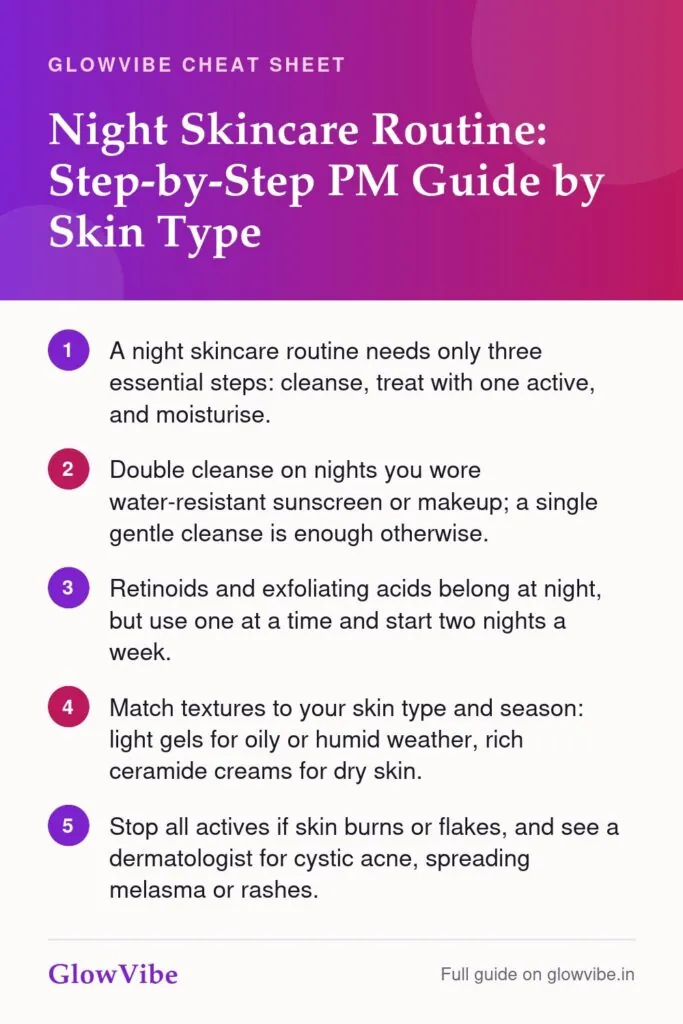
A good night skincare routine has just three essential steps: cleanse off the day, apply one treatment that suits your concern, and seal everything in with a moisturiser. Everything else, from toner to eye cream to face oil, is optional and depends on your skin type.
Night is when your skin is not fighting sun, sweat and pollution, and when you are not layering makeup or sunscreen on top. That makes it the best time for active ingredients like retinoids and exfoliating acids. Below you will find the step-by-step PM routine, how to adapt it for oily, dry, combination and sensitive skin, which actives to use at night, and the mistakes that quietly undo your efforts.
Night skincare routine at a glance
- Cleanse (Double cleansingCleansing twice at night: an oil or balm first to dissolve sunscreen and makeup, then a gentle face wash to clean the skin.See glossaryRead the guide if you wore sunscreen or makeup) – essential
- Tone or hydrate with an alcohol-free toner or essence – optional
- Treat with one active serum: retinoid, exfoliating acid, NiacinamideA form of vitamin B3 that helps with oiliness, the look of large pores, uneven tone and barrier support. Gentle and easy to pair with most ingredients.See glossaryRead the guide or a pigment fighter – recommended
- Eye cream – optional
- Moisturise – essential
- Face oil or OcclusiveAn ingredient that forms a protective layer to stop water escaping from the skin, such as petrolatum, shea butter or dimethicone.See glossaryRead the guide on dry patches – optional, mainly for dry skin
Night routine by skin type
The order of steps stays the same for everyone. What changes is the texture of each product and how often you use actives. Use this table as your starting point.
| Skin type | Cleanser | Best night actives | Moisturiser | Skip or limit |
|---|---|---|---|---|
| Oily / acne-prone | Gel or foaming, low pH | Salicylic acidThe most common BHA. It dissolves oil inside pores, which helps with blackheads, whiteheads and oily skin. Usually used at 0.5 to 2%.See glossaryRead the guide (BHA (beta hydroxy acid)An oil-soluble exfoliating acid that can get inside pores. Salicylic acid is the common BHA, popular for oily and acne-prone skin.See glossaryRead the guide), AdapaleneA retinoid used in acne gels to keep pores from clogging. It can cause dryness at first, so it is usually started a few nights a week with moisturiser and daily sunscreen.See glossaryRead the guide or RetinolA vitamin A derivative that speeds up skin renewal for smoother texture, fewer clogged pores and fewer visible fine lines. Use at night and wear sunscreen by day.See glossaryRead the guide, niacinamide | Light gel, oil-free | Heavy oils, scrubbing daily |
| Dry | Cream or milky, non-foaming | Retinol (slowly), Lactic acidA gentle AHA (first found in milk) that exfoliates and also hydrates. A good starter acid for dry or sensitive skin.See glossary, hyaluronic acid | Rich cream with ceramides | Foaming cleansers, alcohol toners |
| Combination | Gentle gel | BHA on T-zone, retinol all over | Light lotion; extra cream on cheeks | One heavy product all over the face |
| Sensitive | Fragrance-free cream or gel | Azelaic acid, low-strength niacinamide, panthenol | Barrier cream, fragrance-free | Strong acids, multiple actives at once |
| Normal | Gentle gel or cream | Retinol for long-term texture, occasional AHA | Lotion or light cream | Over-complicating the routine |
Step-by-step PM skincare routine
Step 1: Cleanse (and double cleanse when needed)
Cleansing is the one step you should never skip at night. By evening your face carries sunscreen, sweat, sebum and city dust, and none of your later products will work well on top of that layer.

If you wore water-resistant sunscreen or makeup, double cleanse: massage a cleansing oil or balm onto dry skin for about a minute, emulsify with water, then follow with a gentle water-based face wash. On a no-makeup day at home, a single gentle cleanse is enough. Sensitive skin types can look at our guide to gentle oil cleansers for sensitive skin.
- Use lukewarm water, not hot. Hot water strips oil and leaves skin tight.
- If you live in a hard-water city, a non-foaming or low-pH cleanser feels less drying.
- Pat dry with a clean towel; do not rub.
Step 2: Tone or hydrate (optional)
Modern toners are less about “closing pores” and more about adding a thin layer of hydration. An alcohol-free toner with glycerin, hyaluronic acid or panthenol helps dry and sensitive skin, and makes the next serum spread more easily.
Oily skin can skip this step entirely, or use a mild BHA toner a few nights a week instead of a separate exfoliating serum. Avoid toners that list alcohol high in the ingredients and leave a cooling sting.
Step 3: Treat with one active
This is where your night routine does the heavy lifting. Pick one active based on your main concern and apply it to clean, dry skin. More on choosing the right one in the next section.
Retinoids in particular go on completely dry skin, because damp skin can increase irritation. Use a pea-sized amount for the whole face and keep it away from the corners of the nose, lips and eyes.
Step 4: Eye cream (optional)
The under-eye skin is thin and dries out faster than the rest of your face. An eye cream is not compulsory; your regular fragrance-free moisturiser can do the same job. If you like a separate product, look for ceramides, peptides or caffeine, and tap a rice-grain amount along the orbital bone with your ring finger.
Be realistic: dark circles that run in the family or come from shadowing will not vanish with cream. Sleep, sunscreen and managing allergies often help more.
Step 5: Moisturise
Your skin loses water overnight, and a moisturiser slows that down while cushioning any active you applied. Even oily skin needs this step; skipping it often makes skin produce more oil and react more to retinoids and acids.

Choose a light gel such as Neutrogena Hydro Boost Water Gel if you are oily or live somewhere humid like Mumbai or Chennai. Dry and mature skin, or anyone in a dry North Indian winter, does better with a richer ceramide cream such as CeraVe Moisturising Cream. Carry it down to your neck, which shows dryness and fine lines just as easily as your face.
Step 6: Face oil or occlusive (optional)
If your skin still feels tight after moisturiser, press two or three drops of a face oil over it, or dab a thin layer of petroleum jelly on very dry patches. Oil always goes last, because it slows down anything layered on top of it.
Acne-prone skin should skip heavy oils at night. Squalane is usually the lightest option if you want to try one, and a single drop mixed into your moisturiser is plenty.
Which actives to use at night
Several of the most effective skincare ingredients either break down in sunlight or make your skin more sun-sensitive. That is why they belong in your PM routine. Use one at a time, start slowly, and always wear sunscreen the next morning.
Retinoids (retinol, adapalene)
Retinoids are the best-researched topical ingredient for fine lines, uneven texture and clogged pores. Start with a low-strength retinol, such as Minimalist Retinol 0.3% or The Ordinary Retinol 0.2% in Squalane, two nights a week, and build up over a couple of months. Adapalene gel is an option for acne, but speak to a dermatologist first if you have stubborn breakouts. Avoid retinoids if you are pregnant, trying to conceive or breastfeeding.
Our guide to using retinol and vitamin C together explains why many people keep vitamin C for the morning and retinol for the night.
Exfoliating acids (AHA and BHA)
- Salicylic acid (BHA) is oil-soluble and clears inside pores, so it suits oily, acne-prone skin and blackheads.
- Glycolic and lactic acid (AHAs) smooth the surface and help with dullness. Lactic acid is gentler and better for dry skin.
- Use acids two or three nights a week at most, and never on the same night as retinol when you are starting out.
Pigmentation and calming ingredients
Indian skin is prone to dark spots after acne, bites or heat. Niacinamide, azelaic acid, alpha arbutin and tranexamic acid are all gentle enough to use most nights and help even out tone over weeks. Niacinamide also calms redness and controls oil, which makes it a good beginner active.
How to rotate actives
The simplest safe plan is: exfoliation night, retinoid night, then one or two recovery nights with only moisturiser. That rotation is called skin cycling, and we have a full 4-night skin cycling routine for beginners if you want a ready-made calendar.
Adapting your night routine to Indian weather
- Humid summers and monsoon: switch to gel moisturisers, skip face oils and keep the routine to three steps. Sweat under heavy creams can trigger breakouts.
- Dry winters: use a cream cleanser, add a hydrating toner and a richer moisturiser, and cut back on acids if skin flakes.
- Air-conditioned bedrooms: AC dries the air overnight, so even oily skin may need a slightly richer moisturiser.
- Hard water: keep cleansing short and always follow with moisturiser straight away.
If you are oily all year, our oily face skincare routine gives matching morning and night steps.
What to avoid in your night routine
- Sleeping in makeup or sunscreen. Even once a week is enough to clog pores.
- Layering several actives at once. Retinol, glycolic acid and a vitamin C serum on the same night is a fast route to redness and peeling.
- Using physical scrubs every night. Gritty scrubs create tiny tears; let chemical exfoliants do this job a few times a week.
- Trying new products all together. Add one product at a time, two weeks apart, and patch test on your jawline first.
- DIY lemon, baking soda or toothpaste on spots. These irritate skin and can darken pigmentation.
- Dirty pillowcases. Change them at least once a week, more often if you are acne-prone or oil your hair at night.
- Pushing through burning. Stinging, tightness and flaking that do not settle are signs of a damaged skin barrier. Pause all actives and use only cleanser and moisturiser until it calms.
A sample week for beginners
If you have never used actives, try this for the first month. Monday and Thursday: cleanse, retinol, moisturiser. Tuesday and Friday: cleanse, niacinamide or a hydrating serum, moisturiser. Wednesday, Saturday and Sunday: cleanse and moisturise only.
Once your skin tolerates this without irritation, you can add an exfoliating acid on one of the plain nights. Give any routine six to eight weeks before judging it. If your goal is general glow rather than a specific concern, our guide to ingredients that give radiant skin covers the bigger picture, including diet and sun care.
See a dermatologist if you have painful or cystic acne, melasma that keeps spreading, eczema or rosacea, or if a product causes swelling or a rash. Prescription treatments are often faster and safer than experimenting with stronger over-the-counter actives.
Frequently Asked Questions
Go from thinnest to thickest texture: cleanser, toner, treatment serum, eye cream, moisturiser, then face oil. Only the cleanser and moisturiser are essential. Let a retinoid or acid sit for a minute before moisturiser if your skin tolerates it, or apply moisturiser first if it stings.
Yes, they are generally well tolerated together, and niacinamide can make retinol feel less irritating. Apply the niacinamide first, let it absorb, then use retinol. If your skin reacts, use them on alternate nights instead.
Not necessarily. A “night cream” is usually just a richer moisturiser, sometimes with added actives. If your day moisturiser keeps your skin comfortable overnight, you can use the same one morning and night.
Three steps are enough for most people: cleanser, one treatment and moisturiser. Adding more products increases the chance of irritation without guaranteed extra benefit. Add a toner, eye cream or oil only if you have a clear reason.
Yes. Oily skin can still be dehydrated, and actives like retinol and salicylic acid dry it further. A light, oil-free gel moisturiser keeps the barrier healthy without feeling greasy in humid weather.
Hydration and softness improve within days. Changes in texture, acne or dark spots usually take six to twelve weeks of consistent use. Retinoids can cause mild dryness or a few breakouts in the first month before skin settles.
Quick poll
What is your biggest skin concern right now?
The bottom line
Your night skincare routine does not need ten products. Cleanse thoroughly, use one well-chosen active a few nights a week, and moisturise every night, adjusting textures for your skin type and the season. Stay consistent, introduce changes slowly, and pair it with sunscreen every morning to protect the progress you make while you sleep.