Retinol and Vitamin C Serum Benefits: How to Use Both (2026)
What retinol and vitamin C serums each do, whether you can use them together, and a simple morning-and-night routine for Indian skin.


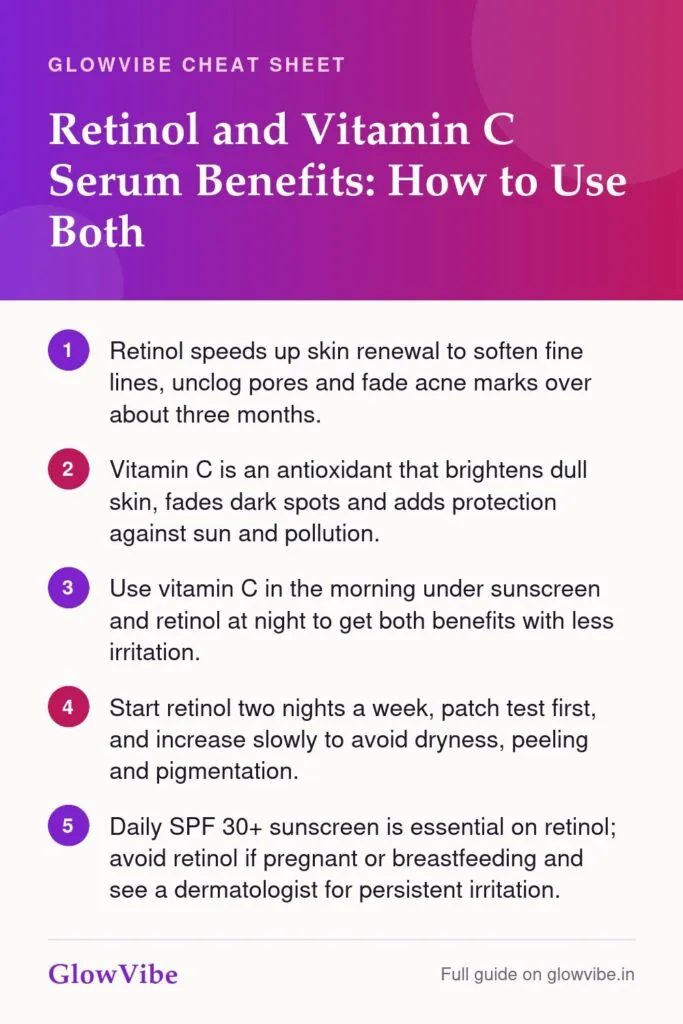
RetinolA vitamin A derivative that speeds up skin renewal for smoother texture, fewer clogged pores and fewer visible fine lines. Use at night and wear sunscreen by day.See glossary and Vitamin CAn antioxidant that brightens dull skin, helps fade the look of dark spots and supports sunscreen against daily damage. Best used in the morning.See glossary are two of the best-studied skincare actives: retinol speeds up skin renewal to soften fine lines, acne marks and rough texture, while vitamin C is an antioxidant that brightens dull skin, fades dark spots and helps defend against sun and pollution damage. Yes, you can use both, and the simplest way is vitamin C in the morning and retinol at night.
This guide explains what each serum actually does, how they differ, how to combine them without irritating your skin, and how to adjust the routine for Indian heat, humidity and pigmentation-prone skin.
Retinol vs vitamin C at a glance
| Retinol | Vitamin C | |
|---|---|---|
| What it is | A form of vitamin A (a retinoid) | An antioxidant (Ascorbic acid (L-ascorbic acid)The pure, most researched form of vitamin C. It works best in low-pH serums but oxidises (turns orange) with air and light, so store it closed and away from sunlight.See glossary or a stable derivative) |
| Main job | Speeds up cell turnover and supports collagen | Neutralises free radicals, brightens, supports collagen |
| Best for | Fine lines, clogged pores, acne-prone skin, uneven texture | Dullness, dark spots, tanning, post-acne marks |
| When to use | Night only | Morning (under sunscreen) is ideal |
| Results show in | About 8–12 weeks | About 4–8 weeks for glow; longer for spots |
| Common side effects | Dryness, peeling, redness in the first weeks | Mild tingling; strong acids can sting sensitive skin |
| Not ideal for | Pregnancy and breastfeeding; very reactive skin without guidance | Skin that reacts to low-pH acids (try a gentler derivative) |
Retinol serum benefits
Retinol is converted in the skin to retinoic acid, which tells skin cells to behave in a younger, more organised way. That is why it is the over-the-counter ingredient dermatologists most often suggest for early signs of ageing.
- Softens fine lines: regular use supports collagen production, so fine lines around the eyes and forehead look less etched over months.
- Unclogs pores: faster cell turnover keeps dead skin from plugging pores, which helps with blackheads, whiteheads and mild acne.
- Smoother texture: rough, bumpy skin and enlarged-looking pores look more refined.
- Fades marks over time: by moving pigmented cells up and out faster, retinol helps post-acne marks and uneven tone fade.
The trade-off is irritation. Retinol can cause dryness, flaking and redness in the first few weeks (often called “retinisation”), and it makes skin more sensitive to the sun. Both are manageable with a slow start and daily sunscreen.
Vitamin C serum benefits
Vitamin C works on the surface and just beneath it. Pure L-ascorbic acid is the most researched form, but it oxidises quickly; derivatives such as ethyl ascorbic acid, sodium ascorbyl phosphate and ascorbyl glucoside are more stable and usually gentler.
- Brightens dull skin: the quickest visible benefit is a fresher, more even glow.
- Fades dark spots and tan: vitamin C interrupts melanin production, which helps sun spots, tanning and post-inflammatory marks that are common on Indian skin.
- Antioxidant protection: it helps neutralise free radicals from UV and city pollution. It does not replace sunscreen, but it makes your sunscreen work harder.
- Supports collagen: vitamin C is needed for collagen formation, so it complements retinol’s anti-ageing work.
If you want to understand what goes into a typical Indian vitamin C formula, our breakdown of vitamin C serum ingredients is a useful companion read.
Can you use retinol and vitamin C together?
Yes. The old advice to never mix them came from the idea that their ideal pH levels clash and that the combination is too harsh. In practice, the bigger issue is irritation, not chemistry, so the smart approach is to separate them by time of day rather than layering both at once.
Using them at different times also plays to each ingredient’s strengths. Vitamin C is most useful during the day when you face UV and pollution, while retinol is broken down by sunlight and works best overnight. For a wider look at which actives clash and which are safe to pair, see our guide to skincare ingredients you should not mix.
Some brands sell a single serum with both ingredients. These can work, but they usually contain lower amounts of each and make it harder to tell which ingredient is causing a reaction. Beginners generally do better with two separate products.
Retinol and vitamin C routine: morning and night
Morning routine (vitamin C)
- Cleanse with a gentle face wash, or just rinse with water if your skin is dry.
- Apply 3–4 drops of vitamin C serum to dry skin and let it absorb for a minute.
- Follow with a light moisturiser (a gel suits oily skin and humid weather).
- Finish with a Broad spectrumA sunscreen label meaning it protects against both UVB rays (which cause burning) and UVA rays (which cause tanning and ageing).See glossaryRead the guide sunscreen of SPF (sun protection factor)A measure of protection against UVB rays, which cause sunburn. SPF 30 blocks about 97% of UVB and SPF 50 about 98%, if you apply enough and reapply.See glossaryRead the guide 30 or higher, two finger-lengths for face and neck. Reapply if you are outdoors.
Night routine (retinol)
- Remove sunscreen and makeup, then cleanse.
- Wait until your face is completely dry; damp skin absorbs retinol faster and stings more.
- Apply a pea-sized amount of retinol over the whole face, avoiding the corners of the nose, the lips and the eye area.
- Seal with a plain, Fragrance-freeA product with no added perfume or essential oils for scent. Often the safer pick for sensitive or reactive skin. "Unscented" can still contain masking fragrance.See glossary moisturiser.
If your skin feels dry or tight, try the “sandwich” method: a thin layer of moisturiser, then retinol, then more moisturiser. It slightly reduces strength but makes the ingredient far easier to tolerate.
How to start without irritating your skin
The most common reason people give up on retinol is starting too fast. Introduce one active at a time, ideally vitamin C first for two to three weeks, then retinol.

- Weeks 1–2: retinol two nights a week (for example, Monday and Thursday).
- Weeks 3–4: three nights a week if your skin is comfortable.
- Week 5 onwards: every other night, then nightly only if your skin is happy.
- Rest nights: just cleanse and moisturise. A structured plan like skin cycling for beginners builds these rest nights in for you.
Always do a Patch testTrying a small amount of a new product behind the ear or on the inner arm for a few days to check for a reaction before using it widely.See glossary first. Apply a small amount behind the ear or along the jawline for two to three nights and watch for burning, swelling or rash. Mild dryness is normal; a stinging, red, raw feeling is not.
How to choose a retinol and vitamin C serum
Choosing a retinol
- Strength: beginners should start low (around 0.1–0.3%) and move up only after months of comfortable use.
- Supporting ingredients: look for soothing partners such as NiacinamideA form of vitamin B3 that helps with oiliness, the look of large pores, uneven tone and barrier support. Gentle and easy to pair with most ingredients.See glossaryRead the guide, ceramides, squalane or panthenol.
- Packaging: opaque, airless or dropper bottles protect retinol from light and air.
- Examples widely sold in India: Minimalist Retinol 0.3% + Q10 and The Ordinary Retinol 0.2% in Squalane are gentle starting points.
Choosing a vitamin C
- Form: L-ascorbic acid is potent but can sting; ethyl ascorbic acid, sodium ascorbyl phosphate or ascorbyl glucoside suit sensitive and acne-prone skin.
- Freshness: buy small bottles, store them away from heat and sunlight, and finish within a few months of opening. A serum that has turned dark orange or brown has oxidised.
- Texture: watery or gel serums layer better under sunscreen in Indian summers than oily ones.
- Examples widely sold in India: Minimalist Vitamin C 10% face serum and Garnier Bright Complete Vitamin C Serum are easy, budget-friendly options.
Adjusting for Indian skin and climate
- Humidity and oily skin: choose gel moisturisers and lightweight serums. Retinol can be a big help for oily, congested skin, but heavy layers on top will feel sticky.
- Heat and strong sun: sunscreen is not optional on retinol. Skipping it can leave you with more tan and pigmentation than you started with. Our sunscreen guide for Indian winters explains why this applies all year.
- Pigmentation-prone skin: deeper Indian skin tones are more likely to darken after irritation, so going slow matters even more. Redness today can turn into a dark patch next month.
- Hard water and dry winters: both strip moisture. Add a richer cream at night and cut retinol back to alternate nights in winter.
- Pollution: city dwellers get the most out of a morning vitamin C, which adds an extra layer of antioxidant defence under sunscreen.
Common mistakes to avoid
- Using retinol in the morning or skipping sunscreen the next day.
- Layering retinol with AHAs, BHAs or scrubs on the same night when you are new to it.
- Applying more than a pea-sized amount, thinking more means faster results.
- Starting retinol and vitamin C in the same week, so you cannot tell which one is causing a reaction.
- Using an oxidised (brown) vitamin C serum.
- Pushing through burning or peeling instead of pausing. If your face feels raw and everything stings, read our guide to repairing a damaged skin barrier and stop actives until it settles.
- Giving up after two weeks. Retinol needs about three months to show what it can do.
Who should be careful or see a dermatologist
Avoid retinol if you are pregnant, trying to conceive or breastfeeding, and check with your doctor before using any retinoid. Vitamin C is generally considered fine, but confirm with your doctor if unsure.
See a dermatologist if you have rosacea, eczema, active cystic acne, melasma that keeps returning, or if irritation lasts more than a week after stopping. A dermatologist can also decide whether a prescription retinoid such as tretinoin or adapalene suits you better than an over-the-counter serum.
Frequently Asked Questions
Yes. Use vitamin C in the morning under sunscreen and retinol at night. This keeps irritation low and lets each ingredient work when it is most effective.
You can, but it is not necessary and raises the chance of stinging and dryness, especially for beginners. Splitting them into morning and night gives you the benefits of both with less risk.
Both help in different ways. Vitamin C reduces melanin production and brightens faster, while retinol speeds up turnover so marks fade over a few months. Used together with daily sunscreen, they work better than either alone.
Vitamin C usually gives a brighter look in four to eight weeks. Retinol takes around eight to twelve weeks for texture and acne, and longer for fine lines. Consistency matters more than strength.
Yes, it is often especially helpful because it keeps pores clear. Use a lightweight, non-comedogenic moisturiser alongside it, and see a dermatologist if your acne is painful, cystic or leaving scars.
Often, yes, with care. Choose a gentle vitamin C derivative and a low-strength retinol, start two nights a week, and buffer with moisturiser. If you have a diagnosed skin condition, ask a dermatologist first.
Many people start in their mid-twenties for early ageing, and teenagers or young adults may use it earlier for acne under a doctor’s guidance. There is no strict age; it depends on your skin concerns.
Quick poll
How many steps are in your skincare routine?
The bottom line
Retinol and vitamin C cover two different jobs: renewal at night and brightening plus protection during the day. Start one at a time, keep strengths low at first, moisturise well and never skip sunscreen. Give the routine three months, and you should see smoother, brighter and more even skin.