Cleanser Toner Moisturizer: The Right CTM Routine for Your Skin (2026)
A simple guide to the cleanser toner moisturizer (CTM) routine: correct order, AM vs PM steps, whether toner is necessary and how to choose each product for your skin type.


A cleanser toner moisturizer routine (often called CTM) is the simplest complete skincare routine: you wash your face, optionally tone it, and then seal in hydration with a moisturiser. Done in that order, morning and night, with sunscreen added every morning, it covers what most skin actually needs.
The trick is choosing each step for your skin type and for Indian weather, which swings from sticky monsoon humidity to dry winter air. This guide walks you through the correct order, AM vs PM differences, whether you really need a toner, and a starter routine you can begin tonight.
The CTM Routine at a Glance
- Cleanser: removes sweat, oil, sunscreen, pollution and makeup. Non-negotiable.
- Toner: adds a layer of hydration or gentle ExfoliationRemoving dead skin cells from the surface, either with acids and enzymes (chemical) or scrubs and tools (physical). Two to three times a week is plenty for most people.See glossary. Optional, not essential.
- Moisturiser: supports your Skin barrierThe outermost layer of skin that keeps water in and irritants out. A damaged barrier feels tight, stings and reacts more easily.See glossaryRead the guide and keeps water in. Every skin type needs it, including oily skin.
- Sunscreen (morning only): the most important anti-tanning and anti-ageing step. Use SPF (sun protection factor)A measure of protection against UVB rays, which cause sunburn. SPF 30 blocks about 97% of UVB and SPF 50 about 98%, if you apply enough and reapply.See glossaryRead the guide 30 or higher, Broad spectrumA sunscreen label meaning it protects against both UVB rays (which cause burning) and UVA rays (which cause tanning and ageing).See glossaryRead the guide.
What Each Step Actually Does
Cleanser
A good cleanser lifts away dirt and excess oil without leaving your face tight or squeaky. That tight feeling is a sign the cleanser has stripped your natural oils, which can trigger more oiliness or dry patches later. Look for a mild, soap-free formula; our guide to soap-free cleansers explains why they are kinder to most skin.

Toner
Old-school toners were alcohol-heavy liquids meant to “close pores” and remove leftover cleanser. Modern cleansers rinse off cleanly, so that job is mostly gone. Today’s toners fall into two groups: hydrating toners that add water-binding ingredients, and exfoliating toners that contain acids to smooth texture and unclog pores.
Moisturiser
Moisturiser locks in the water your skin already has and supports the barrier that keeps irritants out. Texture is what changes by skin type: gels and water-creams for oily skin, lotions for combination skin, and richer creams for dry skin. Ingredients like CeramidesFats that naturally hold skin cells together like mortar between bricks. Moisturisers with ceramides help support a dry or damaged skin barrier.See glossaryRead the guide, GlycerinOne of the most common and effective humectants. It draws water into the skin and is found in most moisturisers and cleansers.See glossary and Hyaluronic acidA humectant that holds water in the skin for a plump, hydrated look. Despite the name, it is not an exfoliating acid. Apply on damp skin.See glossaryRead the guide are reliable choices for almost everyone.
Correct Order: Cleanser, Toner, Moisturizer (Then Sunscreen)
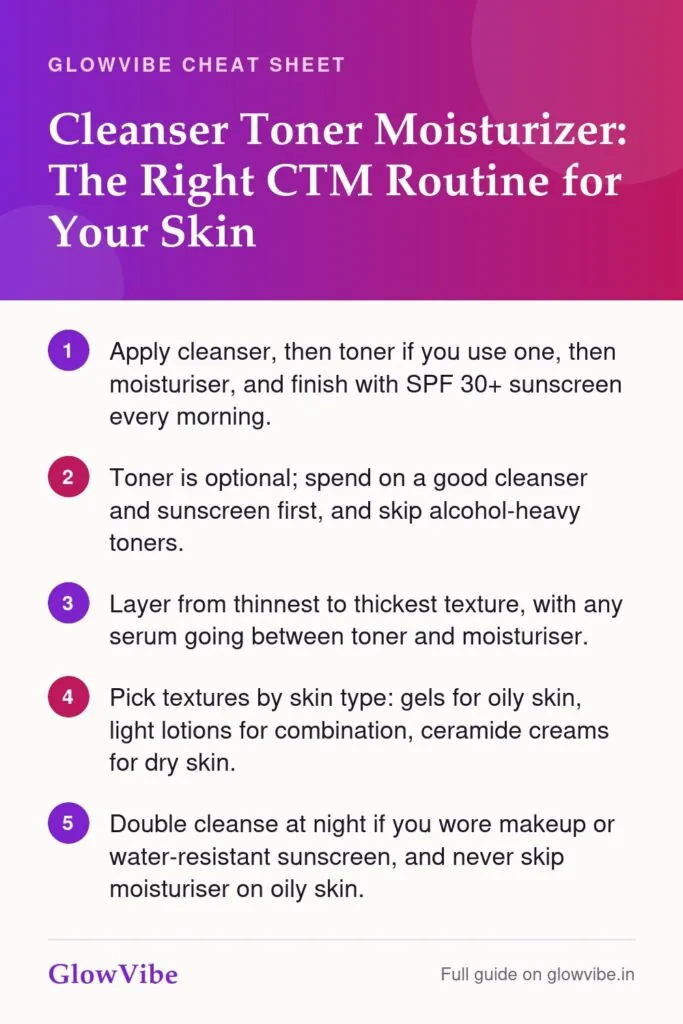
The general rule is to go from thinnest to thickest texture. Water-light products go on first so they can reach the skin, and heavier creams go on top to seal everything in. Sunscreen always goes last in the morning because it needs to sit evenly on the surface to protect you.
- Cleanser
- Toner (if you use one)
- Serum or treatment (optional, such as NiacinamideA form of vitamin B3 that helps with oiliness, the look of large pores, uneven tone and barrier support. Gentle and easy to pair with most ingredients.See glossaryRead the guide or vitamin C)
- Moisturiser
- Sunscreen (morning only)
If you want to add a serum, it slots in between toner and moisturiser. Niacinamide, vitamin C and hyaluronic acid are the easiest actives to add once your basic CTM routine is steady.
Morning vs Night CTM Routine
Your skin has different jobs at different times. In the morning you are preparing it for sun, heat and pollution. At night you are removing the day’s build-up and letting it repair.
| Step | Morning (AM) | Night (PM) |
|---|---|---|
| Cleanse | Gentle cleanser, or just water if your skin is very dry | Thorough cleanse; double cleanse if you wore makeup or water-resistant sunscreen |
| Tone | Hydrating toner (optional) | Hydrating or exfoliating toner (optional, exfoliating only 2–3 nights a week) |
| Treat | Vitamin C or niacinamide (optional) | Retinoid or acne treatment (optional, not on exfoliating nights) |
| Moisturise | Lightweight layer | Same or slightly richer layer |
| Protect | Sunscreen SPF 30+, reapply when outdoors | Not needed |
Double cleansing at night means using an oil-based cleanser or micellar water first to dissolve sunscreen and makeup, then your regular face wash. If you only wore a light sunscreen and no makeup, one thorough cleanse is usually enough. Always remove sunscreen before bed so it does not sit in your pores overnight.
Is Toner Necessary?
Honestly, no. A toner is the most optional part of the CTM routine, and plenty of people with healthy skin use only a cleanser, moisturiser and sunscreen. If you are on a tight budget or just starting out, spend on a good cleanser and sunscreen first.
That said, the right toner can genuinely help. It is worth adding if one of these sounds like you:
- Dehydrated or tight skin: a hydrating toner with glycerin or hyaluronic acid adds an extra light layer of moisture, useful in air-conditioned offices and winter.
- Oily skin that dislikes heavy creams: a hydrating toner plus a gel moisturiser can feel more comfortable in humid weather than a thick cream.
- Clogged pores, blackheads or rough texture: an exfoliating toner with salicylic acid (BHA) or glycolic/lactic acid (AHA), used a few times a week, can help.
Skip any toner that lists alcohol (often shown as “alcohol denat.” or “SD alcohol”) near the top of the ingredients. It feels refreshing for a minute but dries and irritates skin over time. A gentle, alcohol-free option like Simple Kind to Skin Soothing Facial Toner is an easy place to start.
How to Choose Cleanser, Toner and Moisturizer by Skin Type
Not sure of your skin type? Wash your face with a mild cleanser, leave it bare for an hour, then check. Shiny all over means oily, tight or flaky means dry, an oily T-zone with normal cheeks means combination, and redness or stinging with many products suggests sensitive skin.
| Skin type | Cleanser | Toner | Moisturiser |
|---|---|---|---|
| Oily | Gel or foaming, low-foam and sulphate-free | Hydrating, or BHA 2–3 times a week | Oil-free gel or water-gel |
| Dry | Cream or milky cleanser | Hydrating, glycerin or hyaluronic acid | Cream with ceramides |
| Combination | Gentle gel cleanser | Hydrating; exfoliate T-zone only if needed | Light lotion; extra cream on dry patches |
| Sensitive | Fragrance-free, soap-free cream or gel | Skip, or a fragrance-free soothing toner | Fragrance-free, minimal-ingredient cream |
| Acne-prone | Salicylic acid or very gentle gel cleanser | BHA toner a few times a week (not with other strong actives) | Non-comedogenic gel or light lotion |
Oily skin
Oily skin does best with a gel or gentle foaming cleanser, used twice a day and no more. A water-gel moisturiser such as Neutrogena Hydro Boost Water Gel hydrates without the heavy feel, which matters in Mumbai or Chennai humidity. See our oily face skincare routine and our pick of foaming cleansers for oily skin for more options.
Dry skin
Choose a creamy, non-foaming cleanser like Cetaphil Gentle Skin Cleanser or CeraVe Hydrating Cleanser, and follow with a rich cream such as CeraVe Moisturising Cream or Cetaphil Moisturising Cream. Apply moisturiser on slightly damp skin to hold more water in. North Indian winters are especially hard on dry skin, so our winter skincare routine for dry skin is worth a read.
Combination skin
Combination skin needs balance. Use a gentle gel cleanser, a light lotion all over, and an extra dab of cream only on dry cheeks. In monsoon you may only need a gel; in winter, a lotion. Adjusting with the seasons is normal, not a sign that your products have stopped working.
Sensitive skin
Keep the routine short and fragrance-free. Cetaphil Gentle Skin Cleanser and Simple’s Kind to Skin range are popular because they avoid common irritants like added perfume. Introduce one new product at a time and skip exfoliating toners until your skin is calm. Our sensitive skin products guide covers more choices.
Acne-prone skin
A salicylic acid cleanser (Minimalist and Re’equil both make widely available options) helps keep pores clear, but use only one strong active at a time. Do not skip moisturiser, because dry, irritated skin often breaks out more. Look for “non-comedogenic” on the label, and see a dermatologist if acne is painful, cystic, leaving marks, or not improving after two to three months.
How to Do the CTM Routine: Amounts and Wait Times
- Wash your hands first. Then wet your face with lukewarm water, never hot.
- Cleanse with a pea- to coin-sized amount. Massage for 30–60 seconds, including the hairline, jaw and sides of the nose, then rinse well. Pat dry with a clean towel.
- Tone with a few drops. Press into the skin with your palms, or swipe gently with a cotton pad. Exfoliating toners need roughly a minute to settle before the next step.
- Moisturise with a pea-sized to almond-sized amount. Use more if your skin is dry. Apply while the skin is still a little damp and include your neck.
- Apply sunscreen in the morning. Use about two finger-lengths for face and neck, and wait a couple of minutes after moisturiser so it does not pill. Reapply every two to three hours if you are outdoors.
You do not need long waits between hydrating layers; 30 seconds to a minute is plenty. If products start rolling or pilling, you are probably using too much or not letting one layer settle.

CTM Routine for the Indian Climate
- Humid summers and monsoon: switch to gel textures, keep cleansing to twice a day, and blot rather than wash if you get oily midday.
- Dry winters: move to a creamier cleanser and a richer moisturiser, and consider a hydrating toner.
- Hard water: if your face feels tight after washing, a gentle cleanser and a moisturiser applied immediately afterwards help offset the dryness hard water can cause.
- Strong sun and pollution: sunscreen every morning, even indoors near windows, and a thorough cleanse at night.
Common CTM Mistakes to Avoid
- Using alcohol-heavy toners: they give a cooling, “clean” feeling but can leave skin dry, irritated and oilier in response.
- Skipping moisturiser on oily skin: dehydrated oily skin often produces more oil. A light gel fixes this without greasiness.
- Over-cleansing: washing four or five times a day, or scrubbing hard, damages the skin barrier. Twice a day is enough for most people.
- Stacking too many actives: an acid toner, an acne cleanser and a retinoid on the same night is a recipe for redness. Use one at a time.
- Forgetting sunscreen: without it, a CTM routine cannot prevent tanning, dark spots or early lines.
- Changing products every week: give a new routine at least four to six weeks before judging it.
A Simple Starter CTM Routine for Beginners
If you have never followed a routine, start with three products and build from there. This approach also fits the minimalist skincare philosophy: fewer products, used consistently.
- Morning: gentle cleanser, moisturiser suited to your skin type, sunscreen SPF 30+.
- Night: gentle cleanser (twice if you wore makeup), moisturiser.
- After 3–4 weeks: add a hydrating toner if your skin feels tight, or a serum for a specific concern.
Before adding anything new, patch test: apply a little behind your ear or on your inner arm for 24–48 hours and watch for itching, redness or bumps. Stop any product that burns or stings persistently, and see a dermatologist if irritation or acne does not settle.
Frequently Asked Questions
Cleanser first, toner second, moisturiser third. In the morning, finish with sunscreen. If you use a serum, apply it after toner and before moisturiser.
Yes. Toner is optional, and a cleanser, moisturiser and sunscreen cover the essentials. Add a toner only if you want extra hydration or gentle exfoliation for clogged pores.
Yes, morning and night suits most skin types. Very dry or sensitive skin can use just water or a quick, gentle cleanse in the morning and a proper cleanse at night.
They do. Oil and water are different things, and oily skin can still be dehydrated. A lightweight, oil-free gel moisturiser keeps the barrier healthy without adding shine.
Plain rose water can work as a light hydrating mist for many people. Check that it has no added alcohol, and patch test first, since fragrance compounds in rose can irritate sensitive skin.
Comfort and softness often improve within a week or two. Changes in texture, oil balance or breakouts usually take four to six weeks of consistent use.
Yes, the same cleanser toner moisturizer routine works for men, with sunscreen in the morning. If you shave, a fragrance-free moisturiser right after helps calm razor irritation.
Quick poll
How often do you wear sunscreen?
The Bottom Line
Cleanser, toner, moisturiser is a routine you can follow for life: cleanse gently, tone only if it helps, always moisturise, and never skip sunscreen in the morning. Pick textures for your skin type, adjust with the Indian seasons, and stay consistent. That alone will do more for your skin than a shelf full of products.