Face Skin Care Guide: Skin Types, Concerns and Routine (2026)
Learn how to identify your face skin type, understand common concerns in Indian skin and follow a simple cleanse, moisturise and sunscreen routine.


Face skin is thinner, oilier and more exposed than the skin on the rest of your body, which is why it reacts faster to sun, sweat, pollution and the wrong products. Caring for it well comes down to three things: knowing your skin type, recognising the common concerns, and following a simple daily routine of cleansing, moisturising and sun protection.
This guide explains how facial skin works, how to identify whether yours is oily, dry, combination, normal or sensitive, and how Indian conditions like humidity, hard water and strong UV change what you need. You will also find a basic morning and night routine, the DIY hacks worth skipping, and clear signs that it is time to see a dermatologist.
What Makes Face Skin Different
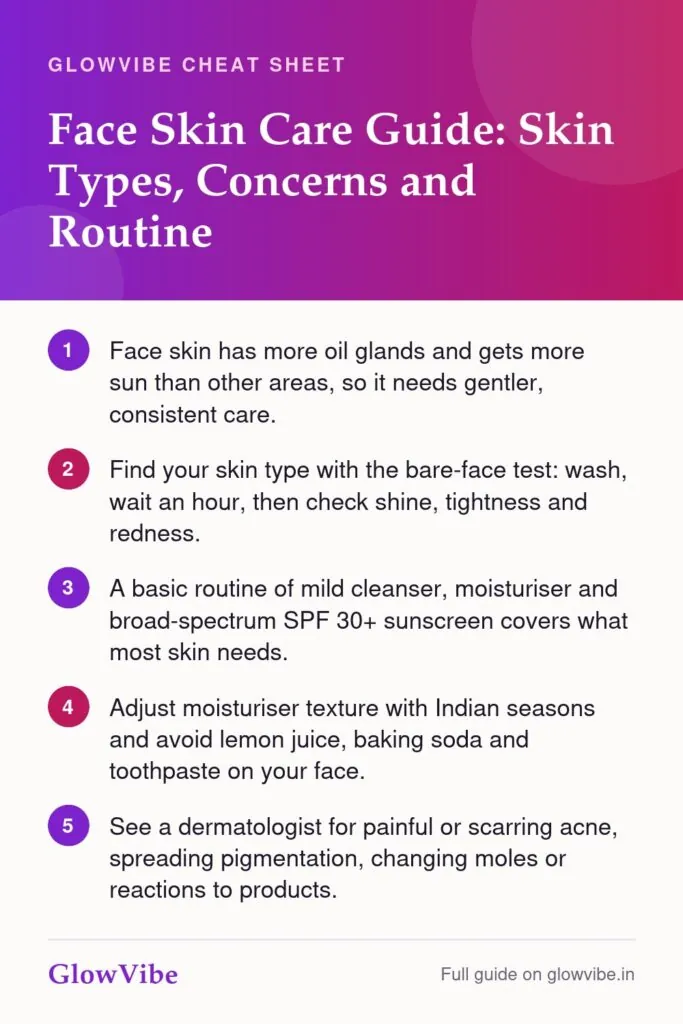
Your face has more oil (sebaceous) glands per square centimetre than almost anywhere else on your body, especially across the forehead, nose and chin. That is why the T-zone shines first on a hot afternoon and why breakouts tend to cluster there.
The skin on your face is also thinner, particularly around the eyes, and it gets the most sun exposure of any area. Add daily contact with your hands, phone screen, pillowcase and makeup, and you have skin that needs gentler, more consistent care than your arms or legs.
The outermost layer, the stratum corneum, works as a barrier. It keeps water in and irritants out. Most everyday face skin trouble, from tightness and flaking to stinging and dullness, starts when this barrier is weakened by harsh cleansers, over-exfoliation or too many active ingredients at once.
Face Skin Types: How to Identify Yours
Skin type is mostly set by genetics and hormones, but it shifts with age, season and climate. Many people in India find their skin oilier in the monsoon and drier in North Indian winters, so check again whenever the weather changes.
The bare-face test
Wash your face with a mild cleanser, pat it dry and apply nothing. Wait about an hour, then look in natural light and press a clean tissue on different areas.
- Oily: visible shine all over and oil on the tissue from cheeks as well as the T-zone.
- Dry: skin feels tight, may look dull or flaky, and the tissue stays clean.
- Combination: shiny forehead, nose and chin, but normal or dry cheeks. This is the most common type in Indian weather.
- Normal: comfortable, little shine, few dry patches and only occasional breakouts.
- Sensitive: stings, itches, turns red or breaks out easily with new products, fragrance or heat. Sensitivity can sit on top of any other type.
Skin types at a glance
| Skin type | How it looks and feels | Cleanser | Moisturiser texture | Watch out for |
|---|---|---|---|---|
| Oily | Shine by midday, enlarged-looking pores, frequent blackheads | Gentle gel or foaming, pH-balanced | Light gel or water-based, Non-comedogenicA label meaning a product is formulated not to clog pores. Useful for acne-prone skin, though it is not a regulated or guaranteed claim.See glossaryRead the guide | Over-washing, alcohol-heavy toners |
| Dry | Tight after washing, flaky patches, dull tone | Cream or milky, soap-free | Richer cream with CeramidesFats that naturally hold skin cells together like mortar between bricks. Moisturisers with ceramides help support a dry or damaged skin barrier.See glossaryRead the guide or GlycerinOne of the most common and effective humectants. It draws water into the skin and is found in most moisturisers and cleansers.See glossary | Hot water, foaming scrubs |
| Combination | Oily T-zone, normal to dry cheeks | Mild gel or low-foam | Light lotion; extra cream on dry areas | Treating the whole face as oily |
| Normal | Balanced, comfortable, few concerns | Any mild cleanser | Light lotion | Adding too many products |
| Sensitive | Redness, stinging, reacts to new products | Fragrance-freeA product with no added perfume or essential oils for scent. Often the safer pick for sensitive or reactive skin. "Unscented" can still contain masking fragrance.See glossary, soap-free | Simple, fragrance-free cream | Fragrance, essential oils, strong actives |
If you are unsure, start by treating your skin as sensitive: fragrance-free, gentle products with few ingredients. It is easier to add strength later than to calm irritated skin.
Common Face Skin Concerns in India
Indian skin, from fair to deep brown, generally has more melanin, which offers some natural sun protection but also makes it more prone to pigmentation after any irritation or breakout. Here are the concerns most people deal with. For deeper fixes, see our detailed guide to face skin problems and their causes.
Acne and breakouts
Pimples form when oil and dead cells clog a pore and bacteria and inflammation follow. Humidity, sweat, heavy creams, hair oil running onto the forehead and hormonal changes all play a part. Gentle cleansing and non-comedogenic products help; picking or squeezing usually leads to dark marks that last longer than the pimple.
Blackheads and sebaceous filaments
The tiny grey dots on your nose are often sebaceous filaments, a normal part of oily skin, not dirt. They refill within days of squeezing. Salicylic acidThe most common BHA. It dissolves oil inside pores, which helps with blackheads, whiteheads and oily skin. Usually used at 0.5 to 2%.See glossaryRead the guide used a few times a week can keep them less noticeable, but they will not disappear permanently.
Pigmentation, dark spots and tanning
Post-inflammatory HyperpigmentationPatches of skin that are darker than the surrounding skin, such as acne marks, sun spots or tanning. Very common on Indian skin tones.See glossary (dark marks left after acne or irritation), sun tan and melasma are very common in Indian skin. Daily sunscreen is the foundation of every treatment, because UV keeps darkening the spots you are trying to fade. Ingredients such as NiacinamideA form of vitamin B3 that helps with oiliness, the look of large pores, uneven tone and barrier support. Gentle and easy to pair with most ingredients.See glossaryRead the guide, Vitamin CAn antioxidant that brightens dull skin, helps fade the look of dark spots and supports sunscreen against daily damage. Best used in the morning.See glossaryRead the guide and azelaic acid can help over a few months; our guide to getting radiant, even-toned skin covers them in detail.
Dullness and uneven texture
Build-up of dead cells, dehydration, poor sleep and pollution make skin look tired. Regular moisturising, sunscreen and gentle exfoliation once or twice a week usually make a visible difference within a few weeks.
Dryness, redness and a damaged barrier
If your face stings with even a basic moisturiser, feels tight all day or is suddenly both oily and flaky, your barrier may be compromised. Strip your routine back to cleanser, moisturiser and sunscreen. Our skin barrier repair guide explains the signs and recovery steps.
A Basic Face Care Routine for Every Skin Type
You do not need a ten-step routine. Three core steps, done consistently, cover what most skin needs, and you can add one targeted product once those are a habit.

Morning routine
- Cleanse: rinse with water or use a small amount of mild cleanser if you wake up oily. Our list of the best face washes by skin type can help you choose.
- Treat (optional): a vitamin C or niacinamide serum if you are working on dullness or dark spots.
- Moisturise: a gel for oily skin, a lotion for combination or normal skin, a cream for dry skin.
- Sunscreen: broad-spectrum SPF 30 or higher with a PA+++ rating or above. Use about two finger-lengths for the face and neck, and reapply every two to three hours outdoors.
Night routine
- Remove makeup and sunscreen: use a cleansing balm, oil or micellar water first if you wore makeup or water-resistant sunscreen.
- Cleanse: the same mild cleanser you use in the morning.
- Treat (optional): one active at a time, such as a retinoid, salicylic acid or azelaic acid, introduced slowly.
- Moisturise: a slightly richer layer is fine at night, especially in winter or air-conditioned rooms.
If you want to understand where toner fits in, read our cleanser, toner and moisturiser routine guide. Before layering several actives, check our list of skincare ingredients you should not mix.
Introducing new products safely
Patch test anything new by applying a little behind your ear or along your jawline for two or three days. Add only one new product every two weeks so you can tell what is helping and what is causing trouble. Most products need six to eight weeks of regular use before you can judge them fairly.
How Indian Climate Changes Your Face Skin Care
The same routine will not behave the same way in Chennai in May and Delhi in January. Adjust textures rather than overhauling everything.
- Humid summers and monsoon: switch to gel moisturisers and lightweight, matte or gel sunscreens. Carry blotting paper instead of washing your face repeatedly.
- Dry winters: move to a cream cleanser and a richer moisturiser, keep showers lukewarm, and do not skip sunscreen just because it feels cooler.
- Hard water: high mineral content can leave skin feeling tight or dry after washing. A gentle cleanser, a quick final rinse and moisturising within a minute or two of washing help.
- Pollution and smog: cleanse thoroughly at night, and use antioxidant serums and sunscreen during the day.
- Strong UV all year: UV is high across most of India even on cloudy days, which is why sunscreen is a daily step, not a beach-only one.
Everyday Habits That Help Your Skin
Products matter, but daily habits often decide whether they work. These small changes add up.

- Moisturise on damp skin: applying moisturiser within a couple of minutes of washing locks in more water.
- Keep hair products off your face: heavy hair oils and styling creams can clog pores along the hairline and forehead. Wash your face after oiling your hair, or choose lighter, water-based styling products.
- Change pillowcases often: once or twice a week, more often if you are breakout-prone.
- Clean your phone screen and makeup brushes: both collect oil and bacteria that end up on your cheeks.
- Sleep and stress: poor sleep and high stress can show up as dullness and flare-ups.
- Eat and drink sensibly: water and a balanced diet with vegetables, fruit and enough protein support your skin, though no single food will clear it.
- Check your medicines: some medicines, including certain steroids, can trigger breakouts. Ask your doctor if you notice changes after starting something new; do not stop prescribed medicine on your own.
DIY Hacks to Avoid
Kitchen remedies are popular, but several common ones do more harm than good on facial skin.
- Lemon juice: it is very acidic and can cause irritation and even burns or dark patches when skin is exposed to sunlight afterwards.
- Baking soda scrubs: far too alkaline for skin and quick to disrupt the barrier.
- Toothpaste on pimples: it dries and irritates the area and can leave a darker mark.
- Harsh physical scrubs: crushed walnut shells, sugar or rough granules can create tiny tears. Choose a gentle chemical exfoliant or a soft cloth instead.
- Undiluted essential oils and raw garlic: common causes of contact dermatitis.
Simple ingredients like plain aloe vera gel can be soothing for some people, but patch test them like any other product.
When to See a Dermatologist
Home care has limits. Book an appointment with a qualified dermatologist if you notice any of the following:
- Painful, deep or cystic acne, or acne that leaves scars
- Breakouts that have not improved after two to three months of a consistent routine
- Persistent redness, flushing, itching, scaling or a rash
- Dark patches that keep spreading, such as suspected melasma
- A mole or growth that changes in size, shape or colour, bleeds or does not heal
- Swelling, burning or hives after using a product
Avoid using steroid creams or “fairness” creams bought without a prescription. Unsupervised steroid use on the face can cause thinning, redness and rebound acne that are hard to reverse.
Frequently Asked Questions
Wash your face with a mild cleanser, leave it bare for about an hour and then check it. Shine all over suggests oily skin, tightness suggests dry, an oily T-zone with normal cheeks means combination, and frequent stinging or redness points to sensitive skin.
Daily sunscreen. It protects against tanning, dark spots and early ageing, and it stops pigmentation treatments from being undone by UV. Pair it with a gentle cleanser and moisturiser and you have covered the essentials.
Yes. Skipping moisturiser can leave oily skin dehydrated, which may make it feel tighter and look shinier. A light, oil-free gel moisturiser hydrates without feeling heavy in humid weather.
For most people, once or twice a week with a gentle chemical exfoliant is enough. Sensitive or dry skin may need less. Stop if you notice stinging, redness or a shiny, tight look, which are signs of over-exfoliation.
If you sit near windows or spend time outside during the day, yes, because UVA passes through glass. If you are indoors away from windows all day, sunscreen matters less, but applying it in the morning is an easy habit that covers trips outside.
Your cleanser and sunscreen can often stay the same. Most people in India benefit from switching moisturiser texture with the seasons: lighter gels in summer and the monsoon, richer creams in winter.
Some, like plain aloe vera, may soothe mild irritation, but home remedies are not a substitute for treatment of acne or pigmentation. Avoid lemon, baking soda and toothpaste on your face, and see a dermatologist for persistent problems.
Quick poll
How often do you wear sunscreen?
Final Thoughts
Healthy face skin is less about expensive products and more about understanding what your skin is telling you. Identify your type, keep a simple cleanse, moisturise and protect routine, adjust textures with the weather, and add one targeted ingredient at a time.
Give each change a few weeks, be patient with dark spots, and do not hesitate to see a dermatologist when something is painful, spreading or simply not improving. Consistent, gentle care is what keeps skin clear and comfortable over the long run.