Radiant Skin: Ingredients and Routine That Add Glow (Indian Skin)
Why skin looks dull and how to fix it: an evidence-based guide to radiance ingredients, AM/PM routines by skin type and mistakes to avoid for Indian skin.


To get radiant skin, you need three things working together: daily sunscreen, gentle and regular ExfoliationRemoving dead skin cells from the surface, either with acids and enzymes (chemical) or scrubs and tools (physical). Two to three times a week is plenty for most people.See glossary, and one or two proven brightening ingredients such as Vitamin CAn antioxidant that brightens dull skin, helps fade the look of dark spots and supports sunscreen against daily damage. Best used in the morning.See glossaryRead the guide, NiacinamideA form of vitamin B3 that helps with oiliness, the look of large pores, uneven tone and barrier support. Gentle and easy to pair with most ingredients.See glossaryRead the guide or Azelaic acidA gentle acid that helps with redness, bumps and uneven tone. It is usually well tolerated by sensitive and acne-prone skin.See glossary. Add steady hydration and enough sleep, and most dull skin starts looking brighter within six to twelve weeks.
This guide explains why skin looks dull in the first place, which radiance ingredients have real evidence behind them, and how to build a simple AM and PM glowing skin routine for oily, dry, combination and sensitive Indian skin. No miracle masks, no “glow in one night” promises.
What does “éclat” mean in skincare?
Éclat is French for radiance, brilliance or glow. You will see it on many product labels, often next to words like “radiance”, “luminous” or “glow-boosting”. These are marketing terms, not regulated claims, so the word itself tells you nothing about what is inside the bottle.
When a label promises éclat or radiance, turn it over and read the ingredient list. Look for the evidence-backed actives covered below. If the “glow” comes only from shimmer particles or a fragrance-heavy oil, the effect washes off with your face wash.
Why your skin looks dull
Radiant skin is really about how evenly your skin reflects light. A smooth, hydrated surface with an even tone bounces light back; a rough, dry or patchy surface scatters it, and the face reads as tired or dull. These are the usual culprits.
- Dead cell build-up: Skin sheds cells constantly, but the process slows with age, dryness and sun damage. Old cells pile up and leave a rough, greyish surface.
- Dehydration: Dehydrated skin looks flat and shows fine lines more. This happens to oily skin too, especially in air-conditioned offices and dry North Indian winters.
- Uneven tone and pigmentation: Indian skin makes melanin readily, so tanning, post-acne dark marks, melasma and darker patches around the mouth and eyes are very common. Uneven tone is often the biggest reason skin looks dull, even when texture is fine.
- Sun exposure: UV rays and visible light trigger tanning and pigmentation, and over years they break down collagen. Strong Indian sun makes this the single most important factor.
- Pollution: Particulate matter and smoke create oxidative stress on the skin and are linked to pigment spots. City dwellers in Delhi, Mumbai or Kolkata feel this most in winter.
- Poor sleep and smoking: Short sleep shows up as puffiness, darker under-eyes and a sallow look. Smoking reduces blood flow to the skin and speeds up ageing.
Skincare for radiant skin: ingredients compared
Not every “glow” ingredient is equal. Here is an honest look at the ones with the strongest evidence, what each one actually does for radiance, and who should be careful.

| Ingredient | What it does for glow | Strength of evidence | Best for | Use with care if |
|---|---|---|---|---|
| Sunscreen (SPF (sun protection factor)A measure of protection against UVB rays, which cause sunburn. SPF 30 blocks about 97% of UVB and SPF 50 about 98%, if you apply enough and reapply.See glossaryRead the guide 30+, PA++++An Asian sunscreen rating for UVA protection. More plus signs mean more protection, with PA++++ the highest.See glossaryRead the guide) | Prevents new tan and pigment; protects every other active you use | Very strong | Everyone, every day | Rarely an issue; switch formulas if one breaks you out |
| Vitamin C | Antioxidant; brightens and fades mild pigmentation over time | Good | Dullness, tan, early sun damage | Sensitive skin; pure Ascorbic acid (L-ascorbic acid)The pure, most researched form of vitamin C. It works best in low-pH serums but oxidises (turns orange) with air and light, so store it closed and away from sunlight.See glossaryRead the guide can sting |
| Niacinamide | Evens tone, supports the barrier, helps with oil and redness | Good | Oily, acne-prone and combination skin | High strengths may cause flushing in a few people |
| AHA (alpha hydroxy acid)Water-soluble exfoliating acids such as glycolic, lactic and mandelic acid. They loosen dead cells on the surface for smoother, brighter-looking skin.See glossaryRead the guide (glycolic, lactic, mandelic) | Loosen dead cells for smoother, brighter skin | Good | Rough texture, dull or sun-damaged skin | Sensitive or very dry skin; raises sun sensitivity |
| PHAs (gluconolactone, lactobionic acid) | Gentler exfoliation with hydrating properties | Moderate | Sensitive and dry skin | Slower results than AHAs |
| Azelaic acid | Fades dark marks and melasma, calms acne and redness | Good | Post-acne marks, pigmentation, rosacea-prone skin | Mild tingling at first is common |
| Retinoids (retinol, adapalene, tretinoin) | Speed up cell turnover; improve texture, tone and fine lines | Very strong (tretinoin), good (retinol) | Texture, pigmentation, ageing, acne | Pregnancy; sensitive skin; needs a slow start |
| Hyaluronic acid | Draws water into skin for a plumper, dewy look | Good for hydration | All skin types, especially dehydrated skin | Apply on damp skin and seal with moisturiser in dry air |
Sunscreen: the number one radiance step
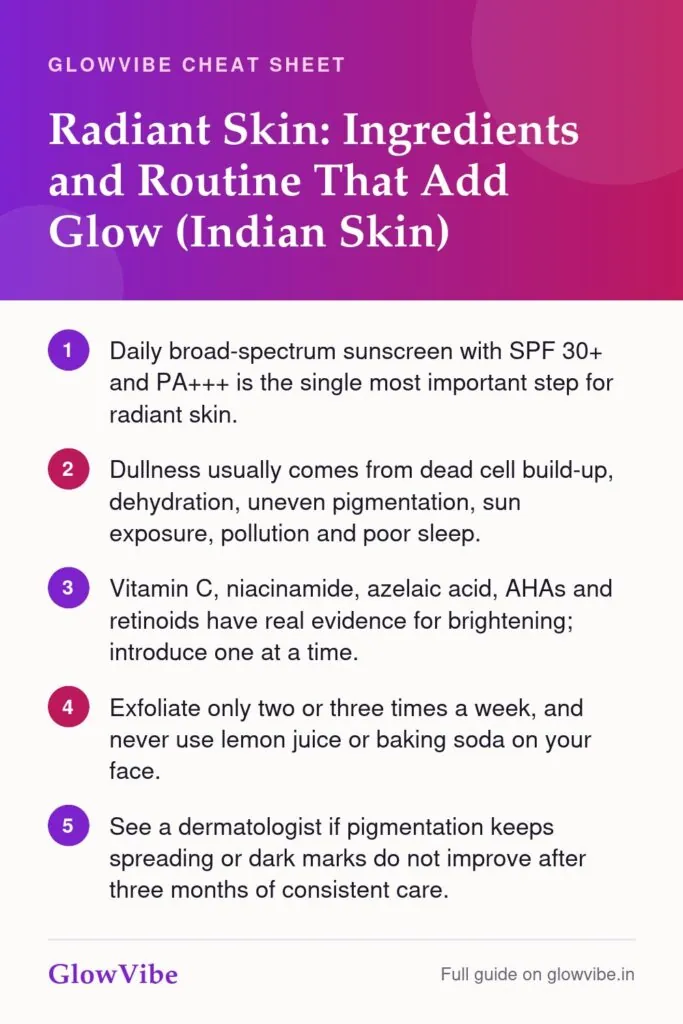
No serum can out-brighten daily sun damage. Sunscreen stops tan from building up, keeps dark marks from darkening further and lets your other actives do their job. Use a broad-spectrum SPF 30 or higher with PA+++ or PA++++, about two finger-lengths for face and neck, and reapply when you are outdoors.
If you have melasma or stubborn patches, a tinted sunscreen with iron oxides adds protection against visible light, which also darkens pigment in brown skin. Yes, you need it in winter and on cloudy days too; our guide on sunscreen in winter in India explains why.
Vitamin C
Vitamin C is an antioxidant that helps neutralise free radicals from sun and pollution, and over several weeks it can soften mild pigmentation and tan. Use it in the morning under sunscreen, where the two work as a team. Store it away from heat and light, and replace it if it turns dark orange or brown. For a deeper look at forms and pairing, read our retinol and vitamin C serum benefits guide.
Niacinamide
Niacinamide (vitamin B3) is the easiest brightening ingredient to tolerate. It helps even out tone, supports the skin barrier and can reduce the look of oiliness, which makes it a favourite for humid Indian summers. Higher percentages are not automatically better; moderate strengths are usually enough and less likely to irritate.
AHAs and PHAs
Chemical exfoliants dissolve the bonds holding dead cells together, which is the fastest route from rough and dull to smooth and bright. Glycolic acid works quickly but can sting; lactic and mandelic acid are gentler choices for Indian skin that tends to darken after irritation. PHAs are gentler still and suit sensitive skin. Two or three nights a week is plenty for most people.
Azelaic acid
Azelaic acid is underrated for brown skin. It helps fade post-acne marks and melasma, calms redness and works on acne, all with a low risk of irritation-related darkening. Lower strengths are sold over the counter, while higher strengths need a dermatologist’s prescription.
Retinoids
Retinoids have the deepest research behind them for texture, tone and fine lines. Retinol is the over-the-counter option; tretinoin is stronger and prescription-only in India. Start two nights a week, use a pea-sized amount on dry skin and buffer with moisturiser. Avoid retinoids if you are pregnant or trying to conceive. A skin cycling routine is a simple way to fit retinoids and exfoliants into the same week without overdoing it.
Hyaluronic acid
Hyaluronic acid will not fade pigment, but hydrated skin looks instantly brighter and smoother. Pat it onto damp skin and follow with a moisturiser, especially in dry winter air or air-conditioning. It is the backbone of the dewy “glass skin” look; see our picks of glass skin serums for Indian skin if that is your goal.
Glowing skin routine: AM and PM by skin type
Pick one brightening active to start, use it consistently for eight weeks, then add a second if you want. Introducing everything at once is the quickest way to an irritated, darker face.
Basic morning routine (all skin types)
- Gentle cleanser, or just water if your skin is dry.
- Antioxidant serum: vitamin C, or niacinamide if vitamin C irritates you.
- Moisturiser suited to your skin type.
- Broad-spectrum sunscreen, SPF 30+ with PA+++ or higher.
Basic night routine (all skin types)
- Cleanse well, double cleansing if you wore sunscreen or makeup all day.
- Treatment: retinoid, exfoliating acid or azelaic acid, on alternate nights rather than all together.
- Hydrating serum if needed, then moisturiser.
Adjustments by skin type
- Oily or acne-prone: Niacinamide in the morning, a gel moisturiser and a matte or gel sunscreen. At night, alternate azelaic acid or a retinoid (adapalene is a good acne option) with a salicylic or mandelic acid night.
- Dry: Hyaluronic acid on damp skin, a richer cream and a hydrating sunscreen. Choose lactic acid or PHAs once or twice a week, and keep retinol to two or three nights.
- Combination: Vitamin C in the morning, a light lotion, and extra moisturiser only on dry cheeks. Rotate a retinoid night, an exfoliation night and two plain recovery nights.
- Sensitive: Start with niacinamide or azelaic acid rather than vitamin C or glycolic acid. Use PHAs for exfoliation, patch test every new product and prefer fragrance-free formulas.
Not every active plays well with others in the same step. Before you layer, check our list of skincare ingredients you should not mix.
Lifestyle factors that affect glow
Skincare does most of the visible work, but a few habits make a real difference to how your face looks day to day.
- Sleep: Seven to nine hours helps reduce puffiness and the tired, sallow look. Sleeping on a clean pillowcase helps acne-prone skin too.
- Sun habits: Shade, hats and avoiding the harshest midday sun support your sunscreen, especially on two-wheelers and long commutes.
- Smoking: Stopping is one of the best things you can do for skin tone and ageing.
- Food and water: A balanced diet and staying hydrated support overall health, but no single food, juice or supplement will “make you glow”. Be wary of anyone who promises that.
Dull skin remedies to avoid: common mistakes
Many popular dull skin remedies do more harm than good, particularly on brown skin, where irritation often leaves behind dark patches.
- Over-exfoliating: Daily scrubs plus acids plus a retinoid strip the barrier. Signs include stinging, tightness, redness and a shiny, “plastic” look. If this sounds familiar, pause actives and follow our damaged skin barrier repair steps.
- Lemon juice on the face: It is highly acidic and can cause irritation and, combined with sunlight, a burn-like reaction that leaves dark marks.
- Baking soda scrubs: Baking soda is strongly alkaline and disrupts the skin’s natural acidity, leaving it dry and reactive.
- Harsh physical scrubs: Walnut shell, sugar or apricot scrubs can cause micro-tears. A soft washcloth or a gentle chemical exfoliant is kinder.
- Skipping sunscreen on “indoor” days: Window light and short trips outside add up and undo your brightening serum.
- Unlabelled fairness or “glow” creams: Some contain undeclared steroids or other strong drugs that thin skin and cause rebound darkening. Only use steroid or hydroquinone creams under a dermatologist’s supervision.
- Switching products every week: Brightening takes six to twelve weeks. Give one routine a fair trial before judging it.
When to see a dermatologist
Over-the-counter skincare handles everyday dullness and mild tan well. See a dermatologist if you notice any of the following.
- Patches of pigmentation on the cheeks, forehead or upper lip that keep spreading (possible melasma).
- Dark marks that have not improved after three months of consistent sunscreen and a brightening active.
- Persistent acne, which keeps creating new dark marks.
- Sudden dullness with fatigue, unusual dryness or other body changes, which can sometimes reflect an underlying health issue.
- A burning, peeling or worsening reaction to any product.
A dermatologist can prescribe stronger options such as tretinoin, higher-strength azelaic acid or combination creams, and offer in-clinic peels when they suit your skin.
Frequently Asked Questions
Gentle cleansing, a moisturiser, daily sunscreen and good sleep are the natural foundation of radiant skin. Avoid harsh DIY remedies like lemon or baking soda. If you want faster results, add one evidence-backed active such as niacinamide or vitamin C.
Hydration makes skin look brighter within days. Changes in texture and tone from exfoliants, vitamin C or retinoids usually take six to twelve weeks of consistent use. Deeper pigmentation can take several months.
Both help. Vitamin C is a stronger antioxidant and suits tan and sun-related dullness, while niacinamide is gentler and better for oily, acne-prone or sensitive skin. Many people use vitamin C in the morning and niacinamide at another time of day.
Yes. Radiance comes from smooth texture and even tone, not oil. Use a light gel moisturiser, niacinamide and a matte sunscreen, and exfoliate two or three times a week to keep pores clear.
Not necessarily. “Radiance” and “éclat” are marketing words with no fixed meaning. Judge the product by its ingredient list and look for proven actives like vitamin C, niacinamide, azelaic acid or AHAs.
Two or three times a week is enough for most people, and once a week for sensitive or very dry skin. Do not exfoliate on the same night as a retinoid when you are starting out. Stinging and redness are signs to cut back.
Quick poll
How much do you usually spend on one beauty product?
The bottom line
Radiant, glowing skin is less about a special product and more about a steady routine: sunscreen every morning, one proven brightening active, gentle exfoliation a few times a week and plenty of moisture. Start simple, be patient for at least two months, and see a dermatologist if pigmentation does not budge. Whatever the label says, the ingredients and your consistency are what bring the éclat.