Oily Face Skincare Routine: Morning and Night Steps (2026)
A simple morning and night routine for oily skin in Indian weather, with the ingredients that control shine, product picks, and mistakes to avoid.


A good oily face skincare routine has just four steps in the morning (gentle cleanser, light treatment, oil-free moisturiser, sunscreen) and three or four at night (cleanser, an active such as Salicylic acidThe most common BHA. It dissolves oil inside pores, which helps with blackheads, whiteheads and oily skin. Usually used at 0.5 to 2%.See glossary or NiacinamideA form of vitamin B3 that helps with oiliness, the look of large pores, uneven tone and barrier support. Gentle and easy to pair with most ingredients.See glossaryRead the guide, and a gel moisturiser). The goal is not to dry your skin out, but to keep oil in balance so pores stay clear and your face looks fresh rather than greasy.
If you live in India, humidity, heat, sweat and pollution make oily skin feel even shinier by midday. This guide walks you through why skin gets oily, the exact morning and night routine, which ingredients and products are worth using, and the habits that quietly make oiliness worse.
Why Is My Face So Oily?
Your skin makes an oil called SebumThe natural oil your skin and scalp make. Some is essential for a healthy barrier; too much can feel greasy and clog pores.See glossary through tiny glands attached to each pore. Sebum is useful: it keeps skin soft and helps protect its barrier. Oily skin simply has glands that produce more of it, so shine shows up quickly and pores can clog with oil and dead cells.
Common reasons your face produces extra oil include:
- Genetics: oily skin and visibly larger pores often run in families.
- Hormones: puberty, the menstrual cycle, PCOS and stress can all push oil production up.
- Climate: hot, humid weather in Mumbai, Chennai or Kolkata, or the Indian monsoon anywhere, makes skin look oilier and sweat mixes with sebum.
- Over-washing and harsh products: scrubbing too often or using stripping soaps can leave skin dehydrated, and it may respond with even more shine.
- Skipping moisturiser: dehydrated oily skin is very common, and it often looks both tight and greasy.
Typical signs are a shiny T-zone (forehead, nose and chin) within a few hours of washing, visible pores, blackheads, makeup that slides off, and frequent breakouts. If your cheeks feel normal or dry while only the T-zone shines, you likely have combination skin, and you can use richer products on the drier areas.
Oily Skin Routine at a Glance
Here is the whole routine in one place. Start with the basics and add the treatment step only once your skin is comfortable.
| Step | Morning | Night | What to look for |
|---|---|---|---|
| 1. Cleanse | Yes | Yes | Gel or foaming, soap-free face wash |
| 2. Tone (optional) | Optional | Optional | Alcohol-free, hydrating or mildly exfoliating |
| 3. Treat | Niacinamide | Salicylic acid, niacinamide or retinoid | Lightweight serum, one active at a time to start |
| 4. Moisturise | Yes | Yes | Oil-free gel or light lotion, Non-comedogenicA label meaning a product is formulated not to clog pores. Useful for acne-prone skin, though it is not a regulated or guaranteed claim.See glossary |
| 5. Sunscreen | Yes | No | Broad spectrumA sunscreen label meaning it protects against both UVB rays (which cause burning) and UVA rays (which cause tanning and ageing).See glossaryRead the guide SPF (sun protection factor)A measure of protection against UVB rays, which cause sunburn. SPF 30 blocks about 97% of UVB and SPF 50 about 98%, if you apply enough and reapply.See glossaryRead the guide 30 or higher, matte or gel finish |
Morning Skincare Routine for Oily Skin
Step 1: Cleanse with a gentle gel or foam
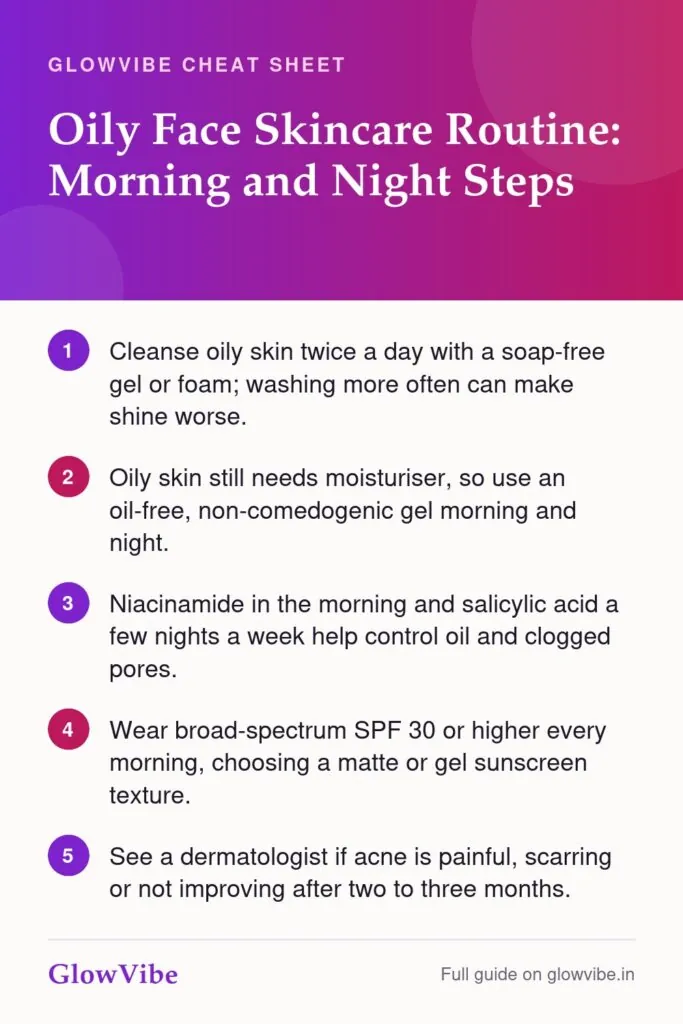
Wash with lukewarm water and a mild, soap-free cleanser. Even if you washed at night, oily skin usually benefits from a morning cleanse to remove overnight sebum and sweat. If you are unsure, our guide on whether to wash your face in the morning breaks it down by skin type.

Massage the cleanser for 30 to 60 seconds, rinse well and pat dry with a clean towel. Skin should feel clean, not squeaky or tight. Squeaky usually means the wash is too harsh.
Cleansers that work well for oily skin and are easy to find in India:
- CeraVe Foaming Cleanser: soap-free, with niacinamide and CeramidesFats that naturally hold skin cells together like mortar between bricks. Moisturisers with ceramides help support a dry or damaged skin barrier.See glossaryRead the guide; a safe all-rounder.
- Cetaphil Oily Skin Cleanser: a simple, gentle foam that suits sensitive oily skin.
- Neutrogena Oil-Free Acne Wash: contains salicylic acid; good if you also get blackheads and breakouts.
For a deeper look at options, see our list of the best foaming cleansers for oily skin.
Step 2: Toner (optional)
Toner is not essential. If you like one, choose an alcohol-free formula; alcohol-heavy astringents feel cooling but can irritate and dehydrate. A hydrating toner suits oily skin that also feels tight, while a mild exfoliating toner can help with rough texture. Skip it entirely if your routine already feels like a lot.
Step 3: Niacinamide serum
Niacinamide (vitamin B3) is one of the most useful ingredients for oily skin. It helps regulate the look of oil, supports the Skin barrierThe outermost layer of skin that keeps water in and irritants out. A damaged barrier feels tight, stings and reacts more easily.See glossaryRead the guide and can make pores look smaller over time. Apply two or three drops to dry skin.
Well-known options include Minimalist Niacinamide 10% + Zinc 1% and The INKEY List Niacinamide. If a higher-strength serum stings or makes you red, switch to a lower-strength formula or use it every other day.
Step 4: Oil-free moisturiser
Yes, oily skin needs moisturiser. Oil and water are different things, and a light gel restores water without adding grease. Look for labels such as oil-free, non-comedogenic and gel or water-gel, with hydrators like glycerin and hyaluronic acid.
Neutrogena Hydro Boost Water Gel is a popular mid-range choice that sinks in fast and sits well under sunscreen.
Step 5: Sunscreen, every single day
Sun exposure can worsen dark marks left behind by pimples, which are common on Indian skin tones, and it ages skin faster. Use a broad-spectrum sunscreen with SPF 30 or higher as the last step every morning, even on cloudy or winter days. Our guide to wearing sunscreen in winter explains why the cooler months are no exception.

Oily skin usually prefers gel, fluid or matte textures. Neutrogena Ultra Sheer Dry-Touch Sunscreen and Minimalist SPF 50 Sunscreen are widely available options with lighter finishes. Use about two finger-lengths for your face and neck, and reapply if you are outdoors or sweating heavily.
Night Skincare Routine for Oily Skin
Step 1: Cleanse (double cleanse if you wore makeup or sunscreen)
At night you need to remove sunscreen, makeup, sweat and pollution. If you wore heavy makeup or water-resistant sunscreen, start with a cleansing oil or balm, then follow with your usual gel wash. It sounds odd for oily skin, but oil dissolves oil well and rinses off cleanly. Our guide to the best oil cleansers for oily skin covers formulas that will not feel heavy.
Step 2: Treat with one active
This is where you target blackheads, clogged pores and breakouts. Pick one of these to start:
- Salicylic acid (BHA): oil-soluble, so it gets into pores and helps clear blackheads. Paula’s Choice Skin Perfecting 2% BHA Liquid Exfoliant and Minimalist Salicylic Acid 2% Serum are well-known choices. Start two or three nights a week.
- Niacinamide: gentle enough to use in the morning and at night if your skin likes it.
- Retinoids: retinol helps with clogged pores and texture over time. Start once or twice a week, use a pea-sized amount and expect some dryness at first. Avoid retinoids if you are pregnant or trying to conceive, and check with your doctor.
Do not stack salicylic acid and retinol on the same night when you are starting out. Our explainer on skincare ingredients you should not mix shows which combinations to separate. Alternating actives on different nights is an easy way to avoid irritation.
Step 3: Moisturise
Finish with your gel moisturiser or a light lotion. CeraVe PM Facial Moisturising Lotion is lightweight, contains niacinamide and ceramides, and suits oily skin that gets dry from actives.
Weekly Extras: Exfoliation and Clay Masks
If you use salicylic acid regularly, you probably do not need a separate scrub. Otherwise, a chemical exfoliant once or twice a week is gentler than gritty scrubs, which can cause tiny tears and redness.
A clay mask (kaolin or bentonite, including multani mitti blends) once a week can absorb excess oil and leave skin looking matte. Leave it on only until it starts to set, not until it cracks, and moisturise afterwards.
How to Adapt the Routine for Indian Weather
- Humid summers and monsoon: switch to the lightest gel moisturiser you own, use a matte sunscreen and carry blotting papers instead of re-washing.
- Dry winters and AC offices: oily skin can still feel tight. Add a hydrating toner or a slightly richer lotion at night, and reduce actives if you see flaking.
- Hard water: it can leave a residue that makes skin feel tight. Rinse thoroughly, avoid very hot water and never skip moisturiser.
- Pollution and sweat: wash after workouts or a long commute, and keep your night cleanse thorough. A gentle double cleanse helps on high-pollution days.
Common Mistakes That Make Oily Skin Worse
- Washing three or four times a day: twice is enough; rinse with water or blot after sweating.
- Skipping moisturiser: dehydrated skin often looks oilier, not less.
- Using harsh soaps, alcohol toners or rough scrubs: these irritate the barrier and can trigger more breakouts.
- Starting several actives at once: introduce one new product every two weeks so you know what works and what irritates.
- Heavy oils or thick creams: coconut oil and rich balms can clog pores on many oily faces.
- Picking or squeezing pimples: this raises the risk of dark marks and scars.
- Skipping sunscreen because it feels greasy: switch textures instead of skipping it.
- Expecting overnight results: most routines need six to eight weeks of consistent use to show a difference.
Always patch test a new product on a small area, such as behind the ear or on the jawline, for two or three days before using it on your full face.
When to See a Dermatologist
A routine can manage shine and mild breakouts, but it is not a treatment for moderate or severe acne. See a dermatologist if you have painful cysts or nodules, acne that leaves scars or dark marks, breakouts that do not improve after two to three months of a consistent routine, or sudden oiliness and acne alongside irregular periods or unwanted hair growth, which can point to a hormonal cause.
Go deeper: compare Minimalist vs The Derma Co niacinamide for oily skin, and see Lakmé vs Maybelline foundation if you wear makeup.
Frequently Asked Questions
Twice a day, morning and night, is enough for most people with oily skin. Add a quick rinse after heavy sweating or exercise if you need it. Washing more often can irritate your skin and make oiliness worse.
Yes. Oily skin can still lack water, and dehydrated skin often looks greasy and feels tight at the same time. Choose an oil-free, non-comedogenic gel or light lotion and use it morning and night.
Niacinamide is the easiest place to start because it helps balance the look of oil and is generally well tolerated. If you also get blackheads or clogged pores, add a salicylic acid serum a few nights a week. Introduce one at a time and patch test first.
Most people with oily skin do not need a face oil. If you want to try one, choose a light formula such as squalane and use just a drop or two at night. Stop if you notice new breakouts.
Use a niacinamide serum, a light gel moisturiser and a matte sunscreen in the morning. Carry blotting papers or a little translucent powder for touch-ups instead of washing again. Keeping your hands off your face and changing pillow covers often also helps.
No, toner is optional. An alcohol-free hydrating or gently exfoliating toner can be a nice addition, but cleansing, moisturising and sunscreen matter far more. Our CTM routine guide explains when a toner earns its place.
Quick poll
How many steps are in your skincare routine?
Final Thoughts
Oily skin does not need harsh products; it needs a steady, simple routine. Cleanse gently twice a day, add one targeted active like niacinamide or salicylic acid, never skip a light moisturiser or your sunscreen, and give it six to eight weeks. Adjust textures with the seasons, and see a dermatologist if breakouts are painful or not improving.