Khadi Vitamin C Serum Ingredients: What Each One Does (2026)
What the common ingredients in Khadi vitamin C serums do, how to read the label for vitamin C form, strength and packaging, and how to use it safely.


Khadi Vitamin CAn antioxidant that brightens dull skin, helps fade the look of dark spots and supports sunscreen against daily damage. Best used in the morning.See glossaryRead the guide serums are usually built around a form of vitamin C plus herbal and hydrating extras such as Hyaluronic acidA humectant that holds water in the skin for a plump, hydrated look. Despite the name, it is not an exfoliating acid. Apply on damp skin.See glossaryRead the guide, rosehip oil, green tea and calendula. The exact list changes from brand to brand and batch to batch, so the most useful thing you can do is learn to read the label yourself. This guide walks you through each ingredient you are likely to see and what it actually does.
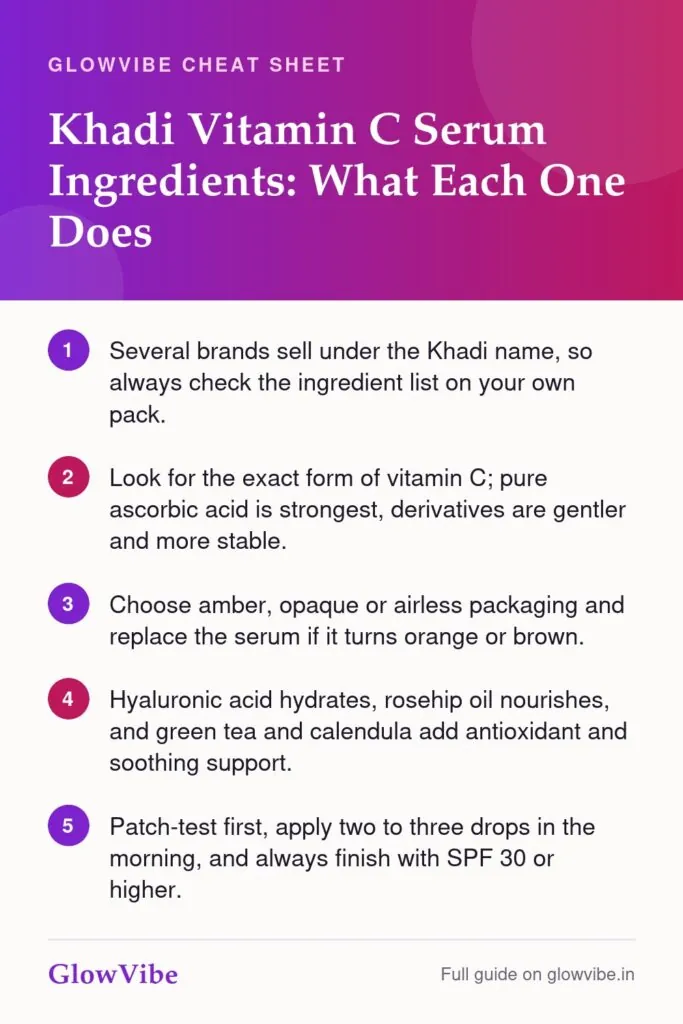
One thing to know first: “Khadi” is not a single company. Several separate brands sell herbal cosmetics under the Khadi name, and each has its own formula. Treat everything below as a guide to reading the pack in your hand, not a fixed recipe.
Khadi Vitamin C Serum Ingredients: The Quick Answer
These are the ingredients this kind of herbal vitamin C serum commonly highlights, and the job each one does. Check your own bottle’s ingredient list to see which of them it contains and where they sit on the list.
- Vitamin C (Ascorbic acid (L-ascorbic acid)The pure, most researched form of vitamin C. It works best in low-pH serums but oxidises (turns orange) with air and light, so store it closed and away from sunlight.See glossaryRead the guide or a derivative): the main active, for brightness and antioxidant protection.
- Hyaluronic acid: pulls water into the skin’s surface so it looks plumper and feels less tight.
- Rosehip oil: a light plant oil that softens and nourishes, best for normal to dry skin.
- Green tea extract: an extra antioxidant that also calms the look of redness.
- Calendula extract: a traditional soothing botanical.
- Preservatives: needed in every water-based serum to keep it safe once opened.
Ingredient Comparison Table
| Ingredient | What it does | Best for | What to check on the label |
|---|---|---|---|
| Ascorbic acid / vitamin C derivative | Brightens dullness, fades the look of dark spots over time, antioxidant | Dull skin, uneven tone, tanning | Exact form named; concentration if stated; opaque or airless pack |
| Hyaluronic acid / sodium hyaluronate | Draws water into the top layers of skin | All skin types, especially dehydrated skin | Usually listed as sodium hyaluronate |
| Rosehip oil | Softens and nourishes; adds slip | Normal, dry and mature skin | How high it sits on the list if you are oily or acne-prone |
| Green tea extract | Antioxidant support; calms the look of redness | Oily, sensitive and pollution-exposed skin | Listed as Camellia sinensis leaf extract |
| Calendula extract | Soothing, comforting feel | Sensitive or easily irritated skin | Listed as Calendula officinalis; rare allergy to daisy-family plants |
| Preservatives | Stop bacteria and mould once the bottle is open | Everyone | Names such as phenoxyethanol, sodium benzoate or potassium sorbate |
How to Read a Khadi Vitamin C Serum Label
Ingredient lists in India follow the INCI system, where ingredients appear roughly in order of quantity, highest first. Anything below about 1% can appear in any order, which is where most extracts and fragrance sit. So if vitamin C is near the very end, it is probably present in a small amount.
1. Find the form of vitamin C
“Vitamin C” on the front of a pack can mean several different molecules. Ascorbic acid (L-ascorbic acid) is the pure form with the most research behind it, but it is unstable and can sting. Gentler, more stable derivatives include sodium ascorbyl phosphate, magnesium ascorbyl phosphate, ascorbyl glucoside, ethyl ascorbic acid and tetrahexyldecyl ascorbate. Herbal brands sometimes rely on fruit extracts like AmlaIndian gooseberry, used in Ayurvedic hair oils, powders and packs. It is valued for conditioning hair and adding shine.See glossaryRead the guide or orange instead, which add some vitamin C but at much lower and less predictable levels.
2. Look for a concentration
Many herbal serums do not state a percentage. If yours does, pure ascorbic acid serums are commonly sold somewhere between 5% and 20%, and beginners or sensitive skin usually do better at the lower end. Derivatives work at different strengths, so a “10%” derivative is not directly comparable with 10% ascorbic acid. If no number is given, judge by position on the list and by how your skin responds over a few weeks.
3. Check the packaging
Vitamin C breaks down with light, air and heat. An amber or opaque glass dropper bottle or an airless pump is a good sign; a clear bottle is a warning. Note the manufacturing date and the “best before” or period-after-opening symbol (the little open jar with “6M” or “12M”).
4. Scan for fragrance and essential oils
Herbal serums often include essential oils such as orange, lemon or rose for scent. These can irritate sensitive skin, and citrus oils can make some people more sun-sensitive. If you react easily, pick a pack with fewer of these near the top of the list.
What Each Ingredient Does
Vitamin C (ascorbic acid)
Vitamin C is an antioxidant that helps skin cope with daily stress from sun and pollution. With steady use it can make a dull complexion look brighter and gradually soften the look of tan and dark spots. Your skin also needs vitamin C to make collagen, which is why it is popular in anti-ageing routines.

- Good for: dullness, uneven tone, post-acne marks, sun-exposed city skin.
- Watch out for: tingling or stinging, especially with pure ascorbic acid on sensitive skin.
- Sign it has gone off: the serum turns dark yellow, orange or brown.
Hyaluronic acid
Hyaluronic acid is a HumectantAn ingredient that attracts water, such as glycerin or hyaluronic acid. Humectants hydrate best when sealed in with a moisturiser.See glossaryRead the guide: it holds water in the upper layers of your skin, so fine dryness lines look softer and the face looks plumper. It is light and non-greasy, which suits humid Indian summers. On the label it usually appears as sodium hyaluronate.
In very dry air, such as a North Indian winter or an air-conditioned office, follow it with a moisturiser so the water stays in your skin rather than evaporating.
Rosehip oil
Rosehip seed oil is rich in fatty acids and gives the serum a softer, more nourishing feel. Normal, dry and mature skin tends to like it. If you are very oily or prone to breakouts, notice how high it sits on the list, since an oil-heavy serum can feel heavy in sticky weather.
Green tea extract
Green tea contains polyphenols that act as antioxidants and can help the skin look calmer. It pairs naturally with vitamin C, and it is a sensible inclusion for oily or pollution-exposed skin. Expect a gentle support role rather than dramatic results.
Calendula extract
Calendula (pot marigold) is used in herbal skincare for its soothing, comforting feel. It is generally well tolerated. A small number of people are allergic to plants in the daisy family, so patch-test if you have reacted to chamomile or arnica before.
Preservatives (“natural” or otherwise)
Any serum that contains water must be preserved, or bacteria and mould can grow after you open it. Herbal brands often describe their preservatives as natural or mild, but what matters is that the system works. Common names include phenoxyethanol, sodium benzoate, potassium sorbate and benzyl alcohol, all widely used at regulated levels. A “preservative-free” water-based serum is not a benefit; it is a risk.
Realistic Benefits of a Vitamin C Serum
- Brighter-looking skin: the most common improvement people notice, usually after several weeks.
- Softer-looking dark spots and tan: gradual fading, not overnight removal.
- Extra antioxidant protection: works alongside sunscreen, never instead of it.
- Better hydration: mostly thanks to hyaluronic acid and any oils in the formula.
A serum will not cure acne, melasma or pigmentation disorders. If dark patches are spreading, changing or not improving after a few months, see a dermatologist. For a deeper look at how vitamin C fits with anti-ageing actives, read our guide to retinol and vitamin C serum benefits.
How to Choose the Right Formula for Your Skin and Climate
- Oily or acne-prone skin: choose a water-based or gel texture with green tea and hyaluronic acid, and fewer oils near the top of the list.
- Dry or mature skin: a formula with rosehip or other plant oils will feel more comfortable, especially in winter.
- Sensitive skin: prefer a vitamin C derivative over pure ascorbic acid, and avoid heavy fragrance or citrus essential oils.
- Humid coastal cities: lightweight textures sit better under sunscreen and do not pill.
- Hot summers: the heat speeds up vitamin C breakdown, so buy smaller bottles and store them away from windows and bathrooms.
How to Use a Khadi Vitamin C Serum
Vitamin C works best in the morning, under sunscreen, because that is when your skin faces the most sun and pollution. Always follow the directions on your specific pack, since some herbal formulas suggest night use.

- Patch testTrying a small amount of a new product behind the ear or on the inner arm for a few days to check for a reaction before using it widely.See glossary first: apply a little behind your ear or on your jawline for two to three days before using it on your face.
- Cleanse: wash with a gentle face wash and pat dry.
- Toner (optional): use a mild, alcohol-free toner if it is already part of your routine.
- Apply the serum: put two to three drops on your fingertips and press gently over the face and neck.
- Moisturise: wait a minute, then apply a light moisturiser.
- Sunscreen: finish with a Broad spectrumA sunscreen label meaning it protects against both UVB rays (which cause burning) and UVA rays (which cause tanning and ageing).See glossaryRead the guide SPF (sun protection factor)A measure of protection against UVB rays, which cause sunburn. SPF 30 blocks about 97% of UVB and SPF 50 about 98%, if you apply enough and reapply.See glossaryRead the guide 30 or higher and reapply when you are outdoors.
- Skipping sunscreen: without it, brightening results are easily undone.
- Using an oxidised serum: if it has turned dark orange or brown, it has lost most of its effect and may irritate.
- Layering too many actives: pairing pure vitamin C with strong AHAs, BHAs or retinol in the same step can sting. See our list of skincare ingredients you should not mix.
- Storing it in the bathroom: heat and steam speed up breakdown.
- Pushing through irritation: burning, peeling or redness that lasts means stop. Our guide to a damaged skin barrier explains how to recover.
- Expecting instant results: give it six to eight weeks of steady use before judging.
Start with once a day, or even every other day if your skin is sensitive. Sunscreen matters all year, not just in May; here is why you need sunscreen in winter in India too. If you prefer a short routine, our minimalist skincare routine shows where a serum fits.
Common Mistakes to Avoid
Frequently Asked Questions
Herbal vitamin C serums like these typically combine a form of vitamin C with hydrators such as hyaluronic acid and botanicals such as rosehip oil, green tea and calendula. Because several brands use the Khadi name and formulas change, check the ingredient list on your own pack for the exact contents.
It depends on the formula. Sensitive skin usually tolerates vitamin C derivatives better than pure ascorbic acid, and does best with little fragrance or citrus essential oil. Always patch-test for two to three days first.
Yes, it layers well with moisturiser, hyaluronic acid, niacinamide and sunscreen. Keep strong exfoliating acids and retinol for a different time of day, such as vitamin C in the morning and retinol at night.
Most people notice a brighter, fresher look within four to eight weeks of daily use with sunscreen. Fading of dark spots usually takes longer, often a few months.
A clear or pale serum that turns deep yellow, orange or brown, or starts to smell different, has likely oxidised. Replace it, and check the period-after-opening symbol on the pack for how long it should last.
Topical vitamin C is generally considered low-risk, but herbal serums can contain essential oils and extracts. Show the ingredient list to your doctor before starting it during pregnancy or breastfeeding.
Keep the cap tightly closed and store the bottle in a cool, dark cupboard away from sunlight and bathroom steam. In very hot months, some people keep it in the fridge door, which is fine as long as the pack does not say otherwise.
Quick poll
What is your biggest skin concern right now?
The Bottom Line
A Khadi vitamin C serum can be a gentle, herbal way to add brightness and antioxidant care to your routine, but its value depends on what is actually inside the bottle. Read the label for the form of vitamin C, any stated concentration, the packaging and the oils or fragrance it contains. Patch-test, use it in the morning under sunscreen, and give it a couple of months to show what it can do.