Anti-Aging Skincare Routine for Your 30s: An Indian Skin Guide
A realistic anti-aging skincare routine for your 30s on Indian skin: the four proven steps, AM and PM routines, starting a retinoid, and handling pigmentation.


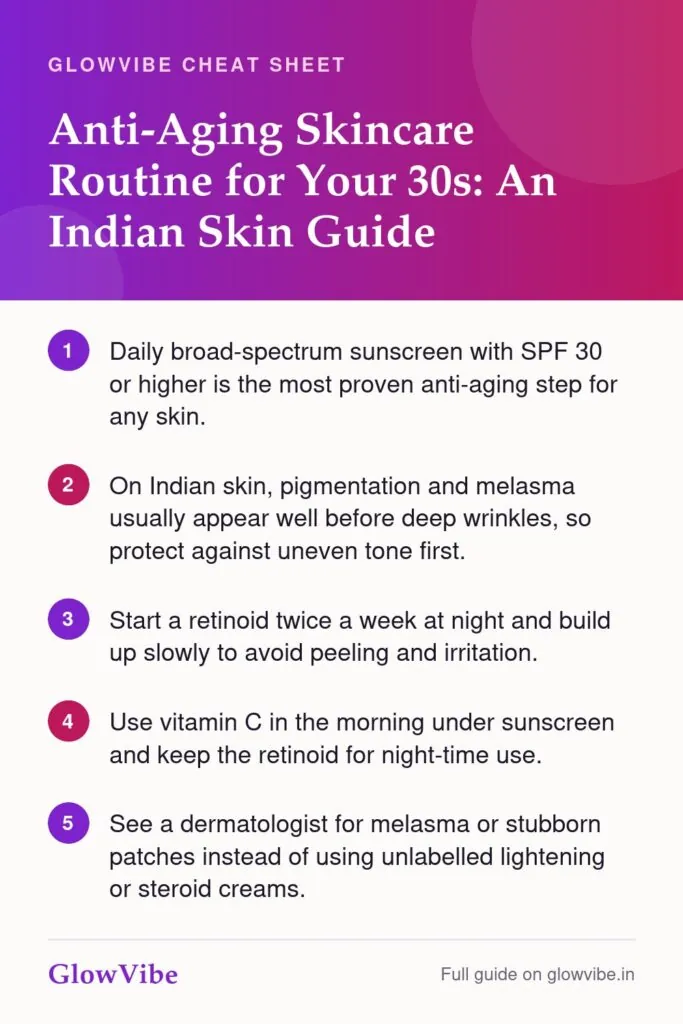
A good anti-aging skincare routine in your 30s comes down to four things: daily sunscreen, a retinoid at night, an antioxidant like Vitamin CAn antioxidant that brightens dull skin, helps fade the look of dark spots and supports sunscreen against daily damage. Best used in the morning.See glossaryRead the guide in the morning, and a moisturiser that suits your skin. For Indian skin, put pigmentation and melasma first and wrinkles second, because uneven tone usually shows up years before deep lines do.
No cream will make you look ten years younger, and this guide won’t pretend otherwise. What a steady, evidence-backed routine can do is slow visible sun damage, soften fine lines, even out tone and keep your skin healthy as it changes.
Quick summary: the 30s routine at a glance
- Morning: gentle cleanse or plain water rinse, vitamin C serum, moisturiser, Broad spectrumA sunscreen label meaning it protects against both UVB rays (which cause burning) and UVA rays (which cause tanning and ageing).See glossaryRead the guide sunscreen SPF (sun protection factor)A measure of protection against UVB rays, which cause sunburn. SPF 30 blocks about 97% of UVB and SPF 50 about 98%, if you apply enough and reapply.See glossaryRead the guide 30 or higher with PA++++An Asian sunscreen rating for UVA protection. More plus signs mean more protection, with PA++++ the highest.See glossaryRead the guide or more.
- Night: cleanse, retinoid two to three nights a week at first, moisturiser every night.
- Pigmentation: sunscreen every day, a tinted sunscreen if you have melasma, and a tone-evening serum such as NiacinamideA form of vitamin B3 that helps with oiliness, the look of large pores, uneven tone and barrier support. Gentle and easy to pair with most ingredients.See glossaryRead the guide or Azelaic acidA gentle acid that helps with redness, bumps and uneven tone. It is usually well tolerated by sensitive and acne-prone skin.See glossary.
- Habits: seven to eight hours of sleep, no smoking, fewer sugary foods and drinks.
- See a dermatologist for melasma, stubborn patches, or if you want peels, lasers or prescription creams.
What changes in your skin in your 30s
The changes are gradual, and most visible ones come from years of sun exposure rather than age alone.
Slower cell turnover
Your skin sheds dead cells more slowly than it did at 20. Those cells sit on the surface longer, so skin can look duller and rougher, and dark spots take longer to fade. This is one reason retinoids and gentle exfoliants become more useful now.
Early fine lines and less bounce
Collagen production slowly declines, and UV light breaks down the collagen you already have. You may notice the first fine lines around the eyes, between the brows or across the forehead, especially when your skin is dehydrated.
Pigmentation and melasma on brown skin
Brown skin has more active pigment cells, which gives it natural protection against sunburn and makes deep wrinkles appear later. The trade-off is that it reacts to sun, heat, inflammation and hormones by making extra pigment. That shows up as sun spots, dark patches left behind by old acne, uneven tone around the mouth and eyes, and melasma: symmetrical brown patches on the cheeks, forehead or upper lip.
Melasma often starts or worsens in the late 20s and 30s, and it is common in Indian women. Pregnancy, hormonal contraceptives, strong sun and even kitchen heat can trigger it. For many Indian readers, this is the main “aging” concern of their 30s, so the routine below is built around it.
The evidence-backed core: four steps that matter
Only a handful of ingredients have solid evidence behind them. Get these four right before adding anything else.
| Step | What it does | When | Look for |
|---|---|---|---|
| Sunscreen | Prevents new sun damage, spots and collagen breakdown | Every morning, reapply outdoors | SPF 30+, PA+++ or higher; tinted with iron oxides if you have melasma |
| Retinoid | Speeds cell turnover, softens fine lines, fades spots over months | Night | RetinolA vitamin A derivative that speeds up skin renewal for smoother texture, fewer clogged pores and fewer visible fine lines. Use at night and wear sunscreen by day.See glossaryRead the guide, Retinal (retinaldehyde)A retinoid one step closer to the active form than retinol, so it tends to work faster. It can still cause dryness, so introduce it slowly.See glossaryRead the guide or a prescription retinoid from a dermatologist |
| Vitamin C | Antioxidant backup to sunscreen, brightens dullness | Morning | L-ascorbic acid around 10–20%, or a gentler derivative |
| Moisturiser | Supports the skin barrier, plumps fine dehydration lines | Morning and night | Ceramides, glycerin, hyaluronic acid; gel for oily skin, cream for dry |
1. Sunscreen, every single day
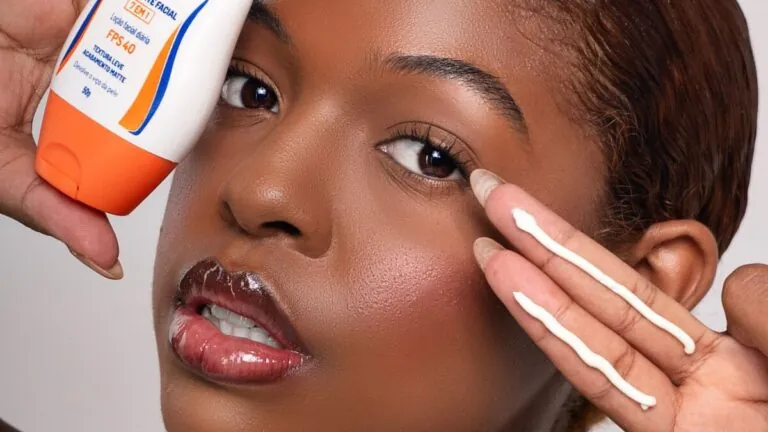
Sunscreen is the most proven anti-aging product you can buy, and it matters even more for pigmentation than for wrinkles. Use a broad-spectrum SPF 30 or higher with a PA+++ or PA++++ rating, and apply enough: roughly two finger-lengths for the face and neck. Wear it indoors near windows and on cloudy days, and reapply every two to three hours when you are outside.
If you have melasma, a tinted sunscreen is worth the switch. The iron oxides that give it colour also help block visible light, which can darken melasma on brown skin. Texture decides whether you will actually wear it daily, so read our guide to choosing between a gel and cream sunscreen for your skin type.
2. A retinoid at night
Retinoids are vitamin A derivatives, and they have the strongest evidence of any topical ingredient for fine lines and sun-damaged skin. Over three to six months they can smooth texture, soften fine lines and help fade spots. Over-the-counter retinol is gentler and slower; prescription options such as tretinoin are stronger and need a dermatologist.
3. Vitamin C in the morning
Vitamin C is an antioxidant that helps neutralise some of the damage UV and pollution cause, so it works as backup for your sunscreen, not a replacement. It also brightens dull skin and can help with mild uneven tone. If pure vitamin C stings or you are torn between options, our comparison of niacinamide vs vitamin C for Indian skin explains which suits your concern, and how to use both.
4. A moisturiser that suits you
Moisturiser won’t reverse aging, but dehydrated skin makes fine lines look deeper, and a strong barrier helps you tolerate a retinoid. Oily skin does well with a light gel; dry or winter skin needs a cream with ceramides. If your skin is already stinging, red or flaky, fix that first with our guide to repairing a damaged skin barrier before you start actives.
Your AM and PM anti-aging routine
Morning routine (about 5 minutes)
- Cleanse: a gentle cleanser if you are oily, or just lukewarm water if your skin is dry.
- Vitamin C serum: three to four drops on dry skin. Wait a minute.
- Moisturiser: a pea-sized amount, or skip it if your sunscreen is moisturising enough.
- Sunscreen: two finger-lengths for face and neck, including ears and the backs of the hands.
Night routine (about 5 minutes)
- Cleanse: double cleanse with an oil or balm first if you wore sunscreen and makeup.
- Retinoid (on retinoid nights): a pea-sized amount on fully dry skin, spread over the whole face.
- Tone-evening serum (on other nights): niacinamide or azelaic acid if pigmentation is your main concern.
- Moisturiser: every night, a little richer than your morning one.
Keep exfoliating acids such as glycolic or lactic acid off your retinoid nights. If you want to see both actives working together, our guide to retinol and vitamin C serum benefits covers timing and layering in detail.

How to start a retinoid slowly
Most people who give up on retinoids start too fast. Some dryness, flaking or mild stinging in the first few weeks is common and is called retinisation. You can keep it mild with a slow build-up.
- Patch test first: apply a little behind the ear or along the jaw for three nights.
- Weeks 1–2: use a low-strength retinol twice a week, on non-consecutive nights.
- Weeks 3–4: move to every third night if your skin feels comfortable.
- Month 2 onwards: try alternate nights, then nightly only if your skin is happy.
- If it stings: apply moisturiser first and the retinoid on top (the “sandwich” method), or drop back a step.
Keep it away from the corners of the nose, the lips and the eyelids, where skin is thin. Sunscreen is non-negotiable once you start. Don’t use retinoids if you are pregnant, trying to conceive or breastfeeding; ask your doctor about alternatives such as azelaic acid. Our guide to skincare ingredients you should not mix lists what else to keep apart.
Pigmentation care for Indian skin
Pigmentation is slow to fade and quick to return, so think in months. Stop new pigment forming while gently fading what is there.
- Protect first: sunscreen daily, a cap or umbrella in strong sun, and a tinted formula for melasma.
- Calm inflammation: don’t pick at spots, scrub hard or wax the upper lip roughly, since irritation leaves dark marks on brown skin.
- Use tone-evening ingredients: niacinamide, azelaic acid, vitamin C, alpha arbutin and tranexamic acid all have reasonable evidence for mild pigmentation.
- Be wary of DIY: lemon juice, raw potato and baking soda can irritate and darken skin further.
- Avoid unlabelled “fairness” or “skin lightening” creams: some contain steroids or hydroquinone, which can thin skin and cause rebound darkening when used without a doctor.
Your aim is even, healthy skin in your own natural shade, not lighter skin.
Caring for the eye area
The skin under your eyes is thin and often shows the first fine lines. In Indian skin, dark circles are usually caused by pigmentation, visible blood vessels or the shape of the under-eye area, more often than by tiredness alone. An eye cream can help with dryness and mild pigment, but it won’t erase hollows or genetic darkness.

- Take your sunscreen up to the orbital bone, and wear UV-protective sunglasses outdoors to reduce squinting.
- Once your face tolerates a retinoid, try a gentle retinol eye cream, or dab a tiny amount of your face retinoid on the outer corners only.
- Use caffeine or niacinamide formulas for puffiness and mild pigment, and pat products in with your ring finger.
- Don’t rub your eyes, especially if you have allergies, since friction darkens the skin over time.
For help matching a product to your type of dark circle, see our guide to the best under eye cream for dark circles.
Lifestyle habits that show on your skin
Sleep
Your skin does much of its repair overnight. Regular short sleep tends to show up as dullness, puffiness and darker circles,. Seven to eight hours is a realistic target, and sleeping on your back or on a smooth pillowcase reduces creasing.
Smoking
Smoking is one of the clearest causes of early skin aging after sun exposure. It reduces blood flow to the skin, breaks down collagen and causes lines around the mouth. Quitting at any age helps.
Sugar
High blood sugar drives a process called glycation, where sugar binds to collagen and makes it stiffer. Most of this evidence comes from lab studies and people with diabetes, so the effect of the occasional mithai is small. Cutting back on sweetened chai and cold drinks still helps your overall health.
When to see a dermatologist
A home routine handles mild concerns. Book a dermatologist if you have melasma, patches that keep spreading, pigmentation that hasn’t improved after three months of daily sunscreen, or a mole that changes shape or colour.
For melasma, a dermatologist may prescribe a short, supervised course of a cream combining hydroquinone, a retinoid and a mild steroid, or oral tranexamic acid when it suits you. These need medical supervision, so never buy them over the counter on a friend’s advice.
In-clinic options include superficial chemical peels such as glycolic or salicylic acid, microneedling, and some lasers. Brown skin is more prone to darkening after aggressive treatments, so choose a dermatologist experienced with Indian skin, start gently and ask about downtime. Injectables like botulinum toxin and fillers can soften expression lines and volume loss, but they are medical procedures and should only be done by a qualified doctor.
Common mistakes in your 30s
- Adding five actives at once: introduce one new product every two to three weeks so you know what works and what irritates.
- Using too little sunscreen: a thin smear gives far less protection than the label promises.
- Over-exfoliating: scrubs plus acids plus a retinoid often leads to redness and more pigmentation.
- Giving up too soon: retinoids and pigment serums need at least 8 to 12 weeks before you judge them.
Frequently Asked Questions
No, your 30s are a sensible time to start. Sunscreen should already be a daily habit, and adding a retinoid now helps with early lines and spots while they are still mild.
Yes, but at different times of day. Use vitamin C in the morning under sunscreen and the retinoid at night.
Moisturiser makes skin look smoother within days. Vitamin C and niacinamide usually take 6 to 8 weeks for brightness and tone. Retinoids need around three to six months for visible changes in fine lines and texture.
Melasma triggered by pregnancy sometimes fades after delivery, but most melasma is long-lasting and comes back with sun and heat. Daily sunscreen and a dermatologist’s plan can control it well.
Not always. A gentle face moisturiser and sunscreen work around the eyes for many people. An eye cream helps if your face products sting there, or if you want a gentler retinol or caffeine formula for that area.
Quick poll
How many steps are in your skincare routine?
The bottom line
The best anti-aging routine in your 30s is the one you can follow every day: sunscreen in the morning, a slowly built-up retinoid at night, vitamin C if you like it, and a moisturiser that suits your skin. Look after pigmentation first, give each product a few months, and see a dermatologist for melasma or anything that won’t budge. Healthy, even skin at any age is a realistic goal.