Best Dry Shampoo in India (2026): How to Use It on Oily Hair
Our picks for the best dry shampoo in India, plus how to use it on oily, dark hair without a white cast, how often is safe, and mistakes to avoid.

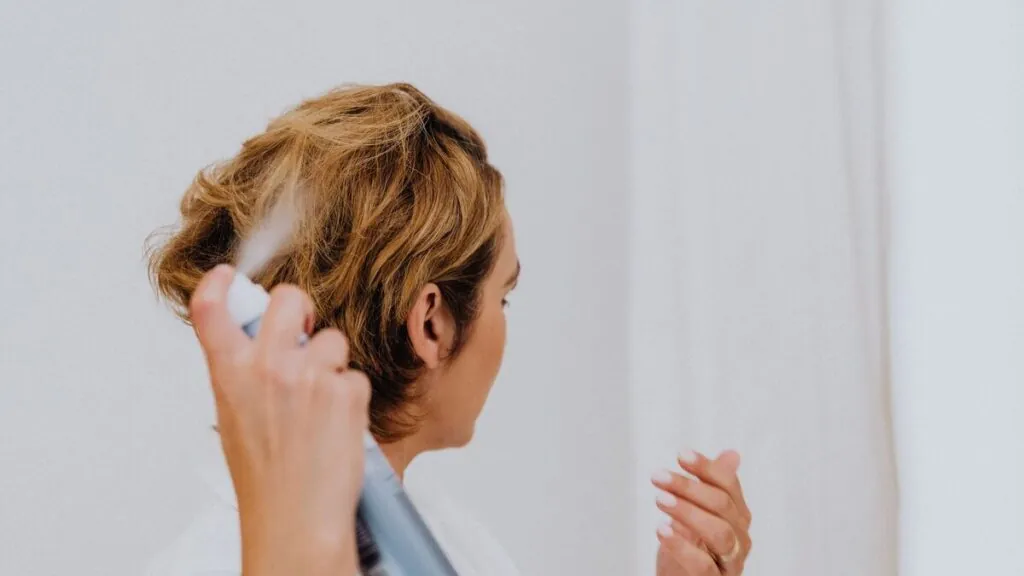
The best dry shampoo in India for most people is a starch-based spray like Batiste Dry Shampoo, with its tinted Divine Dark version being the safer pick for black and dark brown Indian hair. Spray it on oily roots, leave it for a couple of minutes, then brush it through. Your hair will look freshly washed for another day.
Dry shampoo is a quick fix, though, not a replacement for washing. Here’s how to pick one and use it without a white cast.
Best Dry Shampoo in India: Quick Picks
- Batiste Dry Shampoo Divine Dark: best for black and dark brown hair (tinted, so far less white cast).
- Batiste Dry Shampoo Original: best all-rounder for oily roots and light to medium hair.
- Bblunt Back To Life Dry Shampoo: best Indian salon brand, easy to find online and in stores.
- Klorane Dry Shampoo with Oat Milk: best gentle option for sensitive scalps and frequent travellers.
- Klorane Dry Shampoo with Nettle: best for very oily scalps that turn greasy within a day.
Dry Shampoo Comparison Table
| Product | Best for | Format | White cast on dark hair | Price range |
|---|---|---|---|---|
| Batiste Divine Dark | Black / dark brown hair | Tinted aerosol spray | Low | Mid-range |
| Batiste Original | Oily roots, everyday refresh | Aerosol spray | Medium (needs brushing) | Mid-range |
| Bblunt Back To Life | Quick refresh, volume | Aerosol spray | Medium (needs brushing) | Mid-range |
| Klorane with Oat Milk | Sensitive scalp, all hair types | Aerosol spray | Medium | Premium |
| Klorane with Nettle | Very oily scalp | Aerosol spray | Medium | Premium |
How Does Dry Shampoo Work?
Your scalp makes SebumThe natural oil your skin and scalp make. Some is essential for a healthy barrier; too much can feel greasy and clog pores.See glossary, a natural oil that slowly travels down the hair shaft. After a day or two (sooner in humid weather), the roots look flat, shiny and stringy. Dry shampoo contains absorbent ingredients, usually rice starch, corn starch, tapioca or clay-type powders, that soak up that oil and give each strand a slightly gritty texture.

Nothing is actually washed away. The oil, sweat and dust are still on your scalp, just absorbed and hidden.
Spray vs Powder Dry Shampoo
Aerosol sprays are the most common in India. They spread a fine, even mist, dry fast and are easy to target at the roots. The trade-off is the propellant, a strong scent for some people, and the need to spray in a well-ventilated room.
Powders (loose or in a puffer bottle) have no propellant and are travel-friendly. They’re harder to apply evenly, though, and can easily leave white patches on dark hair if you shake out too much. If you go the powder route, tap a little onto a makeup brush and dab it onto your parting rather than pouring it straight on.
The Best Dry Shampoos in India, Reviewed
1. Batiste Dry Shampoo Divine Dark
This is Batiste’s tinted formula for dark hair. It works like the original, absorbing oil with starch, but carries a brown tint that blends into black and dark brown roots.
Who it suits: black, dark brown and brunette hair; anyone who has given up on dry shampoo because of the white cast.
- Pros: blends into dark roots, quick oil absorption, adds some root lift.
- Cons: the tint can transfer to pale pillowcases or white collars if overused; not ideal for very light or grey hair.
2. Batiste Dry Shampoo Original
Batiste Original is probably the best-known dry shampoo in the world, and it’s widely sold in India. It uses rice starch to soak up oil and has a clean, fresh scent. It does leave a visible white film at first, so on dark hair you’ll need to let it sit and then brush or massage it in thoroughly.
Who it suits: oily roots on light to medium brown hair, or dark hair if you’re patient with brushing.
- Pros: strong oil absorption, easy to find, good volume at the roots.
- Cons: white cast on black hair if not worked in; builds up quickly with daily use.
3. Bblunt Back To Life Dry Shampoo
Bblunt is an Indian salon-born haircare brand, and Back To Life is its dry shampoo spray. It’s designed for Indian buyers, easy to pick up online and in many beauty stores, and works well as a quick refresh before work or after the gym.
Who it suits: normal to oily hair, people who want a homegrown brand, and anyone who wants a bit of extra volume.
- Pros: easy availability, refreshes roots and adds body, pleasant fragrance.
- Cons: not tinted, so dark hair needs careful blending; fragrance may bother sensitive noses.
4. Klorane Dry Shampoo with Oat Milk
Klorane is a French pharmacy brand, and its Oat Milk dry shampoo is marketed as an ultra-gentle formula suitable for all hair types.
Who it suits: sensitive or easily itchy scalps, fine hair that gets weighed down, and occasional users.
- Pros: gentle feel, light finish, mild scent.
- Cons: premium price; may not be strong enough for a very oily scalp in peak humidity.
5. Klorane Dry Shampoo with Nettle
This is Klorane’s version made specifically for oily hair. If your roots go greasy by the evening of wash day, this one is worth the extra spend over the gentler Oat Milk formula.
- Pros: targeted at oily scalps, absorbs well, light finish.
- Cons: premium; still needs brushing in on black hair.
How to Choose a Dry Shampoo for Oily Hair and Dark Hair
Dry shampoo for oily hair
If you have an oily scalp, pick a formula that says “for oily hair” or lists a starch or clay high up in the ingredients. Apply it before your roots look really greasy, for example the night before, so it has time to absorb oil while you sleep.
Dry shampoo for dark hair
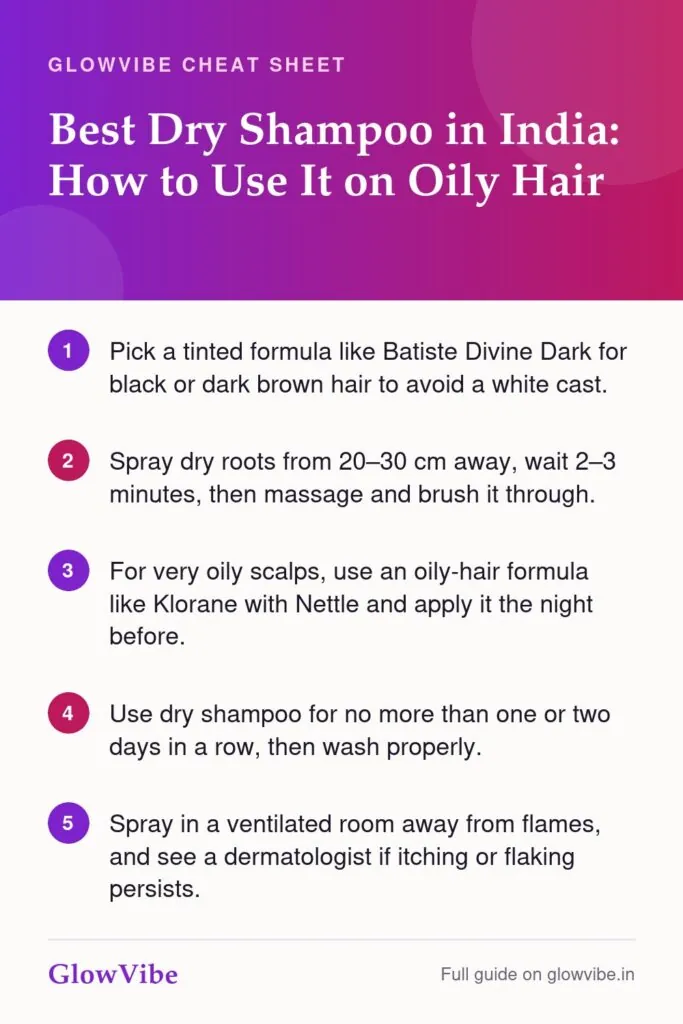
Most Indian hair is black or dark brown, which is exactly where regular dry shampoo shows up most. Three things help: use a tinted formula made for dark hair, spray from a distance so the mist spreads thinly, and let it sit for 2 to 3 minutes before brushing or massaging it in. The white cast mostly disappears once the powder has absorbed oil and been worked into the roots.
Fine, thick and curly hair
Fine hair goes flat fastest, so dry shampoo is a great volume booster, but use very little to avoid a dull, dusty look. You’ll find more on lightweight routines in our guide to haircare products for fine hair. Thick hair needs sectioning so the spray actually reaches the scalp. With curly or wavy hair, apply only at the roots and avoid brushing the lengths; use your fingertips instead to keep your curl pattern intact. Our curly hair products guide covers what to use on the lengths.
Oily scalps in Indian humidity
In Mumbai, Chennai, Kolkata or anywhere during the monsoon, sweat and humidity make the scalp feel greasy much faster. Dry shampoo can stretch a wash by a day, but on a sweaty scalp it mixes with moisture and can clump or feel sticky. In peak summer, washing more often with a gentle shampoo is usually the better choice; see our summer hair care tips for a full routine. Save dry shampoo for days when you truly can’t wash, such as travel, long shifts or the day after a blow-dry.
How to Use Dry Shampoo: Step by Step
- Start with dry hair. Dry shampoo doesn’t work on damp or sweaty roots. If you’ve just come back from a workout, let your scalp dry first.
- Shake the can well so the powder is evenly mixed.
- Section your hair. Lift sections at the crown, parting, hairline and behind the ears, where oil collects most.
- Spray from about 20 to 30 cm away in short bursts, aiming at the roots only, not the lengths.
- Let it sit for 2 to 3 minutes. This is the step most people skip, and it’s what lets the starch absorb oil.
- Massage with your fingertips to break up the powder and blend it into the scalp.
- Brush through with a clean brush (or finger-comb curly hair) to remove excess and any remaining cast.
- Style as usual. A blow-dryer on a cool setting can help lift roots further.
Dry shampoo also gives grip and texture, which makes buns, braids and updos hold better. It’s a handy trick before tying one of these easy saree hairstyles.

How Often Can You Use Dry Shampoo?
A good rule is no more than 1 to 2 days in a row, then wash properly. Dry shampoo doesn’t clean your scalp. Every use adds another layer of powder on top of oil, sweat and dead skin, and that buildup can clog the area around hair follicles, cause itching and flaking, and leave hair dull.
On wash day, massage your scalp well with shampoo to remove all residue; if you use dry shampoo often, a clarifying shampoo once every week or two helps. If you notice persistent itching, redness, flakes or bumps on your scalp, stop using it and see a dermatologist. Constant flaking can also be dandruff, which needs its own care, as explained in our guide to hair fall and dandruff.
Is Dry Shampoo Bad for Your Hair?
Used occasionally, dry shampoo is generally safe for most people. Problems come from overuse: product buildup, a dry or itchy scalp, and hair that breaks more easily if you’re constantly brushing gritty powder through it.
Safety tips for aerosol dry shampoo
- Spray in a ventilated space such as near an open window, and avoid breathing in the mist. Close your eyes and mouth while spraying.
- Keep it away from heat and flames. Aerosols are flammable, so don’t spray near a gas stove, diya or lit incense, and don’t leave the can in a hot car.
- Buy from trusted sellers and check the batch and expiry details. In 2021 and 2022, several aerosol dry shampoos were recalled in the US and other countries after testing found benzene contamination, which was linked to the propellant. Buying genuine stock from reputable retailers and following any recall news is sensible.
- Patch testTrying a small amount of a new product behind the ear or on the inner arm for a few days to check for a reaction before using it widely.See glossary if your skin is sensitive. Spray a little behind your ear or on your hairline and wait 24 hours, especially with fragranced formulas.
Common Dry Shampoo Mistakes
- Spraying too close. Holding the can near your scalp dumps powder in one spot and leaves white patches.
- Brushing immediately. Give it a few minutes to absorb oil, or it will just sit on top of the grease.
- Using it on wet or sweaty hair. It turns pasty and clumps.
- Spraying the lengths. Your ends aren’t oily; powder there just makes them dry and dull.
- Using a white formula on black hair without blending. Choose a tinted version or blend thoroughly.
- Using it for days on end. Skipping washes for a week with dry shampoo is the fastest route to an itchy, flaky scalp.
- Layering it over heavy hair oil. If you oil your hair overnight, wash it out. Dry shampoo can’t absorb that much oil. For better ways to use oil, see our natural hair care tips.
Frequently Asked Questions
A tinted formula such as Batiste Dry Shampoo Divine Dark is the easiest choice for black and dark brown hair because it blends into the roots. With a regular (untinted) spray, spray from a distance, let it sit for a few minutes and brush it through well to avoid a white cast.
Occasional use is generally fine for most people. Using it many days in a row can cause buildup, itching and flaking because it doesn’t actually clean the scalp. Wash your hair properly after one or two days of dry shampoo.
Aim for no more than one or two days in a row before a proper wash. If you use it every week, add a clarifying shampoo once every week or two to remove residue.
Yes, especially formulas made for oily hair, such as Klorane Dry Shampoo with Nettle. It works best when applied before roots get very greasy, for example the night before. In heavy humidity or after intense sweating, a wash is usually the better option.
It’s best not to. Daily use without washing lets oil, sweat and powder build up on the scalp, which can lead to irritation. If your scalp gets oily every day, washing with a gentle shampoo more often is the healthier fix.
Plain arrowroot or cornstarch can absorb oil in a pinch, but it shows clearly on dark hair and is hard to spread evenly. Avoid heavily perfumed talc-based powders on the scalp. Dab any powder on lightly with a brush and wash it out the next day.
Yes, as long as the room is ventilated and you avoid inhaling the mist. Keep aerosols away from flames and heat, and buy from trusted sellers so you get genuine, in-date stock.
Quick poll
How often do you wash your hair?
The Bottom Line
For most Indian hair, a tinted spray like Batiste Divine Dark is the simplest way to rescue oily roots without a white cast. Batiste Original and Bblunt Back To Life are good everyday options if you blend well, and Klorane suits sensitive or very oily scalps.
Whichever you choose, spray from a distance, let it sit, brush it through, and keep it to one or two days between washes.