Best Hair Brush for Your Hair Type: Curly, Wavy and Straight (2026)
Which hair brush suits curly, wavy, straight, fine or thick hair? Compare brush types, see top picks and learn how to brush without breakage.


The best hair brush is the one that matches your hair type: a wide-tooth comb or flexible detangling brush for curly hair, a paddle brush for wavy and straight hair, and a soft boar bristle brush for fine hair that needs shine. Most breakage comes from using the wrong tool on wet hair, not from brushing itself, so getting the brush right is one of the cheapest hair care upgrades you can make.
Below you will find a quick list of picks, a comparison table of every common brush and comb type, recommendations by hair type, and the brushing habits that actually protect your hair in Indian humidity and hard water.
Quick Answer: Best Hair Brush by Hair Type
- Curly hair: a wide-tooth comb or a Denman D3 on wet hair with conditioner in it.
- Wavy hair: a detangling brush such as the Tangle Teezer The Wet Detangler in the shower, then fingers or a wide-tooth comb.
- Straight hair: a paddle brush for daily smoothing; a round brush only if you blow-dry.
- Fine or thin hair: a soft boar bristle brush or the Tangle Teezer The Original.
- Thick hair: a paddle brush or the Wet Brush Original Detangler, working in sections.
- Hair fall-prone hair: a smooth wooden or neem wide-tooth comb, used gently, ends first.
Hair Brush Types Compared
Every brush is designed for a job. Use this table to see which one you need before you think about brands.
| Brush / comb | Best hair type | Best use |
|---|---|---|
| Wide-tooth comb | Curly, coily, thick, wavy | Detangling wet hair with conditioner; spreading masks |
| Detangling brush (flexible bristles) | All types, especially wavy and thick | Removing knots on wet or dry hair with less pulling |
| Paddle brush | Straight, wavy, long, thick | Daily smoothing and rough blow-drying |
| Round brush | Straight, wavy | Blow-drying for volume, bounce and curled-under ends |
| Boar bristle brush | Fine, straight, normal | Spreading scalp oil for shine; smoothing flyaways |
| Vented brush | Straight, wavy, fine | Faster blow-drying and root lift |
| Wooden comb / neem comb | All types, hair fall-prone, dry scalp | Gentle everyday combing with less static |
Each Brush Type Explained
Wide-Tooth Comb
The widely spaced teeth slide through hair without catching every strand, which is why it is the safest tool for wet hair. It is the first thing curly-haired readers should own, and it is cheap: Roots and Vega both sell wide-tooth combs at budget prices.
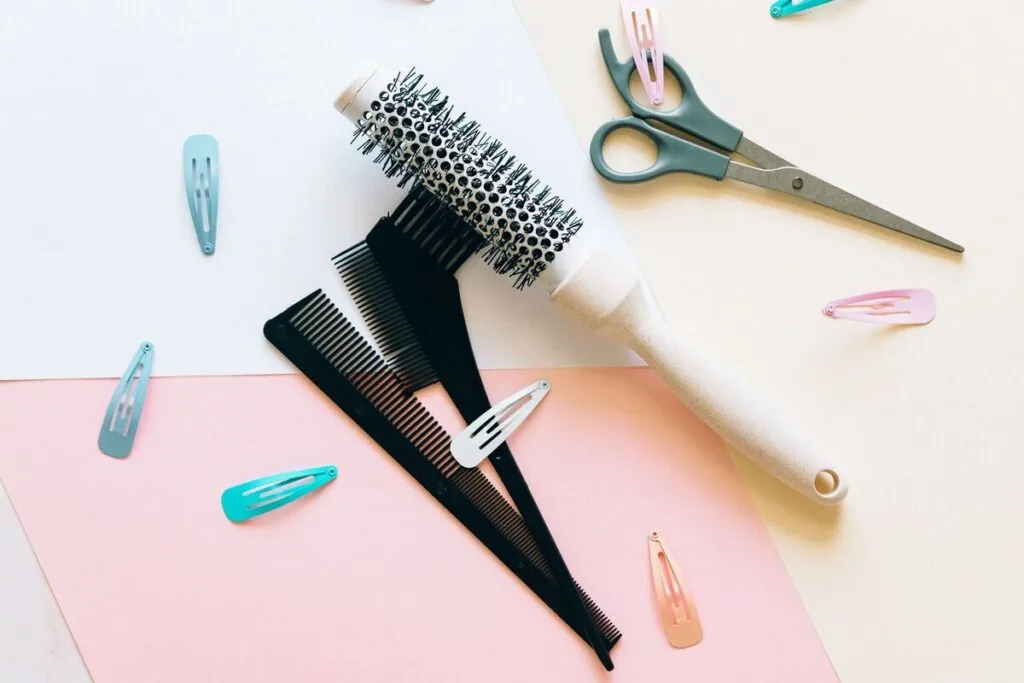
- Pros: very gentle, keeps curl clumps intact, great for spreading conditioner and masks.
- Cons: will not smooth hair or help with blow-drying.
Detangling Brush
Detangling brushes have flexible bristles of two lengths that bend around knots instead of ripping through them. The Tangle Teezer The Original is the classic handle-free design, the Tangle Teezer The Wet Detangler and Tangle Teezer The Ultimate Detangler add a handle, and the Wet Brush Original Detangler is a popular alternative with thin, springy bristles.
- Pros: fast, low-pain detangling on wet or dry hair; good for children and long hair.
- Cons: on dry curly hair it can break up curls and cause frizz; mid-range price.
Paddle Brush
A wide, flat base with cushioned bristles covers a lot of hair per stroke, so it suits long, straight or thick hair. It is also handy for rough-drying with a blow dryer. Vega has a wide range of paddle brushes in the budget segment.
- Pros: quick, smooth finish, comfortable scalp massage.
- Cons: too dense for dry curls; cheap ones have plastic tips that snap off.
Paddle Brush vs Round Brush
This is the most common question, and the answer is simple. A paddle brush smooths and detangles; a round brush shapes hair while you blow-dry. If you air-dry, you do not need a round brush at all.
Round brushes come in different barrel sizes: a large barrel gives smooth, bouncy lengths and root lift, while a small barrel creates curled ends or curls on short hair. Metal (ceramic) barrels heat up and speed styling, but they also add heat exposure, so always use a Heat protectantA spray, cream or serum applied before blow-drying, straightening or curling to reduce heat damage to the hair.See glossary.
Boar Bristle Brush
Natural boar bristles are soft and close together, so they move the scalp’s natural oil down the length and leave a polished shine. They work best on fine to normal straight hair. Mason Pearson is the well-known premium option; mixed boar-and-nylon brushes are easier on thicker hair.
- Pros: shine, smooth flyaways, less static.
- Cons: poor at detangling; can make oily scalps look greasy faster; not for curls.
Vented Brush
The open gaps in the base let hot air pass through, which cuts blow-drying time and adds lift at the roots. It is a good everyday choice if you blow-dry fine or wavy hair but do not want the effort of a round brush.
Wooden Comb and Neem Comb
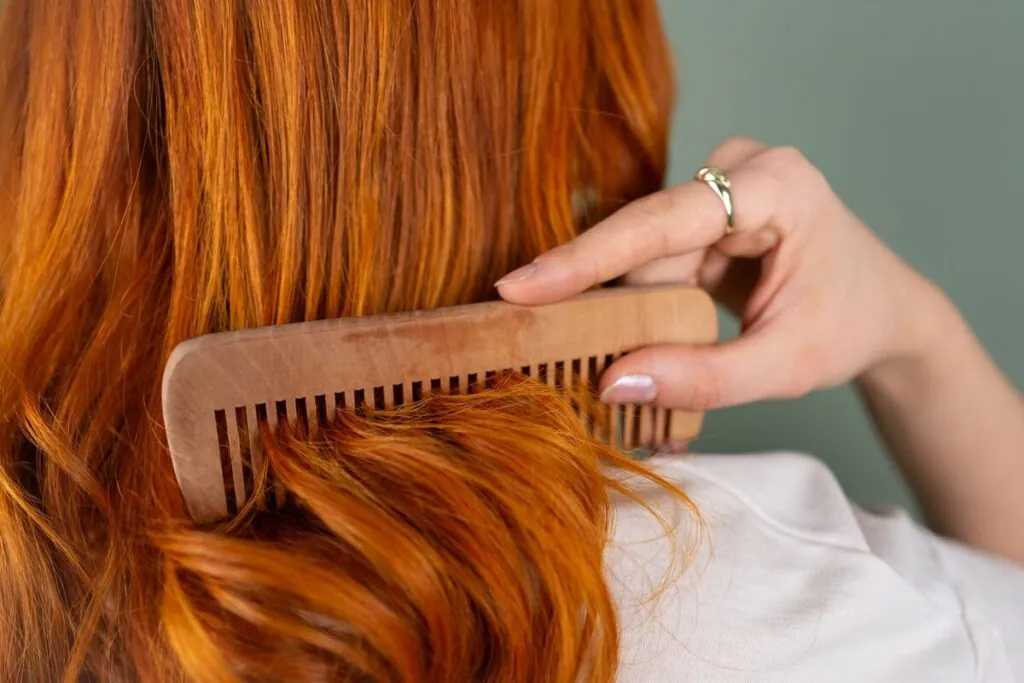
Smooth, well-finished wooden combs, including the neem combs sold widely in India, glide gently and build up less static than cheap plastic. That makes them pleasant for dry, frizz-prone or easily tangled hair. Choose one with wide, rounded teeth and no rough edges, because a splintery comb does more harm than a good plastic one.
Best Hair Brush for Each Hair Type
Hair Brush for Curly Hair
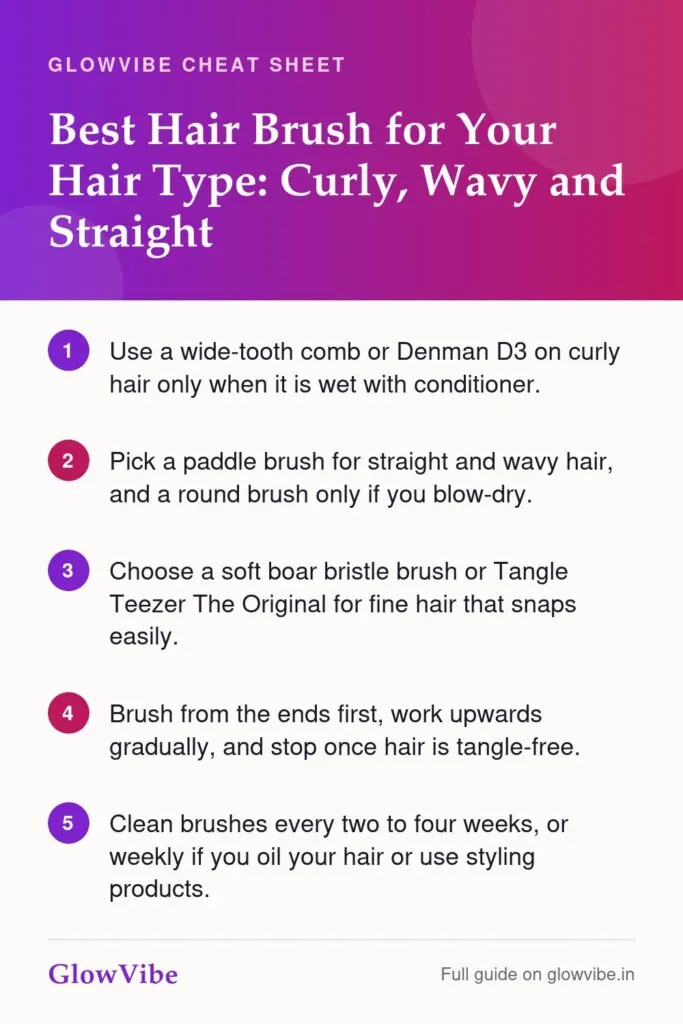
Curly hair should be detangled only when wet and full of conditioner. Section your hair, coat it with conditioner, and work through each section with a wide-tooth comb or a Denman D3 (the 7-row Denman Classic Styling Brush). The Denman also helps form defined curl clumps when you apply cream or gel.
Avoid brushing dry curls: it separates the curl pattern into a frizzy cloud. Between wash days, refresh with water and your fingers instead. For the right shampoo, cream and gel to pair with your brush, see our guide to the best curly hair products in India.
Wavy Hair
Wavy hair tangles easily but loses its shape if brushed too much. Detangle in the shower with a Tangle Teezer The Wet Detangler or a wide-tooth comb, then scrunch in product and let it dry. If you prefer it sleek, a paddle or vented brush with a blow dryer gives a smooth, bouncy finish.
Straight Hair
Straight hair is the most forgiving. A paddle brush handles daily detangling, a boar bristle brush adds shine, and a round brush gives volume if you blow-dry. Straight hair shows oil quickly, so do not over-brush near the roots if your scalp gets greasy by evening.
Fine or Thin Hair
Fine strands snap easily, so pick soft, flexible bristles: a boar bristle brush or the Tangle Teezer The Original. A vented brush is best for blow-drying because it adds lift without heavy tension. Our list of hair care products for fine hair covers lightweight options that will not flatten it.
Thick Hair
Thick hair needs a brush that reaches through the layers. A large paddle brush or the Wet Brush Original Detangler works well. Always divide hair into four or more sections; trying to brush it all at once is what causes tugging and breakage.
Hair Fall-Prone Hair
If you notice a lot of hair on your brush, switch to a wide-tooth wooden or neem comb and comb gently, ends first. Shedding 50 to 100 strands a day is normal, and much of what you see on the comb is hair that had already shed. If shedding is sudden, patchy or lasts more than a few months, see a dermatologist or trichologist; a brush cannot fix the cause. Our article on hair fall home remedies vs medical treatment explains what actually helps.
How to Choose a Hair Brush in India
- Humidity: in monsoon and coastal cities, dry brushing makes frizz worse. Detangle wet with conditioner and keep dry brushing to a minimum.
- Hard water: hard water leaves hair rough and more tangled, so a flexible detangling brush or wide-tooth comb is kinder than stiff bristles.
- Oiling habits: if you oil your hair often, choose a brush that is easy to wash, such as a plastic detangler or paddle brush, rather than a boar bristle brush that holds oil.
- Heat styling: pick a vented or round brush with heat-resistant bristles if you blow-dry regularly.
- Quality check: run the bristles over the back of your hand. Sharp, scratchy tips or seams on a comb will catch and tear hair.
How to Brush Hair Without Breakage
- Start at the ends. Hold a section a few inches above the tips and brush out the knots there first.
- Work upwards. Move your starting point up gradually until you can brush from the roots to the tips in one smooth stroke.
- Use slip on wet hair. Wet hair stretches and breaks more easily, so only detangle it with conditioner or a Leave-in conditionerA light conditioner you do not rinse out. It helps with detangling, frizz and moisture, especially for curly or dry hair.See glossaryRead the guide in it, using a wide-tooth comb or wet detangler.
- Brush dry hair lightly. Straight and wavy hair can be brushed dry with a paddle or boar bristle brush; curly hair should not be.
- Hold the hair above the knot. This takes the pull off your scalp while you work a tangle loose.
- Stop when it is smooth. Once the tangles are out, extra strokes only add friction.
If your hair still tangles badly, the problem is often dryness rather than the brush. A weekly hair mask for damaged hair makes detangling much easier. For a wider routine, our natural hair care tips at home cover washing, oiling and drying.
How to Clean Your Hair Brush
A brush full of hair, oil, dust and product residue puts all of that back on clean hair. Pull out loose hair every few days and deep clean every two to four weeks, or weekly if you oil or use styling products often.
- Remove trapped hair with your fingers or the tail of a comb.
- Swish plastic brushes and combs in warm water with a few drops of shampoo, then use an old toothbrush between the bristles.
- For wooden, boar bristle and cushioned paddle brushes, clean only the bristles and avoid soaking the base or cushion.
- Rinse, shake off water and dry bristles-down on a towel so water does not collect in the cushion.
Replace a brush once bristles are bent, missing or have lost their protective tips.
Hair Brushing Myths
Myth: 100 Strokes a Day Makes Hair Grow
This advice dates back to a time when people washed their hair rarely and brushing helped move oil along it. Today, 100 strokes mostly means 100 rounds of friction, which leads to split ends and frizz. Brush only until your hair is tangle-free.
Myth: Wooden Combs Stop Hair Fall
Wooden comb benefits are real but modest: less static, a smooth glide and less snagging than rough plastic. That can reduce breakage, but no comb, neem or otherwise, stops hair fall from the root. Hair fall is driven by genetics, hormones, nutrition, stress and scalp conditions, which need proper diagnosis.
Myth: Brushing Boosts Scalp Circulation and Growth
A gentle scalp massage feels relaxing, but hard brushing does not make hair grow faster. Pressing stiff bristles into the scalp can irritate it, especially if you have dandruff.
Common Brushing Mistakes
- Brushing from the roots straight down through knots.
- Using a paddle or boar bristle brush on dry curls.
- Detangling wet hair without conditioner, or rubbing it with a towel first.
- Tying hair into a tight bun or ponytail straight after brushing it wet.
- Sharing brushes, which spreads dandruff and scalp infections.
- Using a hot metal round brush without a heat protectant.
Once your hair is detangled and healthy, styling gets easier too. Browse our easy hairstyles for women for looks that suit every length.
Frequently Asked Questions
A wide-tooth comb or a Denman D3, used on wet hair with conditioner, is the best choice for most curls. A flexible detangling brush also works in the shower. Avoid brushing curly hair when it is dry, as it breaks up the curl pattern and causes frizz.
A detangling brush is faster and works well on straight, wavy and thick hair. A wide-tooth comb is gentler and keeps curl clumps together, so curly hair usually does better with a comb. Many people keep both.
Curly and coily hair should be detangled wet with conditioner. Straight and wavy hair can be brushed dry, and wet only with a wide-tooth comb or wet detangler. Wet hair is weaker, so always be gentle and start from the ends.
A paddle brush is flat and wide, made for smoothing and detangling. A round brush is cylindrical and used with a blow dryer to add volume, bounce or curled ends. If you do not blow-dry, a paddle brush is all you need.
A smooth wooden or neem comb creates less static, glides gently and snags less than rough plastic combs. That can mean less frizz and breakage. It will not stop hair fall or treat dandruff, though.
Remove hair every few days and wash the brush every two to four weeks. If you oil your hair or use styling products often, wash it weekly. Dry it bristles-down so water does not soak into the base.
A harsh brush and rough technique cause breakage, which looks like hair fall but is hair snapping along the length. True hair fall from the root has other causes. If you are losing much more hair than usual, see a dermatologist or trichologist.
Quick poll
How much do you usually spend on one beauty product?
The Bottom Line
You do not need an expensive collection. Most people do well with two tools: a wide-tooth comb or detangling brush for wet hair, and a paddle, boar bristle or round brush that matches how they style dry hair. Brush gently from the ends up, keep your brushes clean, and your hair will tangle and break far less, whatever its texture.