Best Hair Mask for Damaged Hair in India (2026): Picks and How to Use
How to pick the best hair mask for damaged hair: protein vs moisture, top picks for heat, colour and frizz damage, how to apply a mask and a simple hair spa routine at home.

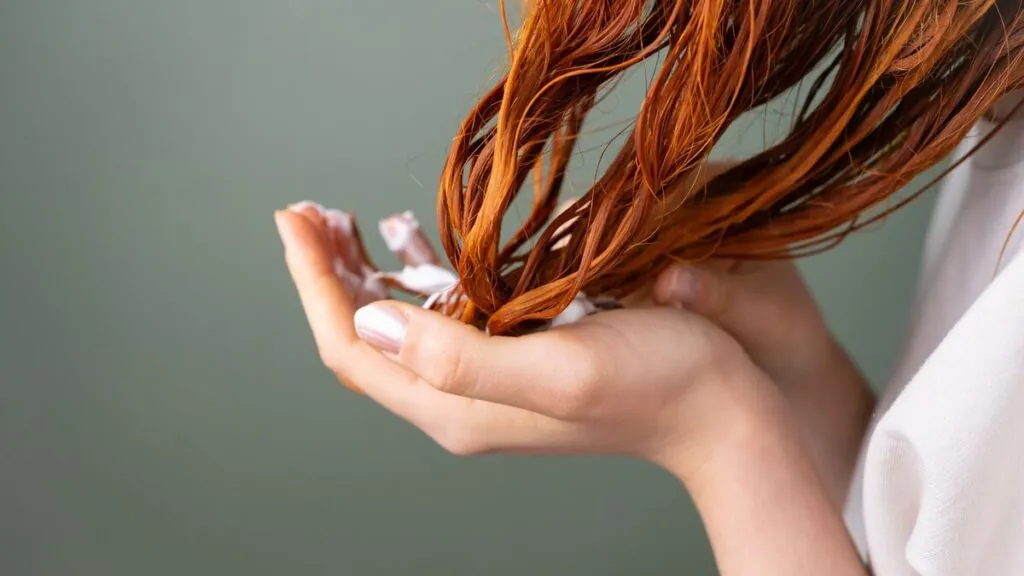
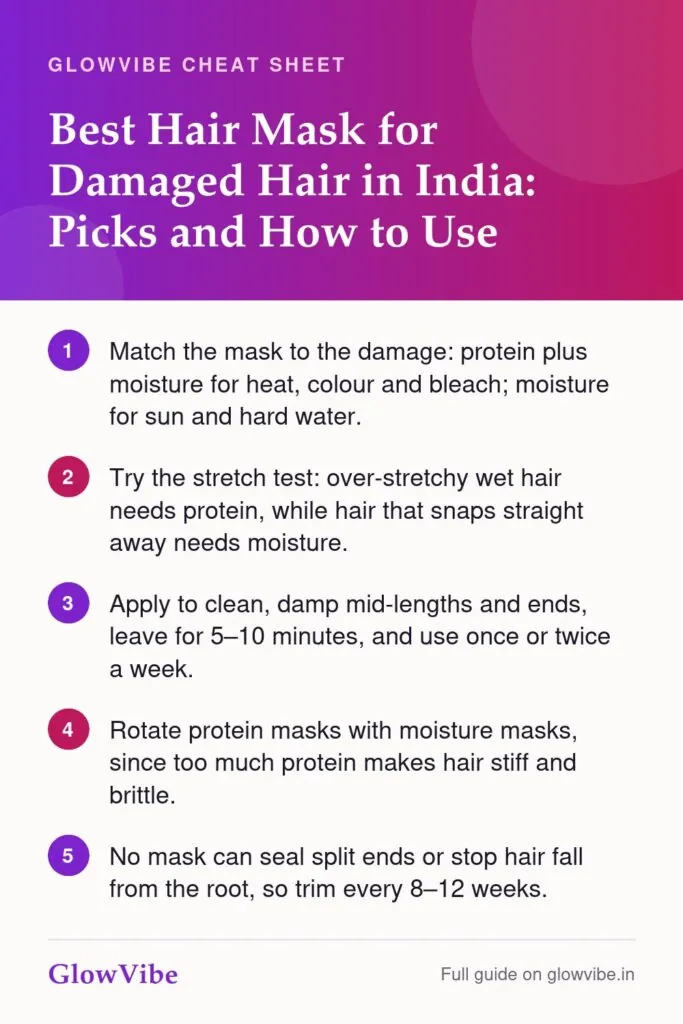
The best hair mask for damaged hair depends on what damaged it: heat, colour and bleach usually leave hair needing protein plus moisture, while sun, hard water and friction mostly leave it dry, rough and frizzy. For most Indian hair, a balanced repair mask such as L’Oréal Professionnel Absolut Repair Mask or the budget L’Oréal Paris Total Repair 5 Repairing Mask, used once or twice a week on damp mid-lengths and ends, is the right place to start.
One honest note: no mask can “heal” a split end or make damage disappear for good. A good deep conditioning mask smooths the cuticle, softens the strand and reduces breakage, so damaged hair looks and behaves much better while healthier hair grows in.
Quick answer: best hair masks for damaged hair in India
- Best overall: L’Oréal Professionnel Absolut Repair Mask – balanced repair for heat- and colour-damaged hair.
- Best budget repair mask: L’Oréal Paris Total Repair 5 Repairing Mask – easy to find, good everyday deep conditioning.
- Best for breakage and bleached hair: Wella Professionals Fusion Intense Repair Mask – a strengthening mask for weak, snapping strands.
- Best premium pick: Kérastase Genesis Masque Reconstituant – for weakened hair that breaks easily.
- Best for frizz in humid weather (budget): TRESemmé KeratinThe protein that hair is made of. "Keratin treatments" are salon smoothing services, and some contain formaldehyde-releasing chemicals.See glossary Smooth Mask – smoothing and frizz control in humid weather.
- Best for dry, frizzy hair: Bblunt Intense Moisture Hair Mask – a moisture-focused mask for rough, thirsty lengths.
- Best natural-leaning budget pick: Mamaearth Onion Hair Mask – a gentle conditioning mask for dry hair.
- Best bond-repair add-ons for bleach: Olaplex No. 3 Hair Perfector and K18 Leave-in conditionerA light conditioner you do not rinse out. It helps with detangling, frizz and moisture, especially for curly or dry hair.See glossaryRead the guide Molecular Repair Hair Mask.
Comparison table: hair masks for damaged hair
| Mask | Type | Best for | Price range | Leave on |
|---|---|---|---|---|
| L’Oréal Professionnel Absolut Repair Mask | Protein + moisture | Heat and colour damage, all-round repair | Mid-range | 5–10 min |
| L’Oréal Paris Total Repair 5 Repairing Mask | Balanced | Everyday damage, dull and rough ends | Budget | 3–5 min |
| Wella Professionals Fusion Intense Repair Mask | Strengthening | Breakage, bleached or highlighted hair | Mid-range to premium | 5–10 min |
| Kérastase Genesis Masque Reconstituant | Strengthening + nourishing | Weak hair prone to breakage | Premium | 5–10 min |
| TRESemmé Keratin Smooth Mask | Smoothing | Dry, frizzy hair in humidity | Budget | 3–5 min |
| Bblunt Intense Moisture Hair Mask | Moisture | Very dry, rough, sun-exposed hair | Budget | 5–10 min |
| Mamaearth Onion Hair Mask | Moisture | Mild dryness, natural-leaning routines | Budget | 10–15 min |
| Olaplex No. 3 / K18 | Bond repair | Bleached, lightened, heavily processed hair | Premium | As per pack |
What is damaging your hair? The four common types
Heat damage
Daily blow-drying, straightening and curling slowly cook the outer cuticle. Heat-damaged hair feels straw-like at the ends, loses shine, and often has white dots or splits.
Colour, bleach and chemical damage
Highlights, global colour, keratin or smoothening treatments and rebonding all open up the hair and break internal bonds. Bleached hair can feel gummy when wet and snap when combed.
Sun, hard water and pollution
Strong Indian sun dries the hair surface, and hard water in cities like Delhi, Bengaluru and Chennai leaves mineral build-up that makes hair feel rough, tangled and dull. Festival smog adds to it (see our hair care after Diwali pollution guide).
Friction and mechanical damage
Rough towel-drying, tight buns, cotton pillowcases and brushing wet hair wear the cuticle down, showing up as frizz, flyaways and breakage where you tie your hair.
Protein vs moisture masks: which one does your hair need?
Hair masks broadly do two jobs. Moisture masks (with oils, butters, GlycerinOne of the most common and effective humectants. It draws water into the skin and is found in most moisturisers and cleansers.See glossary, aloe or PanthenolPro-vitamin B5, a soothing and hydrating ingredient used in skin and hair products to calm and soften.See glossary) soften and add slip. Protein masks (with keratin, amino acids, silk, wheat or rice protein) temporarily fill weak spots in the strand and add strength.
The stretch test
Take a single strand of wet hair from your brush or comb and gently pull it.
- It stretches a lot and does not bounce back, or feels mushy: your hair is likely low on protein. Choose a strengthening mask.
- It barely stretches and snaps straight away: your hair is low on moisture. Choose a moisture mask.
- It stretches a little and returns: your balance is fine. A balanced repair mask once a week is enough.
Signs you are using too much protein
If your hair suddenly feels stiff, crunchy or more tangled after masks, switch to a moisture mask for two or three washes. A simple rhythm for most damaged hair is one protein or repair mask, then one or two moisture masks, and repeat.
Best hair masks for damaged hair: detailed picks
1. L’Oréal Professionnel Absolut Repair Mask – best overall
This salon-brand mask from the Serie Expert range is a reliable choice for hair that has been coloured, smoothened or heat-styled. It combines repair-focused care with rich conditioning without making hair feel stiff.
Who it suits: medium to thick hair with heat or colour damage; people who want one mask that does most of the work.
- Pros: noticeably softer, smoother lengths; easy to find online and in salons; a little goes a long way on mid-lengths.
- Cons: can weigh down very fine hair; costs more than drugstore masks.
2. L’Oréal Paris Total Repair 5 Repairing Mask – best budget repair mask
The Total Repair 5 range is built around five common signs of damage: dryness, roughness, dullness, weakness and split ends. It is a good-value deep conditioning step for everyday damage.
Who it suits: students and first-time mask users; dry, dull ends; anyone on a budget.
- Pros: budget-friendly and widely available; works in a few minutes; good slip for detangling.
- Cons: not strong enough on its own for heavily bleached hair.
3. Wella Professionals Fusion Intense Repair Mask – best for breakage
Fusion is Wella’s strengthening line, designed for hair that breaks easily. Pick it if your stretch test shows weak, over-stretchy strands.
Who it suits: bleached, highlighted or chemically treated hair; hair that snaps while combing.
- Pros: strengthening focus; pairs well with a moisture mask in rotation.
- Cons: pricier; overuse can feel too firm on dry, low-protein-tolerant hair.
4. Kérastase Genesis Masque Reconstituant – best premium pick
Part of Kérastase’s Genesis range for weakened hair prone to falling due to breakage, this mask is thick, nourishing and suits long hair that sheds broken pieces.
Who it suits: long hair with breakage; people already using salon care who want a premium mask.
- Pros: rich texture; leaves lengths soft and manageable.
- Cons: premium price; it addresses breakage, not hair fall from the root.
5. TRESemmé Keratin Smooth Mask – best hair mask for frizzy hair in India (budget)
If your main complaint is frizz in monsoon and humid coastal weather, a smoothing mask helps more than a heavy repair mask. TRESemmé’s Keratin Smooth Mask, from its keratin and Argan oilA light oil from Moroccan argan kernels, used in serums and leave-ins to smooth frizz and add shine without much greasiness.See glossary range, is designed to tame frizz and make hair easier to blow-dry.
Who it suits: wavy or straight hair that puffs up in humidity; people who blow-dry often.
- Pros: budget; quick results on frizz; easy to find.
- Cons: smoothing is temporary; can build up if you never use a clarifying wash.
6. Bblunt Intense Moisture Hair Mask – best hair mask for dry frizzy hair
Bblunt is an Indian salon-born brand, and its Intense Moisture mask is made for dry, frizzy hair.
Who it suits: very dry, coarse or thick hair; wavy and curly hair; sun-exposed lengths.
- Pros: moisture-focused; Indian brand made with Indian hair and weather in mind; budget to mid-range.
- Cons: may be too rich for very fine or oily hair.
7. Mamaearth Onion Hair Mask – best natural-leaning budget pick
Mamaearth’s Onion Hair Mask is a gentle, conditioning mask for people who prefer plant-forward brands. Expect softer hair, not dramatic repair or less hair fall.
Who it suits: mild dryness; people new to masks; fans of natural-leaning formulas.
- Pros: budget; easy to use; gentle.
- Cons: not enough for heavy bleach or heat damage; some people dislike the scent.
Bond repair for bleached hair: Olaplex No. 3 and K18
These are not classic masks but are worth knowing about if your hair is bleached or heavily lightened. Olaplex No. 3 Hair Perfector is a pre-shampoo treatment applied to damp hair and rinsed out before you shampoo. K18 Leave-In Molecular Repair Hair Mask goes on clean, towel-dried hair and is not rinsed out. Both are premium add-ons, not replacements for a conditioning mask.
How to choose a hair mask for your hair and Indian weather
- Fine or oily-root hair: choose a lighter, balanced mask and keep it strictly on the lengths.
- Thick, coarse or very dry hair: go for a richer moisture mask; you can leave it on a little longer.
- Curly and wavy hair: moisture first, protein occasionally. Our best curly hair products in India guide has a full curly routine.
- Coloured or bleached hair: rotate a strengthening mask with a moisture mask, and use a colour-safe, Sulfate-freeShampoo made without strong sulfate cleansers like SLS. Gentler on dry, curly or colour-treated hair, though it may lather less.See glossaryRead the guide shampoo.
- Humid cities (Mumbai, Kolkata, Chennai): smoothing masks and lighter textures, followed by a leave-in or serum to seal.
- Hard-water areas: a monthly clarifying wash plus moisture masks.
How to use a hair mask the right way
- Shampoo first. Masks work best on clean hair without oil or styling product build-up.
- Squeeze out water. Hair should be damp, not dripping, or the mask slides off and gets diluted.
- Apply to mid-lengths and ends. Start about 5–8 cm from the scalp. The ends are the oldest, most damaged part, so give them the most product.
- Comb it through. Use a wide-tooth comb or your fingers so every strand gets coated.
- Wait. Most masks need 5–10 minutes. A shower cap helps; longer than the pack says rarely adds benefit.
- Rinse with cool or lukewarm water.
- Repeat once or twice a week. Once a week is enough for most hair; very damaged hair can take two sessions.
Hair spa at home: a simple 45-minute routine
A salon hair spa is mostly oiling, steam, a mask and massage, all easy to do at home every one or two weeks.
- Oil (20–30 minutes before washing): warm a little coconut, almond or argan oil and massage it into the scalp and lengths. If you need help choosing, see our hair oil guide.
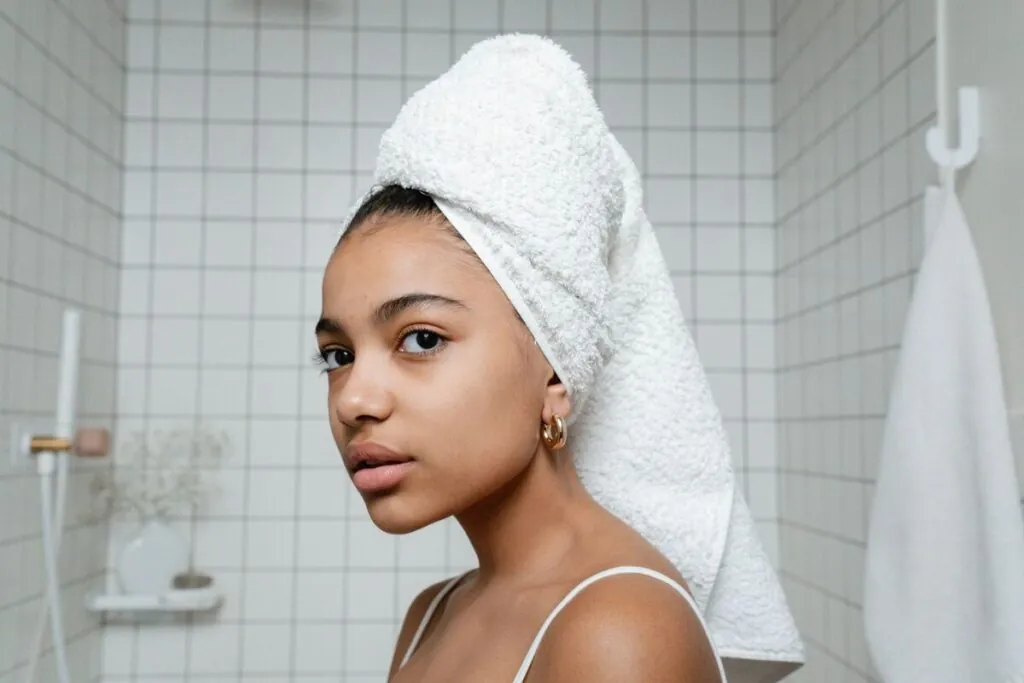
- Steam (5–10 minutes): dip a towel in hot water, wring it out well and wrap it around your hair. Re-warm once.
- Shampoo: wash the scalp with a mild shampoo, twice if you oiled heavily.
- Mask (10 minutes): apply your hair mask to damp mid-lengths and ends, cover with a shower cap.
- Rinse and finish: rinse with cool water, apply a little leave-in cream or serum to damp ends, and air-dry or blow-dry on low heat with a Heat protectantA spray, cream or serum applied before blow-drying, straightening or curling to reduce heat damage to the hair.See glossary.
DIY option: curd, honey and aloe mask
If you want a kitchen-cupboard version, mix 3 tablespoons of plain curd, 1 teaspoon of honey and 2 tablespoons of fresh aloe vera gel. Apply to damp lengths for 15–20 minutes, then rinse and shampoo lightly. It leaves hair softer and less frizzy for a wash or two.
Be realistic: DIY masks condition but will not fix bleach or heat damage. Do a Patch testTrying a small amount of a new product behind the ear or on the inner arm for a few days to check for a reaction before using it widely.See glossary with aloe if your skin is sensitive. For more home recipes, see our hair pack recipes and natural hair care tips at home.
Common hair mask mistakes to avoid
- Applying to the scalp. Most masks are for lengths; on the scalp they can cause greasiness, flakes or itching.
- Only ever using protein. Too much protein makes hair stiff and brittle. Rotate with moisture.
- Leaving it on overnight. Unless the pack says so, extra time does not mean extra repair.
- Skipping heat protection. A mask cannot keep up with a 200°C straightener used daily on bare hair.
- Never trimming. Split ends travel up the strand. A small trim every 8–12 weeks keeps damage from spreading.
- Expecting a mask to stop hair fall. Masks reduce breakage of the lengths, not shedding from the root. If you are losing hair from the scalp, see a dermatologist or trichologist.
If your scalp becomes itchy, red or flaky after a new product, stop using it and, for any lasting reaction, see a dermatologist.
Frequently Asked Questions
For most people, L’Oréal Professionnel Absolut Repair Mask is a strong all-round choice, and L’Oréal Paris Total Repair 5 Repairing Mask is the best budget option. If your hair is bleached or breaks easily, a strengthening mask such as Wella Professionals Fusion works better.
A conditioner is a quick daily step that smooths the surface for detangling. A hair mask is richer and more concentrated, and stays on for longer, so it gives deeper softening and repair. Use conditioner every wash and a mask once or twice a week.
Once a week suits most hair. Very dry or heavily processed hair can take a mask twice a week. If you use a protein-heavy mask, alternate it with a moisture mask so hair does not become stiff.
Apply it on clean, damp hair with the excess water squeezed out. Dripping-wet hair dilutes it, while some pre-wash treatments are designed for dry hair, so check your pack.
No product can permanently seal a split end. A good mask smooths the split temporarily and makes ends less likely to split further. The only real fix is a trim, followed by regular masks and heat protection.
A home hair spa with oiling, steam, a quality mask and a gentle massage gives you most of the benefit. Salons add professional steamers and treatments, but a home spa every one or two weeks works well for routine care.
Quick poll
How much do you usually spend on one beauty product?
The bottom line
Work out whether your hair needs protein, moisture or both, then match the mask to the damage. Use it on damp mid-lengths and ends once or twice a week, pair it with heat protection and regular trims, and give it four to six weeks. Expect softer hair that breaks less and handles Indian humidity better.