Hair Growth Oils: 5 Natural Oils, the Evidence and How to Use Each
Coconut, castor, rosemary, onion and bhringraj oils compared: what the evidence really says, how to use each safely, simple blends and when to see a dermatologist.

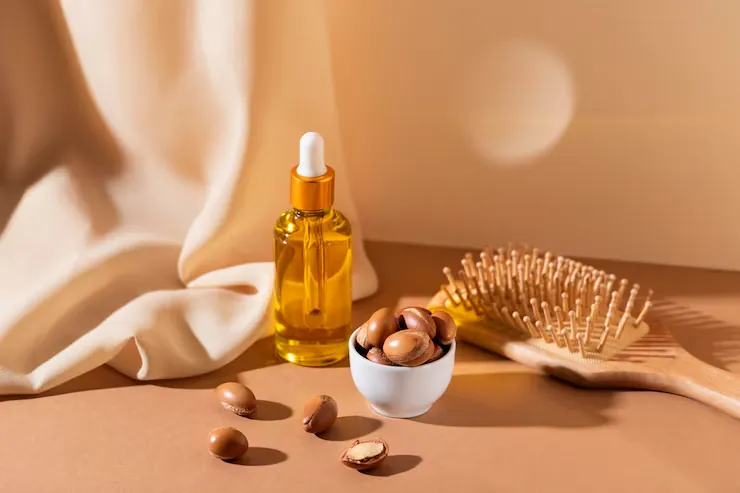
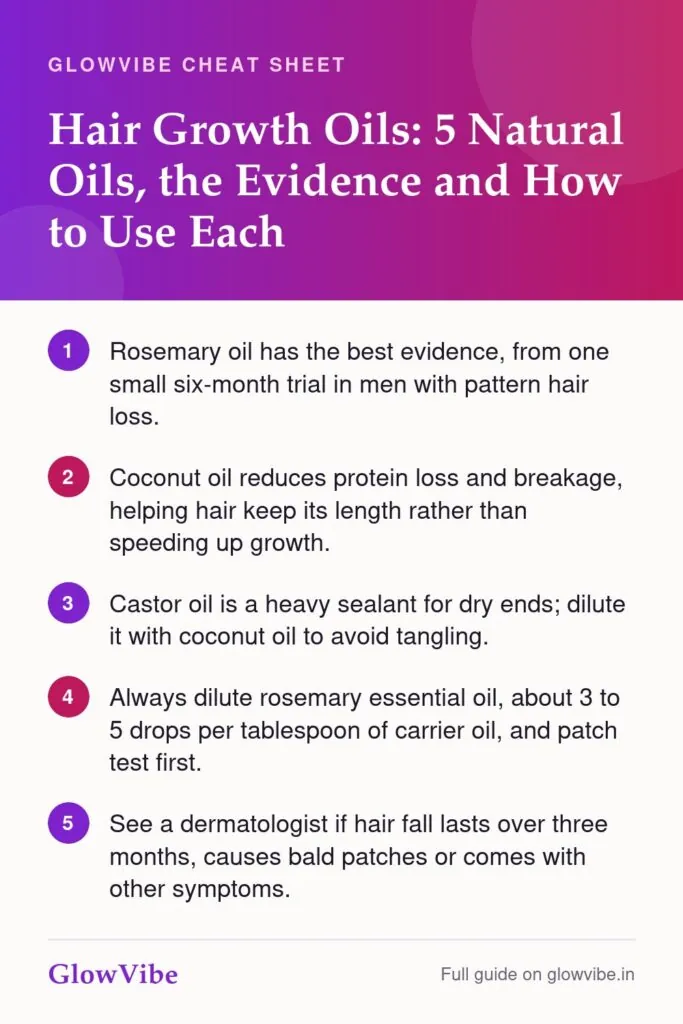
The five hair growth oils worth knowing are coconut, castor, rosemary, onion, and BhringrajA herb (false daisy) widely used in Ayurvedic hair oils. It is traditionally used for scalp massage and hair conditioning.See glossaryRead the guide or AmlaIndian gooseberry, used in Ayurvedic hair oils, powders and packs. It is valued for conditioning hair and adding shine.See glossaryRead the guide. Only rosemary has a small human trial suggesting it can help with pattern thinning; the others mainly protect the hair you have, cut breakage and keep the scalp comfortable, which still makes hair look longer and fuller over time.
This guide goes oil by oil: what each one actually does, what the research says (and doesn’t say), and exactly how to use it, including dilution, how long to leave it on and how often. If you just want brand recommendations, our guide to the best hair oil for hair growth in India covers bottles you can buy off the shelf.
The 5 hair growth oils at a glance
- Coconut oilA common Indian hair oil that can soak into the hair shaft, which may reduce protein loss during washing. It can feel heavy on fine hair.See glossary: the best everyday pre-wash oil for reducing breakage, especially on long or chemically treated hair.
- Castor oilA thick, sticky oil used on hair, brows and lashes for conditioning. It is usually mixed with a lighter oil because it is hard to wash out.See glossaryRead the guide: thick and sealing; good for dry ends, brows and lashes, but no proof it grows scalp hair.
- Rosemary oilAn essential oil popular in scalp routines. Always dilute it in a carrier oil like coconut or jojoba before applying.See glossaryRead the guide: the one with the most promising evidence for thinning, used diluted in a carrier oil.
- Onion oilHair oil infused with onion extract, popular in India for hair fall routines. It has a strong smell; patch test before using it on the scalp.See glossaryRead the guide: popular and pleasant to massage with, but the research is on onion juice, not oil.
- Bhringraj and amla oils: classic Ayurvedic blends for regular champi; nourishing, with only lab and animal data behind growth claims.
Comparison: what each oil does and what the evidence says
| Oil | Main job | Evidence for growth | Texture | Best for |
|---|---|---|---|---|
| Coconut | Reduces protein loss and breakage | None for growth; good lab data on hair protection | Medium; solidifies in winter | Long, dry, coloured or frizzy hair |
| Castor | Seals moisture, coats strands | No human trials | Very thick and sticky | Dry ends, brows, lashes (diluted on scalp) |
| Rosemary | Scalp stimulation | One small trial in pattern hair loss | Essential oil; must be diluted | Early thinning, widening parting |
| Onion | Scalp massage, conditioning | Small study on onion juice only | Light to medium (depends on base) | People who enjoy it and don’t mind the smell |
| Bhringraj / amla | Nourishing champi oil | Animal and lab studies only | Medium (usually in sesame or coconut base) | Dry scalp, regular weekly oiling |
One point before the details: hair grows roughly a centimetre a month, and no oil changes that rate dramatically. (Curious about the numbers? Read our explainer on how much human hair grows per day.) What oils can do is stop hair snapping off before it reaches the length it should, and keep the scalp in good shape.
1. Coconut oil: the breakage-stopper
Coconut oil is the base of most Indian hair oils for good reason. Its main fatty acid, lauric acid, is small enough to get inside the hair shaft, and lab research has shown that using it before washing reduces the protein hair loses during shampooing. Less protein loss means fewer split ends and less breakage.
It won’t wake up dormant follicles, but if your hair “never grows past the shoulders”, breakage is often the real problem, and coconut oil tackles exactly that. Plain Parachute Coconut Oil or any pure cold-pressed coconut oil does the job.
How to use: warm a teaspoon or two between your palms and work it through the lengths and ends, plus the scalp if it’s dry. Leave it on for 30 minutes to two hours, then shampoo. Two or three times a week is plenty.
- Pros: budget-friendly, easy to find, proven to protect strands, good base for other oils.
- Cons: can feel heavy on fine hair; some people with dandruff find it makes flaking worse.
2. Castor oil: the sealant, not a miracle
Castor oil is famous on social media for “doubling” hair growth, but there are no good human studies showing it grows scalp hair. Its value is as a heavy sealant: it coats strands, adds shine and helps very dry ends feel softer.
Because it’s so thick, using it neat on long hair can cause tangles; dermatologists have even reported rare cases of severe matting after heavy castor oil use. Mixing it with a lighter oil solves most of that.
How to use: mix one part cold-pressed castor oil with two or three parts coconut or almond oil. Apply to the scalp and ends, leave for an hour, then shampoo twice if needed. For brows and lashes, a tiny amount on a clean spoolie at night is enough; keep it out of your eyes.
- Pros: great for dry, coarse or curly ends; inexpensive; a little goes a long way.
- Cons: sticky, hard to wash out, can tangle long hair, no proven growth effect.
3. Rosemary oil: the one with real (if limited) evidence
Rosemary is the most interesting oil on this list. A 2015 study of 100 men with androgenetic alopecia (pattern hair loss) compared rosemary oil with 2% MinoxidilA topical drug used for pattern hair loss. It needs ongoing use to keep results, so check with a dermatologist before starting.See glossary over six months. Both groups saw a similar increase in hair count by the end, and the rosemary group reported less scalp itching.
That’s encouraging, but it’s one small trial in men, and results took six months to show. Treat rosemary as a reasonable thing to try for early thinning, not as a replacement for medical treatment if your hair loss is significant.
How to use: rosemary essential oil is strong and must be diluted. Add about 3 to 5 drops to a tablespoon of carrier oil such as coconut, almond or jojoba. Massage into the scalp for a few minutes, leave on for a few hours or overnight, and wash. Do this two or three times a week, and do a Patch testTrying a small amount of a new product behind the ear or on the inner arm for a few days to check for a reaction before using it widely.See glossary behind your ear first. Ready-made options such as Mamaearth Rosemary Hair Growth Oil save you the mixing.
- Pros: best evidence among natural oils; light once diluted; pleasant herbal smell.
- Cons: can irritate if used neat or too often; needs months of consistency; avoid during pregnancy unless your doctor says it’s fine.
4. Onion oil: popular, but read the fine print
Onion oil became a bestseller in India largely through Mamaearth Onion Hair Oil. The claim usually traces back to a 2002 study where 38 people with alopecia areata (patchy hair loss) applied fresh onion juice; more of them saw regrowth than the group using tap water.
That study used juice, not oil, and alopecia areata is a different condition from everyday hair fall. Most onion oils are a coconut or sesame base with onion extract and other herbs, so the benefit you’ll notice mostly comes from the base oil and the massage.
How to use: apply a ready-made onion oil to the scalp, massage, and leave for one to two hours before shampooing, two or three times a week. If you make it at home by heating chopped onion in coconut oil, strain it well, store it in the fridge and use it within a week or two.
- Pros: widely available; usually light and non-greasy; pleasant for regular massage.
- Cons: weak evidence for the oil itself; homemade versions smell strongly and spoil quickly.
5. Bhringraj and amla oils: the Ayurvedic classics
Bhringraj (Eclipta alba) and amla (Indian gooseberry) are the herbs behind many traditional hair tailams. Animal studies on bhringraj extract have shown faster hair growth in mice, and amla is rich in antioxidants, but neither has been properly tested on human scalps.
Where they shine is as comfortable, nourishing oils for a weekly champi, especially if your scalp runs dry. Indulekha Bringha Oil and Dabur Amla Hair Oil are well-known options; many Ayurvedic brands also sell plain bhringraj tailam in a sesame base.
How to use: apply to the scalp in sections, massage gently with your fingertips for five minutes, and leave for one to two hours (or overnight if your scalp tolerates it). Wash with a mild shampoo. Once or twice a week suits most people.
- Pros: soothing for dry scalps; traditional and familiar; good for a relaxing ritual.
- Cons: growth claims rest on lab and animal data; sesame-based blends can feel heavy in humid weather.
Which hair growth oil suits you?
Choose by your scalp first and your hair lengths second. A greasy scalp needs a light oil and a short contact time; dry, breaking ends need something richer.
- Early thinning or a widening parting: diluted rosemary oil, used consistently for at least six months.
- Long hair that breaks and splits: coconut oil as a pre-wash treatment on the lengths.
- Very dry, coarse or curly hair: a coconut and castor blend on the ends.
- Dry, tight scalp: bhringraj or amla oil for a weekly massage.
- Oily scalp or fine hair: a light onion oil or rosemary diluted in jojoba, left on for just an hour.
- Dandruff: keep oil off the scalp until the flaking settles, and treat it with an anti-dandruff shampoo first.
Indian climate matters too. In humid coastal cities and during the monsoon, heavy oils left on for long attract sweat and dust, so stick to lighter oils and shorter contact times. In dry North Indian winters you can go richer. If you have hard water, oil before washing and finish with a conditioner, because hard water already leaves hair rough and an un-rinsed oil layer makes buildup worse.
Simple blends you can mix at home
You don’t need to choose just one. These three blends cover most needs; mix small batches in a clean glass bottle and use within a month.
- Thinning blend: 2 tablespoons coconut or jojoba oil + 6 to 10 drops rosemary essential oil.
- Dry-ends blend: 2 tablespoons coconut oil + 2 teaspoons castor oil.
- Weekly champi blend: 2 tablespoons bhringraj or amla oil + 4 to 6 drops rosemary essential oil.
For more kitchen-cupboard ideas, our DIY hair packs for hair growth pair well with a weekly oiling.
How to apply hair growth oil, step by step
Technique matters more than the bottle. A gentle, regular routine beats an aggressive once-a-month session.

- Patch test: dab a little of the oil or blend behind your ear and wait 24 hours, especially for rosemary and onion.
- Warm it slightly: rub it between your palms or warm the bottle in a bowl of hot water. Never apply hot oil.
- Section your hair: part it into four to six sections so the oil reaches the scalp, not just the top layer.
- Massage with fingertips: use the pads of your fingers in small circles for about five minutes. Don’t use nails or rub hard.
- Coat the lengths: run whatever is left on your hands through the mid-lengths and ends.
- Wait: leave it on for one to two hours; overnight only if your scalp doesn’t itch or break out.
- Wash well: apply shampoo to dry, oiled hair first, then add water; shampoo twice if needed and follow with conditioner on the ends.
Pair the oiling with the basics in our natural hair care tips at home: a protein-rich diet, gentle detangling and less heat styling.
Common mistakes with hair growth oils
- Using essential oils neat: undiluted rosemary can burn or irritate the scalp.
- Oiling a flaky scalp: extra oil can feed the yeast linked to dandruff. Our guide to winter hair fall and dandruff explains what to do instead.
- Leaving oil on for days: it traps sweat and pollution and can clog follicles.
- Tying oiled hair tightly: oiled hair is more prone to stretching and breaking, so keep plaits loose.
- Switching oils every two weeks: the hair cycle is slow; give any oil at least three months, and rosemary six.
- Expecting oil to fix medical hair loss: thyroid issues, anaemia, PCOS and genetic thinning need proper diagnosis.
When to see a dermatologist instead
Oils are for care, not cure. See a dermatologist or trichologist if you’re losing noticeably more than usual for over three months, see bald patches, notice your parting widening quickly, or have hair fall along with tiredness, irregular periods or weight changes. Proven treatments exist, and our overview of hair loss treatment options in India explains them.
Frequently Asked Questions
None of them works fast. Rosemary oil has the best evidence, but the study behind it measured results after six months. Coconut oil can make hair look healthier within a few weeks simply by reducing breakage.
Rosemary oil has a small human trial in pattern hair loss, while onion research was done with fresh juice in patchy hair loss. On current evidence rosemary is the better bet for thinning, as long as you dilute it properly.
Yes, and it’s the easiest way to use castor oil. One part castor to two or three parts coconut keeps the sealing benefit while making it far easier to spread and wash out.
Two or three times a week works for most people. If your scalp is oily or you live somewhere humid, once or twice a week with a shorter contact time is enough.
You can if your scalp tolerates it, but it isn’t necessary. One to two hours gives most of the benefit, and long contact can cause itching or breakouts along the hairline for some people.
Oil itself doesn’t cause hair loss, but rough massage, tight hairstyles on oiled hair, or oiling a dandruff-prone scalp can increase shedding and breakage. If you react to an oil with redness or itching, stop using it.
Quick poll
How often do you wash your hair?
The bottom line
Pick the oil that matches your problem: rosemary for early thinning, coconut for breakage, castor for dry ends, and bhringraj or amla for a nourishing weekly champi. Use it gently and consistently for a few months, wash it out properly, and see a dermatologist if hair fall is heavy or sudden.