Minimalist Salicylic Acid 2% Serum Review: Formula and How to Use
What is inside Minimalist's Salicylic Acid 2% serum, who it suits, how to use it at night with sunscreen, and how to tell purging from a reaction.


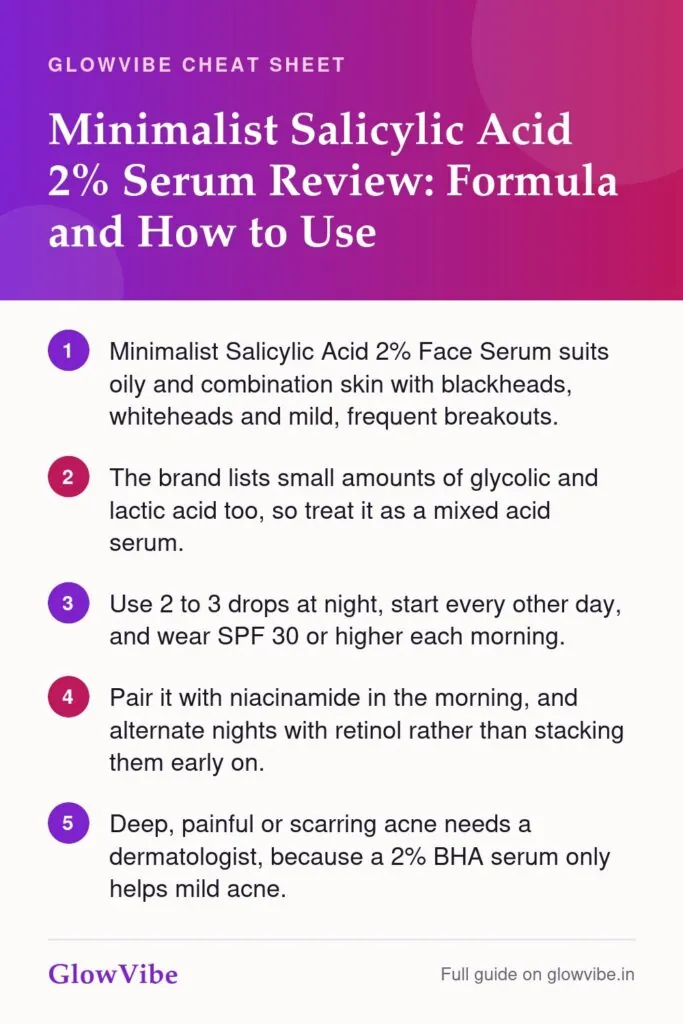
The Minimalist Salicylic acidThe most common BHA. It dissolves oil inside pores, which helps with blackheads, whiteheads and oily skin. Usually used at 0.5 to 2%.See glossaryRead the guide 2% Face Serum is a good fit if you have oily or combination skin with blackheads, whiteheads and small, frequent breakouts, and you are ready to use it at night with a daily sunscreen. It is not the right first choice for dry, very sensitive or eczema-prone skin, or for deep, painful acne, which needs a dermatologist rather than a serum.
This guide walks through the formula as the brand lists it on its own product page, what salicylic acid actually does inside a pore, how often to use it, how to pair it with NiacinamideA form of vitamin B3 that helps with oiliness, the look of large pores, uneven tone and barrier support. Gentle and easy to pair with most ingredients.See glossaryRead the guide or a retinoid, and how to tell PurgingA temporary rise in breakouts when starting an ingredient that speeds up skin turnover, like retinoids or acids. It usually settles within 4 to 6 weeks.See glossaryRead the guide from a genuine reaction. GlowVibe has not tested this serum; this is a guide to what is in the bottle and what that means for your skin.
Quick summary
- What it is: a water-based exfoliating serum built around 2% salicylic acid (a BHA (beta hydroxy acid)An oil-soluble exfoliating acid that can get inside pores. Salicylic acid is the common BHA, popular for oily and acne-prone skin.See glossaryRead the guide), with small amounts of glycolic and Lactic acidA gentle AHA (first found in milk) that exfoliates and also hydrates. A good starter acid for dry or sensitive skin.See glossary, a white horehound extract, a green tea derivative, a PeptidesShort chains of amino acids used in serums and creams to support firmer, smoother-looking skin. Generally gentle and easy to layer.See glossary and Hyaluronic acidA humectant that holds water in the skin for a plump, hydrated look. Despite the name, it is not an exfoliating acid. Apply on damp skin.See glossaryRead the guide.
- Best for: oily and combination skin with clogged pores, blackheads, whiteheads and mild breakouts. The brand recommends it for ages 18 and up.
- How to use: 2 to 3 drops at night after cleansing, starting every other day, with sunscreen every morning.
- Skip or go slow if: your skin is dry, flaky, sensitive or broken, you are on prescription acne treatment, or you are pregnant or breastfeeding without your doctor’s go-ahead.
- Give it time: judge results after six to eight weeks of steady use, not after one week.
The formula, verified from the brand page
Minimalist sells this as the Salicylic Acid 2% Face Serum and lists the full ingredient list on its website. Here is what stands out and what each ingredient is there to do.
| Detail | What the brand lists | What it means for you |
|---|---|---|
| Main active | Salicylic acid 2% | The standard over-the-counter strength for acne-prone skin; works inside oily pores |
| Other acids | Glycolic acidThe smallest AHA, so it works quickly but can sting. Used in toners and peels for dullness and rough texture; always follow with sunscreen.See glossaryRead the guide and lactic acid (no percentage given) | Present in the formula, so treat it as a mixed acid product when layering |
| Supporting ingredients | White horehound (Marrubium vulgare) extract, epigallocatechin gallatyl glucoside (a green tea derivative), oligopeptide-10, sodium hyaluronate, glycerin | Blackhead-focused plant extract, antioxidant support, a peptide and light hydration |
| pH | 3.2 to 4.0 | Acidic enough for the salicylic acid to exfoliate; expect a mild tingle |
| Skin type | Combination and oily | Not designed for dry or reactive skin |
| Free from | Fragrance and essential oils; the brand says it is non-comedogenic | Fewer common irritants for acne-prone skin |
| Pack sizes | 30 ml and 60 ml, with smaller sizes listed at times | A smaller pack is a sensible way to trial it |
The brand also says its white horehound extract is clinically shown to reduce blackheads and that oligopeptide-10 has anti-microbial activity against acne bacteria. These are the brand’s claims based on ingredient-supplier and consumer data, so read them as supporting extras. The salicylic acid is doing the main work.
Formulas change from time to time, so always check the ingredient list on the pack you buy against what you read online.
What salicylic acid does for blackheads, whiteheads and oily skin
Salicylic acid is a beta hydroxy acid (BHA). Unlike glycolic acid, which is water-loving and works mostly on the surface, salicylic acid is oil-soluble. That lets it move into the sebum that fills your pores and loosen the mix of oil and dead skin cells that forms a clog.

Blackheads
A blackhead is an open clogged pore whose contents have darkened on contact with air. Salicylic acid gradually softens and clears that plug, which is why noses and chins often look smoother after several weeks of regular use. It will not empty every pore overnight, and stubborn blackheads on the nose tend to come back if you stop.
Whiteheads and small bumps
Whiteheads are closed clogged pores, the tiny skin-coloured bumps many people get on the forehead and jawline. Because BHA keeps dead cells from sticking together inside the pore, it helps stop new ones forming. This is where a salicylic serum often shows its value most.
Oily skin and mild breakouts
Salicylic acid does not switch off oil glands, but clearer pores and a smoother surface can make skin look less greasy through a humid Indian afternoon. It also has a mild calming effect on small red pimples. For deeper, swollen or painful spots, it is only a helper, not a treatment.
If you want the full morning and night order of steps around a serum like this, our oily face skincare routine lays it out by skin need.
Who it suits, and who should skip it
A good match if you have
- Oily or combination skin with a shiny T-zone.
- Blackheads on the nose and chin, or clusters of whiteheads on the forehead.
- Mild, frequent breakouts, including those that flare with sweat, helmets or heavy makeup.
- Skin that already tolerates a basic routine of cleanser, moisturiser and sunscreen without stinging.
Skip it or check with a doctor first if
- Your skin is dry, flaky or tight, or you have eczema or rosacea. An acid serum can make these worse.
- Your skin is currently sunburnt, windburnt, cut or freshly waxed or threaded.
- You are using a prescription retinoid, benzoyl peroxide or other acne medicine. Ask the prescribing doctor before adding it.
- You are pregnant or breastfeeding. The brand advises speaking to your doctor first.
- You are under 18. The brand recommends a doctor’s advice for younger users.
- You have a known aspirin allergy. Salicylic acid is closely related, so check with a doctor before using it.
How to use it: frequency, AM or PM, and sunscreen
The brand’s own directions are simple: 2 to 3 drops at night, after cleansing, every other day for the first two weeks, then daily if your skin is happy. If you have never used an acid before, start even slower. Here is a practical plan.
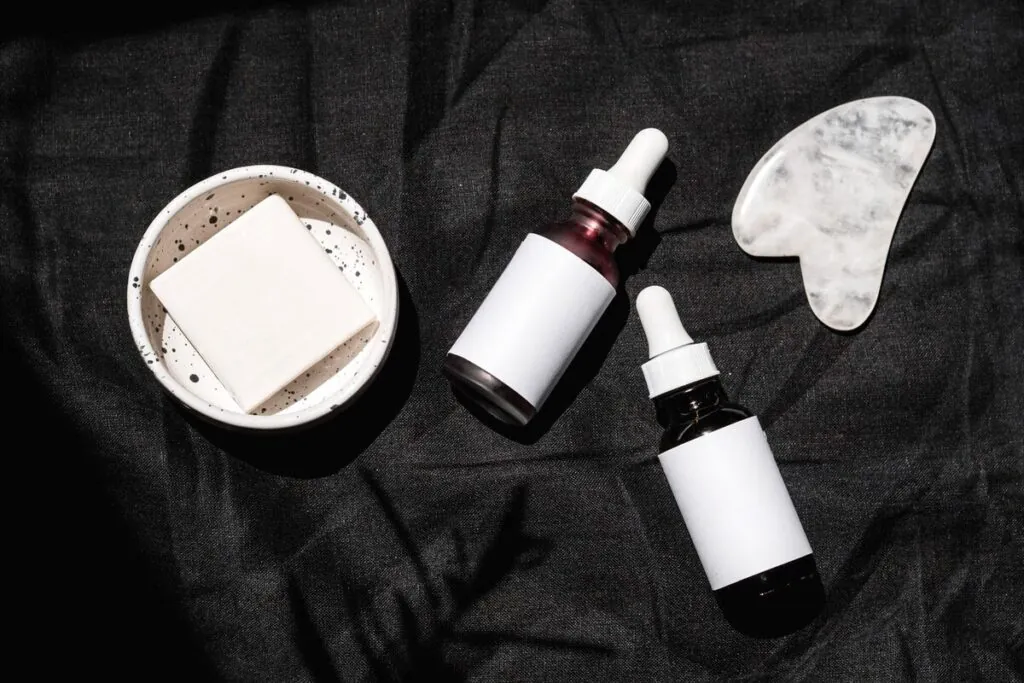
- Patch test first: apply a little behind the ear or along the jawline for two to three nights and watch for burning, itching or rash.
- Weeks 1 and 2: use it two or three nights a week. Cleanse with a gentle face wash, pat skin fully dry, then apply 2 to 3 drops over the oily and breakout-prone areas.
- Wait a minute or two: let it absorb before your moisturiser so you are not diluting it on wet skin.
- Moisturise: a light gel or gel-cream moisturiser stops the acid from leaving you tight or flaky.
- Weeks 3 to 4: if there is no stinging or peeling, move to alternate nights and then nightly, as the brand suggests.
- Every morning: wear a broad-spectrum sunscreen, SPF 30 or higher, and reapply if you are outdoors.
Why night, not morning? Exfoliating acids can leave skin more sensitive to the sun, and this formula also contains small amounts of glycolic and lactic acid. Using it at night keeps your morning simple: cleanser, moisturiser, sunscreen. Oily skin often prefers a lightweight texture, and our guide to gel vs cream sunscreen for oily skin helps you pick one you will actually wear daily.
The cleanser matters too. A harsh, squeaky-clean wash plus an acid serum is a common route to irritation. Our roundup of foaming cleansers for oily skin covers gentler options that remove oil without stripping.
Combining it with niacinamide or retinoids
Salicylic acid and niacinamide
These two are a popular pair for oily, acne-prone skin. Salicylic acid clears pores, while niacinamide helps with oil, redness and the dark marks breakouts leave behind. The easiest way to use both is to split them: niacinamide in the morning under sunscreen, salicylic acid at night.
You can layer them on the same night once your skin is used to both. Apply the salicylic serum first, wait a few minutes, then the niacinamide. If you are still choosing a niacinamide serum, our Minimalist vs The Derma Co niacinamide serum comparison breaks down both formulas.
Salicylic acid and retinol or retinoids
Both exfoliate and both can dry and irritate, so do not start them together or stack them on the same night at first. Alternate nights instead: salicylic acid one night, retinol the next, with a plain moisturiser-only night whenever your skin feels tender. Our explainer on how to use retinol and vitamin C serums covers starting a retinoid slowly.
What not to stack
Avoid using it on the same night as other exfoliating serums (AHA or AHA-BHA peels), scrubs, or a benzoyl peroxide treatment unless a doctor has suggested it. One exfoliating step per night is plenty for most skin.
Purging vs breakouts: how to tell the difference
Because salicylic acid speeds up how quickly clogged pores come to the surface, some people notice more small spots in the first few weeks. The brand’s FAQ says this purging usually settles within about three to four weeks. The trick is knowing whether you are purging or reacting.
| Sign | Likely purging | Likely a reaction or new breakout |
|---|---|---|
| Where | Areas where you usually break out | New areas where you rarely get spots |
| What it looks like | Small whiteheads and bumps that come and go quickly | Rash, hives, large painful spots, or widespread redness |
| How it feels | Mostly comfortable | Burning, itching, stinging that lasts, or swelling |
| Timing | Settles within about four to six weeks | Keeps getting worse, or starts within hours of applying |
| What to do | Stay at a low frequency and keep going | Stop, rinse with water, use a plain moisturiser, see a doctor if it does not settle |
When acne needs a dermatologist, not a serum
A 2% salicylic acid serum is a good tool for mild, surface-level acne. It is not a cure, and waiting too long with stronger acne can leave scars that are harder to treat than the acne itself. See a dermatologist if you notice any of these:
- Deep, painful, swollen lumps or cysts, especially on the jawline, chin or back.
- Acne leaving pitted scars or dark marks that are not fading.
- No real improvement after two to three months of a consistent routine.
- Acne alongside irregular periods, excess facial hair or sudden weight change, which can point to a hormonal cause.
- Itchy, uniform small bumps on the forehead or chest that do not respond to acne products.
- Acne that is affecting your confidence, sleep or mood. That alone is a valid reason to get help.
Common mistakes to avoid
- Using it twice a day from day one. More is not faster; it is just more irritation.
- Skipping moisturiser because your skin is oily. Dehydrated oily skin often looks shinier and feels more reactive.
- Forgetting sunscreen. Without it, the dark marks you are trying to fade can get darker.
- Picking or squeezing spots. The brand itself warns against this, and it is a fast way to get marks and scars.
- Quitting at week two. Pore-clearing takes a full skin cycle or two to show.
Frequently Asked Questions
Many oily skin types can, once they have built up to it. The brand suggests alternate nights for the first two weeks, then daily. If you see dryness, peeling or stinging, drop back to three nights a week.
The brand’s directions are for night use, and that is the simpler choice. Acids can increase sun sensitivity, so a night routine plus morning sunscreen is the safer pattern for Indian sun.
Your skin may feel smoother and less oily within a couple of weeks. Fewer blackheads and whiteheads usually take six to eight weeks of steady use. Dark marks from old pimples fade more slowly and benefit from sunscreen and niacinamide alongside.
No. It can help with surface texture and may help marks look more even over time, but true pitted scars need in-clinic treatments such as peels, microneedling or lasers from a dermatologist.
The brand recommends it for combination and oily skin. If your skin is dry or sensitive but you get the odd blackhead, use it only on the nose and chin once or twice a week, and stop if it stings.
It can be used on small areas like the chest or upper back, but a small dropper bottle is not practical for large areas. A salicylic acid body wash is usually more practical, and widespread back acne is worth showing to a dermatologist.
Quick poll
How many steps are in your skincare routine?
The bottom line
The Minimalist Salicylic Acid 2% Face Serum is a straightforward, fragrance-free BHA serum aimed at the problems oily skin knows best: blackheads, whiteheads, shine and small breakouts. Start slowly at night, moisturise, wear sunscreen every morning, and give it six to eight weeks.
If your skin is dry or reactive, or your acne is deep and painful, skip the serum and see a dermatologist instead. A good routine helps mild acne; stronger acne deserves proper treatment.