Mamaearth Onion Hair Oil Review: Ingredients, Uses and Honest Verdict
What is in Mamaearth Onion Hair Oil, what onion oil can and can't do for hair growth, who it suits, how to use it and what to try instead.

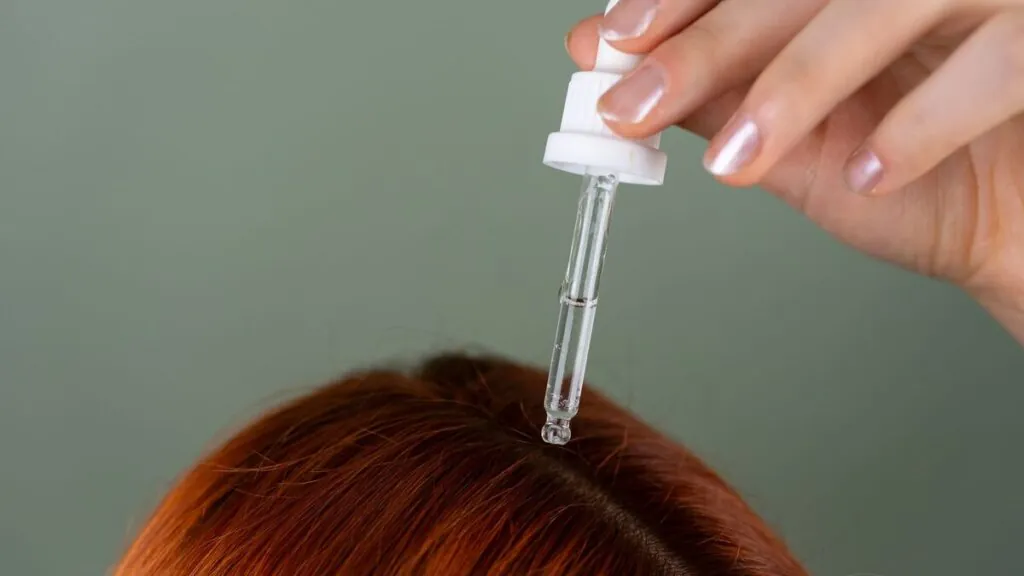
Mamaearth Onion oilHair oil infused with onion extract, popular in India for hair fall routines. It has a strong smell; patch test before using it on the scalp.See glossaryRead the guide is a light, fragranced blend of about a dozen plant oils plus Redensyl, and it is a decent everyday oil for dry lengths and breakage-prone hair. It is not a proven hair regrowth treatment: the evidence for onion on the scalp is very thin, so buy it for softer, stronger-feeling hair, not to fix real hair loss.
GlowVibe has not tested this oil. This guide breaks down what is on the label, what each part can realistically do, whose scalp it suits, and what to use instead if it is not right for you.
Quick verdict
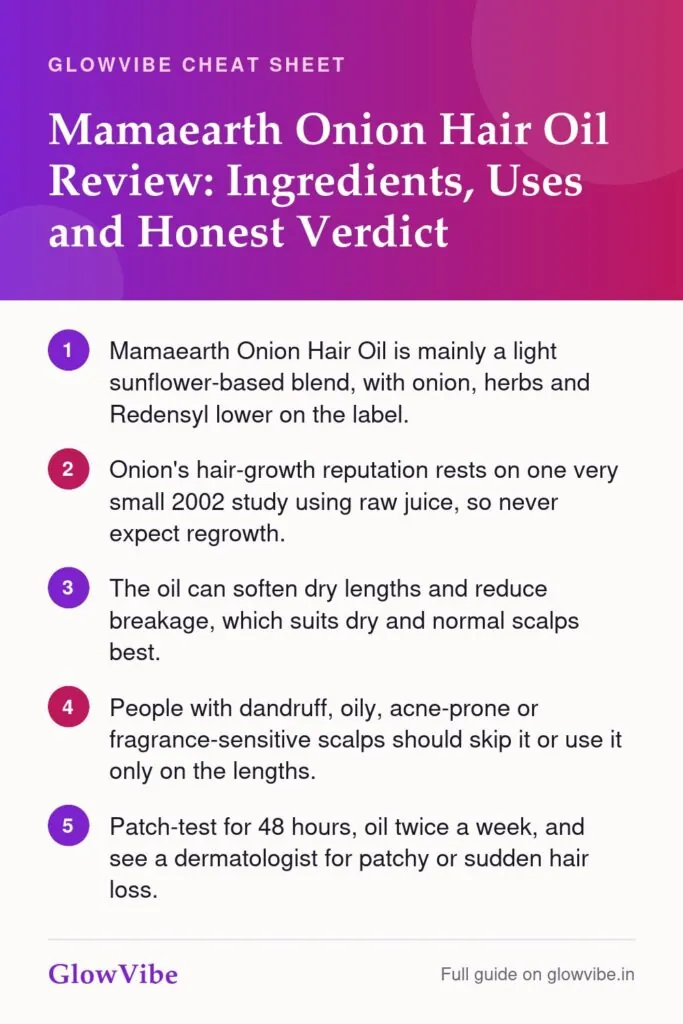
- Good for: dry or frizzy lengths, rough ends, hair that snaps when you comb it, and anyone who wants a lighter feel than pure coconut or Castor oilA thick, sticky oil used on hair, brows and lashes for conditioning. It is usually mixed with a lighter oil because it is hard to wash out.See glossaryRead the guide.
- Think twice if: you have dandruff, an oily or acne-prone scalp, fragrance sensitivity, or a known onion allergy.
- Not a fix for: patchy hair loss, a widening parting, receding hairline or sudden heavy shedding. Those need a doctor.
- How to use: 2 times a week, on the scalp for a few hours or overnight, then a gentle shampoo.
- Before first use: patch-test for 48 hours, because it combines many plant extracts with added fragrance.
What is actually in Mamaearth Onion Hair Oil
Mamaearth sells it as Onion Hair Oil with Onion Oil and Redensyl for hair fall control, in a bottle with a built-in comb applicator. The ingredient list on the 1mg listing, in label order, is:

Sunflower Oil, Isopropyl Myristate, Caprylic/Capric Triglyceride, Jojoba Oil, Olive Oil, Almond Oil, Castor Oil, AmlaIndian gooseberry, used in Ayurvedic hair oils, powders and packs. It is valued for conditioning hair and adding shine.See glossaryRead the guide Oil Extract, BhringrajA herb (false daisy) widely used in Ayurvedic hair oils. It is traditionally used for scalp massage and hair conditioning.See glossaryRead the guide Oil Extract, Gurhal Oil Extract, Sesame Oil, Onion Oil Extract, Brahmi Oil Extract, Natural Vitamin E (tocopherol)An antioxidant and moisturising ingredient. It is often paired with vitamin C to make it more stable.See glossary, Onion Oil (Black Seed Oil), IFRA Certified Allergen Free Fragrance, Tinogard TT, Redensyl.
Formulas change, and lists vary slightly between retailers and pack sizes, so always check the label on the bottle you buy.
Ingredients are listed from most to least, so a few things stand out:
- The base is sunflower oil plus two light EmollientAn ingredient that softens and smooths skin or hair by filling gaps between cells, such as squalane, shea butter or plant oils.See glossary. Isopropyl myristate and caprylic/capric triglyceride make the oil thinner and less sticky than a traditional kitchen-style oil. That is why it spreads easily and washes out more easily too.
- Onion comes late in the list. Onion oil extract sits after sesame oil, and the second “onion oil” is labelled black seed oil in brackets. In India, “black seed” usually means kalonji (nigella), which is a different plant from the kitchen onion. Either way, onion is not the main ingredient by volume.
- The Ayurvedic herbs are in small amounts. Amla, bhringraj, gurhal (HibiscusFlowers and leaves used in traditional Indian hair packs and oils to condition hair and add softness.See glossary) and brahmi are traditional hair herbs. Here they come as oil extracts in the middle of the list.
- Redensyl is last. No percentage is published, and it appears after the fragrance and the antioxidant (Tinogard TT), which suggests a small amount.
- It contains added fragrance. The brand says it is IFRA-certified and allergen-free. Fragrance is still one of the most common causes of scalp irritation, so sensitive scalps should take note.
The brand says the oil is free of mineral oil and SiliconesIngredients like dimethicone that coat hair (and skin) for slip, shine and frizz control. Heavier ones can build up and need a clarifying wash.See glossaryRead the guide, dermatologically tested, Made Safe certified, vegan and suitable for all hair types.
What each ingredient can and can’t do
| Ingredient | What it can realistically do | What it can’t do |
|---|---|---|
| Sunflower, olive, almond, sesame, jojoba | Soften hair, coat the cuticle, cut friction and reduce breakage from combing | Grow new hair |
| Castor oil | Add slip and shine; thicker feel on the lengths | Thicken hair from the root (no good evidence) |
| Onion oil / onion extract | Adds an onion-sulphur story; very limited data | Reliably regrow hair (only one tiny study, and it used raw juice) |
| Amla, bhringraj, brahmi, hibiscus | Traditional conditioning herbs; pleasant to massage in | Replace medical treatment; human evidence is thin |
| Redensyl | An active developed for hair-growth products; most data comes from its maker | Match proven treatments like minoxidil, based on current independent evidence |
| Vitamin E, Tinogard TT | Help stop the oils going rancid | Feed the follicle |
The honest truth about onion and hair growth
Most onion hair claims trace back to one very small 2002 study. It used fresh onion juice on people with alopecia areata, a patchy autoimmune hair loss, and it did not compare it with a proven treatment. Nobody has shown that an onion-infused oil in a shampoo-off product does the same thing for everyday hair fall.
So the fair way to judge this oil is as a conditioning oil. Oiling genuinely reduces dryness and breakage, and less breakage can make hair look fuller over a few months. That is not the same as new hair growing from the root. If you want the full evidence comparison, read our guide to rosemary oil vs onion oil for hair growth.
A note on Redensyl
Redensyl is a branded cosmetic active, and the brand says it “unblocks hair follicles and boosts new hair growth”. Most of the published data comes from the ingredient’s manufacturer, and an oil you wash off after a few hours is a different situation from a leave-on serum. Treat it as a small bonus, not the reason to buy.
Who it suits, by scalp and hair type
Dry scalp, dry or frizzy hair: a good match
If your scalp feels tight after washing and your lengths look dull, this is where the oil makes sense. The sunflower, jojoba and almond base softens without the heaviness of pure castor. It helps most in dry north Indian winters.
Normal scalp, breakage on the lengths: good
Use it mainly from mid-length to ends, with a light scalp massage. Coloured, heat-styled or long hair does well with pre-wash oiling.
Oily scalp: use carefully
It is lighter than many oils, but it is still oil. Keep it on for 1–2 hours rather than overnight, and shampoo twice if your roots feel greasy afterwards. In humid Mumbai or Chennai weather, many people do better oiling only the lengths.
Dandruff or itchy, flaky scalp: probably skip
The yeast linked to dandruff feeds on scalp oils, and many plant oils can make flaking worse. A medicated anti-dandruff shampoo will do more than any oil. Our winter hair fall and dandruff guide explains what to use instead.
Acne-prone forehead or hairline: watch for breakouts
Isopropyl myristate is high on the list, and it is an ingredient some acne-prone people react to. Keep the oil off your hairline, tie your hair back at night and wash your pillowcase often.
Sensitive scalp or fragrance allergy: patch test first
Many plant extracts plus added fragrance means more chances to react. A plain, unscented oil may be the safer choice.
How to use Mamaearth Onion Hair Oil
The brand’s directions are simple: part your hair, apply the oil to the scalp with the comb nozzle, leave it on overnight or for a few hours, then wash with a gentle shampoo. Here is how to get more out of it.

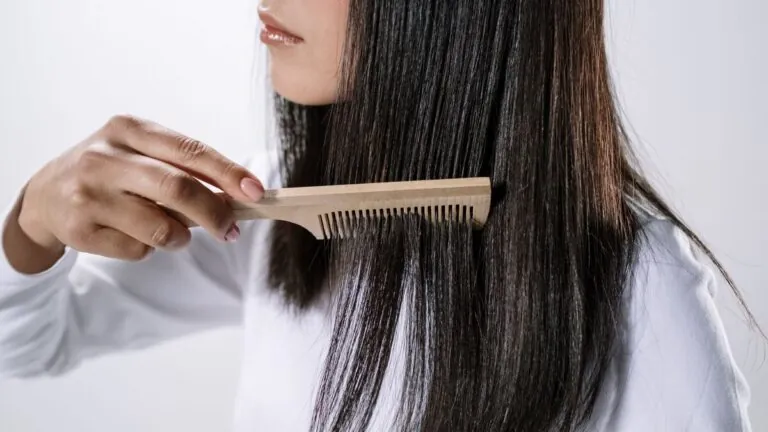
- Start with dry, detangled hair. Comb gently with a wide-tooth comb so you are not pulling out knots later.
- Section into 4–6 parts. Run the comb applicator along each parting, using only a few drops each time. Most people need far less than they think.
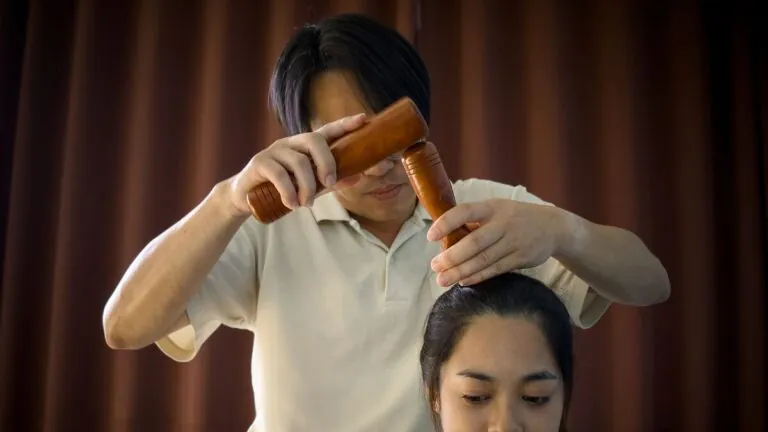
- Massage for 3–5 minutes with your fingertips. Use the pads, not nails, in small circles. Hard rubbing causes breakage.
- Smooth the leftover oil down the lengths. Focus on the ends, where hair is oldest and driest.
- Leave it on for 1–2 hours, or overnight if your scalp is dry. Use an old pillowcase or a cotton scarf.
- Wash it out properly. Apply shampoo to the scalp before wetting your hair fully, which breaks up the oil faster. Shampoo twice if needed, then condition the lengths.
Twice a week is enough for most people. Daily oiling without washing builds up on the scalp. For the full champi technique, including how warm the oil should be and how long to leave it, see how to oil hair correctly.
Give it at least 8–12 weeks before you judge it. Hair grows slowly (see how fast hair grows per day), and what you will mostly notice is less breakage and softer lengths, not new growth.
Side effects and how to patch test
The brand describes the oil as having no side effects. Its own listing also says natural ingredients can trigger allergies and recommends a patch test, which is the more useful advice. Possible problems include:
- Itching, redness or a burning feeling on the scalp, often from fragrance or a plant extract
- More flaking or dandruff, especially if you already have it
- Small bumps along the hairline, forehead or back
- Greasy, limp roots if you use too much or don’t wash it out well
- Shedding during washing, which is usually hair that had already fallen out, not hair the oil pulled out
Simple 48-hour patch test
- Dab a few drops behind your ear or on the inner elbow.
- Leave it unwashed for 48 hours.
- If you see redness, itching, swelling or a rash, wash it off and don’t use the oil.
- If the skin is calm, try it on one section of scalp first before a full application.
If you are pregnant, breastfeeding or using prescription scalp treatments, ask your doctor before adding new products. Stop using it and see a dermatologist if irritation does not settle within a few days.
When an oil is not the answer
Normal shedding is roughly 50–100 hairs a day. See a dermatologist if you notice any of these:
- Round bald patches
- A widening parting or a thinning crown
- A receding hairline
- Heavy shedding after illness, surgery, crash dieting or childbirth
- Hair loss along with tiredness, weight change or irregular periods, which can point to thyroid, iron or hormone problems
Treatments with real evidence, such as minoxidil or treating an underlying deficiency, are covered in our hair loss treatment guide. You can keep oiling for softer hair alongside them if your doctor agrees.
Alternatives to Mamaearth Onion Hair Oil
Which alternative to pick depends on why this oil doesn’t suit you:
- Want something simple and unscented: plain cold-pressed coconut oil, such as Parachute Coconut Oil. Coconut oil is one of the few oils shown to soak into the hair shaft and reduce protein loss during washing. It suits dry and normal scalps.
- Prefer a traditional Ayurvedic oil: Indulekha Bringha Oil is a well-known bhringraj-based oil sold widely in India. As with any herbal oil, patch-test it first and judge it on hair feel, not regrowth promises.
- Curious about rosemary instead: rosemary has slightly better (still limited) evidence than onion. Always dilute rosemary essential oil in a carrier oil.
- Oily or dandruff-prone scalp: skip scalp oils. Oil only the lengths, and use a medicated shampoo on the scalp.
- Real thinning: see a doctor about evidence-based treatment, as above.
For a wider shortlist of oils by hair type, see our guide to the best hair oil for hair growth in India.
Common mistakes with onion hair oil
- Expecting regrowth in a month. Oil helps the hair you have. It won’t revive follicles that have stopped producing hair.
- Using too much. A heavy layer is hard to wash out and leads to buildup and greasy roots.
- Oiling a flaky scalp. This often makes dandruff worse, not better.
- Using oil to put off a doctor’s visit. Sudden or patchy hair loss needs a diagnosis first.
Frequently Asked Questions
There is no good evidence that it does. Onion’s reputation rests on one very small 2002 study that used raw onion juice on patchy hair loss. The oil can reduce breakage and dryness, which may make hair look fuller over time.
Most people don’t need to. Two times a week, washed out after a few hours or overnight, is plenty. Daily oiling without washing tends to cause buildup, greasy roots and, for some, more dandruff.
The formula includes added fragrance, which the brand uses to give it a more pleasant scent than raw onion. If you are sensitive to fragrance, that is a reason to patch test first or choose an unscented oil.
It is lighter than many traditional oils, but it is still oil. If your scalp is oily, keep it on for an hour or two, wash thoroughly, or apply it only to your lengths.
Yes, the same scalp-type advice applies. For a receding hairline or thinning crown, though, an oil won’t stop male pattern hair loss. See a dermatologist about treatments with real evidence.
Quick poll
How much do you usually spend on one beauty product?
The bottom line
Mamaearth Onion Hair Oil is a light, easy-to-apply blend of common plant oils with a little onion, herbal extracts, fragrance and Redensyl. Choose it if you have a dry or normal scalp and want softer, less breakage-prone hair. Skip it if you have dandruff, a sensitive or acne-prone scalp, or real hair loss that needs a doctor. Patch test first, use it twice a week, and judge it on how your hair feels, not on regrowth promises.