Rosemary Oil vs Onion Oil for Hair Growth: Honest Verdict
Rosemary oil or onion oil for hair growth? An honest comparison of the evidence, smell, irritation risk, scalp types and how to use each safely.

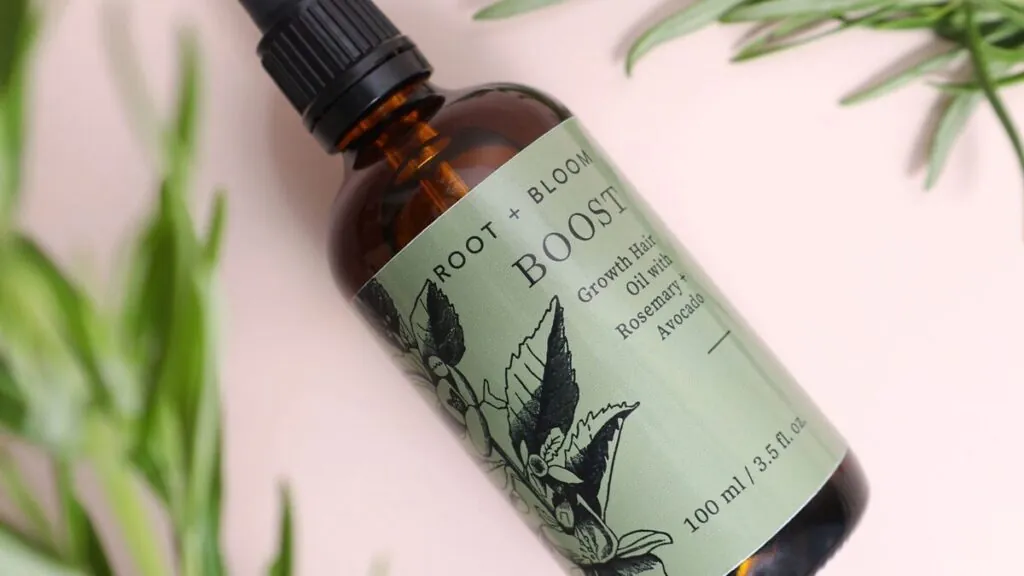
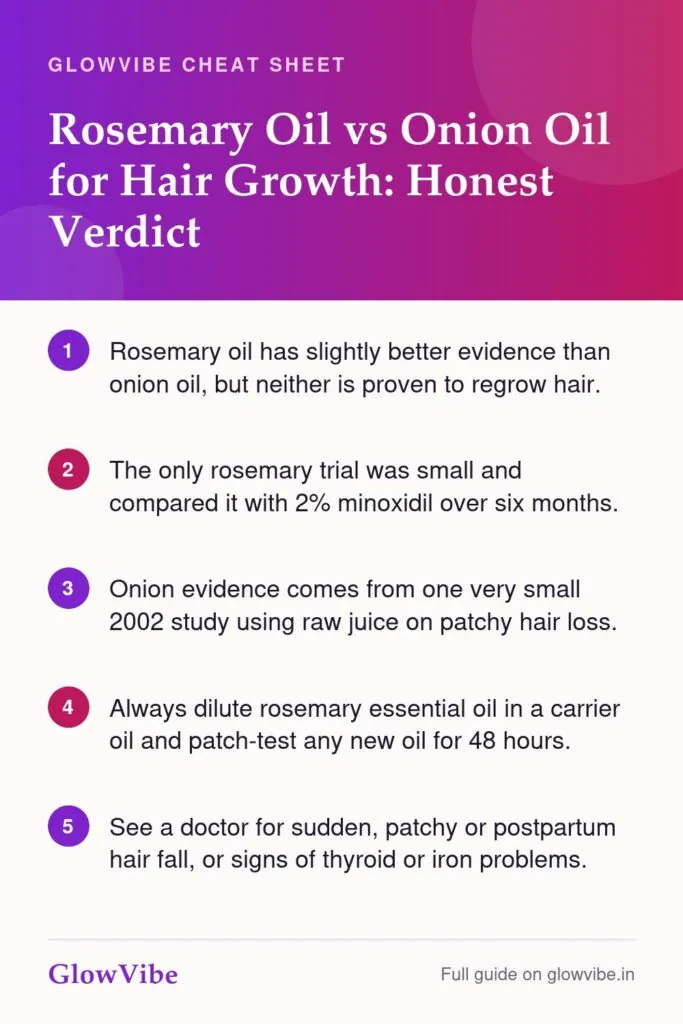
In the Rosemary oilAn essential oil popular in scalp routines. Always dilute it in a carrier oil like coconut or jojoba before applying.See glossaryRead the guide vs Onion oilHair oil infused with onion extract, popular in India for hair fall routines. It has a strong smell; patch test before using it on the scalp.See glossaryRead the guide debate, neither is a proven hair-growth cure, but rosemary oil has slightly better (still limited) evidence and is easier to live with. Choose rosemary oil if you want the better-studied option for gradual thinning and can dilute it properly; choose an onion oil if you like a traditional, nourishing champi oil and don’t mind the smell.
Below, we explain what you are actually buying, what the research really says, which scalp suits which oil, and when oiling is simply the wrong tool because your hair fall needs a doctor.
Quick verdict and summary
- Choose rosemary oil if you have gradual thinning, a normal to oily scalp, and the patience to use a properly diluted oil for at least six months.
- Choose an onion oil if you have a dry scalp, enjoy a weekly pre-wash oil massage and want a familiar blend of carrier oils and herbs.
- Skip both and see a doctor if your hair is falling in clumps, in round patches, after a baby, or alongside tiredness, weight change or heavy periods.
- Patch-test either oil for 48 hours, and never put undiluted rosemary essential oil or raw onion juice straight onto your scalp.
- Expect modest results at best. Oils can make hair feel softer and reduce breakage; regrowth is never guaranteed.
What each oil actually is
Both names cover very different products, so it helps to know which one is in your bottle before you compare results.
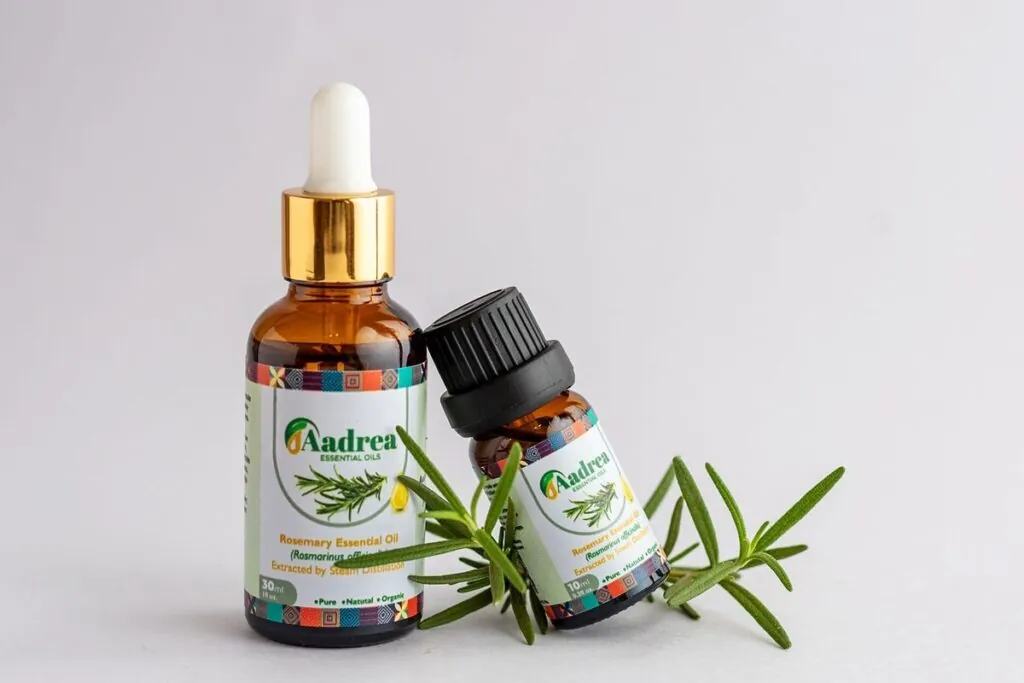
Rosemary oil: essential oil vs infused oil
Rosemary essential oil is a concentrated, steam-distilled oil sold in tiny dropper bottles. It is far too strong to use neat. You mix a few drops into a carrier oil such as coconut, jojoba, almond or sesame oil before it touches your scalp.
Rosemary-infused oils are carrier oils in which rosemary leaves have been steeped, or ready-made hair oils with rosemary added. They are gentler and ready to use, but the amount of rosemary varies widely and is rarely stated, so they may not match what was used in research.
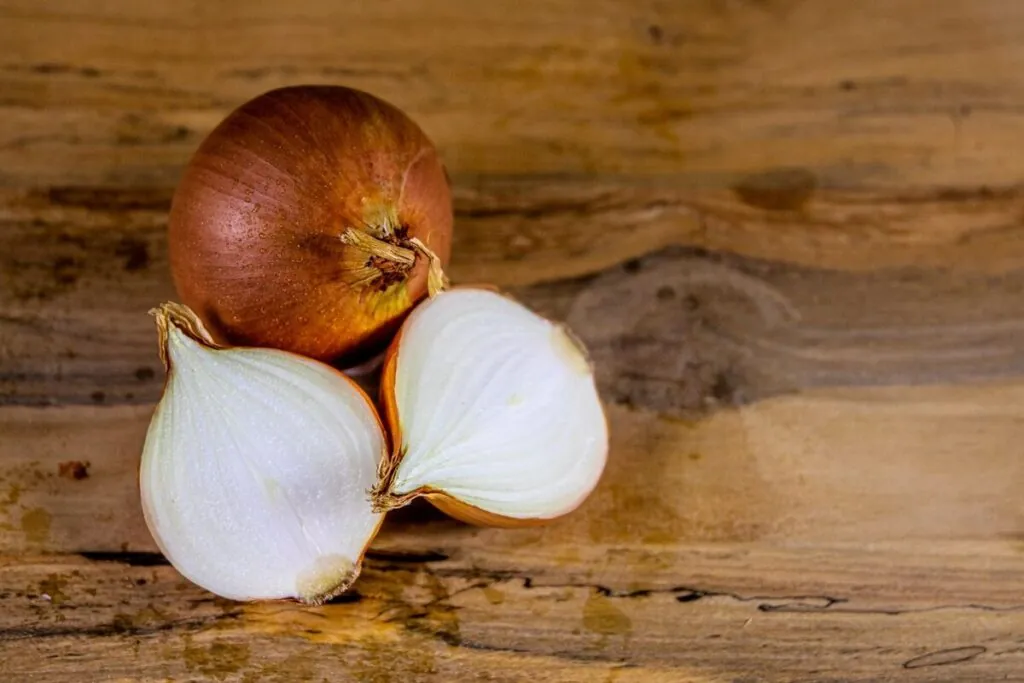
Onion oil and onion juice
Most onion hair oils sold in India, such as Mamaearth Onion Hair Oil or WOW Skin Science Onion Black Seed Hair Oil, are blends: a base of carrier oils with onion extract plus other herbs like BhringrajA herb (false daisy) widely used in Ayurvedic hair oils. It is traditionally used for scalp massage and hair conditioning.See glossaryRead the guide, AmlaIndian gooseberry, used in Ayurvedic hair oils, powders and packs. It is valued for conditioning hair and adding shine.See glossaryRead the guide or black seed. You are getting a nourishing champi oil with some onion in it, not pure onion.
Onion juice is the home remedy: grated onion, squeezed and dabbed onto the scalp. This is what the old study used, and it is not the same thing as an onion-infused oil. Raw juice is also more likely to sting and irritate.
Rosemary oil vs onion oil: side-by-side
| Factor | Rosemary oil | Onion oil / onion juice |
|---|---|---|
| What it is | Essential oil diluted in a carrier, or a rosemary-infused oil | Carrier-oil blend with onion extract, or raw onion juice |
| Evidence | One small 2015 trial against 2% MinoxidilA topical drug used for pattern hair loss. It needs ongoing use to keep results, so check with a dermatologist before starting.See glossary | One very small 2002 study using raw onion juice |
| Smell | Herbal, camphor-like; most people find it fine | Strong onion smell, especially raw juice |
| Irritation risk | High if undiluted; low to moderate when diluted | Moderate for raw juice; usually low for blended oils |
| Best scalp type | Normal to oily, mild dandruff-prone (diluted in a light carrier) | Dry or normal scalp that enjoys a richer oil |
| Typical use | Two to three times a week, left on a few hours or overnight | Once or twice a week as a pre-wash oil |
| Time to judge | At least six months | Three to six months |
What the evidence really says
This is where honesty matters, because social media makes both oils sound far more powerful than the research shows.
Rosemary: one small trial
The study everyone quotes is a 2015 trial by Panahi and colleagues. Around 100 people with pattern hair loss (androgenetic alopecia) used either rosemary oil or 2% minoxidil for six months. Both groups saw a similar modest increase in hair count at six months, with no real change at three months, and the rosemary group reported less scalp itching.
That sounds encouraging, but it is one small, short study. It compared rosemary with a low-strength minoxidil rather than a placebo, and it has not been repeated in large, well-designed trials. So rosemary is promising, not proven, and it is not a replacement for medical treatment.
Onion: one very small 2002 study
The onion evidence is thinner still. A very small 2002 study tested raw onion juice on people with alopecia areata, an autoimmune condition that causes round bald patches. Some of them regrew hair, but the group was tiny and the study design was basic.
Crucially, that study used fresh juice on a specific condition. It tells us very little about onion hair oils, or about everyday hair fall, thinning or pattern hair loss. Any bottle promising regrowth from onion is going well beyond the evidence.
What this means for you
Neither oil should be your only plan if you are genuinely losing hair. What both can do is support a healthy routine: a gentle massage, softer lengths and less breakage, which can make hair look fuller. If you want options with stronger evidence, read our guide to hair loss treatments in India ranked by evidence.
Smell, irritation and patch testing
Smell is a real deciding factor, because an oil you hate using is an oil you will stop using. Rosemary has a fresh, herbal scent most people tolerate easily. Onion juice smells strongly and the smell can linger even after washing; branded onion oils are usually perfumed and much milder.
Irritation is the bigger issue. Undiluted rosemary essential oil can cause redness, burning or contact dermatitis. Raw onion juice is acidic and can sting, especially on a scalp with scratches, dandruff flakes or recent colour.
How to patch-test
- Mix the oil exactly as you plan to use it (for rosemary, the diluted version).
- Dab a little behind your ear or on your inner elbow.
- Leave it for 48 hours without washing it off early.
- If you see redness, itching, bumps or burning, don’t use it on your scalp.
Avoid both on broken skin, and talk to your doctor before using rosemary essential oil if you are pregnant, breastfeeding, have epilepsy or high blood pressure.
Which scalp type suits which oil
Your scalp matters more than the label. Here is a practical way to match them.
Oily or dandruff-prone scalp
Heavy oils can sit on an oily scalp and make flakes worse, because the yeast linked to dandruff feeds on certain oils. If you want to try either, a few drops of rosemary essential oil in a light carrier such as jojoba is the better fit, left on for one to two hours rather than overnight. If dandruff is your main problem, a medicated anti-dandruff shampoo will do far more; our winter hair fall and dandruff routine walks you through it.
Dry or normal scalp
A dry scalp usually enjoys a richer pre-wash oil, which is where onion-blend oils shine as a pleasant champi oil. Diluted rosemary in coconut or sesame oil also works well here.
Sensitive scalp or eczema
Go slowly with both. Choose a ready-made, lower-strength rosemary-infused oil over essential oil, skip raw onion juice, and check with a dermatologist if your scalp is often red or itchy.
How to use each oil, and for how long
Using rosemary oil
- Dilute: add about 3–5 drops of rosemary essential oil to one tablespoon of carrier oil. Start at the lower end.
- Apply: part your hair into sections and dab the mix onto the scalp with your fingertips or a dropper.
- Massage: use the pads of your fingers in slow circles for three to five minutes. No scratching.
- Leave on: a few hours, or overnight if your scalp tolerates it, then wash with a mild shampoo.
- Repeat: two to three times a week, and judge results only after six months, since that is how long the trial ran.
Using onion oil
- Warm a blended onion oil slightly by placing the bottle in warm water for a minute.
- Apply to the scalp in sections and massage gently.
- Leave for one to two hours, or overnight on a dry scalp, then shampoo.
- Use once or twice a week and give it three to six months.
If you want to try fresh onion juice, use it no more than once a week, dilute it with an equal amount of water or aloe vera gel, leave it for 15–20 minutes only, and wash thoroughly. Stop if it stings.
Why patience matters
Hair grows roughly a centimetre a month, so any change takes months to show. Our explainer on how fast hair grows per day explains why a two-week trial tells you nothing. Take a photo in the same light at the start and every two months.
Can you use both?
Yes, you can, but there is little reason to layer them on the same day. Combining them doubles the irritation risk and makes it impossible to know which one is helping or bothering you.
A sensible approach is to alternate: diluted rosemary oil on two nights a week and a blended onion oil as your weekly pre-wash champi. Some ready-made oils already contain both, which is fine as long as you patch-test first. Start one oil at a time for two weeks before adding the second.
When hair fall needs a doctor, not an oil
Losing around 50–100 hairs a day is normal. See a dermatologist or your doctor if you notice any of these:
- Sudden or heavy shedding, such as clumps in the shower, often two to three months after a fever, illness, surgery, crash diet or major stress.
- Round or patchy bald spots, a widening parting or a receding hairline.
- Postpartum hair fall that hasn’t eased around a year after delivery.
- Signs of thyroid problems, such as tiredness, weight change, feeling cold or dry skin.
- Signs of low iron, such as heavy periods, breathlessness, pale skin or fatigue. Low iron and vitamin D are common in India and easy to test for.
- An itchy, painful, scaly or red scalp that doesn’t settle.
A simple blood test for thyroid, ferritin and vitamin D can find the real cause. For pattern hair loss, proven treatments like minoxidil should be started and monitored by a dermatologist.
Common mistakes to avoid
- Applying undiluted rosemary essential oil “for stronger results”.
- Using raw onion juice daily or leaving it on for hours.
- Expecting visible regrowth in a month and quitting too soon.
- Piling heavy oil on an oily, flaky scalp and leaving it overnight.
- Using oils instead of seeing a doctor for sudden or patchy hair loss.
- Rubbing the scalp hard with your nails, which causes breakage.
If you want to compare more oils beyond these two, our best hair oil for hair growth in India guide covers the full range, and our round-up of five natural hair growth oils explains the evidence for coconut, castor and others. Men dealing with a thinning crown can also read our guide to the best hair growth oil for men.
Before you start: read how to oil hair correctly so the oil you choose actually helps. For a ready-made onion oil, see our Mamaearth Onion Hair Oil review.
Frequently Asked Questions
Rosemary oil has slightly better evidence, from one small 2015 trial against 2% minoxidil. Onion has only a very small 2002 study using raw juice. Neither is proven to regrow hair, so choose based on your scalp and which one you will use consistently.
No. Undiluted essential oil can burn and irritate the skin. Mix about 3–5 drops in a tablespoon of carrier oil and patch-test for 48 hours first.
In the trial, there was no real difference at three months and a modest change at six months. Give it at least six months of regular use, and take photos to track progress honestly.
There is no good evidence that onion oil stops hair fall. A massage with a blended onion oil can reduce dryness and breakage, which may make hair look healthier. If shedding is heavy or sudden, see a doctor to check the cause.
Diluted rosemary oil and blended onion oils can be left overnight on a dry or normal scalp if they don’t irritate. On an oily or dandruff-prone scalp, one to two hours is better. Never leave raw onion juice on overnight.
Quick poll
What is your biggest hair concern?
The bottom line
If you want the better-studied option, pick a properly diluted rosemary oil and stick with it for six months. If you love a rich, traditional champi and your scalp is dry, a blended onion oil is a pleasant choice. Either way, keep expectations realistic, patch-test first, and let a doctor look into any hair fall that is sudden, patchy or linked to your health.