Dabur Amla vs Parachute Coconut Oil: Which Hair Oil Suits You?
Dabur Amla is mostly mineral oil; Parachute is pure coconut oil. Here is what that means for dry, oily, dandruff-prone scalps and winter use.

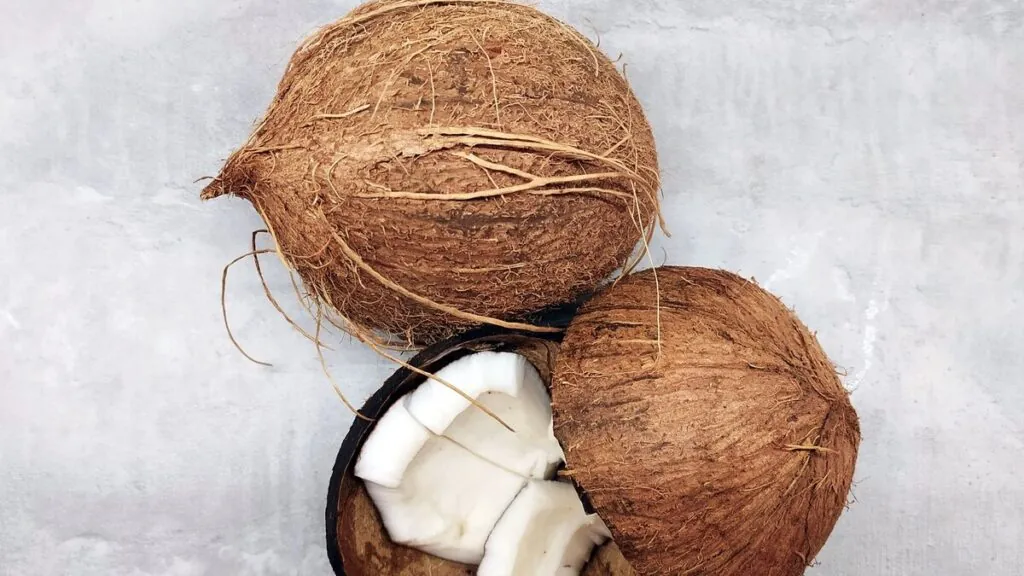
Choose Parachute Coconut oilA common Indian hair oil that can soak into the hair shaft, which may reduce protein loss during washing. It can feel heavy on fine hair.See glossary if you want a single-ingredient oil that soaks into the hair shaft and helps protect it from protein loss and breakage, especially before washing. Choose Dabur AmlaIndian gooseberry, used in Ayurvedic hair oils, powders and packs. It is valued for conditioning hair and adding shine.See glossaryRead the guide Hair Oil if you want a light, fragranced oil that stays liquid in winter and gives quick shine and slip, knowing that its main base is mineral oil, not amla.
Both are classic Indian bathroom-shelf oils, and both are fine for everyday champi. Neither one regrows hair. This guide looks at what is actually on each label, what the research says, and which suits your scalp and hair type.
GlowVibe has not tested these oils. This is a guide to the formulas based on their published ingredient lists. Formulas change, so always check the label on the bottle you buy.
Quick verdict
- Dry, rough or chemically treated lengths: Parachute Coconut Oil, used as a pre-wash treatment.
- Want shine and easy detangling with no solidifying in winter: Dabur Amla Hair Oil.
- Fragrance-sensitive scalp: Parachute, because its label lists only coconut oil.
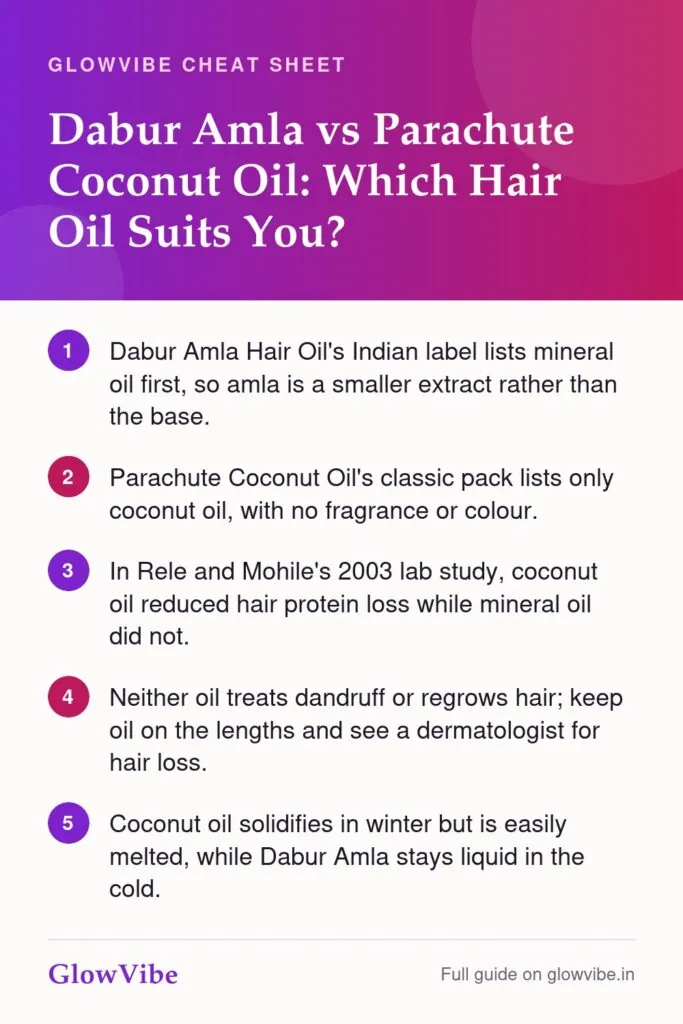
- Dandruff-prone scalp: neither treats dandruff. Keep either oil to the lengths and use a medicated shampoo.
- Hair fall or thinning: neither oil fixes it. See a dermatologist and read about proven options.
What is actually in each bottle
Dabur Amla Hair Oil: a mineral oil base
The name suggests amla oil, but the Indian ingredient list on major retailers such as Apollo Pharmacy starts with mineral oil (paraffinum liquidum), followed by vegetable oils, amla extract (Phyllanthus emblica), fragrance, the antioxidant TBHQ and colourants. Ingredients are listed from most to least, so mineral oil is the main base and amla is a smaller extract.
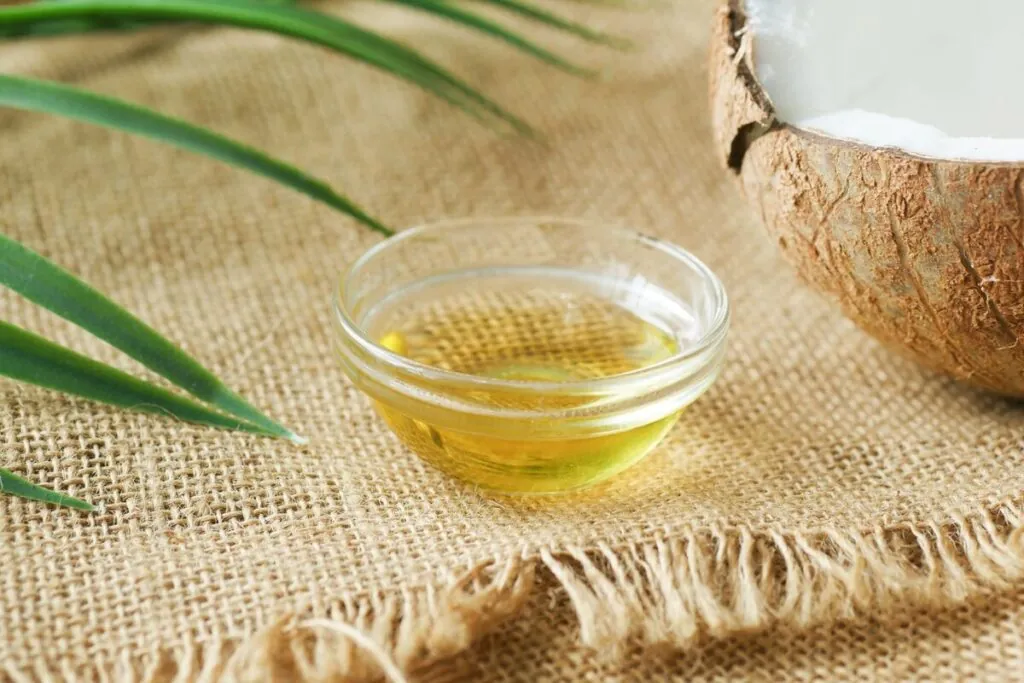
Some retailer listings name the vegetable oils (for example canola, palmolein or sesame), and export versions sold abroad have slightly different lists. That variation is another reason to read your own bottle’s back label.
Mineral oil is not a bad ingredient. Cosmetic-grade mineral oil is highly refined, doesn’t go rancid, rarely irritates and coats the hair to cut friction. It just doesn’t do what plant oils like coconut can do inside the hair fibre.
Parachute Coconut Oil: one ingredient
Marico’s classic Parachute 100% Pure Coconut Oil lists just coconut oil on its label. The brand says it is made from sun-dried coconuts and carries no added preservatives, and it is sold as edible-grade oil. There is no fragrance or colour.
Parachute also sells other hair oils under the Parachute Advansed range, which have different formulas. This comparison is about the plain blue-bottle coconut oil.
Dabur Amla vs Parachute: side-by-side
| Feature | Dabur Amla Hair Oil | Parachute Coconut Oil |
|---|---|---|
| Main base | Mineral oil (listed first) | Coconut oil only |
| Other ingredients | Vegetable oils, amla extract, fragrance, TBHQ, colourants | None on the classic pack |
| Gets into the hair shaft? | Mostly sits on the surface | Yes, shown in lab studies |
| Protein-loss evidence | Mineral oil showed no benefit (Rele & Mohile 2003) | Reduced protein loss (Rele & Mohile 2003) |
| Feel | Light, slippery, fragranced | Rich, can feel heavy on fine hair |
| In winter | Stays liquid | Solidifies below about 24°C |
| Fragrance-sensitive scalp | May irritate | Fragrance-freeA product with no added perfume or essential oils for scent. Often the safer pick for sensitive or reactive skin. "Unscented" can still contain masking fragrance.See glossary |
| Regrows hair? | No | No |
The coconut oil evidence: Rele & Mohile 2003
The study most people quote is Rele and Mohile, published in the Journal of Cosmetic Science in 2003. The researchers compared coconut oil, sunflower oil and mineral oil on hair samples. Coconut oil reduced protein loss in both undamaged and damaged hair when used as a pre-wash and post-wash treatment. Sunflower oil and mineral oil did not.
The likely reason is coconut oil’s structure. It is rich in lauric acid, a small, straight fatty acid that is drawn to hair protein and can move inside the shaft. Mineral oil is a hydrocarbon with no such attraction, so it stays on the surface.
Two honest limits. This was a lab study on hair fibres, not a trial on people’s scalps. And “less protein loss” means less damage from washing and combing, which shows up as less breakage. It is not hair growth.
What amla can and can’t do
Amla (Indian gooseberry) has a long place in Ayurvedic hair care, and it is rich in Vitamin CAn antioxidant that brightens dull skin, helps fade the look of dark spots and supports sunscreen against daily damage. Best used in the morning.See glossaryRead the guide and antioxidant polyphenols. Dabur’s own product pages talk about stronger roots, less hair fall and darker hair. Those are the brand’s claims.
The research on amla for hair is mostly lab and animal work, plus a few small studies of mixed herbal blends. There are no strong human trials showing that amla in a hair oil reduces hair fall, regrows hair or reverses greying. Vitamin C you rub on your scalp also doesn’t fix a nutritional deficiency.
What amla oil can realistically do is the same as any good oil: soften the hair, add shine, reduce friction and make combing easier, which means less breakage. In this formula much of that comes from the mineral oil base.
Which oil suits your scalp?
Dry scalp and dry hair
Parachute is the stronger pick for dry, frizzy or coloured lengths. Use it as a pre-wash treatment 30 minutes to an hour before shampoo so it can do its protective job. Dabur Amla works too if you mainly want a smooth, glossy finish.
Oily scalp
You don’t need to oil an oily scalp at all. If you like oiling, apply either one to the mid-lengths and ends only, keep it short (30 to 60 minutes) and shampoo well. Dabur’s lighter feel may suit you better on the lengths, but it still needs a proper wash.
Dandruff-prone scalp
Dandruff is linked to Malassezia, a yeast that feeds on skin oils. Leaving plant oils on the scalp overnight can make flaking worse for some people. Mineral oil isn’t food for the yeast, but it can still trap flakes and SebumThe natural oil your skin and scalp make. Some is essential for a healthy barrier; too much can feel greasy and clog pores.See glossary, and Dabur’s fragrance can sting an irritated scalp.
The honest answer: neither oil treats dandruff. Keep oil off the scalp during a flare and use an anti-dandruff shampoo with ketoconazole, zinc pyrithione or selenium sulfide. Our guide to winter dandruff and hair fall care has a full routine.
Sensitive scalp
Parachute’s single-ingredient label makes it the simpler choice. Dabur Amla contains fragrance and colourants, which are common triggers. Patch-test either oil behind your ear for 48 hours first.
Fine hair vs thick hair
Fine or thin hair: coconut oil can leave fine hair limp and greasy, and some people find it makes their hair feel stiff. Use a small amount (half a teaspoon for the lengths) or try Dabur’s lighter texture. For more ideas, see our picks of hair care products for fine hair.
Thick, coarse or curly hair: Parachute is usually the better fit. Thick Indian hair that is long, often tied up and frequently washed benefits most from coconut oil’s protection against breakage. Dabur gives slip for detangling but less of that inner protection.
Using them in winter
Coconut oil turns solid below about 24°C, so in North Indian winters your Parachute bottle will set white. That doesn’t mean it has gone bad. Stand the bottle in a mug of warm water for a few minutes, or warm a spoonful between your palms. Never microwave it in the plastic bottle.
Dabur Amla stays liquid in the cold because of its mineral oil base, which many people find more convenient from December to February. Winter air also dries hair, so a weekly pre-wash oiling with either oil can help with static and rough ends.
How to use either oil well
- Start with dry, detangled hair.
- Warm 1 to 2 teaspoons (more for long, thick hair) and work it into the lengths and ends first.
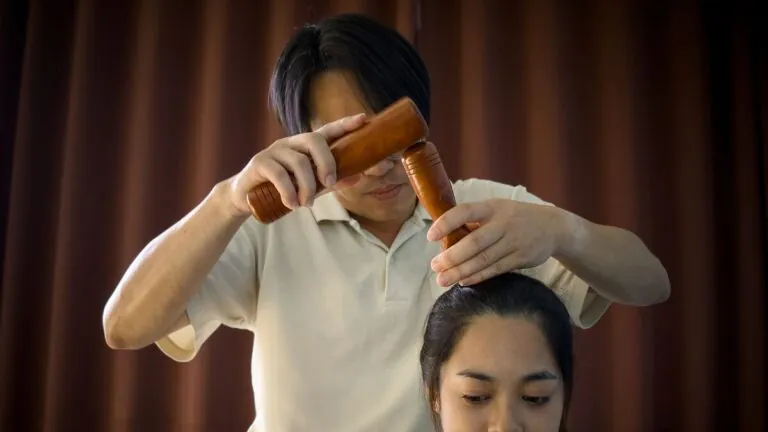
- If your scalp is dry and flake-free, massage a little into it with your fingertips for 2 to 3 minutes. No hard rubbing.
- Leave it for 30 minutes to 2 hours. Overnight is optional for dry hair and best avoided if you get dandruff.
- Shampoo, twice if needed, then condition the ends.
Our step-by-step guide on how to oil hair correctly covers champi technique, timing and how often to oil.
Can you use both?
Yes. A sensible split is Parachute Coconut Oil as your pre-wash treatment once or twice a week, and a few drops of Dabur Amla on dry ends between washes if you like its shine and scent. You can also use Parachute in summer and switch to Dabur on the coldest days when coconut oil sets.
Mixing them in the same bottle won’t harm anything, but it doesn’t add a benefit either. Using them at different steps makes more sense.
Neither oil regrows hair
Oiling reduces breakage and dryness, so hair can look thicker and lose fewer broken strands in the comb. That is not the same as growing new hair. Pattern hair loss, thyroid problems, iron deficiency and stress-related shedding need diagnosis and treatment.
If you are noticing a widening parting, patches or sudden heavy shedding, see a dermatologist and read our guide to hair loss treatments in India ranked by evidence. If you still want an oil with growth-focused ingredients like rosemary, our guide to the best hair oil for hair growth in India explains what the limited evidence actually shows.
Common mistakes
- Assuming “amla hair oil” means the oil is pressed from amla. Read the first ingredient.
- Oiling a flaky scalp overnight, every night, and wondering why dandruff gets worse.
- Using too much and shampooing three times, which dries out the hair you wanted to protect.
- Rubbing the scalp hard during champi, which pulls out loose hairs.
- Expecting any oil to stop genetic hair loss.
Frequently Asked Questions
Its Indian ingredient list on major retailers names mineral oil (paraffinum liquidum) first, followed by vegetable oils and amla extract. So mineral oil is the main base. Check your bottle, as formulas and export versions vary.
No. Cosmetic-grade mineral oil is refined, stable and gentle, and it smooths hair by coating it. It just didn’t reduce protein loss in the 2003 lab study the way coconut oil did.
For hair that breaks easily, Parachute has better evidence for reducing damage. For hair fall from the root, neither oil is a treatment. A dermatologist can find the cause and suggest proven options.
It won’t clear dandruff and may make flaking worse if left on the scalp for long. Use a medicated anti-dandruff shampoo and keep coconut oil on your lengths until the scalp settles.
You can’t stop it from setting below about 24°C, but it is easy to melt. Keep the bottle in a warm spot or stand it in warm water for a few minutes before use.
It is a blend built on plant oils with onion and herbal extracts, and its growth evidence is also very limited. Read our Mamaearth Onion Hair Oil review for a full look at its formula and who it suits.
Quick poll
What is your biggest hair concern?
The bottom line
Parachute Coconut Oil is the better choice if you want real protection for dry, thick or damaged hair and a fragrance-free label. Dabur Amla Hair Oil suits you if you want a light, scented oil for shine that stays pourable in winter, as long as you know it is mostly mineral oil. Use either one on the lengths, wash it out well, and treat hair fall as a separate problem.