Best Organic Hair Care Products for Fine Hair in India (2026)
Light, honest picks of organic and natural hair care products for fine hair in India, plus how to read labels and choose by oily scalp, hard water or humidity.

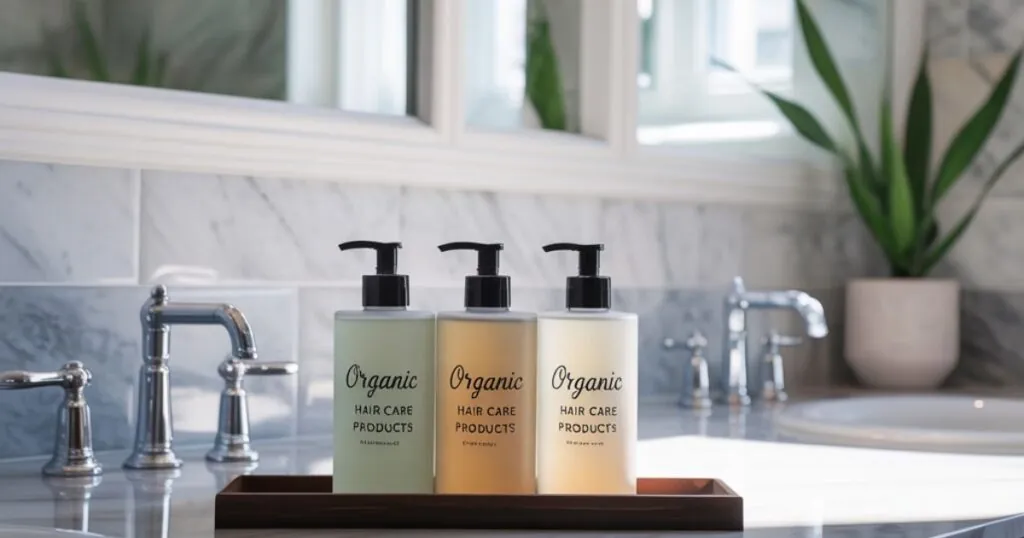
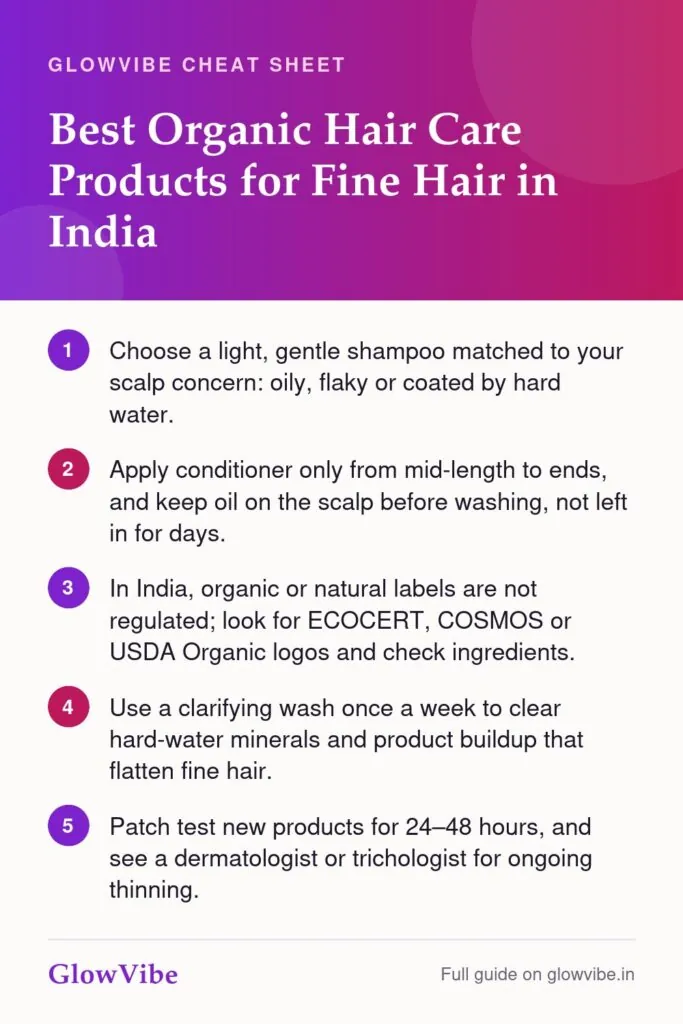
The best organic hair care products for fine hair are light, gentle cleansers and weightless conditioners that clean the scalp well without leaving residue that flattens your roots. For most Indian fine-hair routines, that means a mild plant-based shampoo matched to your scalp (oily, flaky or hard-water-coated), a conditioner used only on the lengths, and oil kept to the scalp before washing rather than left in.
Here is something most product pages won’t tell you. In India, “organic” and “natural” on a shampoo bottle are marketing words, not a legal guarantee. Below you’ll find how to read labels honestly, our shortlist of products sold in India, and how to choose by your actual fine-hair problem.
Quick picks: organic and natural hair care for fine hair
- Best for an oily scalp and daily washing: Biotique Green Apple Fresh Daily Purifying Shampoo & Conditioner (budget)
- Best for hard-water buildup: WOW Skin Science Apple Cider Vinegar Shampoo (budget)
- Best for an oily, dandruff-prone scalp: Mamaearth Tea Tree Shampoo (budget)
- Best for a flaky, itchy scalp: The Body Shop Ginger Scalp Care Shampoo (mid-range)
- Best Ayurvedic cleanser: Forest Essentials Hair Cleanser BhringrajA herb (false daisy) widely used in Ayurvedic hair oils. It is traditionally used for scalp massage and hair conditioning.See glossaryRead the guide & ShikakaiA pod used in traditional Indian hair washes. It cleans gently with a mild lather and is often combined with reetha and amla.See glossary (premium)
- Best pre-wash oil: Kama Ayurveda Bringadi Intensive Hair Treatment (premium)
- Best scalp oil (imported): Mielle Rosemary Mint Scalp & Hair Strengthening Oil (mid-range)
- Best weightless conditioner (imported): John Masters Organics Citrus & Neroli Detangler (premium)
Comparison table
| Product | Type | Best fine-hair concern | Price band |
|---|---|---|---|
| Biotique Green Apple Fresh Daily Purifying Shampoo & Conditioner | 2-in-1 shampoo | Oily scalp, frequent washing | Budget |
| WOW Skin Science Apple Cider Vinegar Shampoo | Shampoo | Hard water, dull residue | Budget |
| Mamaearth Tea Tree Shampoo | Shampoo | Oily scalp with dandruff | Budget |
| The Body Shop Ginger Scalp Care Shampoo | Shampoo | Flaky, itchy scalp | Mid-range |
| Forest Essentials Hair Cleanser Bhringraj & Shikakai | Shampoo | Gentle Ayurvedic wash | Premium |
| Kama Ayurveda Bringadi Intensive Hair Treatment | Pre-wash oil | Scalp oiling without daily grease | Premium |
| Mielle Rosemary Mint Scalp & Hair Strengthening Oil | Scalp oil | Targeted scalp care | Mid-range |
| John Masters Organics Citrus & Neroli Detangler | Conditioner | Tangles without flat roots | Premium |
First, the honest truth about “organic hair care” in India
Cosmetics in India are regulated for safety and labelling, but there is no official standard that a shampoo must meet before calling itself “organic”, “natural”, “herbal” or “chemical-free”. A bottle can contain a little aloe or AmlaIndian gooseberry, used in Ayurvedic hair oils, powders and packs. It is valued for conditioning hair and adding shine.See glossaryRead the guide in a conventional base and still carry those words.
That doesn’t make these products bad. It just means you should judge them on the ingredient list and how your hair responds, not on the front label. Some herbal brands also sell products under an Ayurvedic licence rather than as cosmetics, which is a different category, not a stamp of purity.
How to read an organic hair care label
- Look for a real certification logo. Independent standards such as ECOCERT, COSMOS (COSMOS Organic or COSMOS Natural) and USDA Organic audit the formula. The logo should be on that specific product, not just mentioned on the brand’s website. Indian brands like Juicy Chemistry say they certify their range, so check the individual pack.
- Read the first five ingredients. Ingredients are listed in descending order. If aloe or HibiscusFlowers and leaves used in traditional Indian hair packs and oils to condition hair and add softness.See glossary appears near the end, after fragrance, it is a tiny amount.
- Check the cleanser. Sodium lauryl sulphate (SLS) and sodium laureth sulphate (SLES) clean strongly. Sulfate-freeShampoo made without strong sulfate cleansers like SLS. Gentler on dry, curly or colour-treated hair, though it may lather less.See glossaryRead the guide options use milder surfactants like cocamidopropyl betaine, decyl glucoside or sodium cocoyl isethionate.
- Spot the SiliconesIngredients like dimethicone that coat hair (and skin) for slip, shine and frizz control. Heavier ones can build up and need a clarifying wash.See glossaryRead the guide. Words ending in “-cone” or “-siloxane” (dimethicone, amodimethicone, cyclopentasiloxane) are silicones.
Sulphate-free and silicone-free: the trade-offs for fine hair
Sulphate-free shampoos are gentler, but fine hair on an oily scalp sometimes needs a proper clean. If a mild shampoo leaves your roots limp by evening, or you oil your hair before washing, wash twice or use a slightly stronger shampoo once a week.
Silicones are a similar story. Heavy silicones can coat fine strands and make them look flat and greasy faster. But light silicones also reduce friction, tangling and heat damage. If your hair feels coated, go silicone-free on the roots and keep a light serum only for the ends.
The best organic hair care products for fine hair: detailed picks
1. Biotique Green Apple Fresh Daily Purifying Shampoo & Conditioner
Who it suits: fine hair with an oily scalp that needs washing every day or every other day, especially in hot, sweaty months. It is easy to find almost anywhere.
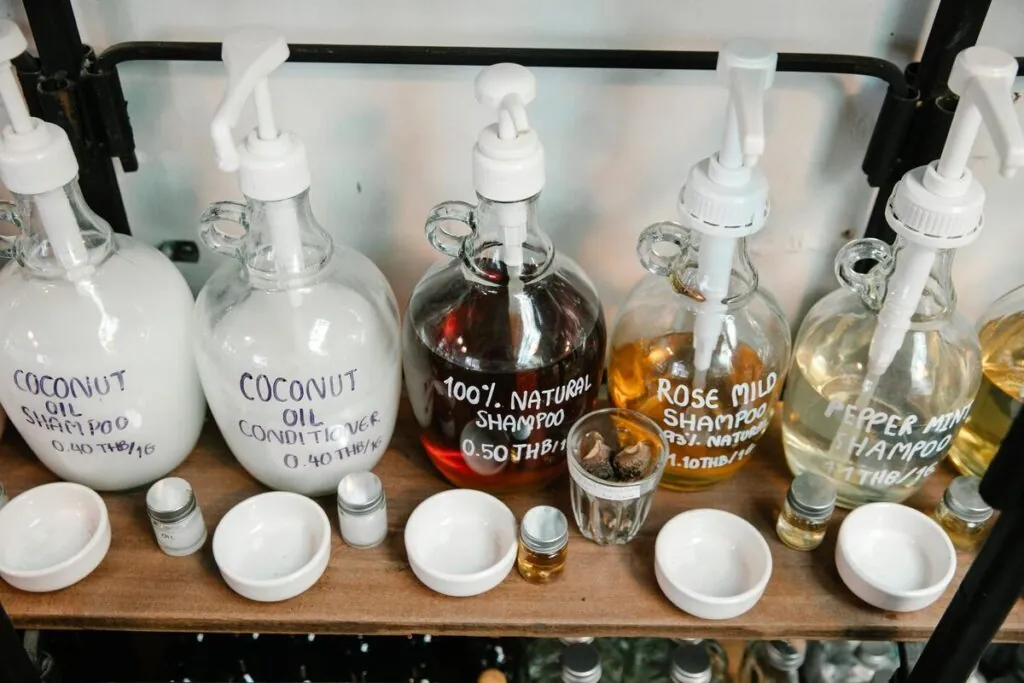
How to use: lather on the scalp, leave for a minute, rinse thoroughly. Because it is a 2-in-1, you may not need a separate conditioner on short or shoulder-length fine hair.
- Pros: light finish, budget-friendly, suited to frequent washing
- Cons: long or dry ends may still need extra conditioning; herbal label is not an organic certification
2. WOW Skin Science Apple Cider Vinegar Shampoo
Who it suits: fine hair that looks dull, stiff or “coated” because of hard water or styling product buildup.
How to use: use it once or twice a week as your clarifying wash, and a gentler shampoo on other days.
- Pros: widely available, leaves a squeaky-clean feel that fine hair often likes
- Cons: can feel drying if used daily on dry or colour-treated hair
3. Mamaearth Tea Tree Shampoo
Who it suits: fine hair on an oily scalp that also gets dandruff, a common combination in humid Indian cities.
How to use: massage into the scalp for a minute or two, rinse well, and condition only the lengths.
- Pros: budget-friendly, cooling feel, easy to buy online and offline
- Cons: not a medicated dandruff treatment; tea tree can irritate sensitive skin, so Patch testTrying a small amount of a new product behind the ear or on the inner arm for a few days to check for a reaction before using it widely.See glossary
4. The Body Shop Ginger Scalp Care Shampoo
Who it suits: fine hair with a dry, flaky or itchy scalp, including the winter flakes many of us get in North India.
How to use: focus it on the scalp, leave for a minute, rinse. Pair with a light conditioner on the ends.
- Pros: pleasant warming scent, gentle enough for regular use
- Cons: mid-range price; the ginger scent is strong if you prefer Fragrance-freeA product with no added perfume or essential oils for scent. Often the safer pick for sensitive or reactive skin. "Unscented" can still contain masking fragrance.See glossary
5. Forest Essentials Hair Cleanser Bhringraj & Shikakai
Who it suits: anyone who wants a luxury Ayurvedic-style wash built around traditional herbs like bhringraj and shikakai.
How to use: herbal cleansers can foam less, so wet hair fully, use a small amount, and wash twice if you oiled the night before.
- Pros: classic Indian herbs, luxurious feel, nice as a gift
- Cons: premium price; less foam can feel unfamiliar at first
6. Kama Ayurveda Bringadi Intensive Hair Treatment
Who it suits: fine hair that still wants the ritual of champi without greasy, flat roots. For more on oils, see our guide to the best hair oils in India.
How to use: warm a few drops, massage into the scalp for five minutes, leave for an hour or overnight, then shampoo twice.
- Pros: traditional Ayurvedic herb blend, a little goes a long way
- Cons: premium price; too much oil will weigh fine hair down if not washed out properly
7. Mielle Rosemary Mint Scalp & Hair Strengthening Oil
Who it suits: people who like a targeted scalp oil and enjoy a minty, tingling feel. It is an imported product, sold in India mostly through online marketplaces and beauty retailers.
How to use: part your hair, apply a few drops directly to the scalp using the nozzle, massage, and wash out within a few hours or the next morning.
- Pros: precise applicator, easy to keep off the lengths
- Cons: it is not certified organic; buy from authorised sellers to avoid fakes; mint can sting a sensitive scalp
8. John Masters Organics Citrus & Neroli Detangler
Who it suits: fine hair that tangles easily but goes limp with rich conditioners. Availability in India is mainly online and can vary.
How to use: apply from mid-length to ends, comb through with fingers, leave for a minute or two, rinse well.
- Pros: weightless feel, makes combing easier, fresh citrus scent
- Cons: premium imported price; may not be enough for very dry or bleached ends
How to choose organic hair care products by fine hair concern
Fine hair means each strand has a small diameter. You can have fine hair that is thick (lots of strands) or thin (fewer strands). Either way, it gets weighed down easily, so choose by the problem you actually see in the mirror.
Flat roots
Skip creamy, “nourishing” or “smoothing” shampoos. Use a clear, light shampoo, keep conditioner away from the top 3–4 inches, and blow-dry the roots upside down for lift. A clarifying wash once a week stops buildup from flattening things further.
Oily scalp
Wash as often as you need to, even daily, with a gentle shampoo. Look for light ingredients like tea tree, green apple or neem, and avoid leaving oil in for days. If dandruff keeps coming back, read our guide to hair fall and dandruff.
Hard water
Much of India, from Delhi and Gurugram to Bengaluru borewell supplies, has hard water. Minerals leave fine hair stiff, dull and hard to lather. Use a clarifying shampoo weekly, look for chelating ingredients like disodium EDTA or sodium phytate, try a diluted apple cider vinegar rinse, and consider a shower filter.
Humidity
In Mumbai, Chennai or Kolkata monsoons, fine hair can turn limp and frizzy at the same time. Use a weightless conditioner, then a drop or two of light serum only on the ends. Pollution adds grime too, so see our tips on hair care after Diwali smog.
A simple routine for fine hair
- Optional pre-wash oil: massage a small amount into the scalp only, one to two hours before washing, once or twice a week.
- Shampoo the scalp: use a coin-sized amount, massage with fingertips (not nails) and rinse. Repeat if you oiled.
- Condition the lengths: apply from mid-length down, leave for one to two minutes, rinse completely.
- Dry gently: squeeze with a cotton T-shirt or microfibre towel instead of rubbing.
- Style lightly: a volumising mousse or root spray at the roots and a tiny drop of serum on the ends, if needed.
- Clarify weekly: one deeper wash to clear hard-water minerals and product buildup.
Want to add DIY steps like a rice-water or aloe rinse? Our natural hair care tips at home cover the basics.
Safety first: patch test and when to see a doctor
Plant extracts and essential oils like tea tree, peppermint and citrus can cause irritation or allergies. Before using a new product, apply a little behind your ear or on your inner elbow and wait 24–48 hours. If you notice redness, itching or a rash, don’t use it.
No shampoo or oil can cure thinning hair. If you see a widening parting, a receding hairline, bald patches, sudden heavy shedding or a painful scalp, see a dermatologist or trichologist. Thinning can be linked to thyroid issues, low iron, hormones, stress or genetics.
Common mistakes with fine hair
- Leaving oil in for days: it attracts dust and sweat and flattens roots. Wash it out within a day.
- Conditioning the scalp: keep conditioner on the lengths only.
- Trusting the front label: “organic” or “chemical-free” means little without a certification logo and a sensible ingredient list.
- Using rich masks every wash: fine hair usually needs a mask once a week at most, on the ends.
- Switching products every week: give a routine four to six weeks before you judge it.
Frequently Asked Questions
Not automatically. What helps fine hair is a light formula that rinses clean, whether it is organic or not. Organic and natural products are a good choice if you prefer plant-based ingredients, but judge them by how your hair looks and feels after a few weeks.
There is no specific legal standard in India that a cosmetic must meet to be called organic or natural. Look for third-party certification logos such as ECOCERT, COSMOS or USDA Organic on the actual product. Without one, treat “organic” as a description, not a guarantee.
It depends on your scalp. Sulphate-free shampoos suit dry, sensitive or colour-treated hair. If your scalp is very oily or you oil often, a mild sulphate-free shampoo may not clean well enough, so wash twice or clarify once a week.
Silicones aren’t harmful, but heavy ones can weigh fine hair down and build up, especially in hard water. Many people with fine hair do best with silicone-free shampoo and conditioner, plus a light serum only on the ends for heat protection and smoothness.
Yes, but use less and wash it out sooner. Apply a small amount to the scalp an hour or two before washing, or overnight at most, then shampoo twice. Lighter oils feel less heavy than thick ones on fine strands.
No shampoo or oil can reverse thinning on its own. Good products keep the scalp clean and reduce breakage, which helps hair look its best. If you notice ongoing thinning, see a dermatologist or trichologist to find the cause; you can also read about how fast hair grows to set realistic expectations.
Quick poll
What is your biggest hair concern?
The bottom line
The right organic hair care products for fine hair are the ones that clean your scalp properly and leave nothing heavy behind. Pick a shampoo for your main concern, whether that’s oil, flakes or hard water, keep conditioner and oil off the roots, and clarify weekly.
Read labels with healthy scepticism, patch test anything new, and see a dermatologist if thinning is your real worry. Do that and your fine hair will look fuller, fresher and easier to manage.