Hair Care Trends 2026: What Works for Indian Hair (and What to Skip)
Rosemary oil, rice water, slugging, bond builders and more: an honest, evidence-based verdict on 2026's viral hair care trends for Indian hair, humidity and hard water.

Most hair care trends in 2026 fall into three groups: a few that genuinely help Indian hair (scalp care, Bond builderA treatment that helps repair broken bonds inside the hair fibre, often used after colouring, bleaching or heat damage.See glossary for coloured hair, heatless curls), several that are fine if you go easy (Rosemary oilAn essential oil popular in scalp routines. Always dilute it in a carrier oil like coconut or jojoba before applying.See glossaryRead the guide, rice water, overnight oiling), and one or two worth skipping. This guide sorts the viral hair care trends by evidence, not hype, and tells you which ones suit humid weather, hard water and an oiling routine you probably already follow.
Each trend gets a plain-language evidence check and a clear verdict: Worth it, Try with care or Skip.
Quick answer: the verdicts at a glance
- Worth it: a proper scalp care routine, bond builders (only if your hair is coloured or bleached), heatless curls, silk or satin pillowcases.
- Try with care: rosemary oil, rice water, hair SluggingApplying a thin layer of an occlusive like petroleum jelly as the last night-time step to lock in moisture. Best for dry skin.See glossaryRead the guide/overnight oiling, “skinified” scalp serums with NiacinamideA form of vitamin B3 that helps with oiliness, the look of large pores, uneven tone and barrier support. Gentle and easy to pair with most ingredients.See glossaryRead the guide or PeptidesShort chains of amino acids used in serums and creams to support firmer, smoother-looking skin. Generally gentle and easy to layer.See glossary, Co-washingWashing hair with a cleansing conditioner instead of shampoo. Popular with curly and dry hair that loses moisture easily.See glossaryRead the guide, shower filters.
- Skip: KeratinThe protein that hair is made of. "Keratin treatments" are salon smoothing services, and some contain formaldehyde-releasing chemicals.See glossary or “hair botox” treatments that don’t disclose their straightening chemical, and long skip-wash streaks on an oily or dandruff-prone scalp.
Hair care trends 2026: verdict comparison table
| Trend | Evidence | Best for | Verdict |
|---|---|---|---|
| Scalp care routine | Good for dandruff and buildup | Everyone, especially oily or flaky scalps | Worth it |
| Rosemary oil | One small trial; promising but limited | Mild thinning, patient users | Try with care |
| Rice water | Mostly anecdotal | Fine, limp hair | Try with care |
| Hair slugging / overnight oiling | Coconut oilA common Indian hair oil that can soak into the hair shaft, which may reduce protein loss during washing. It can feel heavy on fine hair.See glossary reduces protein loss | Dry lengths, frizz, curls | Try with care |
| Bond builders | Reasonable for chemically treated hair | Coloured, bleached, rebonded hair | Worth it |
| Keratin / “hair botox” | Works cosmetically; safety concerns | Only with full ingredient disclosure | Skip (unless verified) |
| Skinification (niacinamide, peptides) | Early and mostly brand-led | Curious users with healthy scalps | Try with care |
| Heatless curls | No damage from heat, by definition | Straight and wavy hair | Worth it |
| Silk / satin pillowcases | Logical (less friction), little research | Curly, frizzy, long hair | Worth it |
| Co-washing / skip-wash | Suits dry curls; risky for oily scalps | Dry, curly, coily hair | Try with care |
| Shower filters | Mixed; most don’t soften water | Chlorinated city water | Try with care |
1. Scalp care routine (scalp serums, scrubs and exfoliation)
What it is: treating your scalp like skin, with a cleanser suited to it, occasional exfoliation and targeted serums. What the evidence says: the basics are well supported. Antifungal shampoos with ketoconazole or zinc pyrithione reliably reduce dandruff, and salicylic acid helps lift flakes and buildup.
Indian hair angle: sweat, pollution, heavy oiling and hard-water residue all collect on the scalp, so a clean scalp matters more here than in cooler, drier countries.
- Try it safely: wash oily scalps every 2–3 days; use an anti-dandruff shampoo twice a week if you flake; exfoliate (chemical or gentle scrub) no more than once a week.
- Avoid: sugar or salt scrubs on a sore, broken or very sensitive scalp.
- Verdict: Worth it. Our winter hair fall and dandruff routine has a step-by-step plan.
2. Rosemary oil for hair growth: does it work?
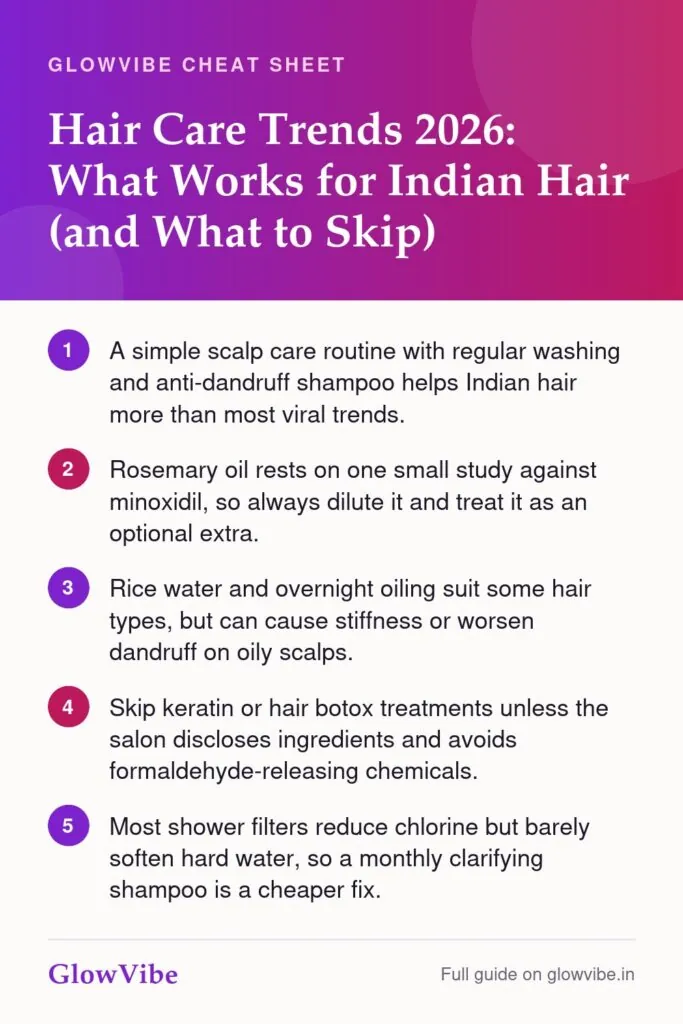
What it is: diluted rosemary essential oil, or a ready-made rosemary hair oil, massaged into the scalp. What the evidence says: the claim rests largely on one small 2015 trial of about 100 people with pattern hair loss. Rosemary oil and 2% minoxidil gave similar, modest improvements after six months, and rosemary caused less scalp itching. Encouraging, but it’s a single study with small gains.

So rosemary oil is not “natural minoxidil”. Minoxidil has decades of data behind it; rosemary has one promising trial. If you’re losing hair noticeably, read our hair loss treatments ranked by evidence before relying on an oil.
- Who it suits: mild thinning or general scalp care, if you are happy to be consistent for 4–6 months.
- Try it safely: never apply the essential oil neat. Mix a few drops into a tablespoon of coconut, almond or jojoba oil, patch test behind your ear for 48 hours, and use 2–3 times a week.
- Verdict: Try with care. For carrier oils that suit Indian hair, see our best hair oil for hair growth guide.
3. Rice water for hair
What it is: the starchy water left after soaking or boiling rice, often fermented for a day, used as a rinse. What the evidence says: very little human research exists. Rice starch may coat the hair and reduce friction, which explains the smoother feel. There’s no good proof that it makes hair grow faster.
- Who it suits: fine or limp hair that likes a bit of grip and body.
- Who should be careful: dry, coarse or tightly curled hair can feel stiff and brittle with frequent use; left too long on the scalp it can also smell sour and attract flakes in humid weather.
- Try it safely: use it once a week, leave it on for 10–20 minutes, rinse well and follow with conditioner.
- Verdict: Try with care.
4. Hair slugging and overnight oiling
What it is: coating your lengths in oil overnight, sometimes under a silk wrap. It’s basically the Sunday champi, renamed. What the evidence says: coconut oil is one of the few oils shown to penetrate the hair shaft and reduce protein loss during washing, which supports pre-wash oiling. Leaving oil on for 12 hours doesn’t add much over 1–2 hours, though.
- Who it suits: dry, frizzy, curly or chemically treated lengths.
- Who should be careful: oily or dandruff-prone scalps. Heavy oil left on the scalp overnight can feed the yeast linked with dandruff.
- Try it safely: focus oil on mid-lengths and ends, keep the scalp light, and wash it out properly the next morning.
- Verdict: Try with care. If you’d rather use a weekly mask, our DIY hair pack recipes cover the classics.
5. Bond builders
What it is: treatments such as Olaplex No.3 and the K18 Leave-In Molecular Repair Mask that aim to repair or protect the internal bonds broken by bleach, colour and chemical straightening. What the evidence says: independent studies are limited, but the chemistry is sound and colourists use bond builders widely during bleaching to reduce breakage.
- Who it suits: highlighted, bleached, rebonded or smoothened hair that snaps easily.
- Who doesn’t need it: healthy, untreated hair. A good conditioner does the job.
- Verdict: Worth it, but only for chemically treated hair. Buy from authorised sellers to avoid fakes.
6. Keratin treatments, “hair botox” and formaldehyde concerns
What it is: professional smoothing treatments sealed in with a flat iron. “Hair botox” contains no botox; it’s a marketing name for a conditioning or smoothing treatment. What the evidence says: many keratin treatments get their straightening effect from formaldehyde or chemicals that release it when heated. Formaldehyde is a known carcinogen and irritant, which is why regulators in several countries have restricted it. Some “formaldehyde-free” alternatives use glyoxylic acid, which has been linked to case reports of kidney problems.
In humid Indian cities these treatments are tempting because they tame frizz for months, but the fumes are a risk for you and the stylist.
- Try it safely (if you must): ask your stylist for the product name and full ingredient list, avoid anything listing formaldehyde, formalin or methylene glycol, and insist on good ventilation.
- Safer frizz control: leave-in conditioner, anti-humidity serum and a curl-friendly routine.
- Verdict: Skip unless your stylist can show you exactly what goes on your hair.
7. Skinification of hair: niacinamide, peptides and caffeine
What it is: skincare actives moved onto the scalp. In India you’ll see products like Minimalist Hair Growth Actives and The Ordinary Multi-Peptide Serum for Hair Density. What the evidence says: most data comes from small or brand-funded studies. None has minoxidil’s track record.
- Who it suits: people who want a leave-on scalp product that won’t feel heavy in humidity.
- Try it safely: patch test first, introduce one serum at a time, and give it at least three months before judging.
- Verdict: Try with care. Nice to have, not a substitute for medical treatment.
8. Heatless curls
What it is: setting slightly damp hair around a satin rod, robe belt, socks or braids overnight for waves without a curling iron. What the evidence says: no research needed for the main benefit. Skipping regular high heat means less dryness and breakage.
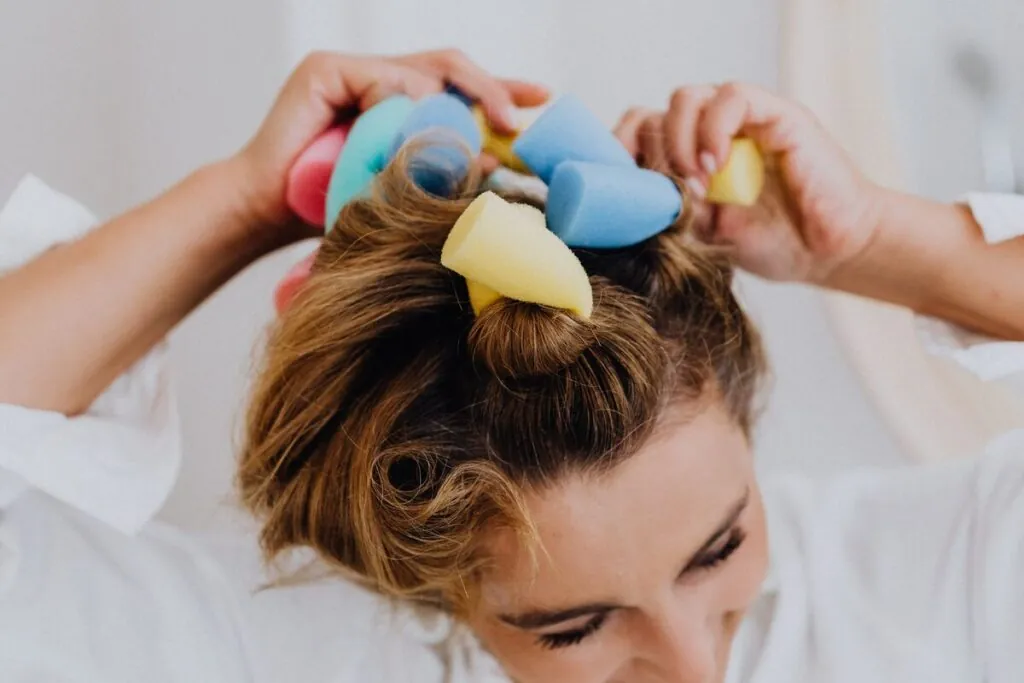
- Who it suits: straight and wavy hair. Curly hair already has its own pattern; see our curly hair products guide instead.
- Indian tip: in monsoon humidity, set with a light mousse or gel so the waves last past lunch.
- Verdict: Worth it.
9. Silk and satin pillowcases
What it is: swapping cotton pillowcases for smoother fabric. What the evidence says: there is little formal research, but less friction logically means less frizz, tangling and breakage at the nape, and many curly-haired users notice the difference.
Mulberry silk is the premium option; polyester satin gives most of the benefit at a budget price and is easier to wash. Verdict: Worth it, especially for curly, long or frizz-prone hair.
10. Co-washing and the “skip-wash” routine
What it is: co-washing means washing with conditioner instead of shampoo; skip-wash means stretching days between washes. What the evidence says: curly and coily hair loses moisture easily, so gentler cleansing helps. But the scalp still needs cleaning, and in Indian heat sweat and sebum build up fast.
- Who it suits: dry, curly or coily hair with a scalp that isn’t oily.
- Who should skip it: oily scalps, dandruff, people who oil heavily or sweat at the gym daily.
- Try it safely: alternate co-washes with a mild sulphate-free shampoo, and do a clarifying wash every 2–4 weeks.
- Verdict: Try with care.
11. Shower filters for hard water
What it is: a cartridge fitted to your shower head. What the evidence says: studies on hard water and hair are mixed. Most shower filters mainly reduce chlorine and some sediment. They remove only a little of the calcium and magnesium that make water “hard”, which needs a proper softener.
- Who it suits: people on chlorinated municipal water who notice dryness or a “squeaky” feel.
- Cheaper fixes for hard water: a clarifying or chelating shampoo every couple of weeks, a final rinse with diluted apple cider vinegar, and always conditioning.
- Verdict: Try with care. Change cartridges on schedule, or the filter stops doing anything.
How to choose trends by hair type
- Oily scalp, fine hair: scalp care, a light skinified serum, occasional rice water. Skip overnight scalp oiling and long skip-wash streaks.
- Dry, frizzy hair: pre-wash oiling on lengths, satin pillowcase, leave-in conditioner. Go easy on rice water.
- Curly or wavy hair: co-washing alternated with shampoo, satin pillowcase, slugging the ends.
- Coloured or chemically treated hair: bond builders, gentle washing, heatless styling.
- Thinning hair: rosemary oil or peptide serums as extras only; see a dermatologist for the main plan.
Whatever your type, the fundamentals in our natural hair care tips at home matter more than any single trend: a balanced diet, gentle handling and regular trims.
How to try a new trend safely
- Pick one trend at a time so you know what’s working.
- Patch test any oil, serum or DIY rinse behind your ear for 48 hours.
- Stick with it for 8–12 weeks (growth claims need 3–6 months).
- Stop if you get itching, redness, burning or extra shedding.
Common mistakes with viral hair care trends
- Stacking everything at once: rosemary oil, rice water and a new serum in the same week makes irritation hard to trace.
- Using essential oils undiluted: a common cause of scalp burns and contact allergy.
- Oiling a dandruff-prone scalp overnight: it often makes flakes worse.
- Trusting before-and-after reels: lighting and styling change more than a two-week routine.
- Delaying a doctor visit: sudden or patchy hair loss, a widening parting or a painful scalp needs a dermatologist or trichologist, not a trend.
Frequently Asked Questions
There is some evidence, but not much. One small trial found diluted rosemary oil gave results similar to 2% minoxidil after six months, with modest gains in both groups. Treat it as an optional extra, always dilute it, and see a dermatologist if hair loss is significant.
Once a week is enough for most people. Leave it on for 10–20 minutes, rinse thoroughly and condition.
Largely, yes. Slugging is overnight oiling of the lengths, often under a silk wrap, while traditional champi also massages oil into the scalp. If your scalp is oily or flaky, oil the lengths only and wash within a few hours.
Wash often enough to clear sweat and oil (every 2–3 days for oily scalps), use an anti-dandruff shampoo if you flake, and exfoliate gently no more than once a week.
It depends on the formula. Many keratin treatments release formaldehyde when heated, which is a health risk for you and the stylist. Ask for the full ingredient list, avoid formaldehyde, formalin and methylene glycol, and skip the treatment if your stylist can’t tell you.
Most shower filters reduce chlorine but remove little of the calcium and magnesium in hard water, so don’t expect them to stop hair fall. A monthly clarifying shampoo and regular conditioning help with the dull, rough feel.
Quick poll
What is your biggest hair concern?
The bottom line
The hair care trends that last are the boring, sensible ones: a clean, healthy scalp, less heat, less friction and repair for hair that has been chemically treated. Rosemary oil, rice water and slugging can be pleasant extras if you match them to your hair type and Indian weather. Pick one, test it properly and give it time before you move on to the next viral trend.