Medium Haircut Ideas (2026): 7 Cuts for Every Face and Hair Type
Seven medium-length haircuts, from the layered lob to curtain bangs, with who each suits, what to ask your stylist and how to keep it looking good in Indian weather.


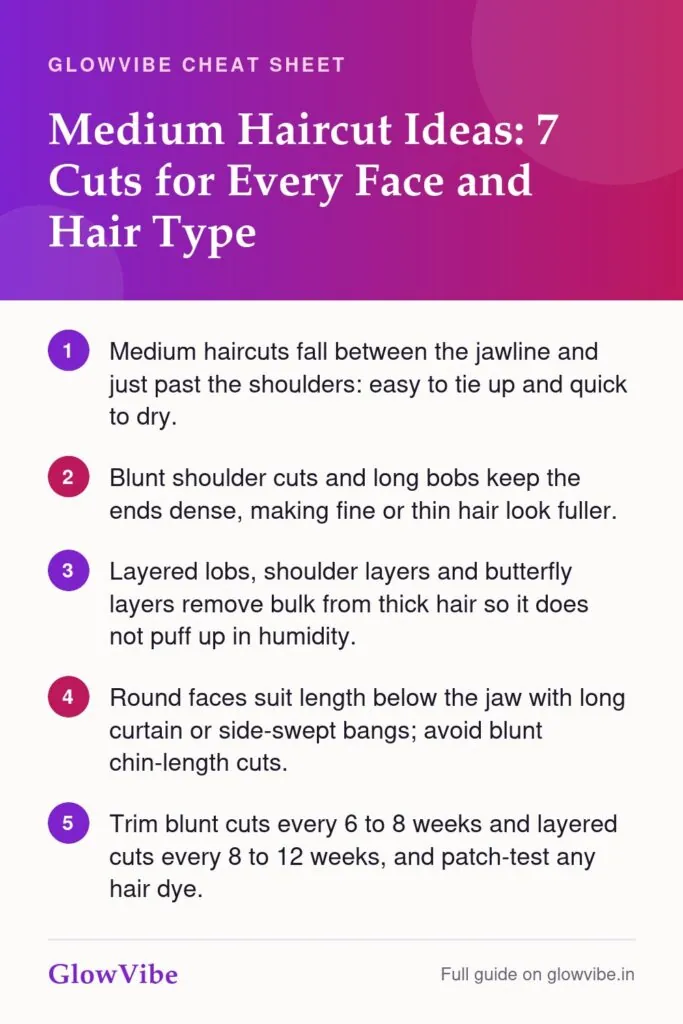
A medium haircut sits anywhere between your jawline and just past your shoulders, and it is the easiest length to wear well: long enough to tie up, short enough to dry quickly. The best medium-length haircuts right now are the layered lob, shoulder-length layers, the blunt shoulder cut, the shag, curtain bangs and the long bob with face-framing pieces.
Below you will find what each cut looks like, who it suits, how much upkeep it needs, what to tell your stylist, and how Indian humidity and hard water change the way it behaves.
Top medium haircut ideas at a glance
- Layered lob: the safest all-rounder for thick or wavy hair that needs lightness.
- Shoulder-length layers: soft movement without losing too much weight.
- Blunt shoulder cut: makes fine or thin hair look fuller and neater.
- Medium shag: lots of texture for wavy and curly hair.
- Curtain bangs with medium hair: the gentlest way to try a fringe.
- Face-framing long bob: polished, office-friendly and easy to grow out.
- Butterfly or feathered layers: a bouncy blow-dry look for thick, long-medium hair.
Comparison table: which medium cut suits you?
| Haircut | Best hair type | Best face shapes | Upkeep | Daily styling time |
|---|---|---|---|---|
| Layered lob | Thick, wavy, straight | Round, square, oval | Trim every 8–10 weeks | Low |
| Shoulder-length layers | Medium to thick, straight or wavy | Most face shapes | Trim every 8–10 weeks | Low to medium |
| Blunt shoulder cut | Fine, thin, straight | Oval, heart, long | Trim every 6–8 weeks | Low |
| Medium shag | Wavy, curly, thick | Oval, heart, square | Trim every 8–12 weeks | Low (air-dry friendly) |
| Curtain bangs + medium hair | Straight to wavy | Square, long, heart, oval | Fringe trim every 4–6 weeks | Medium |
| Face-framing long bob | Straight, fine to medium | Round, oval, square | Trim every 6–8 weeks | Medium |
| Butterfly layers | Thick, straight or wavy | Oval, long, heart | Trim every 8–10 weeks | Medium to high |
1. The layered lob
A lob (long bob) usually ends between the chin and the collarbone. Adding long, invisible layers takes bulk out of the ends so the hair swings instead of sitting like a triangle.
- Who it suits: thick, straight or wavy hair; round and square faces when the length falls below the jaw.
- Ask your stylist for: “a collarbone-length lob with long internal layers, not choppy ones.”
- How to style: rough-dry, then flip the ends out with a round brush or a flat iron.
Pros
- Works for office, college and weddings.
- Grows out gracefully into a shoulder cut.
Cons
- Very fine hair can look thin if too many layers are taken out.
2. Shoulder-length layered haircut
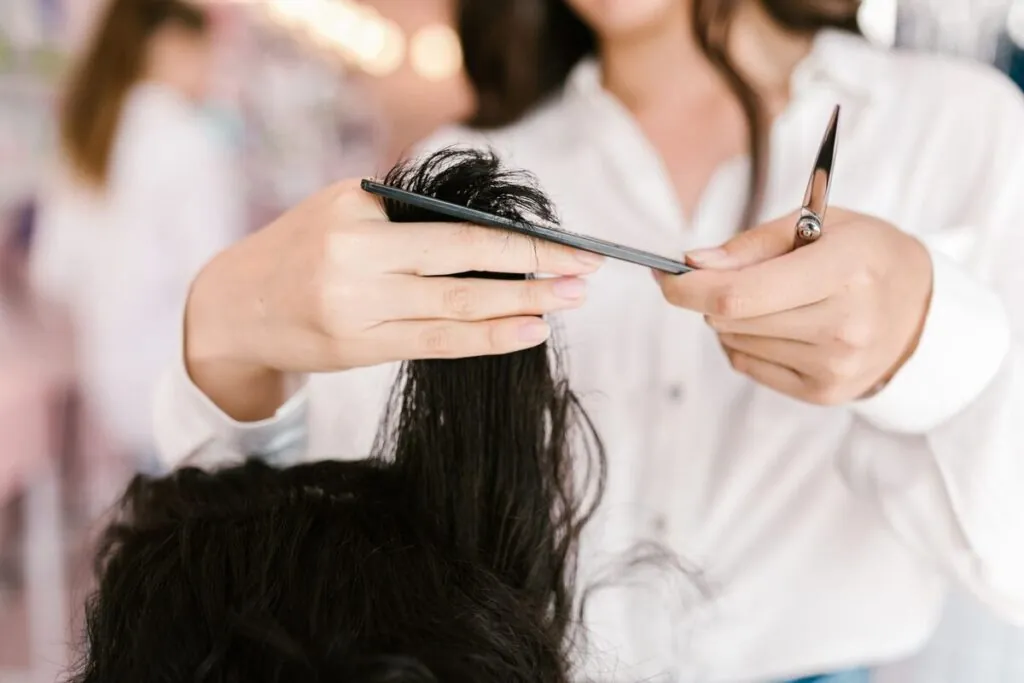
This is the classic medium haircut, and it stays popular for good reason. The length rests on or just past the shoulders, with layers starting around the chin or cheekbones to add movement and frame the face.
- Who it suits: almost everyone with medium to thick hair; especially good for oval and round faces.
- Ask your stylist for: “soft layers starting at the chin, keep the perimeter full.”
- How to style: blow-dry with a round brush for bounce, or scrunch in a light mousse if your hair has a natural wave.
Pros
- Gives volume at the crown without heavy styling.
- Easy to tie into a ponytail or bun on hot days.
Cons
- Short top layers can frizz in monsoon humidity.
- Needs regular trims to keep the shape crisp.
3. The blunt shoulder cut
A blunt cut has one even line at the ends with few or no layers. Because all the hair ends at the same point, the bottom looks thick and healthy, which is why stylists often suggest it for fine or thinning hair.
- Who it suits: fine, thin or straight hair; oval, heart and long faces.
- Ask your stylist for: “a blunt line at shoulder length, minimal layering, no thinning scissors.”
- How to style: a quick blow-dry with a paddle brush and a drop of serum on the ends. If you want help choosing gentle products for this hair type, see our guide to the best organic hair care products for fine hair.
Pros
- Instantly makes thin hair look denser.
- Very low effort day to day.
Cons
- Shows split ends quickly, so trims are more frequent.
- Can look heavy and flat on very thick hair.
4. The medium shag
A shag uses lots of short and medium layers all over the head, with extra texture around the crown and face. It is designed to look a little undone, which makes it ideal if you prefer to air-dry.
- Who it suits: wavy and curly hair, and thick straight hair that wants lift.
- Ask your stylist for: “a medium shag with layers cut to my natural wave; please cut curls dry if possible.”
- How to style: apply a curl cream or Leave-in conditionerA light conditioner you do not rinse out. It helps with detangling, frizz and moisture, especially for curly or dry hair.See glossaryRead the guide on damp hair, scrunch, and let it air-dry or diffuse on low heat. Our roundup of the best curly hair products in India can help you build the routine.
Pros
- Brings out natural waves and curls.
- Looks better a few days after washing, not worse.
Cons
- Not ideal for very fine, straight hair.
- Growing out short top layers takes patience.
5. Medium hair with curtain bangs
Curtain bangs are longer fringe pieces parted in the middle and swept to each side, framing the eyes and cheekbones. They blend into the rest of the cut, so they feel far less risky than a full fringe.

- Who it suits: straight to wavy hair; square, long and heart-shaped faces. Round faces do well when the bangs fall below the cheekbones.
- Ask your stylist for: “curtain bangs that hit my cheekbones and blend into face-framing layers.”
- How to style: blow-dry the fringe with a small round brush, rolling each side away from the face.
Other fringe options
- Wispy bangs: light and see-through, good for fine hair.
- Blunt bangs: bold and graphic, best on straight hair with no strong cowlick.
- Side-swept bangs: easy to pin back, flattering on round faces.
Pros
- Changes your look without losing length.
- Easy to grow out into face-framing layers.
Cons
- Gets oily and sweaty in summer and needs daily touch-ups.
- Cowlicks at the hairline can make bangs hard to control.
6. Face-framing long bob
This is a sleek long bob, often with a middle or deep side parting, with a few longer front pieces that angle towards the chin. It looks polished with minimal effort.
- Who it suits: straight, fine to medium hair; round faces benefit from front pieces that fall below the chin.
- Ask your stylist for: “a long bob, slightly longer in front, with face-framing pieces from the chin down.”
- How to style: smooth with a flat iron or blow-dry with a paddle brush, then tuck one side behind the ear. For festive looks, try the ideas in our post on saree hairstyles for Diwali and weddings.
Pros
- Looks neat even on rushed mornings.
- The angle flatters the jawline.
Cons
- Slightly too short for a full bun.
- Needs a trim every 6–8 weeks to keep the angle sharp.
7. Butterfly or feathered layers
Butterfly layers combine shorter face-framing layers with longer ones underneath, so when you blow it out the hair looks voluminous and bouncy, like a salon blow-dry.
- Who it suits: thick, straight or wavy hair, and oval, long or heart faces.
- Ask your stylist for: “butterfly layers with the shortest pieces at my cheekbones, length kept below the shoulders.”
- How to style: large round brush or hot-air brush, then set the front sections with velcro rollers for ten minutes.
Pros
- Big, glamorous volume.
- Can be worn straight or with loose waves.
Cons
- Looks best when styled, so it needs more daily effort.
- Frizzes easily if air-dried in humid weather.
How to choose a medium haircut for your face shape
Face shape is a guide, not a rule, but it helps you decide where the volume and the shortest layers should sit.
- Round face: choose length below the jaw, long side-swept or curtain bangs, and layers that start below the chin. Avoid chin-length blunt cuts that add width.
- Oval face: most medium cuts work; experiment with shags, blunt cuts or fringes.
- Square face: soft layers, waves and curtain bangs soften a strong jawline. Avoid a very blunt line right at the jaw.
- Heart face: keep volume around the chin and lower half, such as a lob with fuller ends or a shoulder cut with waves.
Choosing by hair type and Indian weather
Your hair texture and the climate you live in matter as much as your face shape.
- Fine or thin hair: blunt cuts and long bobs keep the ends dense. Avoid heavy thinning or razor cutting.
- Thick hair: layered lobs, shoulder layers and butterfly layers remove bulk so the cut does not puff up in humidity.
- Wavy or curly hair: shags and long layers cut to your curl pattern work best. Ask for dry cutting or a stylist familiar with curls.
- Humid coastal cities: choose cuts that look good air-dried, and keep short top layers to a minimum to reduce frizz.
- Hard water areas: mineral build-up can make ends rough and dull, which shows more on blunt cuts. Use a clarifying wash every week or two and a good conditioner; a shower filter can also help.
Hair colour ideas for medium haircuts
Colour can make a medium cut look completely new. On dark Indian hair, warm shades usually blend more naturally than very ashy or icy tones, which need heavy bleaching and toning.
- Caramel or honey balayage: shows off layers and movement.
- Chocolate and chestnut brown: subtle, low-maintenance and good for first-timers.
- Face-framing highlights: brighten the face without colouring the whole head.
- Burgundy or plum tones: a richer shade that suits many Indian skin tones.
Always do a Patch testTrying a small amount of a new product behind the ear or on the inner arm for a few days to check for a reaction before using it widely.See glossary 48 hours before any dye, even a brand you have used before, and see a dermatologist if you get itching, redness or swelling. For shade ideas suited to Indian skin, read our guide to the best hair colour for women in India.
How to maintain and style your medium haircut at home
- Wash with a gentle shampoo two to three times a week; daily washing can dry out your ends.
- Condition the mid-lengths and ends every wash, and use a leave-in or light serum to control frizz.
- Apply a Heat protectantA spray, cream or serum applied before blow-drying, straightening or curling to reduce heat damage to the hair.See glossary before blow-drying, straightening or curling.
- Dry with intent: rough-dry to about 80 percent, then use a brush only for the final shaping.
- Sleep on a satin or silk pillowcase, or tie hair in a loose scrunchie, to reduce friction and morning frizz.
- Book trims on time: every 6–8 weeks for blunt cuts and bobs, 8–12 weeks for layered and shag cuts.
Healthy hair makes every cut look better. Our natural hair care tips at home cover oiling, washing and diet basics that support your new style.
Common mistakes with medium-length hair
- Asking for “layers” without a photo: bring two or three reference photos of hair with a texture like yours.
- Over-thinning thick hair: it can make ends wispy and more prone to frizz. Ask for long internal layers instead.
- Skipping trims while growing hair out: small, regular trims keep the shape and stop split ends from travelling up.
- Cutting curly hair wet and straight: curls shrink, so the final length can end up much shorter than planned.
If you notice sudden hair thinning, patchy hair loss or a lot of breakage, a new haircut will only hide it. See a dermatologist or trichologist to find the cause.
Frequently Asked Questions
Layered lobs, shoulder-length layers and curtain bangs with medium hair are classic, widely worn medium cuts. They suit many face shapes and hair types and need little styling. The best choice for you still depends on your hair texture and routine.
Choose length that falls below the jaw, with layers starting below the chin and long side-swept or curtain bangs. These create vertical lines that make the face look slightly longer. Avoid blunt cuts that end right at the chin.
Yes. A blunt shoulder cut or long bob keeps the ends thick, so fine hair looks fuller. Avoid heavy layering and thinning scissors, which remove the little density you have.
Blunt cuts and bobs look best with a trim every 6 to 8 weeks, while layered cuts and shags can usually go 8 to 12 weeks. If you are growing your hair out, a light dusting of the ends every couple of months keeps it healthy.
Yes, curtain bangs pair well with almost any medium cut and are an easy first fringe. They blend into face-framing layers, so growing them out is simple. Expect to restyle them daily and trim them every 4 to 6 weeks.
Cuts that look good air-dried, such as a layered lob, a medium shag on wavy hair or long, soft layers, handle humidity best. Avoid very short top layers, which tend to frizz. A leave-in conditioner and anti-frizz serum help seal the hair.
Quick poll
How often do you wash your hair?
Find your medium cut
A medium haircut gives you the freedom of short hair with the versatility of long hair. Start with your hair texture, then your face shape, and finally how much time you genuinely want to spend styling each morning.
Take reference photos, talk through upkeep with your stylist, and care for your ends between trims. For a wider look at what is worth trying this year, read our take on hair care trends for Indian hair.