Curly Hairstyles for Boys: Easy Cuts and Gentle Curl Care
Easy curly haircuts for boys, from the curly crop to the taper, plus a gentle, tear-free curl care routine and child-safe product tips for Indian weather.

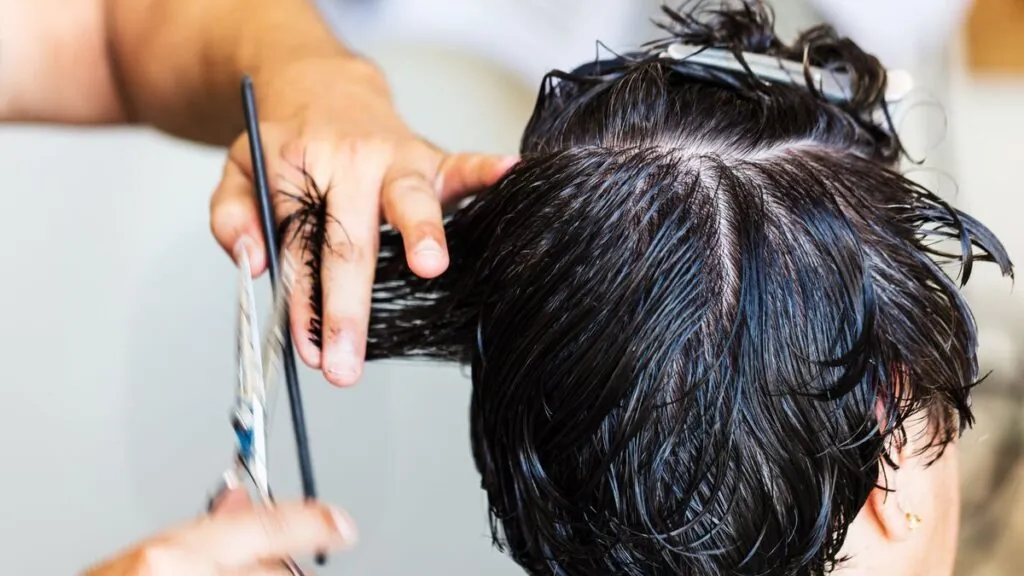
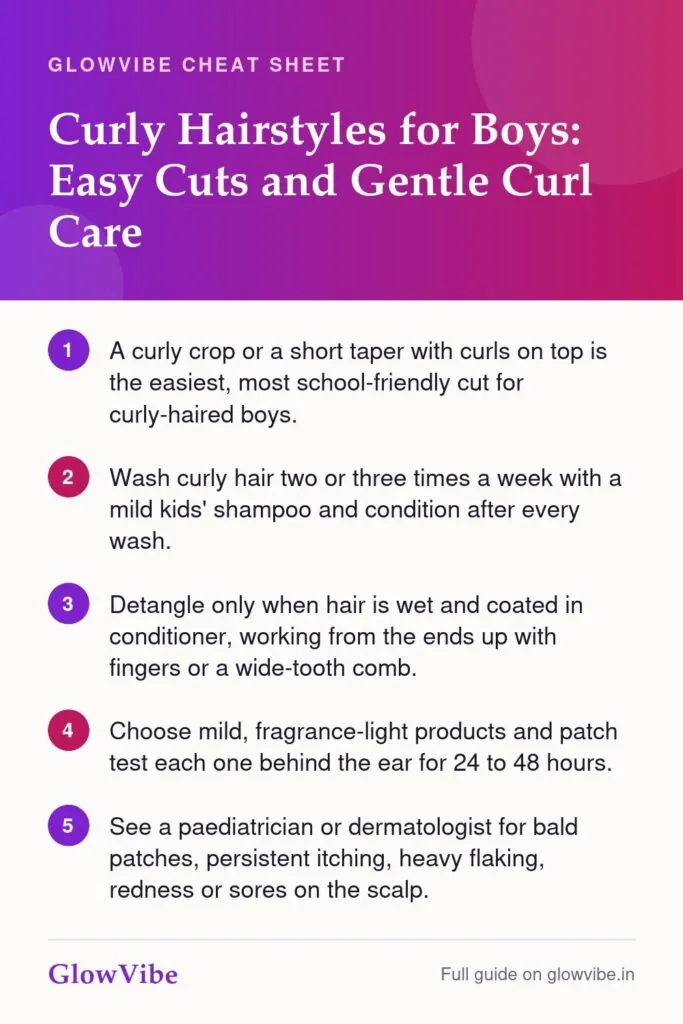
The best curly hairstyles for boys are short-to-medium cuts that keep the curls on top and tidy the sides, such as a curly crop, a short taper with curls on top or a rounded natural cut. Pair the cut with gentle care: wash two or three times a week with a mild shampoo, condition every time and detangle only when the hair is wet and slippery.
If your son’s curls turn into a frizzy, knotty mess by evening, or every comb-out ends in tears, you are not doing anything wrong. Curly hair simply needs a different approach from straight hair. This guide covers easy cuts to ask the barber for, a simple routine for Indian weather, child-safe product tips and styles that grow with him into his teens.
Quick answer: easy curly haircuts for boys
- Curly crop: short all over with a little length on top. The lowest-maintenance option for toddlers and school-going boys.
- Short taper with curls on top: sides gradually shorter, curls left loose on top. Neat enough for school, still shows off the texture.
- Rounded natural cut: even length shaped into a soft round. Best for tight curls and coils.
- Medium curly mop: longer, layered curls for loose waves and curls. Looks great but needs more detangling.
- Curly fringe: curls brought forward over the forehead. Popular with tweens and teens.
Curly haircuts for boys compared
| Cut | Best for | Daily effort | Trim every | Ask the barber for |
|---|---|---|---|---|
| Curly crop | Toddlers, all curl types | Very low | 4–6 weeks | “Short all over, a bit longer on top, cut dry if possible” |
| Short taper, curls on top | School-age boys, wavy to tight curls | Low | 3–5 weeks | “Low or mid taper on the sides, leave the top curly” |
| Rounded natural cut | Tight curls and coils | Low to medium | 6–8 weeks | “Even shape all round, just tidy the outline” |
| Medium curly mop | Loose curls, older kids | Medium to high | 6–8 weeks | “Light layers to remove bulk, keep length” |
| Curly fringe | Tweens and teens | Medium | 4–6 weeks | “Shorter sides, curls on top falling forward” |
Understanding your boy’s curl type
Before picking a cut, look at his hair when it is clean and drying naturally. Loose S-shaped waves, springy ringlets and tight coils all behave differently. Many Indian children have wavy or loosely curly hair, while children of African or mixed heritage often have tighter curls and coils.
Curl pattern often changes as children grow. Baby curls can loosen, tighten or appear for the first time between ages two and seven, and hormones can change the texture again in the teen years. So treat today’s routine as a starting point, not a permanent rule.
- Wavy to loose curls: tangle less, frizz more in humidity, get weighed down by heavy creams.
- Springy curls: shrink a lot when dry, knot at the back of the head, need regular conditioning.
- Tight curls and coils: the driest type, fragile when combed dry, do best with fewer washes and more moisture.
Easy curly hairstyles for boys, in detail
1. The curly crop
This is the cut most parents end up loving. Keeping the hair short means fewer tangles, quicker drying after a bath and less sweat-trapping in an Indian summer. A little extra length on top stops it looking like a buzz cut and lets the curls show.
- Pros: almost no styling, suits babies and toddlers, great for swimming and sports.
- Cons: needs regular trims to keep its shape.
2. Short taper with curls on top
The sides and back are cut gradually shorter towards the neck while the top stays curly. It looks smart with a school uniform and grows out gracefully. Ask for scissors or a longer clipper guard on younger boys, who may find a close fade scratchy.
- Pros: neat, school-friendly, works on most curl types.
- Cons: sides lose their crisp shape within a few weeks.
3. Rounded natural cut
For tight curls and coils, an even, rounded shape is often the healthiest and easiest choice. The barber shapes the hair while it is dry, so the outline matches how it actually sits. Keep it short for little ones and let it grow fuller as he gets older and can sit through detangling.
- Pros: respects natural texture, low daily effort, no heat needed.
- Cons: needs a barber who knows how to cut tight curls.
4. Medium curly mop
Longer curls with light layers look playful and full. This is best for boys with loose curls who don’t mind a few minutes of detangling after each wash. Light layering removes bulk so the curls don’t form a triangle shape.
- Pros: shows off the curls, very forgiving between trims.
- Cons: more tangles, slower drying, can feel hot in summer.
5. Curly fringe
Shorter sides with curls on top falling forward is a favourite among tweens. Keep the fringe above the eyebrows so it doesn’t poke his eyes or get pushed back with sweaty hands all day.
- Pros: trendy, easy to restyle with damp fingers.
- Cons: the fringe grows into his eyes quickly, so trims are frequent.
Styles that grow with him into his teens
Around 11 to 14, many boys start wanting a say in their hair. Give them that choice, and simply guide them towards cuts that suit their curls. Older boys can handle fuller looks like a longer rounded cut or an afro, longer curly tops and a more defined taper, because they can manage a few minutes of care themselves.

This is also the age when sweat, oily scalp and the occasional pimple along the hairline show up, so washing frequency may need to go up after sports. A light cream or gel can replace the “just wet it” approach. Our guide to hair styling creams for men is a useful next step once he is in his mid-teens. Until then, keep heat tools, straightening treatments and chemical relaxers off his hair.
Gentle curl care: choosing child-safe products
A child’s scalp is more sensitive than an adult’s, so less is more. You need only three things for most boys: a mild shampoo, a conditioner and, for drier curls, a little Leave-in conditionerA light conditioner you do not rinse out. It helps with detangling, frizz and moisture, especially for curly or dry hair.See glossaryRead the guide or oil.
- Shampoo: choose a mild, tear-free formula made for babies or children, such as Johnson’s Baby Shampoo or Himalaya Gentle Baby Shampoo. Fragrance-freeA product with no added perfume or essential oils for scent. Often the safer pick for sensitive or reactive skin. "Unscented" can still contain masking fragrance.See glossary or lightly scented is best.
- Conditioner: a simple, gentle conditioner makes detangling far easier. Rinse it out well for wavy hair, and leave a little in for tight curls.
- Moisture: a few drops of plain Coconut oilA common Indian hair oil that can soak into the hair shaft, which may reduce protein loss during washing. It can feel heavy on fine hair.See glossary or a light leave-in cream on the lengths, not the scalp, for dry curls.
- Skip: strong fragrance, essential-oil blends, heavy gels on young children, dry shampoo, and any adult “treatment” product.
Patch testTrying a small amount of a new product behind the ear or on the inner arm for a few days to check for a reaction before using it widely.See glossary every new product. Dab a little behind his ear or on the inner arm and wait 24–48 hours. If you see redness, itching or bumps, stop using it. See a paediatrician or dermatologist for a scalp that stays itchy, flaky or red, patchy hair loss, or sores. These need a proper check, not a new shampoo.
For teens who are ready for curl-specific products, our roundup of the best curly hair products in India and our guide to hair creams for curly hair explain what each product type does.
How to choose for Indian weather and water
- Humid cities (Mumbai, Chennai, Kolkata, monsoon anywhere): curls frizz and puff. Shorter cuts and a light leave-in work better than going bare.
- Hot, dry summers (north India): curls get dry and tangle more. Keep the cut short and condition after every wash. Our summer hair care tips help here.
- Hard water: leaves curls rough and dull. A final rinse with filtered or stored RO water and regular conditioning help.
- Swimming: wet his hair with clean water before the pool, and rinse and condition straight after to reduce chlorine dryness.
A simple curly hair routine for boys
- Wash two or three times a week with a mild shampoo, focusing on the scalp. Wash more often only after heavy sweat or swimming.
- Condition every wash. Smooth it through the lengths and leave it on for a minute or two.
- Detangle while the conditioner is in, using fingers or a wide-tooth comb, starting at the ends and working up.
- Rinse and pat dry with a soft cotton T-shirt or microfibre towel. Don’t rub.
- Add moisture if needed: a pea-sized amount of leave-in or a drop of oil on the lengths of dry curls.
- Air-dry, and don’t brush once dry. On non-wash days, mist with water and scrunch to refresh.
- At night, a cotton or satin pillowcase reduces frizz and knots for longer curls.
Make it fun for younger children: let him pick a special comb, sing a song while you detangle, or let him “help” scrunch. A calm 5-minute routine works far better than a rushed battle. For more home-care ideas, see our natural hair care tips at home.
Common mistakes parents make with curly hair
- Brushing dry curls: it causes frizz, breakage and tears. Detangle only when wet and conditioned.
- Daily shampooing: strips the natural oils curls need. Rinse with water on in-between days if he is sweaty.
- Heavy oiling of the scalp: it can trap sweat and dust in hot weather. Oil the lengths lightly instead.
- Thinning or razoring curls: heavy thinning shears can leave curls frizzy and uneven. Ask for light layering instead.
- Tight styles and pulling: very tight braids, rubber bands or constant pulling can stress the scalp. Keep any protective style loose and comfortable.
- Using adult products: strong fragrance and actives meant for grown-ups can irritate a child’s scalp.
Frequently Asked Questions
For most boys, a short taper with curls on top or a curly crop is the easiest choice. Both keep tangles down, stay neat for school and still show off his texture. Tight curls and coils often look best in a rounded natural cut.
Two or three times a week suits most children, with a water-only rinse on sweaty days. Tight curls and coils may need even fewer washes. Always follow shampoo with conditioner.
Detangle only when the hair is wet and coated in conditioner. Work in small sections with your fingers or a wide-tooth comb, starting at the ends and moving up. Holding the hair above the knot as you comb stops it from pulling on his scalp.
For young children, stick to mild baby or kids’ shampoos and a gentle conditioner. Older children and teens can try simple, fragrance-light curl creams or leave-ins. Always patch test first and stop if you see redness or itching.
Often, yes. Curl patterns can loosen, tighten or appear during early childhood and again in the teen years. Adjust his routine and cut as his hair changes.
A few drops of plain coconut oil on the lengths can soften dry curls and reduce tangles. Avoid heavy scalp oiling in hot, humid weather, and patch test even natural oils. Skip essential-oil blends for young children.
See a paediatrician or dermatologist if you notice round bald patches, heavy flaking, persistent itching, redness, sores or sudden hair loss. These can have causes that need diagnosis and treatment rather than a change of shampoo.
Quick poll
What is your biggest hair concern?
Keep it simple and let the curls be curls
Curly hair on a little boy is easy to manage once you stop fighting it. Pick a cut that matches his curl type and your morning schedule, wash gently, condition every time and detangle only when wet. As he grows, let him try fuller styles while you keep the products mild and patch tested.