Blue Hair Dye Colors: Shades, Bleaching, Fading & Care (2026)
An honest guide to blue hair dye colors on Indian hair: which shades need bleach, the types of blue dye, safe home application and how to stop blue fading.

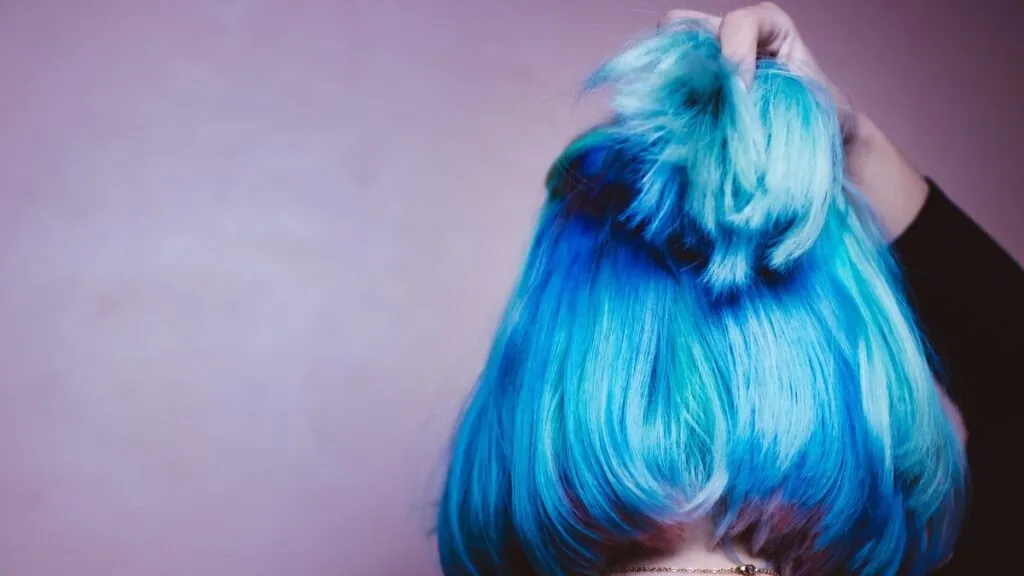
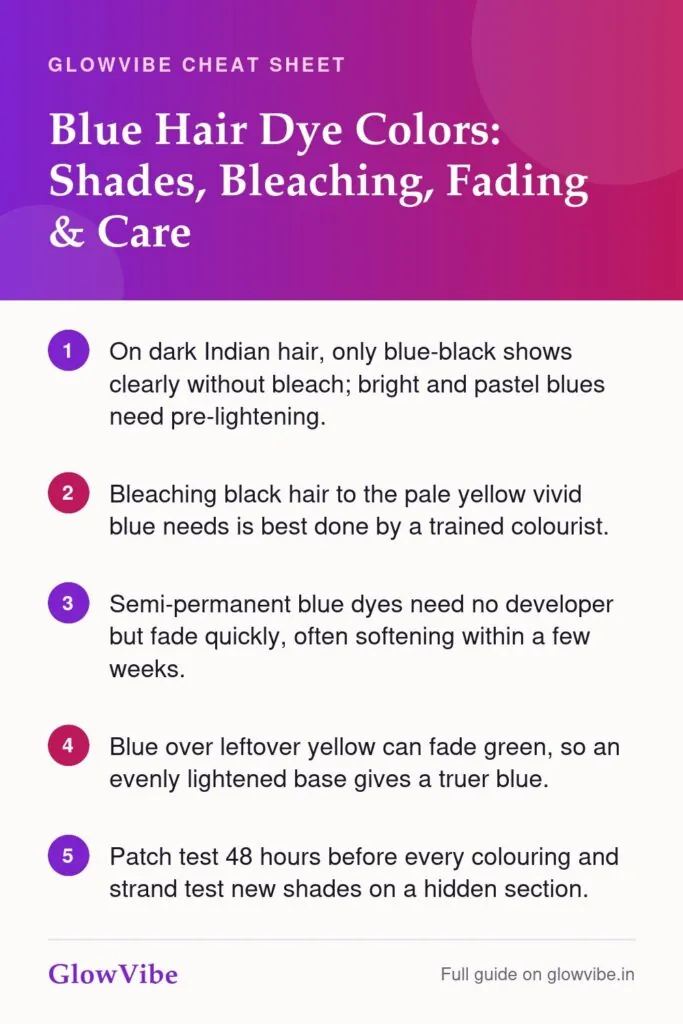
Blue hair dye comes in shades from soft pastel ice blue to electric royal blue, deep navy, teal and blue-black, and the shade you can actually get depends mostly on how light your hair is before you start. On naturally dark Indian hair, only blue-black and a faint navy tint show up without bleach; every bright or pastel blue needs the hair pre-lightened first.
This guide is honest about that. It walks you through the main blue shades, the types of blue dye (semi-permanent, permanent and temporary), what bleaching involves and why a professional is the safer choice for it, how to apply semi-permanent blue at home, and how to slow the fading that blue is famous for.
Quick answer: what you need to know about blue hair dye
- Dark hair, no bleach: blue-black (permanent or indigo-based) is the only shade that shows clearly. Semi-permanent blues give at most a subtle sheen in sunlight.
- Navy, teal or denim blue: hair usually needs lifting to a golden-yellow stage.
- Electric or royal blue: needs a clean, even yellow base.
- Pastel or ice blue: needs very pale, almost white-yellow hair, which takes the most bleaching and the most damage.
- Fading: blue is one of the fastest-fading vivid colours. Expect semi-permanent blue to soften noticeably within a few weeks of regular washing.
- Safety: Patch testTrying a small amount of a new product behind the ear or on the inner arm for a few days to check for a reaction before using it widely.See glossary every dye 48 hours before use, strand test on a hidden section, and leave bleaching to a trained colourist.
Blue hair dye colours compared
Use this table to match the blue you want to the starting point it needs. “Lift” means how much the hair has to be lightened before the blue goes on.
| Shade | Looks like | Bleach needed on dark Indian hair | How it fades | Best for |
|---|---|---|---|---|
| Blue-black | Black with a blue shine in light | None | Slowly, towards natural black | Office-friendly, first-timers |
| Navy / midnight blue | Deep, inky blue | Moderate (to golden-yellow) | Towards denim, then teal-grey | A rich look that stays wearable |
| Denim blue | Slightly greyed, muted blue | Moderate to high | Towards soft grey-blue | Subtle colour, balayage ends |
| Teal / turquoise | Blue-green | Moderate to high | Towards mint or green | Warm and olive skin tones |
| Electric / royal blue | Bright, saturated blue | High (even yellow) | Towards sky blue, sometimes green | Bold statement colour |
| Pastel / ice blue | Soft, icy, almost silver-blue | Very high (pale yellow) | Very fast, often within a few washes | Already-light or professionally lightened hair |
Choosing the right blue shade for you
Start with your natural colour, not the photo on the box. Most Indian hair is naturally very dark brown to black, and dye only adds colour on top of what is already there. A blue on black hair is like painting blue ink on a black page: you will barely see it.
Skin tone matters too. Teal and turquoise tend to flatter warm and olive skin, deep navy and blue-black suit almost everyone, and icy pastels can make some medium-to-deep skin tones look dull unless the shade is warmed slightly. If you want to explore conventional shades as well, our guides to the best hair colour for women in India and the best hair colour for men cover how undertones work on brown skin.
Think about your work and lifestyle. Peekaboo blue under the top layer, blue ends or a blue streak near the face give you the colour with less bleaching, lower upkeep and an easy way to hide it when you need to.
Types of blue hair dye
Blue dyes fall into three groups, and they behave very differently on dark hair.
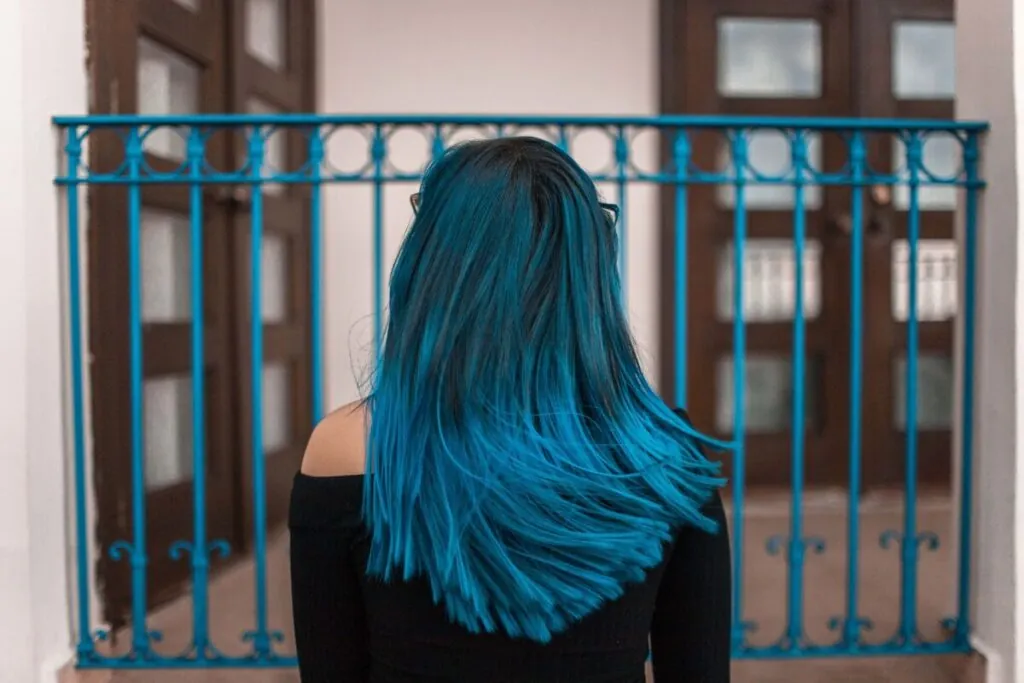
Semi-permanent blue hair dye
Semi-permanent vivid dyes are “direct” dyes: they come ready to use, need no developer and simply coat and stain the outer layer of the hair. Most are cream or conditioner-like, which is why they feel gentler than permanent colour. They only show properly on pre-lightened hair.
Well-known ranges sold in India through beauty sites and salons include Manic Panic (blues such as Shocking Blue, Atomic Turquoise and After Midnight), Arctic Fox (Poseidon and Aquamarine) and Directions by La Riche (several blues and turquoises). Salons often use professional vivid lines such as Pravana ChromaSilk Vivids.
- Pros: no developer, bright results on light hair, easy to mix and dilute, can be refreshed often.
- Cons: almost invisible on unbleached dark hair, fades quickly, can stain skin, towels and pillowcases.
Permanent blue and blue-black dye
Permanent (oxidative) colour is mixed with developer and works inside the hair shaft. In blue, it is mostly sold as blue-black, which can be applied straight on dark hair. It cannot lift black hair to a bright blue; the developer in a box dye simply cannot lighten that far.
- Pros: no bleach needed for blue-black, lasts until it grows out, good grey coverage.
- Cons: the blue tone is subtle, permanent dyes carry a higher allergy risk, and dark colour is hard to remove later if you want to go lighter.
Prefer a plant-based route? Indigo applied after Henna (mehendi)A plant dye that stains hair reddish-brown and coats strands for a glossy feel. Pure henna is different from "black henna", which can contain harsh dyes.See glossaryRead the guide gives a natural blue-black. Our guide to natural hair dyes you can use at home explains the two-step method. Just know that henna makes future bleaching harder and less predictable, so tell your colourist if you have used it.
Temporary blue colour
Colour sprays, hair chalks and colour waxes sit on the surface and wash out in one or two shampoos. On dark hair they look more like a tint than true blue, but they are perfect for a festival, concert or a one-night trial before you commit.
Can you get blue hair without bleach? The honest answer
For a vivid, visible blue on dark Indian hair, no. You need to lighten the hair first, and that means bleach (lightener). Products labelled “for dark hair” can add a blue sheen in strong sunlight, but indoors your hair will still look black or dark brown.
Bleaching black hair to the pale yellow that electric or pastel blue needs is a big chemical job. It often takes more than one session, the hair passes through red and orange stages along the way, and uneven lifting shows up later as patchy blue. Leaving lightener on too long or overlapping it on already-bleached lengths can cause breakage, and lightener on the scalp can irritate or burn.
That is why we strongly suggest getting the lightening done by a trained colourist. A good salon will check your hair’s history, use bond-protecting additives, apply lightener evenly, tone out unwanted orange and stop before the hair is over-processed. You can then maintain the blue yourself at home.
One colour-theory point helps you understand the results: blue on leftover yellow can turn greenish, and blue on orange can turn muddy or brownish. The cleaner and more even the lightened base, the truer your blue will be.
How to apply semi-permanent blue dye at home
Once your hair has been lightened (or if it is already light), applying semi-permanent blue is a manageable home job. Give yourself time and protect everything around you, because blue stains.
- Patch test 48 hours before. Dab a little dye behind your ear or on your inner elbow and leave it as the pack directs. Skip the dye if you get itching, redness or swelling.
- Strand test. Colour a small hidden section from the nape to check the shade and how long to leave it on.
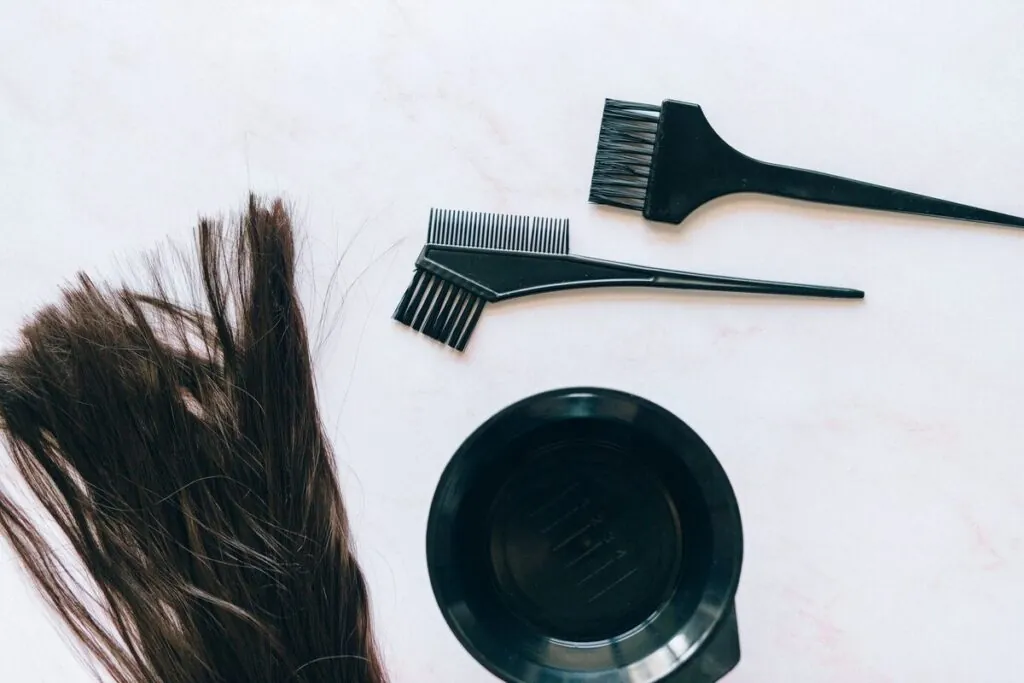
- Prep the space. Wear an old T-shirt, use old towels, cover the sink and floor, and keep gloves, a bowl, a tint brush, clips and a wide-tooth comb ready.
- Protect your skin. Apply petroleum jelly or a thick cream along your hairline, ears and neck.
- Start with clean, dry hair. Wash with a plain shampoo, skip conditioner, and dry fully unless the brand says otherwise.
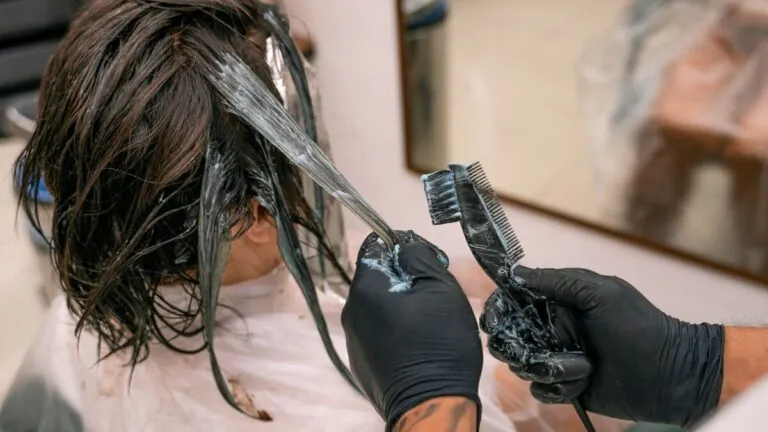
- Section and saturate. Divide hair into four parts, then apply in thin sections, coating every strand fully. Patchy application is the main reason for patchy blue.
- Process. Leave on for the time the brand recommends. Covering with a shower cap keeps it moist and stops drips.
- Rinse with cool water until it runs mostly clear, then condition. Avoid shampoo for the first couple of days.
Keep leftover dye tightly closed and away from heat and sunlight. Our guide on how to store hair colour at home covers shelf life and safe storage.
How to stop blue hair dye from fading
Blue molecules are relatively large and sit loosely in bleached hair, so they slip out with every wash. Indian conditions add to it: hard water, strong sun, sweat in humid months and chlorinated pools all speed up fading.
- Wash less and wash cool. Two or three washes a week in cool water make a real difference. Dry shampoo helps between washes.
- Use a Sulfate-freeShampoo made without strong sulfate cleansers like SLS. Gentler on dry, curly or colour-treated hair, though it may lather less.See glossaryRead the guide, colour-safe shampoo and a rich conditioner.
- Refresh at home. Mix a little of your blue dye into a white conditioner and use it in place of your normal conditioner once a week.
- Protect from sun and heat. Wear a scarf or cap outdoors, keep heat styling low and use a Heat protectantA spray, cream or serum applied before blow-drying, straightening or curling to reduce heat damage to the hair.See glossary.
- Before swimming, wet your hair with tap water and apply conditioner so it absorbs less chlorine.
- Hard water? A shower filter or an occasional final rinse with filtered water helps reduce dullness and brassy, greenish fading.
- Protect bleached hair. Regular deep conditioning keeps lightened hair holding colour better. Our natural hair care tips include simple masks for dry ends.
Common blue hair dye mistakes to avoid
- Expecting box dye to turn black hair bright blue. Without lightening, it will not.
- DIY bleaching black hair to platinum in one go. This is where most breakage and scalp burns happen.
- Skipping the patch test because the dye is “gentle” or “vegan”. Any product can trigger a reaction.
- Putting blue over yellow or orange hair and getting green or murky results.
- Hiding a henna history from your colourist. Henna, and especially compound or “black henna” products, can make lightening unpredictable.
- Washing with hot water and regular shampoo straight after colouring.
- Re-bleaching to remove blue at home. Repeated lightening on fragile hair can cause serious breakage.
When to see a dermatologist
Rinse the dye off immediately and see a doctor or dermatologist if you notice burning, swelling of the face, eyelids or scalp, blistering, oozing or a spreading rash after colouring. Seek urgent help if you have trouble breathing. People who have reacted to hair dye before, or to a black henna tattoo, should get a dermatologist’s advice before using any permanent or blue-black dye again.
Frequently Asked Questions
On dark Indian hair, you can get blue-black or a faint blue sheen without bleach, but not a bright or pastel blue. Vivid blues need the hair lightened first. If you want no bleach at all, blue-black dye or an indigo treatment is your best option.
Semi-permanent blue usually starts fading noticeably within a few weeks, depending on how often you wash, your water and how porous your hair is. Pastel blues can fade within a handful of washes. Permanent blue-black lasts until it grows out, though the blue tone softens over time.
It often can, especially if the lightened hair underneath was still yellow. As the blue washes out, the yellow base shows through and mixes into a greenish tone. A more evenly lightened base and regular blue refreshes reduce this.
Semi-permanent blue dye itself is usually mild because it contains no developer. Most of the damage comes from the bleaching step. Professional lightening, bond-protecting treatments and regular deep conditioning help keep your hair in better shape.
Yes. Do a patch test 48 hours before every colouring, even with a brand you have used before, because allergies can develop over time. A strand test is also worth doing to check the shade on your hair.
Blue is one of the hardest colours to remove. Clarifying shampoo and warm-water washes help it fade faster, and colour removers made for direct dyes may lift some of it. For a full change, see a colourist rather than re-bleaching at home.
Yes, semi-permanent dyes from the same brand usually mix well. Blue with a little green gives teal, blue with purple gives indigo, and blue with white conditioner gives pastel shades. Always strand test a custom mix first.
Quick poll
How much do you usually spend on one beauty product?
The bottom line
Blue hair is completely doable on Indian hair, as long as your expectations match your starting point. Choose blue-black if you want zero bleach. For navy, teal, electric or pastel blue, get the lightening done professionally, then use semi-permanent dye and a gentle routine at home to keep it bright.
Patch test every time, strand test new shades, protect your hair from sun and hard water, and refresh the colour regularly. Do that, and your blue will look rich and intentional rather than patchy or green.