
L’Oréal INOA Hair Color Shades: Numbers, Shade Guide & Care (2026)
Understand L'Oréal INOA hair colour: what the shade numbers mean, which tones suit Indian skin, grey coverage, salon application, patch testing and aftercare.

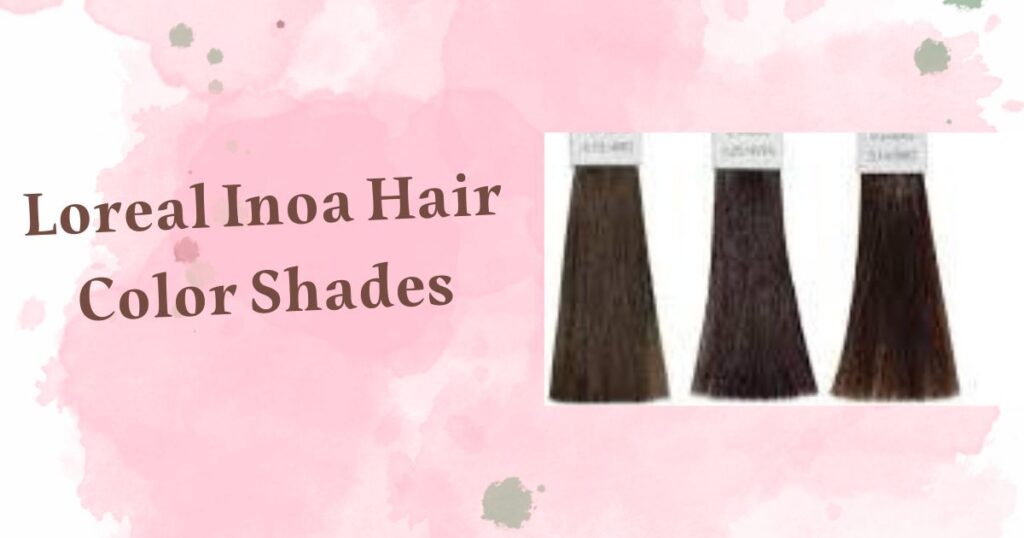
L’Oréal Professionnel INOA is an ammonia-free, permanent salon hair colour that L’Oréal builds around its oil-based ODS (Oil Delivery System) technology. Its shades follow a simple code: the number before the dot tells you how dark the colour is, and the numbers after the dot tell you its tone, such as ash, gold, copper or red.
Once you can read that code, picking an INOA hair color shade for Indian skin and hair becomes far less confusing. This guide explains how the system works, which shade families suit warm, cool and neutral undertones, how well INOA covers grey, and how to make your colour last in our heat, humidity and hard water.
L’Oréal INOA hair color: the quick summary
- What it is: a professional, permanent oxidation hair colour from L’Oréal Professionnel, described by the brand as ammonia-free and oil-based.
- Who applies it: it is mixed with INOA developer and is meant for salon use, so a trained colourist is recommended.
- How shades are named: base level (1 to 10) for depth, then tone numbers after the dot.
- Grey coverage: natural and neutral shades are the usual choice when you want to cover grey.
- Safety: do a patch test 48 hours before every colour service, even if you have used INOA before.
- How long it lasts: permanent colour grows out rather than washing out; most people need root touch-ups every 4 to 6 weeks.
What is L’Oréal Professionnel INOA?
INOA stands for “Innovation No Ammonia”, and that is the main reason people ask for it by name. Traditional permanent colours use ammonia to open the hair cuticle so the dye can get in. INOA uses a different alkaline agent instead, which is why many clients notice a much milder smell during application.
L’Oréal describes INOA’s ODS technology as an oil-based system that helps carry the colour into the hair while it is processing. According to the brand, this oil base is meant to give colour that looks shiny and even, with more comfort on the scalp. It is still a permanent colour, so it lifts and deposits pigment just as other permanent dyes do.
Note that “ammonia-free” does not mean “chemical-free” or “allergy-free”; INOA is an oxidation dye and can still trigger a reaction in sensitive people. It is a professional product mixed with its own developer in set ratios, so results depend heavily on the person mixing it.
How the INOA hair color shades numbering works
L’Oréal uses the same basic numbering convention across its professional colour ranges, and INOA follows it. Every shade code has two parts: a base level before the dot, and one or two tone numbers after it.
The base level: how dark or light
The base level runs from 1 (black) to 10 (the lightest blonde). Most Indian hair sits naturally between level 1 and level 4, which is why the darker end of any shade chart is where most of us will be choosing from.
| Base level | Depth | What it looks like on Indian hair |
|---|---|---|
| 1 | Black | Deep jet black, very close to most natural Indian hair |
| 2 | Very dark brown | Soft black with a hint of brown in sunlight |
| 3 | Dark brown | A noticeable but subtle brown, very low-maintenance |
| 4 | Medium brown | Clear brown tone; popular for a first colour |
| 5 | Light brown | Visibly lighter; needs lift on naturally black hair |
| 6 | Dark blonde | Bronze or caramel effect on dark hair; more lift needed |
| 7 to 10 | Blonde to lightest blonde | Usually needs pre-lightening on Indian hair for a true result |
A permanent colour can only lift natural hair a limited number of levels. If your hair is naturally level 1 or 2, a level 6 shade will usually show up warmer and darker than the swatch.
The tone numbers: the colour you actually see
The digit straight after the dot is the main tone, and a second digit (if there is one) is a secondary tone. The general L’Oréal tone convention is:
| Tone number | Tone | Effect |
|---|---|---|
| .0 | Natural | Neutral, balanced colour; good for grey coverage |
| .1 | Ash | Cool; reduces brassy orange and red |
| .2 | Iridescent / violet | Cool, pearly; cancels yellow |
| .3 | Gold | Warm, sunny, adds brightness |
| .4 | Copper | Warm orange-copper glow |
| .5 | Mahogany | Red-violet brown; rich, deep |
| .6 | Red | Clear red tone |
So a shade with a gold first digit and a copper second digit will look mostly golden with a coppery edge, while the reverse order leans more copper. Some ranges add further tone families, such as mocha or brown variations, so always check the current INOA shade chart in your salon rather than guessing from the number alone.
Choosing an INOA shade for Indian skin undertones
The base level decides how bold the change looks; the tone decides whether it flatters your skin. The simplest way to find your undertone is to look at the veins on your wrist in daylight: greenish suggests warm, bluish or purple suggests cool, and a mix suggests neutral.
| Undertone | Tone families that usually suit | Base levels to start with |
|---|---|---|
| Warm (golden, olive or peachy skin) | Gold, copper, warm mahogany | Levels 3 to 5 |
| Cool (pink or rosy undertone) | Ash, violet, cool mahogany, natural | Levels 3 to 5 |
| Neutral (a mix of both) | Natural, soft gold, mahogany | Levels 3 to 6 |
| Deep skin tones | Rich mahogany, red-brown, deep natural brown | Levels 2 to 4 |
Warm undertones
If your skin has a golden glow, gold and copper tones look the most natural on you. A level 4 or 5 with gold gives a soft “sunkissed” brown, and copper adds warmth that photographs beautifully.
Cool undertones
Cooler Indian skin tones tend to suit ash, violet and cooler mahogany shades. If you want warmth, a mahogany with a violet lean is usually more flattering than a bright copper.
Neutral and deep skin tones
Neutral undertones have the most freedom; natural browns and soft golds are safe, and mahogany adds richness. For deep skin, darker levels with burgundy, mahogany or red-brown tones give depth and shine without looking washed out. If you are unsure, read our guide to choosing the best hair colour for women for more general pointers, and men can see our tips on hair colour for men with brown skin.
INOA for grey coverage
Grey hair has lost its pigment, so it takes colour differently from the rest of your hair. That is why colourists usually build grey coverage around natural (.0) and neutral shades, sometimes mixing them with a fashion tone so the result is both covered and flattering.
- Under 30% grey: a fashion shade alone often blends greys into soft highlights.
- 30 to 50% grey: a fashion tone mixed with a natural base gives fuller coverage.
- Over 50% grey: natural shades at your chosen level, or a natural-heavy mix, usually give the most even cover.
- Stubborn or resistant greys: often on the temples and hairline; your colourist may apply these first or adjust processing time.
Pure ash shades can look flat on very grey hair, and very light levels can leave greys looking brighter than the rest of your head. Choosing one or two levels lighter than your natural colour is a common way to make regrowth less obvious between appointments. Men looking for subtle grey blending can also compare options in our roundup of the best hair colour for men.
Salon vs at-home use: can you use INOA at home?
INOA is a professional salon colour. Each tube has to be mixed with INOA’s own developer in a specific ratio, and the developer strength is chosen based on how much lift and grey coverage you need.
| Factor | Salon INOA application | DIY at home |
|---|---|---|
| Shade choice | Colourist assesses base, grey % and undertone | Guesswork from a swatch |
| Mixing | Correct developer strength and ratio | Easy to under- or over-mix |
| Application | Even sectioning, roots first, timing controlled | Patchy back sections, overlap on old colour |
| Corrections | Can tone or adjust on the spot | Fixing mistakes is harder and costlier |
You may see INOA tubes sold online, but a salon application is recommended. If you prefer colouring at home, a consumer box colour designed for home use, with its own instructions, is a safer choice than a professional product.
How an INOA colour service usually works
- Consultation: your colourist checks your natural level, grey percentage, any previous colour or henna, and your undertone.
- Patch test: done at least 48 hours before the service, using the colour you will actually have.
- Mixing: the chosen shade is mixed with INOA developer at the right strength.
- Application: roots or full length are applied in neat sections; regrowth only is applied for a touch-up.
- Processing: the colour is left on for the time the colourist decides, often around 30 to 45 minutes.
- Rinse and care: the colour is emulsified, rinsed thoroughly and finished with a colour-care shampoo and conditioner.
If you have used henna or mehendi, tell your colourist. Some henna products contain metallic salts or other additives that can react unpredictably with permanent colour, and a strand test may be needed first.
Patch test: do it 48 hours before, every time
Like every oxidation hair dye, INOA can cause allergic reactions, even in people who have used it safely before. Do a skin allergy test 48 hours before every colour service by applying a small amount of the mixed colour behind the ear or inside the elbow, as instructed by the salon or the product leaflet.
- Do not colour if you get itching, redness, swelling, burning or blisters at the test site.
- Do not colour if your scalp is irritated, broken or sunburnt.
- People who have reacted to hair dye or to black henna tattoos in the past should avoid dyeing and speak to a dermatologist.
- If you notice swelling of the face, eyes or lips, or difficulty breathing after colouring, seek medical help immediately.
Ongoing scalp itching, flaking or hair shedding after colouring is a sign to see a dermatologist or trichologist rather than trying another shade.
Aftercare for INOA-coloured hair in Indian weather
Indian conditions are hard on colour. Strong sun, humidity, sweat, chlorinated pools and hard water all speed up fading and can turn browns brassy.
- Wait 48 to 72 hours before your first wash so the colour settles.
- Use a sulphate-free colour-care shampoo, such as L’Oréal Professionnel Serie Expert Vitamino Color, and always follow with conditioner.
- Wash with cool or lukewarm water; hot water opens the cuticle and releases colour faster.
- Fight hard water with a shower filter, or a weekly deep-conditioning mask if your water leaves hair rough.
- Protect from sun: cover your hair with a scarf or cap during long outdoor hours, as recommended in our summer hair care tips.
- Use heat protection before blow-drying, straightening or curling.
- Keep oiling gentle: light pre-wash oiling is fine for most people, but heavy, hot oil massages right after colouring can make fresh colour fade faster.
For more everyday habits that keep hair soft and strong between salon visits, see our natural hair care tips at home.
How long does INOA hair colour last?
INOA is permanent, so the pigment stays in the coloured lengths until that hair is cut off. What changes over time is the tone (warm shades like copper and red tend to fade fastest) and the regrowth at your roots.
Most people book a root touch-up every 4 to 6 weeks, or sooner if they have a lot of grey and want a seamless look. A gloss or toning refresh on the lengths every few months can bring back shine and correct brassiness without re-colouring everything.
Common mistakes to avoid
- Choosing a shade only from the swatch, without considering your natural base level.
- Skipping the patch test because “it’s ammonia-free”.
- Expecting a light blonde result on black hair without pre-lightening.
- Colouring over henna without telling the colourist.
- Going for very ashy tones on warm skin, which can look dull.
- Colouring the full length every visit instead of roots only, which can over-process the ends.
Frequently asked questions
Is L’Oréal INOA hair colour really ammonia-free?
Yes, L’Oréal markets INOA as an ammonia-free permanent colour that uses a different alkaline agent and its oil-based ODS technology. Being ammonia-free usually means a milder smell, but it is still an oxidation dye, so a patch test is still essential.
What do the numbers on INOA hair color shades mean?
The number before the dot is the base level, from 1 (black) to 10 (lightest blonde). The numbers after the dot show tone, for example .1 ash, .3 gold, .4 copper, .5 mahogany and .6 red, with the first digit being the main tone.
Which INOA shade suits Indian skin?
Warm skin usually suits gold and copper tones at levels 3 to 5, while cool skin suits ash, violet and cool mahogany. Deep skin looks rich in mahogany, burgundy and red-brown at darker levels.
Does INOA cover grey hair completely?
INOA can give good grey coverage when the right natural or neutral shade and developer are chosen. Very resistant greys, often at the temples, may need extra care from your colourist, so results vary from person to person.
Can I apply INOA hair colour at home?
INOA is a professional colour that has to be mixed with developer in set ratios, so a salon application is recommended. If you want to colour at home, choose a consumer box colour designed for home use and follow its instructions.
Is INOA safe for a sensitive scalp?
Many people find it comfortable, but no hair dye is guaranteed safe for everyone. Do a patch test 48 hours before each service and see a dermatologist if you have had a reaction to hair dye before.
The bottom line
L’Oréal Professionnel INOA is a good fit if you want permanent colour with a milder, ammonia-free experience in the salon. Learn the code (level for depth, tone after the dot), pick a tone family that matches your undertone, and let a colourist handle the mixing and grey coverage.
Book a patch test two days ahead, look after your colour with gentle, sulphate-free care, and plan root touch-ups every 4 to 6 weeks. Do that, and your INOA shade will stay rich and flattering through Indian sun and humidity.



Join the conversation