Hair Creams for Curly Hair: How to Choose and Apply (2026)
What curl creams do, how to choose one by curl pattern and porosity, and how to apply it with praying hands, raking and scrunching.

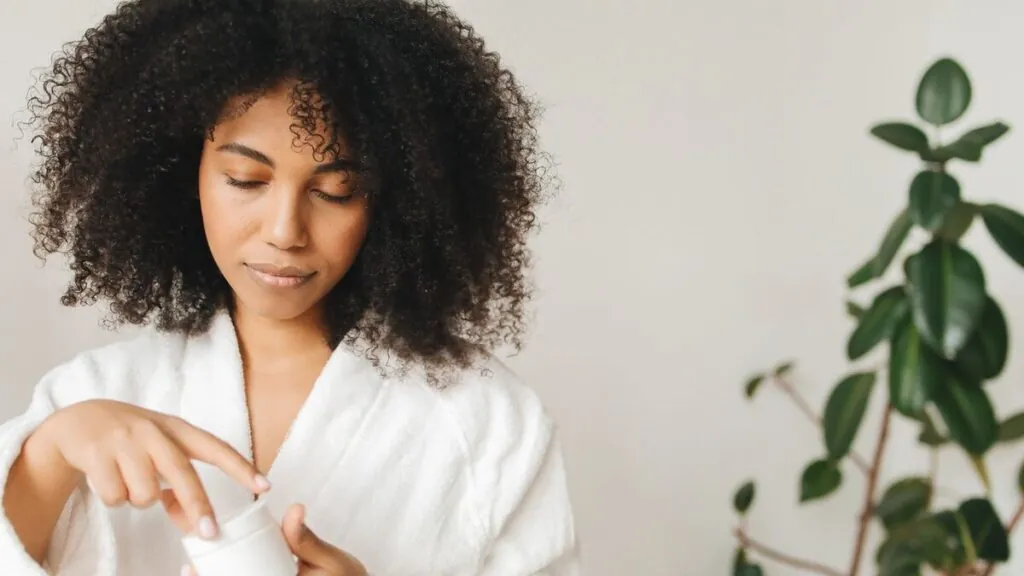
A curl cream is a rich, Leave-in conditionerA light conditioner you do not rinse out. It helps with detangling, frizz and moisture, especially for curly or dry hair.See glossaryRead the guide styler that adds moisture, softens frizz and helps curls clump into defined ringlets without the crunch of a gel. The right one depends on two things: how tight your curl pattern is and how quickly your hair absorbs (and loses) moisture.
This guide is only about curl creams and leave-in creams: what they actually do, how to pick one for your curl type and Hair porosityHow easily your hair absorbs and holds moisture. Low-porosity hair resists water; high-porosity hair absorbs it fast but loses it quickly.See glossaryRead the guide, and the three application methods that make the biggest difference. If you want the complete wash-day line-up from shampoo to oil, see our guide to the best curly hair products in India.
Hair Creams for Curly Hair at a Glance
- What it does: moisturises, weighs curls down just enough to form clumps, and smooths the cuticle so frizz is lower.
- When to use it: on soaking-wet or very damp hair straight after conditioning, then on dry hair for refresh days.
- Who needs the richest formula: tight curls and coils, high-porosity or bleached hair.
- Who should go light: wavy, fine or low-porosity hair, which can turn limp or greasy under heavy butters.
- Cream alone or with gel? Cream gives softness; gel gives hold. In humid Indian summers, most curls do best with both.
What Does a Curl Cream Actually Do?
Curly hair is naturally drier than straight hair because scalp oil struggles to travel down a spiral strand. Dry strands lift their cuticle, grab moisture from humid air and swell unevenly, and that is what you see as frizz. A curl cream puts a layer of conditioning ingredients and light oils on each strand so it stays hydrated and lies smoother.

The second job is definition. When you apply cream to wet hair, neighbouring strands stick together into “clumps”. Bigger, well-formed clumps look like defined ringlets; separated strands look like a frizzy halo. Cream also adds a little weight, which helps loose curls hold their shape instead of puffing out.
What a cream does not do is lock a style in place for days. Most creams have soft or no hold, which is why curls styled with cream alone can drop or fuzz up by afternoon in Mumbai or Chennai humidity.
Curl cream vs leave-in conditioner
The line is blurry, and many products call themselves both. A leave-in conditioner is usually thinner and focuses on moisture and detangling. A curl cream (also sold as a “curling cream”, “curl enhancing cream” or “smoothie”) is thicker, often richer in butters, and is designed to shape curls as well as hydrate them.
Wavy and fine hair often needs only a leave-in. Thick curls and coils frequently layer a leave-in first, then a curl cream on top.
Curl Cream vs Gel vs Mousse
These three are not competitors so much as tools for different jobs. Here is how they compare.
| Styler | Main job | Hold | Best for | Watch out for |
|---|---|---|---|---|
| Curl cream | Moisture, softness, clumping | Soft to none | Curls and coils, dry or high-porosity hair | Greasy, limp results on fine or low-porosity hair |
| Leave-in conditioner | Hydration and slip for detangling | None | All curl types as a base layer | Not enough definition on its own for tight curls |
| Gel | Hold and frizz control | Medium to strong (a “cast”) | Humid weather, long-lasting definition | Crunch if you don’t scrunch out the cast; dryness if used without moisture |
| Mousse / foam | Light hold and volume | Light to medium | Fine waves and loose curls | Can feel drying on thick, coarse curls |
A practical rule: cream for moisture, gel or mousse for hold. Use cream first, then the holding product on top. Wavy hair may skip cream and pair a leave-in with mousse; tight coils may use cream generously and a firm gel only on wash day.
How to Choose a Curl Cream by Curl Pattern
Wavy hair (2A–2C)
Waves collapse easily, so weight is your enemy. Choose a lotion-like leave-in or a “lightweight” curl cream, and use a pea-sized to coin-sized amount. Avoid formulas where shea butter, cocoa butter or heavy oils sit near the top of the ingredient list unless your waves are very coarse.
Curly hair (3A–3C)
This is the classic curl-cream user. A medium-weight cream with HumectantAn ingredient that attracts water, such as glycerin or hyaluronic acid. Humectants hydrate best when sealed in with a moisturiser.See glossaryRead the guide (GlycerinOne of the most common and effective humectants. It draws water into the skin and is found in most moisturisers and cleansers.See glossary, aloe) plus some conditioning oil works for most people. Looser 3A curls need less; dense 3C curls can take a richer cream and a little more product.
Coily hair (4A–4C)
Coils lose moisture fastest and usually love thick, butter-rich creams. Many people with coily hair follow a layering method: leave-in, then cream, then a small amount of oil or a butter to seal. Work in sections so every coil is coated.
How to Choose by Hair Porosity
Porosity is how easily your hair takes in and holds water, and it often matters more than curl type when picking a cream. A rough home check: notice how long your hair takes to get fully wet in the shower and how long it takes to air-dry.
- Low porosity (water beads on hair, products sit on top, drying takes ages): choose light, water-based creams and lotions. Apply to dripping-wet hair so the product spreads, and use less than you think.
- Medium porosity (wets and dries at a normal pace): most curl creams work; adjust weight to your curl pattern.
- High porosity (soaks up water instantly, dries very fast, frizzes easily; common after bleaching, colouring or regular heat styling): richer creams with butters and oils help slow moisture loss. Follow with a gel to seal in the humidity.
Ingredients worth knowing
- Shea butter, mango butter, cocoa butter: rich and softening; great for coils and high porosity, heavy for fine waves.
- Coconut, argan, olive and jojoba oil: add shine and slip. Coconut oilA common Indian hair oil that can soak into the hair shaft, which may reduce protein loss during washing. It can feel heavy on fine hair.See glossary can feel stiff on some low-porosity hair.
- Glycerin and aloe vera: humectants that draw water in. Helpful in moderate humidity; in very sticky monsoon weather, pair with a gel so curls don’t swell and frizz.
- Conditioning agents (behentrimonium, cetearyl alcohol and other fatty alcohols): give softness and slip. Fatty alcohols are not the drying kind of alcohol.
- SiliconesIngredients like dimethicone that coat hair (and skin) for slip, shine and frizz control. Heavier ones can build up and need a clarifying wash.See glossaryRead the guide: smooth frizz well but heavier types can build up, especially with hard water. If you use them, clarify every few weeks.
Curl Creams Easy to Find in India
These are well-known creams sold through major Indian beauty retailers. Treat them as examples of each style rather than a ranking. Our curly hair products guide covers shampoos, conditioners and gels to pair with them.
| Cream | Type | Texture | Suits | Price band |
|---|---|---|---|---|
| Cantu Shea Butter Leave-In Conditioning Repair Cream | Leave-in cream | Thick, buttery | Coarse curls, coils, dry hair | Budget to mid-range |
| Cantu Shea Butter for Natural Hair Coconut Curling Cream | Curl cream | Rich | 3B–4C curls, high porosity | Budget to mid-range |
| SheaMoisture Coconut & HibiscusFlowers and leaves used in traditional Indian hair packs and oils to condition hair and add softness.See glossary Curl Enhancing Smoothie | Curl cream | Medium-rich | 3A–4A curls needing moisture and definition | Mid-range |
| Moroccanoil Curl Defining Cream | Curl cream | Light to medium | Waves and looser curls that want frizz control | Premium |
| Moroccanoil Intense Curl Cream | Curl cream | Rich | Thick, dry curls | Premium |
Quick read on each: the two Cantu creams are thick and generous, so start small on finer hair. The SheaMoisture smoothie sits in the middle and is a good first try for most 3-type curls. The Moroccanoil Curl Defining Cream is the lightest of the group, while the Intense Curl Cream is the richer option in the same line. Whatever you pick, check the full ingredient list on the pack, since formulas can change.
How to Apply Curl Cream: Praying Hands, Raking and Scrunching
Technique changes results as much as the product does. Always start with hair that is soaking wet to very damp, ideally straight after rinsing out conditioner, and work in two to four sections if your hair is thick.

Praying hands (for waves, loose curls and frizz control)
- Rub a small amount of cream between your palms.
- Take a section and press it flat between your palms, as if your hands are folded in prayer.
- Glide your hands down from mid-length to the ends without pulling the curls apart.
This smooths the surface of the hair and keeps larger clumps intact, so it is the gentlest method for waves.
Raking (for even coverage on thick curls and coils)
Spread cream over your palms and fingers, then slide your fingers through each section from root to tip like a wide-toothed comb. Raking makes sure every strand gets product and gives smaller, more defined ringlets. Follow with a light praying-hands pass to re-smooth the surface.
Scrunching (to encourage curl and finish)
Cup the ends of a section in your palm and squeeze gently upward towards the scalp, releasing after a second. You may hear a soft “squish” sound on wet hair, which means water and product are mixing well. Scrunching is the step that wakes up the curl pattern after the other two methods.
A simple wash-day order
- Cleanse and condition; detangle while the conditioner is in.
- Rinse, leaving hair dripping wet. Optional: apply a leave-in first.
- Apply curl cream with praying hands or raking, section by section.
- Layer gel or mousse on top if you want hold, then scrunch.
- Blot (don’t rub) with a cotton T-shirt or microfibre towel.
- Air-dry or diffuse on low heat, and avoid touching until fully dry. If gel left a firm cast, scrunch it out gently with a drop of oil.
Refresh days: mist hair with water, warm a little cream between wet palms, and scrunch or smooth it over frizzy sections only. Re-apply to the whole head and your curls will get heavy.
Using Curl Cream in Indian Weather
- Monsoon and coastal humidity: cream alone rarely survives. Use a little less cream and seal with a gel. Very glycerin-heavy creams can make curls swell in sticky weather.
- Dry North Indian winters: go richer and add a few drops of oil to the ends. Our winter hair care guide covers scalp dryness too.
- Hard water: minerals plus heavy creams build up and leave curls dull and stiff. Clarify every two to four weeks, and consider a shower filter if your water is very hard.
- Summer heat and sweat: light creams feel better, and a cotton scarf or satin-lined cap protects curls from sun and dust. See our summer hair care tips.
Common Curl Cream Mistakes
- Applying to towel-dried hair. Curls form clumps when wet; on half-dry hair, cream breaks clumps apart and causes frizz.
- Using too much. Start with a coin-sized amount per section and add more only if hair still feels rough.
- Loading the roots. Keep cream mostly on mid-lengths and ends so your roots keep volume and your scalp doesn’t feel greasy.
- Expecting cream to give hold. If curls fall flat by evening, the fix is usually a gel layer, not more cream.
- Touching while drying. Fiddling with damp curls is the fastest route to frizz.
- Never clarifying. Butters and silicones build up over weeks, especially with hard water, until curls feel coated.
- Skipping a Patch testTrying a small amount of a new product behind the ear or on the inner arm for a few days to check for a reaction before using it widely.See glossary. Fragranced creams can irritate sensitive scalps. Try a new product behind your ear first, and see a dermatologist if itching, redness or flaking persists.
Go deeper: compare curl cream vs gel vs mousse and follow our curly hair routine for Indian weather.
Frequently Asked Questions
The best cream is the one that matches your curl pattern and porosity. Wavy or low-porosity hair usually does best with a light cream such as Moroccanoil Curl Defining Cream, while dry, tight curls and coils often prefer richer options like Cantu Coconut Curling Cream or the SheaMoisture Curl Enhancing Smoothie.
Apply it on soaking-wet or very damp hair on wash day, because that is when curls form clumps and the cream spreads evenly. On dry hair, use only a small amount over frizzy areas, ideally after misting with water.
Yes, and in humid Indian weather it is often the best combination. Apply the cream first for moisture and softness, then gel on top for hold. Once fully dry, scrunch out any stiff cast for soft, defined curls.
Usually the cream is too heavy for your hair, you are using too much, or it is going on your roots. Switch to a lighter formula, use less, keep it to the mid-lengths and ends, and apply on wetter hair so it spreads more thinly.
Absolutely. Curl creams work the same way on any curly hair, short or long. Men with short curls need only a pea-sized amount scrunched through damp hair. If you want a more styled, structured finish, see our guide to hair styling creams for men.
Use it every wash day, and a small amount on refresh days if curls look dry or frizzy. If your hair starts to feel coated or stiff, cut back and use a clarifying shampoo before your next wash.
Not quite. Curl creams are made to moisturise and define a natural curl pattern, while many general styling creams are designed for texture or hold on straight or short hair and can weigh curls down or leave them dull.
Quick poll
How often do you wash your hair?
The Bottom Line
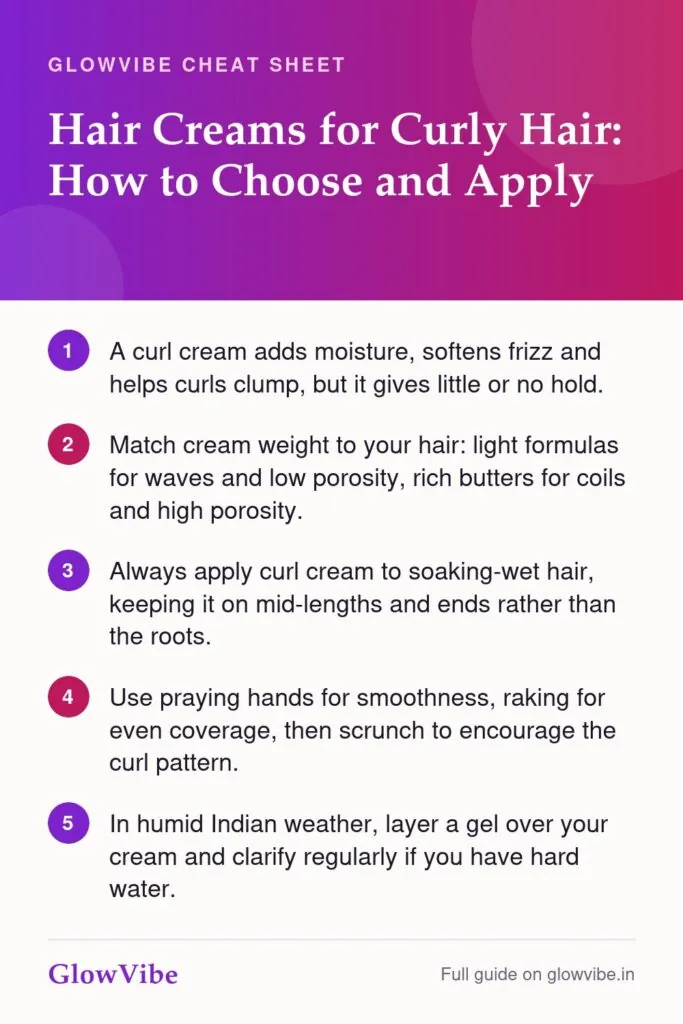
A curl cream is your moisture and definition step, not your hold step. Match its weight to your curl pattern and porosity, apply it to soaking-wet hair with praying hands, raking or scrunching, and add a gel when humidity is high.
Get those basics right and even a budget cream can give you soft, defined curls. For the rest of your routine, head to our full guide to curly hair products in India.