Curl Cream vs Gel vs Mousse: Which Is Best for Your Curls?
Curl cream vs gel vs mousse vs leave-in, compared for hold, definition and frizz in Indian humidity, plus how to layer them and scrunch out the crunch.


In the curl cream vs gel debate, choose a curl cream if your curls are dry, thick or coily and you want soft, touchable definition; choose a gel if you want strong hold and frizz control that lasts through Indian humidity. Choose mousse if you have fine waves or thin curls that need volume without weight, and a Leave-in conditionerA light conditioner you do not rinse out. It helps with detangling, frizz and moisture, especially for curly or dry hair.See glossaryRead the guide if you mainly need moisture and only a little help with frizz.
Most curly heads in India get the best results by combining two of these, usually a cream or leave-in first and a gel on top. Below you’ll find a side-by-side comparison, which product suits your curl type and hair thickness, how to layer them, how much to use, and how to “scrunch out the crunch”.
The Quick Verdict
- Curl cream: best for dry, thick curls and coils (3B–4C) that want softness and moisture. Light hold.
- Gel: best for anyone who wants definition that lasts, especially in humid cities. Medium to strong hold.
- Mousse: best for fine, thin waves and loose curls (2A–3A) that go flat under heavy products. Light to medium hold with volume.
- Leave-in conditioner: best as a moisture base for all curl types, or alone on low-maintenance waves. Little to no hold.
- Humid weather: gel wins, or a cream-plus-gel combination.
- Dry winter weather: cream or leave-in plus a softer gel feels more comfortable.
Curl Cream vs Gel vs Mousse vs Leave-In: Side by Side
| Curl cream | Gel | Mousse | Leave-in | |
|---|---|---|---|---|
| Texture | Thick lotion or butter | Clear or slightly cloudy jelly | Light foam | Thin lotion, cream or spray |
| Main job | Moisture and soft definition | Hold and clump definition | Volume and light hold | Moisture and detangling |
| Hold | Light | Medium to strong | Light to medium | Very light |
| Frizz control in humidity | Fair | Best | Fair | Low |
| Finish | Soft, touchable | Crunchy “cast” until scrunched | Airy, bouncy | Soft, natural |
| Weight | Medium to heavy | Light to medium | Lightest | Light to medium |
| Best curl type | Curly and coily (3B–4C) | All (2A–4C) | Wavy and loose curls (2A–3A) | All, as a base |
| Best hair thickness | Thick, coarse | Fine to thick | Fine, thin | Fine (light ones) to thick (creamy ones) |
What Each Product Actually Does
Curl cream
A curl cream is a moisturising styler made with butters, oils and conditioning agents. It helps curls clump, softens frizz and keeps hair feeling soft, but its hold is light. On its own it may not survive a humid afternoon. Cantu Shea Butter for Natural Hair Coconut Curling Cream and Moroccanoil Curl Defining Cream are two widely available examples. For a deeper look at choosing and applying creams, see our guide to hair creams for curly hair.
Gel
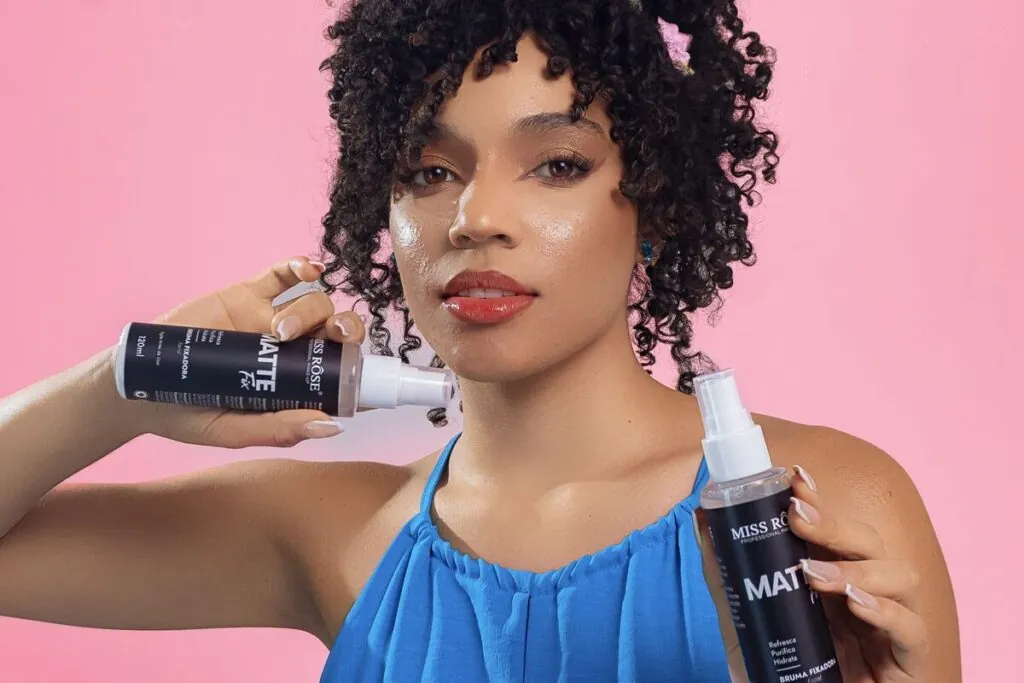
Curl gels contain film-forming ingredients (often polymers, flaxseed or aloe) that coat clumps of curls and dry into a firm shell called a “cast”. The cast holds your curl pattern in place and blocks humid air from puffing up the strands. Once your hair is fully dry, you break the cast for soft, defined curls. Eco Style Olive Oil Styling Gel is a well-known option for strong hold.
Mousse
Mousse is a foam styler that adds lift at the roots and light hold without much weight. It’s the go-to for fine waves that collapse under creams. Some mousses contain drying alcohol, so check the label if your hair feels rough after using one, and pair it with a light leave-in.
Leave-in conditioner
A leave-in is about moisture, not hold. It detangles, softens and gives your styler something to grip. A thick leave-in such as Cantu Shea Butter Leave-In Conditioning Repair Cream can double as a light curl cream on coily hair, while a spray or thin lotion suits waves.
Which One Suits Your Hair?
Wavy hair (2A–2C)
Waves are easily weighed down, so keep it light. Try mousse, or a light leave-in followed by a gel. Skip heavy curl creams unless your waves are thick and very dry. If your waves fall flat by noon, you’re probably using too much product or a cream that’s too rich.
Curly hair (3A–3C)
Curly hair is the most flexible. A curl cream on its own works on dry, low-humidity days. In most Indian cities, though, a cream or leave-in plus a medium-hold gel gives the most reliable definition. Looser 3A curls might prefer mousse plus gel instead.
Coily hair (4A–4C)
Coils need moisture first, so start with a rich leave-in or curl cream. Add a gel on top if you want defined coils or a twist-out that lasts. Use gentle pressure and smaller sections so every coil gets coated.
Fine vs thick hair
Thickness matters as much as curl pattern. Fine hair (thin individual strands) does best with mousse, light gels and spray leave-ins, used in small amounts. Thick or coarse hair can take richer creams and stronger gels without going limp. If you have fine but very curly hair, use a light leave-in plus gel and skip the heavy cream.
Which Works Best in Indian Humidity?
Humid weather, from the monsoon to coastal summers in Mumbai, Chennai or Kolkata, is when gel truly earns its place. Humid air swells the hair strand and pulls curls out of their clumps, and a gel cast acts as a barrier against that. A cream alone often looks good when you leave the house and frizzy by lunch.
In dry winter air in North India, the problem flips. Curls are more likely to feel dry and rough, so a cream or leave-in base matters more, and you may want a softer gel. Strong gel on dry winter curls can feel stiff, so scrunching out the crunch thoroughly matters more in this season.
For the full routine from shampoo to styler, including products that cope with humidity and hard water, see our list of the best curly hair products in India.
Can You Use Both? Layering Curl Cream and Gel
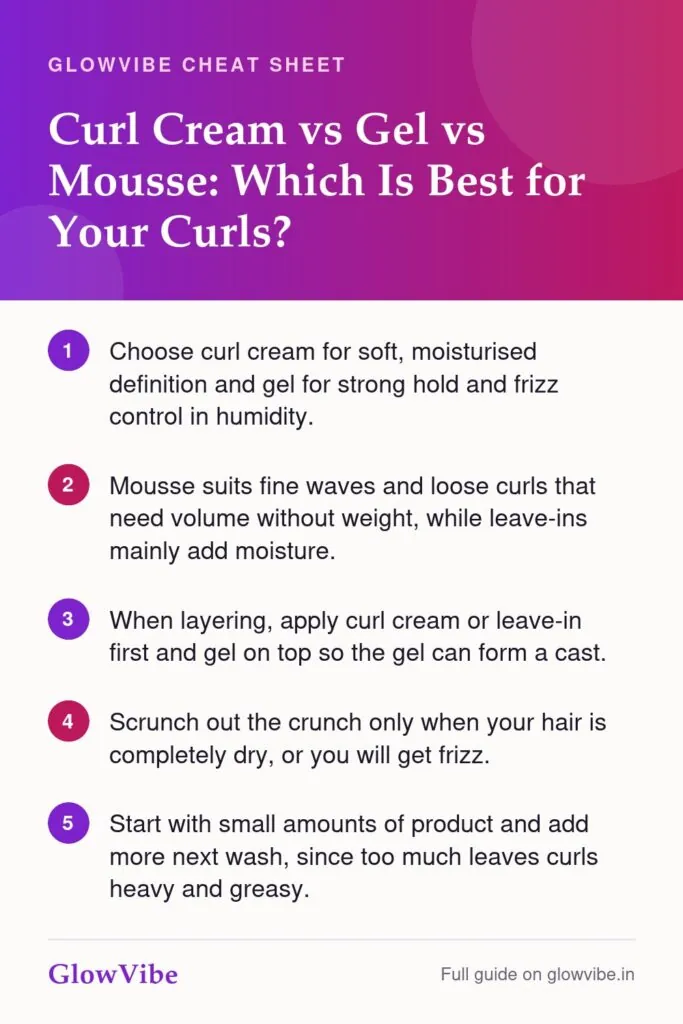
Yes, and this is the most popular combination for curly hair in India. The cream (or leave-in) adds moisture and softness, and the gel locks it in with hold. The order matters: cream first, then gel. Gel needs to be the top layer so it can form a cast over everything.
How to layer cream and gel
- Start on soaking-wet hair, straight after conditioning. Wet hair spreads product evenly and clumps better.
- Apply leave-in (optional) if your hair is dry. Use a small amount on mid-lengths and ends.
- Apply curl cream with the “praying hands” method (smoothing it down between flat palms) or by raking it through with your fingers.
- Apply gel on top with praying hands, then scrunch upwards towards your scalp to encourage curls to form.
- Don’t touch while it dries. Air-dry or use a diffuser on low heat and low speed. Our guide to hair styling tools for your hair type covers diffusers and other options.
- Scrunch out the crunch only when your hair is 100% dry.
Other combinations that work
- Mousse plus gel: for fine waves that want volume and hold. Mousse first, a little gel on top.
- Leave-in plus gel: for wavy or fine curly hair that finds creams too heavy.
- Leave-in plus cream: for coily hair on dry days when you want softness over hold.
Avoid layering two heavy products on fine hair (for example a rich leave-in and a rich cream) as it usually ends in flat, greasy curls.
How to “Scrunch Out the Crunch”
When gel dries, it leaves curls feeling stiff and crunchy. That’s normal and a sign the cast has formed. Breaking it is what gives you soft, defined curls that last.
- Wait until your hair is completely dry. If you touch it while damp, you’ll get frizz.
- Put a drop of light oil or a tiny bit of curl cream on your palms if your hair feels dry. This is optional.
- Cup sections of hair in your palms and gently scrunch upwards. You’ll hear a slight crackle as the cast breaks.
- Work around your head until your curls feel soft. Don’t rake your fingers through or you’ll separate the clumps.
- Shake your roots gently with your fingertips for volume.
If your hair still feels crunchy after scrunching, you used too much gel or a stronger gel than you need. If it falls flat and frizzy within an hour, you may have scrunched before it was fully dry.
How Much Product to Use
Amounts depend on hair length and thickness, so start small and add more next wash if needed. As a rough guide for shoulder-length hair:
| Product | Fine or thin hair | Medium hair | Thick hair or coils |
|---|---|---|---|
| Leave-in | 1 small pump or a pea-sized amount | 1–2 pumps | A coin-sized amount per section |
| Curl cream | Pea-sized, or skip | A coin-sized amount | A coin-sized amount per section |
| Gel | A coin-sized amount | 1–2 coin-sized amounts | A generous palmful, in sections |
| Mousse | A golf-ball-sized amount | A tennis-ball-sized amount | Usually not needed |
Longer hair needs more. Waist-length coils might need two or three times these amounts, applied section by section. Too much product leaves curls heavy and greasy; too little leaves them frizzy.
Common Mistakes
- Applying styler to dry or damp hair instead of soaking-wet hair, which causes frizz and uneven hold.
- Putting gel under cream: the cream breaks up the cast and you lose hold.
- Using curl cream alone in monsoon weather and expecting it to last all day.
- Touching your hair while it dries, which breaks clumps and adds frizz.
- Never clarifying: stylers build up. A clarifying wash every two to four weeks keeps curls bouncy.
- Skipping a Patch testTrying a small amount of a new product behind the ear or on the inner arm for a few days to check for a reaction before using it widely.See glossary: if you have a sensitive scalp, try a new product on your inner arm first and keep it off the scalp.
Put it together: use your styler as part of our curly hair routine for Indian weather.
Frequently Asked Questions
It depends on what you want. Curl cream gives softness and moisture with light hold, while gel gives longer-lasting definition and better frizz control. For most curly hair in Indian weather, using a cream first and then a gel gives the best of both.
Yes, especially on thick, dry curls or coils on low-humidity days. Expect softer, looser definition and a little more frizz as the day goes on. If you live somewhere humid, you’ll probably want to add gel.
Mousse is often better for fine waves because it adds volume without weight. Gel holds waves more firmly and copes better with humidity. Many people with waves use a little mousse and a little gel together.
Gel itself doesn’t damage hair when used normally, but drying alcohols high on the ingredient list can leave curls rough. Breaking the cast while hair is still wet, or brushing out dry gel, can cause breakage. Wash it out properly and clarify regularly.
The same rules apply. Men with short curls often do well with a small amount of curl cream for a soft look or a light gel for more hold. For short styles that aren’t about curl definition, our guide to hair styling cream for men in India has more options.
The usual causes are applying gel to hair that isn’t wet enough, touching it while it dries, or scrunching out the crunch too early. Try applying on soaking-wet hair, leaving it alone until it’s completely dry, and using a little more gel.
Quick poll
How often do you wash your hair?
The Bottom Line
Curl cream gives softness, gel gives hold, mousse gives volume and a leave-in gives moisture. For most Indian curls, especially in humid weather, a cream or leave-in first and gel on top is the most reliable routine. Use the right amount for your hair thickness, let it dry untouched, then scrunch out the crunch for soft, defined curls that last.