Best Shampoo for Curly Hair in India: How to Choose (2026)
How to choose a curly hair shampoo in India: sulfate-free, gentle-sulfate, co-wash or clarifying, plus hard-water fixes, picks by need and how often to wash.


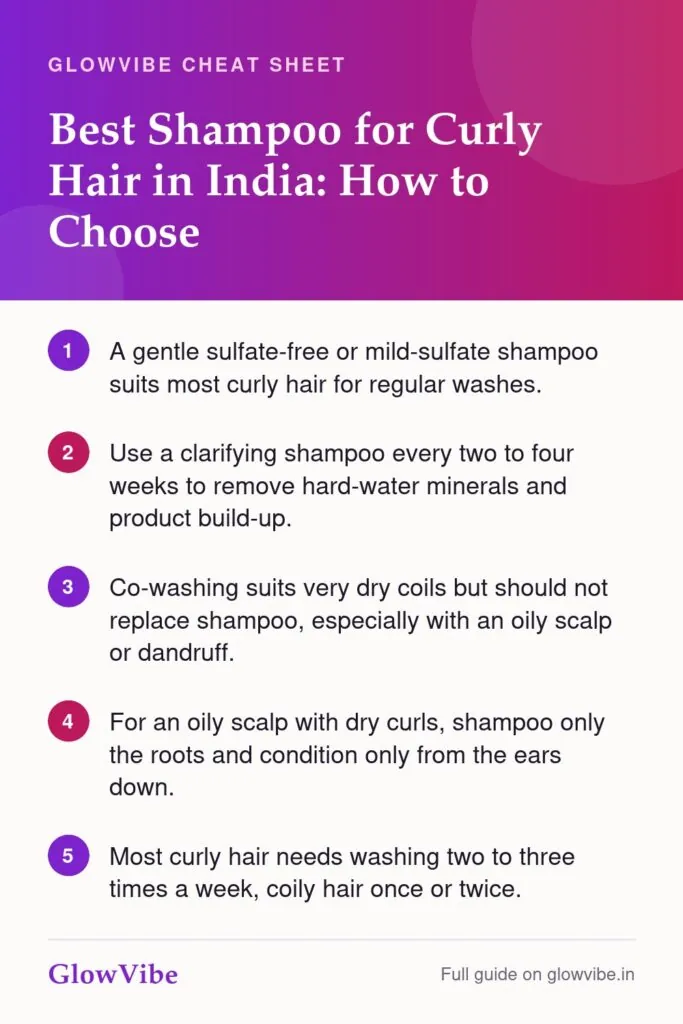
The best shampoo for curly hair in India is usually a gentle, Sulfate-freeShampoo made without strong sulfate cleansers like SLS. Gentler on dry, curly or colour-treated hair, though it may lather less.See glossaryRead the guide or mild-sulfate formula for regular washes, backed up by a clarifying shampoo every 2–4 weeks to clear hard-water and product build-up. Which one suits you depends less on the brand and more on your scalp (oily or dry), your curl type and the water coming out of your tap.
This guide shows you how to read a shampoo label, when each type of cleanser makes sense, and how to handle the very common Indian combination of an oily scalp with dry, frizzy curls. For the rest of your routine, from conditioner to gel, see our full list of the best curly hair products in India.
Quick Answer: Which Shampoo Type Do You Need?
- Dry, thick or coily curls: a creamy sulfate-free shampoo for most washes.
- Wavy hair or an oily scalp: a lighter sulfate-free or gentle-sulfate shampoo that cleans more thoroughly.
- Very dry, fragile coils: a Co-washingWashing hair with a cleansing conditioner instead of shampoo. Popular with curly and dry hair that loses moisture easily.See glossaryRead the guide (cleansing conditioner) between regular shampoos.
- Hard water, heavy stylers or dull, stiff curls: a clarifying shampoo every 2–4 weeks.
- Flakes and itching: an anti-dandruff shampoo on the scalp, with a curl-friendly conditioner on the lengths.
Why Curly Hair Needs a Different Shampoo
Scalp oil (SebumThe natural oil your skin and scalp make. Some is essential for a healthy barrier; too much can feel greasy and clog pores.See glossary) travels easily down a straight strand but gets stuck at every bend of a curl. That is why curly hair often feels dry at the ends even when the roots look oily by the next day. A strong cleanser removes what little oil the lengths have, and the result is the familiar rough, frizzy, “straw” feel after washing.
The aim, then, is a shampoo that cleans your scalp properly while being as kind as possible to your lengths. You also wash the scalp, not the curls: massage shampoo into the roots and let the lather rinse through the rest.
Sulfate-Free vs Gentle-Sulfate vs Co-Wash vs Clarifying
| Type | What it is | Best for | Use it | Skip it if |
|---|---|---|---|---|
| — | — | — | — | — |
| Sulfate-free | Uses milder cleansers such as cocamidopropyl betaine, sodium cocoyl isethionate, decyl glucoside or coco-glucoside | Most curly and coily hair, dry or coloured curls | Every wash | You use heavy butters and SiliconesIngredients like dimethicone that coat hair (and skin) for slip, shine and frizz control. Heavier ones can build up and need a clarifying wash.See glossaryRead the guide and never clarify |
| Gentle-sulfate | Uses milder sulfates such as sodium laureth sulfate (SLES) or sodium coco-sulfate, often with conditioning agents | Wavy hair, oily scalps, sweaty days, gym-goers | Every wash or alternating | Your curls feel tight and rough after every wash |
| Co-wash | A cleansing conditioner with little or no detergent | Very dry 4A–4C coils, high-porosity hair | Between shampoos | You have an oily scalp, dandruff or fine waves |
| Clarifying | A stronger cleanser, often with chelating agents like EDTA or citric acid | Hard water, build-up, swimming, heavy product use | Every 2–4 weeks | Never as your daily shampoo |
When sulfate-free is right
Sulfate-free shampoos lather less and feel creamier. They are the safe default for curls that are dry, coily, coloured or heat-damaged. Note that “sulfate-free” on the front doesn’t guarantee a mild formula, so check the first few cleansing ingredients on the back.
When a gentle sulfate is fine
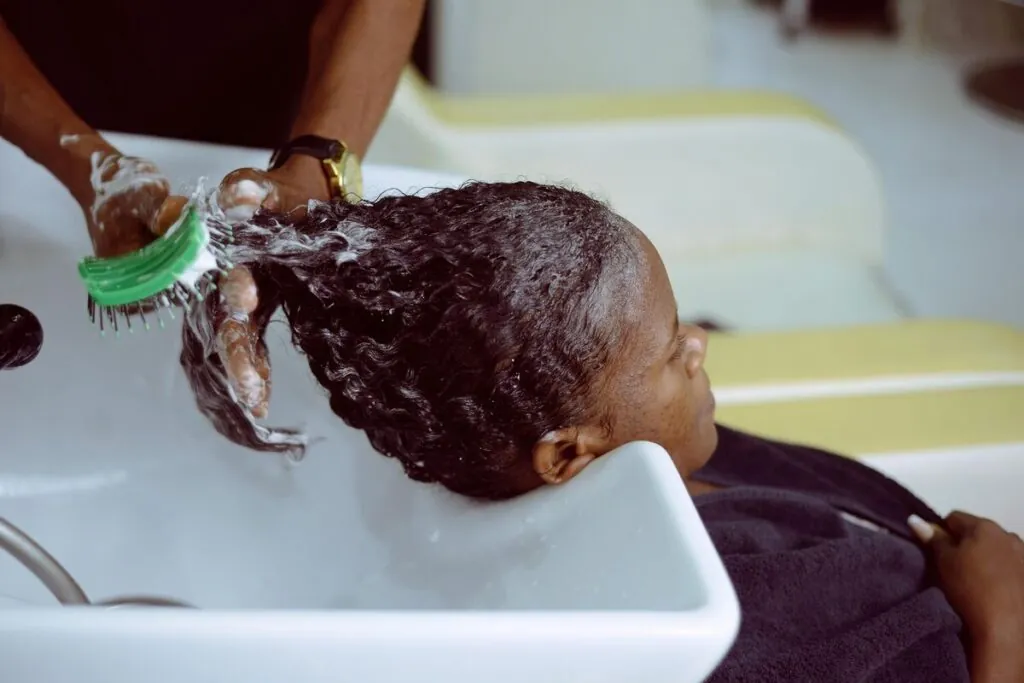
Sulfates are not toxic or banned; they are simply strong. Sodium lauryl sulfate (SLS) is the harshest common one, while SLES and sodium coco-sulfate are milder. If your scalp gets oily within a day, you sweat a lot, or you have fine waves that go flat under creamy washes, a well-formulated gentle-sulfate shampoo followed by a good conditioner can work better than a sulfate-free one.
When to co-wash
Co-washing means “washing” with a cleansing conditioner instead of shampoo. It suits very dry, tightly coiled hair that hates lather, especially in dry winters. It does not clean the scalp deeply, so pair it with a proper shampoo at least once a week or every other wash, and avoid it if you have dandruff or an oily scalp.
When to clarify
A clarifying shampoo strips away build-up that gentle cleansers leave behind: hard-water minerals, silicones, butters, oils and city grime. It is a reset, not a daily wash. Always follow it with a deep conditioner or mask for 10–20 minutes, because clarifying leaves curls feeling stripped.
Hard Water and Build-Up
Hard water is common in much of North India, Bengaluru and anywhere you rely on borewell or tanker water. Its calcium and magnesium bind to hair, and over a few weeks you may notice:
- Curls that stop clumping and look dull or “fuzzy”
- Hair that feels stiff, rough or waxy even after conditioning
- Products that suddenly don’t seem to work
- More tangles and knots on wash day
Shampoos labelled “clarifying”, “detox” or “chelating”, with ingredients such as disodium EDTA, tetrasodium EDTA, sodium citrate or phytic acid, help remove mineral deposits. A shower filter can reduce the problem, though filters vary a lot in how much they remove.
If you also live in a smoggy city, pollution particles add to the film on your scalp. Our guide to caring for skin and hair after pollution exposure has a simple reset routine.
Oily Scalp With Dry Curls: What to Do
This is one of the most common curl problems in Indian heat and humidity: greasy roots by day two and dry, frizzy ends at the same time. You don’t have to pick between them.
- Wash the scalp, condition the ends. Apply shampoo only to the roots and massage for a full minute; use conditioner only from the ears down.
- Choose a lighter cleanser. A clear, non-creamy sulfate-free shampoo or a gentle-sulfate one suits oily scalps better than a rich, buttery wash.
- Double-cleanse the scalp on days when you have sweated, oiled or used dry shampoo. Lather twice on the roots only.
- Keep oils and butters off the scalp. Put leave-ins and curl creams on the lengths, starting a few centimetres from the roots.
- Wash more often if needed. An oily, itchy scalp is a sign to wash, not to stretch. Curls can be protected with conditioner and stylers.
If you like a pre-wash oil massage, keep it short and wash it out the same day; our honest guide to the best hair oil for hair growth in India explains which oils are worth using and what the evidence really says.
Shampoo Picks by Need
We have only named products that are well known and sold in India. Formulas change, so check the current label before you buy, and patch-test anything new behind your ear for 24–48 hours.
Dry, thick curls and coils
SheaMoisture Coconut & HibiscusFlowers and leaves used in traditional Indian hair packs and oils to condition hair and add softness.See glossary Curl & Shine Shampoo is a creamy sulfate-free wash with Coconut oilA common Indian hair oil that can soak into the hair shaft, which may reduce protein loss during washing. It can feel heavy on fine hair.See glossary and shea butter. It suits 3A–4C hair that feels dry most of the time, though it can be heavy on fine waves.
Cantu Shea Butter Sulfate-Free Cleansing Cream Shampoo is another rich, shea-based option for curly and coily hair. It works best with occasional clarifying, since shea-heavy routines build up more with hard water.
Wavy hair, oily scalp or build-up between clarifying washes
WOW Skin Science Apple Cider Vinegar Shampoo is a lighter, widely available choice that cleans more thoroughly than creamy washes, which wavy hair and oily scalps tend to like. Confirm the cleansers on the current label, and use a good conditioner after it.
Clarifying shampoo
Rather than relying on one brand, look for a shampoo marked “clarifying” or “detox” that contains a chelating ingredient such as EDTA or sodium citrate. Use it every 2–4 weeks, or after swimming in a chlorinated pool.
Co-wash
Look for a product labelled “co-wash” or “cleansing conditioner” which relies mostly on conditioning agents (often behentrimonium or cetrimonium compounds) with only a little mild cleanser, plus moisturisers such as GlycerinOne of the most common and effective humectants. It draws water into the skin and is found in most moisturisers and cleansers.See glossary or aloe vera. It is a top-up for dry coils, not a replacement for shampoo.
Dandruff with curly hair
Medicated shampoos with ketoconazole, zinc pyrithione, selenium sulfide or piroctone olamine target the yeast linked to dandruff. Leave the lather on your scalp for 3–5 minutes, keep it mostly off the lengths, and condition the ends well. If flakes persist after four weeks, or your scalp is red and sore, see a dermatologist. Our guide to winter hair fall and dandruff care covers this in more depth.
For a full comparison table of curl shampoos, conditioners and stylers, head to our curly hair products guide.
How Often Should You Wash Curly Hair?
There is no single rule, but these ranges work for most people. Adjust for sweat, scalp oil and the season.
| Hair and scalp | Shampoo | Extras |
|---|---|---|
| — | — | — |
| Wavy (2A–2C), oily scalp | Every 1–2 days | Clarify every 2 weeks if you use product daily |
| Curly (3A–3C), balanced scalp | 2–3 times a week | Water or co-wash refresh between washes; clarify every 3–4 weeks |
| Coily (4A–4C), dry scalp | Once or twice a week | Co-wash in between if needed; weekly deep conditioner |
| Any type, hard water | As above | Clarify every 2–4 weeks and follow with a mask |
In humid months you may need to wash more often because of sweat. In dry winters, most curlies can stretch washes a little and add a weekly mask. Whatever you use, a rich conditioner afterwards is non-negotiable; our guide to hair creams for curly hair explains what to layer on next.
Common Shampoo Mistakes With Curly Hair
- Scrubbing the lengths: this tangles and roughens curls. Clean the scalp and let the lather rinse through.
- Using hot water: very hot water dries both scalp and curls. Lukewarm is enough.
- Going sulfate-free but never clarifying: build-up from hard water and stylers dulls curls over time.
- Clarifying too often: weekly clarifying leaves most curls dry and frizzy.
- Co-washing an oily or flaky scalp: it rarely cleans enough and can make dandruff worse.
- Judging after one wash: give a new shampoo three to four washes, since hair often feels different while old build-up clears.
Next step: pair your shampoo with the right conditioner for curly hair and our full curly hair routine.
Frequently Asked Questions
Not always. It is the safer default for dry, coily or coloured curls, but wavy hair and oily scalps sometimes do better with a gentle-sulfate formula. What matters most is how your scalp and curls feel after three or four washes.
Only if you have very hard water and use heavy products, and even then follow it with a deep conditioner. For most curly hair, every 2–4 weeks is enough to remove build-up without drying the curls out.
For most people, no. Co-washing is gentle on very dry coils, but it does not remove sweat, oil and product as well as shampoo. Use a proper shampoo at least once a week or every other wash.
Choose a medicated anti-dandruff shampoo with an active ingredient such as ketoconazole or zinc pyrithione and use it on the scalp only, followed by a curl-friendly conditioner on the lengths. See a dermatologist if flakes continue after four weeks.
Many curlies switch to a creamier sulfate-free shampoo and wash a little less often in winter, when dry air makes curls brittle. If winter also brings dandruff, add a medicated shampoo for the scalp once or twice a week.
Yes. Shampoo is chosen by scalp and hair type, not gender. Men with short curls and active lifestyles often prefer a lighter, gentle-sulfate formula because they wash more often.
Quick poll
How often do you wash your hair?
The Bottom Line
The best shampoo for curly hair in India is a gentle everyday cleanser matched to your scalp, paired with a clarifying wash every few weeks to beat hard water. Wash your scalp, condition your lengths, and let your curls tell you whether to go lighter or richer.
If you notice heavy shedding, patchy hair loss or a scalp that stays itchy and inflamed, see a dermatologist rather than switching shampoos again.