Best Conditioner for Curly Hair in India: How to Choose and Use
How to choose the best conditioner for curly hair in India: rinse-out, deep and leave-in types, protein vs moisture, key ingredients and seasonal care.

The best conditioner for curly hair in India is a rich, silicone-light rinse-out conditioner with plenty of slip, backed up by a weekly deep conditioner and a Leave-in conditionerA light conditioner you do not rinse out. It helps with detangling, frizz and moisture, especially for curly or dry hair.See glossaryRead the guide that suits your curl type and Hair porosityHow easily your hair absorbs and holds moisture. Low-porosity hair resists water; high-porosity hair absorbs it fast but loses it quickly.See glossaryRead the guide. Which one works best depends less on the brand and more on whether your curls are craving moisture or protein right now.
This guide shows you how to tell the difference, which ingredients to look for on the label, how to use the “squish to condish” method, and how to adjust your conditioning for dry winter air and sticky monsoon humidity. For the full product line-up from shampoo to gel, see our guide to the best curly hair products in India.
Quick Summary: Conditioning Curly Hair
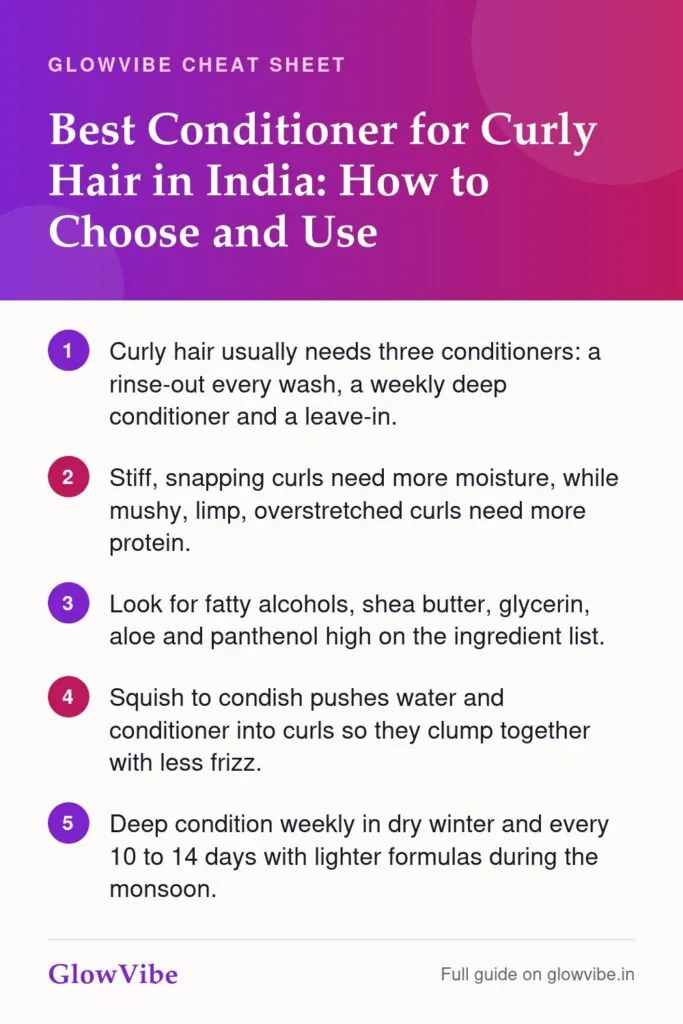
- Use three types: a rinse-out conditioner every wash, a deep conditioner once a week or so, and a leave-in on damp hair.
- Balance protein and moisture: mushy, limp curls want protein; straw-like, snapping curls want moisture.
- Look for slip and HumectantAn ingredient that attracts water, such as glycerin or hyaluronic acid. Humectants hydrate best when sealed in with a moisturiser.See glossaryRead the guide: fatty alcohols, shea butter, GlycerinOne of the most common and effective humectants. It draws water into the skin and is found in most moisturisers and cleansers.See glossary, aloe and PanthenolPro-vitamin B5, a soothing and hydrating ingredient used in skin and hair products to calm and soften.See glossary are good signs.
- Squish, don’t rinse it all out: squish to condish helps curls clump and cuts frizz.
- Match porosity: low-porosity hair likes lighter formulas and gentle heat; high-porosity hair likes butters and some protein.
- Change with the season: deep condition more in dry winter, keep formulas lighter in the monsoon.
Rinse-Out vs Deep Conditioner vs Leave-In
Curly hair is naturally drier than straight hair because scalp oil struggles to travel down a coiled strand, so most curly routines use more than one conditioning product.
| Type | When to use | What it does | Best for |
|---|---|---|---|
| Rinse-out conditioner | Every wash day, after shampoo | Smooths the cuticle, adds slip for detangling | Everyone with curls |
| Deep conditioner / hair mask | Once every 1–2 weeks, 10–30 minutes | Delivers more moisture or protein than a daily conditioner | Dry, coloured, heat-damaged or high-porosity hair |
| Leave-in conditioner | On damp hair after washing, before styling | Keeps moisture in through the day, softens frizz | Curly and coily hair; light versions for waves |
Rinse-out conditioner
This is your everyday workhorse. A good one feels slippery between your fingers, so a wide-tooth comb or your fingers glide through knots without snapping strands. Apply it from mid-lengths to ends and keep it off the scalp if your roots get oily.
Deep conditioner
A deep conditioner (also sold as a hair mask or masque) is thicker and stays on longer. Leave it on for 10–30 minutes, ideally under a shower cap so your body heat helps it work. Some are moisture-focused, some contain protein, so read the label before you pick one.
Leave-in conditioner
A leave-in is a lighter cream, lotion or spray that you don’t wash out. On wavy hair it might be all you need before a gel. On thick curls and coils, it’s the base layer under your curl cream or gel. If you’re not sure how leave-ins differ from curl creams, our guide to choosing hair creams for curly hair explains the overlap.
Protein vs Moisture Balance
Curls need both moisture (water inside the strand) and protein (which temporarily patches gaps in the cuticle). Too much of either throws your curls off, and most “my conditioner stopped working” complaints come down to this.
Signs your hair needs more moisture (too much protein)
- Curls feel stiff, rough or straw-like, even after conditioning
- Strands snap with a small tug instead of stretching first
- Hair looks dull and frizzes in a dry, crunchy way
- Your products contain KeratinThe protein that hair is made of. "Keratin treatments" are salon smoothing services, and some contain formaldehyde-releasing chemicals.See glossary, silk, rice or wheat protein and you’ve used them every wash
Fix: switch to a protein-free, moisture-rich conditioner and deep conditioner for two or three washes. Look for shea butter, aloe, glycerin and fatty alcohols.
Signs your hair needs more protein (too much moisture)
- Curls feel mushy, gummy or overly soft when wet
- Strands stretch a long way and don’t spring back
- Curls go limp, lose their shape and won’t hold a clump
Fix: use a protein deep conditioner once, then add a protein-containing product every second or third wash. Coloured, bleached or heat-styled hair usually needs protein more often.
The simple stretch test
Take one clean, wet shed hair and gently pull it. If it stretches a little and bounces back, you’re balanced. If it snaps almost at once, lean towards moisture. If it stretches a lot and stays stretched or breaks after a long stretch, lean towards protein. It’s a rough guide, not a lab test.
Ingredients to Look For (and When to Be Careful)
Focus on the first five to seven ingredients, since they make up most of the formula.
| Ingredient group | Examples on the label | Why curls like it |
|---|---|---|
| Fatty alcohols | Cetyl alcohol, cetearyl alcohol, stearyl alcohol | Softening and slip; these are not drying like “alcohol denat.” |
| Conditioning agents | Behentrimonium chloride, behentrimonium methosulfate | Detangling and smoothing |
| Butters and oils | Shea butter, cocoa butter, coconut, argan, avocado oil | Seal moisture in and add softness |
| Humectants | Glycerin, aloe vera, panthenol, honey | Draw water into the hair |
| Proteins | Hydrolysed keratin, silk, wheat, rice or soy protein | Strength and structure for weak or damaged curls |
Ingredients to be careful with
- Heavy SiliconesIngredients like dimethicone that coat hair (and skin) for slip, shine and frizz control. Heavier ones can build up and need a clarifying wash.See glossaryRead the guide (like dimethicone): they smooth well, but can build up if your shampoo is very gentle. If you use them, clarify every couple of weeks.
- Drying alcohols high on the list: alcohol denat. or isopropyl alcohol near the top can feel drying on curls.
- Glycerin in extreme weather: glycerin pulls water from the air. In very sticky monsoon air it can cause puffiness for some people, and in very dry winter air it may feel less effective. If your curls frizz in one season, check whether glycerin is high on the list.
How to Use Conditioner on Curls: The Squish to Condish Method
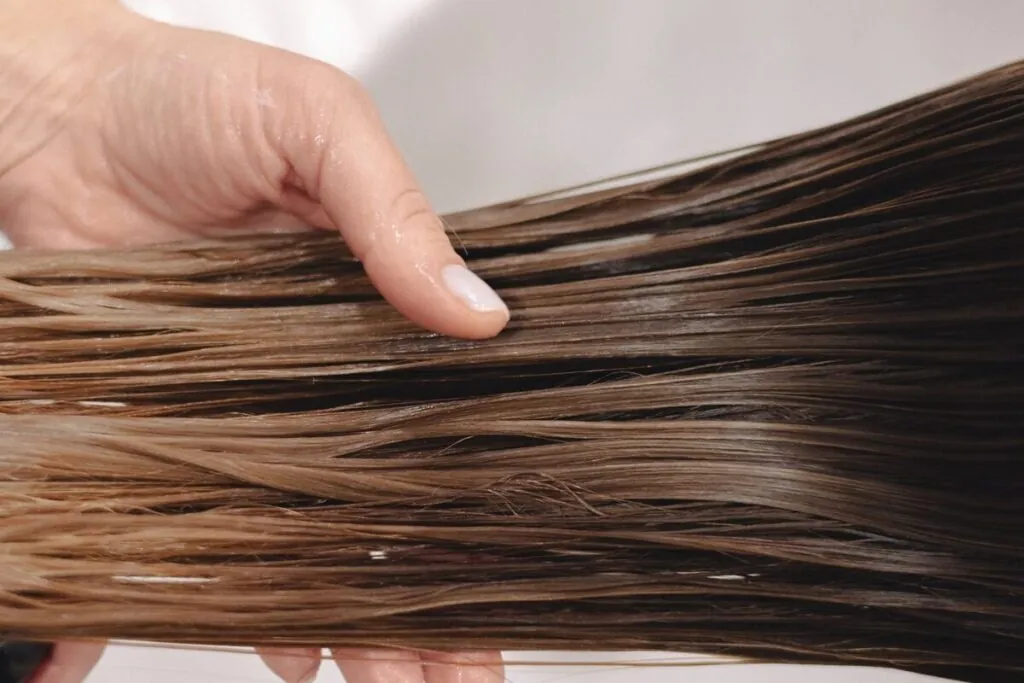
Squish to condish is a technique that pushes water and conditioner into your curls so they clump together. It’s one of the easiest ways to get better definition and less frizz without buying anything new.
- Shampoo and rinse, then apply a generous amount of rinse-out conditioner to soaking-wet hair, focusing on mid-lengths and ends.
- Detangle with your fingers or a wide-tooth comb while the conditioner is in. Work from the ends up.
- Flip your head forward or to one side. Cup a handful of water from the shower.
- Squish upwards: scrunch sections of hair up towards your scalp with the water in your palms. You should hear a squelching sound. That’s the conditioner and water being pushed into the strand.
- Repeat for 1–2 minutes around your whole head, until curls start forming clumps and feel slippery.
- Rinse lightly or not at all. Waves and fine curls do better with a light rinse; thick, dry curls and coils can leave a little conditioner in.
- Apply leave-in and styler on wet hair straight away, then blot with a cotton T-shirt or microfibre towel instead of rubbing.
If your hair feels greasy or flat after squish to condish, rinse more thoroughly next time or use less conditioner.
Picks by Curl Type and Porosity
Curl type (wavy, curly, coily) tells you how much weight your hair can carry. Porosity tells you how easily it takes in and holds water. Use both to choose.
Wavy hair (2A–2C)
Waves get weighed down quickly. Choose a lightweight rinse-out conditioner and use it mainly on the ends. Skip heavy butters and use a light leave-in spray or lotion, or skip leave-in and go straight to gel. Deep condition only every two weeks unless your ends feel dry.
Curly hair (3A–3C)
Most curly hair does well with a creamy rinse-out conditioner plus a leave-in. SheaMoisture Coconut & HibiscusFlowers and leaves used in traditional Indian hair packs and oils to condition hair and add softness.See glossary Curl & Shine Conditioner is a widely available option with good slip for detangling. Follow with a leave-in such as Cantu Shea Butter Leave-In Conditioning Repair Cream if your curls are on the drier side, using a pea-to-coin-sized amount per section.
Coily hair (4A–4C)
Coils need the most moisture and slip. Use a rich rinse-out, detangle in sections, leave a little in after squish to condish, and deep condition weekly. A thick, buttery leave-in like the Cantu one above suits most coily hair.
Low-porosity hair
Low-porosity hair resists water: it’s slow to get wet, slow to dry, and products sit on top. Use lighter, more liquid conditioners and avoid piling on butters. Apply deep conditioner to damp (not dripping) hair and add gentle warmth with a shower cap and warm towel so it can absorb. Clarify every two to three weeks, since buildup is a common problem.
High-porosity hair
High-porosity hair soaks water up fast and loses it just as fast. It’s common in bleached, coloured, heat-styled or sun-damaged hair. It usually likes richer formulas with butters and some protein. A repair-focused mask such as Briogeo Don’t Despair, Repair! Deep Conditioning Mask or Moroccanoil Intense Hydrating Mask can help, followed by a leave-in and a light oil or cream to seal.
| Your hair | Rinse-out | Deep conditioner | Leave-in |
|---|---|---|---|
| Fine waves, low porosity | Light, on ends only | Every 2 weeks, with warmth | Light spray or skip |
| Thick waves, medium porosity | Creamy, mid-lengths to ends | Every 1–2 weeks | Light lotion |
| Curly, medium porosity | Creamy with good slip | Weekly or fortnightly | Cream leave-in |
| Curly or coily, high porosity | Rich, butter-based | Weekly; alternate protein and moisture | Thick cream, then seal |
| Coily, low porosity | Rich but not waxy | Weekly, with gentle heat | Cream, in small amounts |
How Often to Deep Condition: Winter vs Monsoon
India’s weather changes a lot across the year, and your curls notice. Here’s how to adjust.
Winter (November to February in most of North India)
Cold, dry air, especially in Delhi, Punjab, Uttar Pradesh and the hills, pulls moisture out of curls. Deep condition once a week, and coily or high-porosity hair may like it twice a week. Choose moisture-focused masks with butters, and seal your leave-in with a little oil or cream. Use lukewarm water, not hot. If you’re also dealing with flakes or more shedding this season, our guide to winter hair fall and dandruff care covers the scalp side.
Winter is also wedding season. If you have a big function coming up, do a deep conditioning treatment two to three days before, not the night before, so your curls have time to settle. Don’t try a brand-new mask right before an event; test it on a normal wash day first.
Monsoon (June to September)
In humid weather, curls take on water from the air and frizz easily. Deep condition every 10–14 days, and keep formulas lighter. Lean on protein a little more if curls turn limp or mushy. Rinse your conditioner a bit more thoroughly and rely on a firmer gel to hold your clumps.
Common Conditioning Mistakes
- Applying conditioner to the scalp: it can make roots oily and flat. Keep it on mid-lengths and ends unless your scalp is very dry.
- Detangling dry hair: always detangle with conditioner in, starting from the ends.
- Using protein every wash: this is a common cause of stiff, snapping curls.
- Skipping clarifying: layers of butters and silicones build up. A clarifying wash every two to four weeks resets your curls.
Next step: choose a shampoo for curly hair that won’t undo your conditioner, then a styler from curl cream vs gel vs mousse.
Frequently Asked Questions
There isn’t one best conditioner for everyone. Look for a creamy rinse-out with fatty alcohols and good slip, then choose a leave-in and deep conditioner based on your curl type and porosity. Widely available options include SheaMoisture Coconut & Hibiscus Curl & Shine Conditioner for daily use and Cantu Shea Butter Leave-In Conditioning Repair Cream as a leave-in.
Yes, this is called co-washing, and many people with dry curls or coils co-wash between shampoo days. Use a conditioner without heavy silicones and massage your scalp well. Still use a gentle shampoo every few washes so oil and product don’t build up.
If your curls feel stiff, rough and snap easily, they need moisture. If they feel mushy, limp and overly stretchy, they need protein. Try the stretch test on a wet shed hair and watch how your curls behave over a few washes.
For fine waves, a light leave-in can be enough before a gel. Most curly and coily hair also needs a rinse-out conditioner for detangling on wash day. The rinse-out helps you detangle, and the leave-in keeps moisture in through the day.
Conditioner reduces breakage from tangles and dryness, which can make your hair look fuller. It doesn’t treat hair fall from the root. If you’re shedding a lot, losing patches or noticing thinning, see a dermatologist.
Quick poll
How much do you usually spend on one beauty product?
The Bottom Line
Great curls start with good conditioning: a slippery rinse-out on every wash, a deep conditioner matched to your protein and moisture needs, and a leave-in that suits your curl type. Use squish to condish to help your curls clump, and adjust how often you deep condition as the weather swings from dry winter to humid monsoon. When you’re ready to build the rest of your routine, browse our full guide to the top curly hair products available in India.