Empty Makeup Palette: How to Choose, Depot and Fill One (2026)
How to pick an empty makeup palette and fill it safely: depotting pressed powders, handling cream products, labelling pans and keeping your custom palette hygienic.

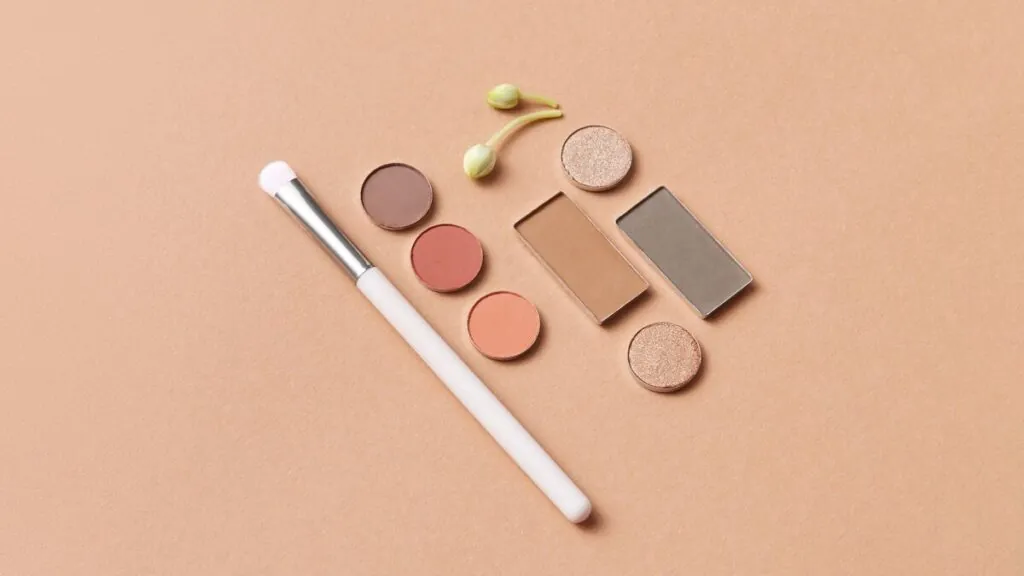
An empty makeup palette is a blank case, usually magnetic, that you fill with single pans of eyeshadow, blush, highlighter, bronzer or concealer so your favourite shades sit together in one compact. It is the easiest way to cut drawer clutter, travel lighter and stop buying full palettes for the two shades you actually use.
This guide covers the main types of empty palettes, how to choose one, and, most importantly, how to depot and fill one safely: pressed powders, cream products, labelling and hygiene. A little care at the filling stage decides whether your custom palette lasts years or turns into a crumbly, mouldy mess by the monsoon.
Why use an empty makeup palette?
- Less clutter: ten loose singles and three half-used quads become one flat compact.
- A palette that is all “yours”: build a work palette, a festive palette or a travel face palette with exactly the shades you reach for.
- Lighter travel: one case with a mirror replaces a pouch full of bulky packaging.
- Less waste and better value over time: refill pans from brands that sell them cost you less packaging, and you only replace the shade that runs out.
Types of empty makeup palettes
Most empty palettes fall into four groups. The right one depends on what you plan to put inside and whether it will live on your dresser or in your handbag.
| Palette type | How pans stay in | Best for | Watch out for |
|---|---|---|---|
| Magnetic palette (open base) | Magnetic sheet holds metal-backed pans anywhere | Mixing pan sizes and shapes; depotted eyeshadows and blushes | Aluminium pans need a metal sticker; weak magnets let pans slide in transit |
| Brand refill system | Fixed wells or a magnetic base sized for that brand’s refills | Building from one brand, e.g. MAC Pro Palette refills or the Inglot Freedom System | Pans from other brands may not fit the wells |
| Palette with removable inserts or dividers | Snap-in wells or dividers you rearrange | Neat layouts, mixing round and square pans | Inserts can crack; check the depth for thicker pans |
| Small lidded pans / mixing palette | Separate pots or a flat tray with sealed lids | Cream products, custom concealer or lip mixes, pressed loose pigments | Creams dry out or pick up dust if lids are loose |
Magnetic empty palettes
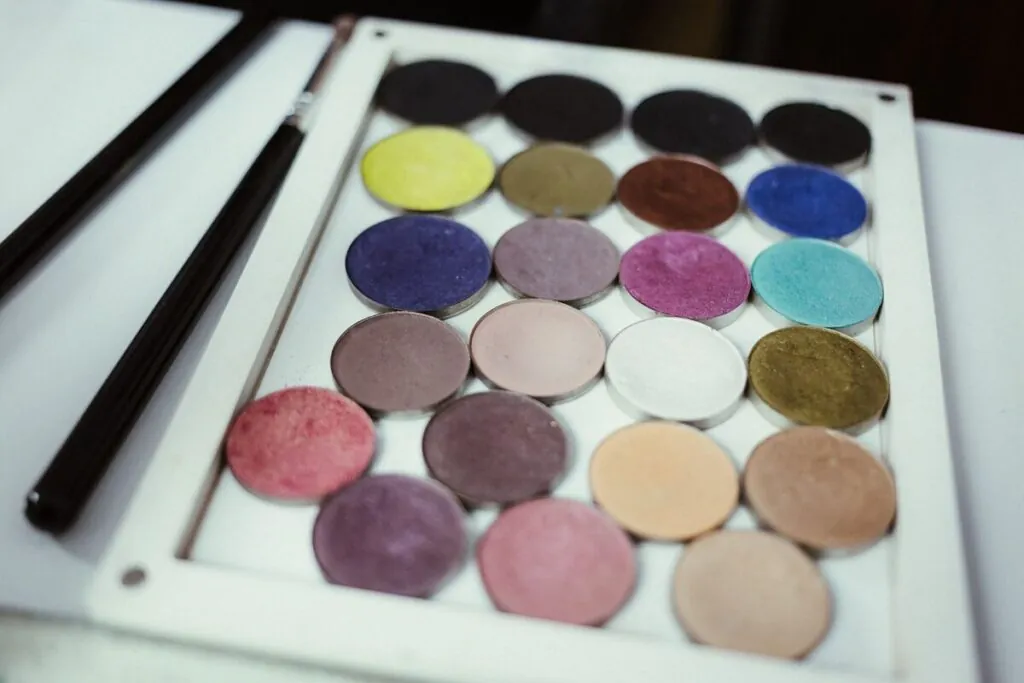
These are the most flexible and the most popular. A magnetic sheet lines the base, and any pan with a steel (magnetic) back sticks wherever you place it. You can mix a big blush pan with tiny eyeshadow pans and rearrange them whenever your mood or the season changes.
- Pros: takes almost any pan shape; easy to swap shades; often slim and mirrored.
- Cons: many pans are aluminium and will not stick until you add a metal disc or sticker; cheap magnets may not hold in a bumpy cab ride.
Brand refill systems
Some brands sell single shades as refill pans designed for their own empty palettes. MAC’s Pro Palette and Inglot’s Freedom System are long-running examples you can find in India. You choose the palette size (one shade up to a full face), then add pans one by one.
- Pros: pans fit perfectly; no depotting; less packaging.
- Cons: you are mostly locked into that brand’s shade range and pan size.
Palettes with inserts and lidded pans
Palettes with removable inserts suit people who like a tidy grid. Lidded pots and flat mixing palettes are the better home for creams, balms and anything you press yourself, because a lid keeps out dust and slows drying.
How to choose the right empty palette
- Measure your pans first. Note the diameter and depth of what you want to depot. A palette that is too shallow will not close over deep blush or highlighter pans.
- Check magnet strength. For travel, choose a firm magnetic base and a snap or magnetic lid closure so it does not pop open in your bag.
- Pick sturdy material. Thick card with a magnetic sheet is light; plastic or metal cases survive drops and humidity better.
- A clear lid or window helps you spot shades at a glance; a mirror is handy for touch-ups on the go.
- Think about climate. In humid cities like Mumbai, Chennai or Kolkata, a well-sealed case keeps powders from going hard or patchy. Card palettes can warp if they sit in a steamy bathroom.
If you are still choosing which eyeshadows deserve a spot, our guide to the best professional eyeshadow kits can help you narrow down shades before you start depotting.
How to depot pressed powders safely
Depotting means removing a pan of eyeshadow, blush, bronzer or highlighter from its original packaging so it can go into your empty palette. Most pans are glued in, so you need to loosen the glue gently without cracking the powder or cutting yourself.
What you need
- A thin, flat tool such as a palette knife, a blunt butter knife or an old metal spatula
- Isopropyl alcohol (the higher the percentage the better for loosening glue) in a dropper or spray bottle
- Metal stickers or discs for non-magnetic pans
- Small labels and a fine permanent marker
- Tissues, cotton buds and a clean, flat surface lined with paper
Step by step
- Check the product first. Only depot powders that are within their period-after-opening (the open-jar symbol, such as 12M or 24M) and look and smell normal. Never transfer a pan with fuzzy spots, a sour smell or a hard, shiny film you cannot scrape away.
- Wash your hands and wipe your tools with isopropyl alcohol, and let them dry.
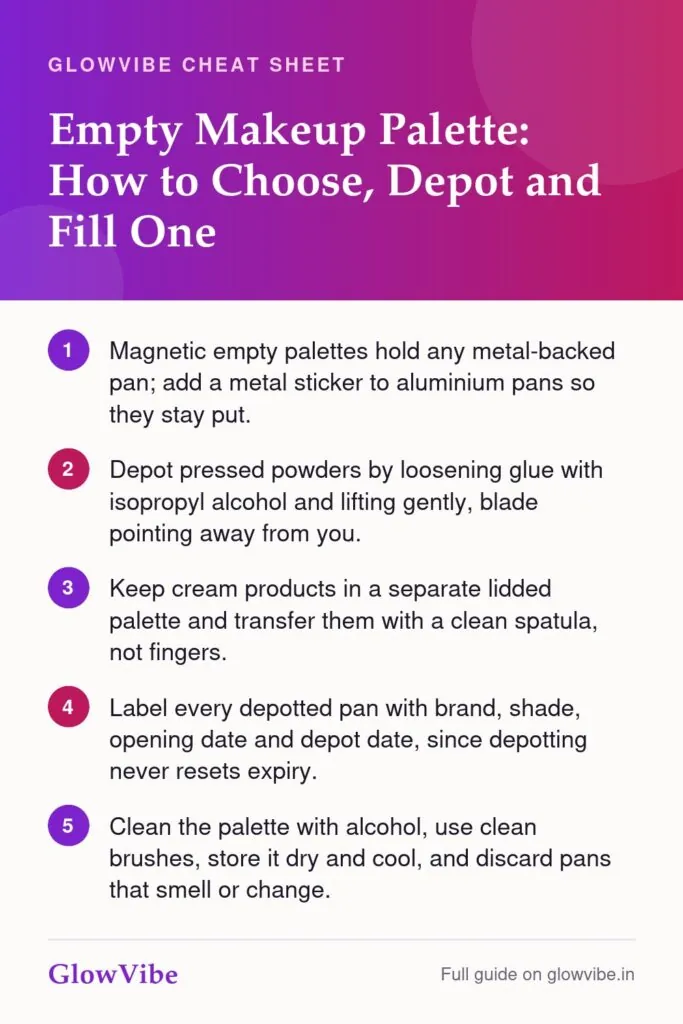
- Loosen the glue with alcohol, not force. Drip a few drops of isopropyl alcohol around the edge of the pan and let it seep under for a minute. Many glues soften enough for the pan to lift out.
- Lever from the side, blade pointing away from you. Slide your flat tool under the pan edge and lift slowly. Work around the pan rather than prying hard in one spot, which bends the metal and cracks the powder.
- If you use heat, keep it gentle. Some people warm stubborn plastic compacts briefly on a low hair straightener with foil between, so the glue softens. Keep it short, keep the room ventilated, never heat a compact directly over a flame, and never microwave makeup or metal pans. Stop if the plastic starts to smell or soften.
- Let the pan dry fully, powder side up, for a few hours or overnight if alcohol touched the product.
- Add a metal sticker to the back if the pan does not stick to a magnet, then place it in your palette.
Cracked a pan? Crush the pieces back into the pan, add a few drops of isopropyl alcohol to make a damp paste, press flat with a coin wrapped in tissue, and let it dry completely before closing the palette. The same method works for pressing loose eyeshadow or pigment into empty pans. Check the original label first, though: some loose pigments are not approved for use around the eyes.
Can you put cream products in an empty palette?
Yes, but creams need more caution than powders. Cream blushes, concealers, foundation sticks and lipsticks contain oils and often water, so they dry out, pick up bacteria and spoil faster once they are exposed.
- Use a separate palette with a tight lid for creams. Do not store them next to powders, where powder dust settles on them and creams can make powders patchy.
- Scoop, don’t melt, where you can. Transfer creams with a clean spatula into small pans and smooth the top. Melting lipsticks or balms is possible on very low heat, but heat can change texture and is best avoided for products with SPF (sun protection factor)A measure of protection against UVB rays, which cause sunburn. SPF 30 blocks about 97% of UVB and SPF 50 about 98%, if you apply enough and reapply.See glossaryRead the guide.
- Keep the original expiry. Depotting does not reset the clock. Cream products usually have a shorter period-after-opening than powders, so follow the symbol on the original packaging.
- Apply with a spatula or brush, not fingers dipped straight into the pan, to keep the surface clean.
- Keep creams cool. Indian summers can melt balms in a car or handbag; store the palette away from windows and heaters.
A custom cream palette is especially useful for lips. If you want ideas on which shades and finishes to combine, see our guide to lip makeup products and building a lip kit.
Labelling your depotted pans
Once a pan leaves its box, you lose the shade name, brand, batch code and expiry. A two-minute labelling habit saves you from guessing later.
- Many pans have the shade name and batch number printed or stickered on the back. Keep that sticker, or cut it from the packaging and stick it on.
- Write the brand, shade name, date opened and date depotted on a small label on the back of the pan.
- Add a front label or a note inside the lid if you mix similar shades, so you do not confuse two browns or two peachy blushes.
- Snap a quick photo of the original box with its ingredient list before throwing it away. It helps if you ever react to a product.
Hygiene and care for your custom palette
- Clean the empty palette before filling. Wipe the inside with a tissue dampened with isopropyl alcohol and let it dry fully. Avoid harsh solvents that can cloud clear lids or lift the magnetic sheet.
- Sanitise powder surfaces now and then. A light mist of isopropyl alcohol over pressed powders, allowed to evaporate, is a common way to refresh them. Scrape off any hard, shiny layer with a clean spatula.
- Use clean brushes. Dirty brushes carry oil and bacteria straight into your pans. Wash them regularly and store them dry; our makeup brush pouch guide covers care and storage.
- Store it dry and cool. Keep palettes out of the bathroom and away from direct sun. A silica gel packet in your makeup drawer helps during the monsoon.
- Don’t share eye products. Even in a custom palette, sharing eyeshadow and cream products can spread eye infections.
- Replace when in doubt. Throw out any pan that changes smell, colour or texture, or that you have had for well past its period-after-opening. If a product causes redness, itching or swollen eyes, stop using it and see a doctor if it does not settle quickly.
Smart ways to use an empty palette
- Everyday face palette: one bronzer, one blush, one highlighter and two or three neutral eyeshadows for a quick office look.
- Festive and wedding palette: shimmer shadows, a deeper blush and a strong highlighter for sangeet and reception nights. Our wedding guest makeup guide has looks to build around.
- Travel palette: everything for a full face in one slim case, plus a pressed powder. If you are choosing that powder, see our makeup face powder guide.
- A thoughtful gift: a new palette filled with refill pans (never used or depotted ones) chosen for a friend’s skin tone.
Common mistakes to avoid
- Prying pans out with a sharp blade pointed towards your hand.
- Overheating plastic compacts, or heating anything in a microwave or over a flame.
- Closing the palette before alcohol-pressed or repaired pans are completely dry, which can trap moisture.
- Depotting old or expired makeup just because the packaging was pretty.
- Mixing creams and powders in one open palette.
- Throwing away the box without noting the shade name and expiry.
For more habits that quietly ruin makeup, read our list of everyday makeup mistakes and how to fix them.
Frequently Asked Questions
It holds single makeup pans, such as eyeshadow, blush, bronzer and highlighter, on a magnetic base so you can create your own palette. You can rearrange or swap pans whenever you like. It is popular for decluttering and for travel.
Many makeup pans are made of aluminium, which is not magnetic. Stick a small metal disc or adhesive metal sticker on the back of the pan and it will hold firmly. Test with a fridge magnet before you depot if you are unsure.
Gentle, short heat can soften glue, but it carries a risk of burns, melted plastic and fumes. Try isopropyl alcohol first, which loosens most glues without heat. If you do use heat, keep it low, work in a ventilated room and never use a microwave or open flame.
No. The product keeps the period-after-opening from its original packaging, counted from when you first opened it. Write the opening date on the back of the pan so you know when to replace it.
Yes, ideally in a separate palette or lidded pans so creams do not dry out or collect powder dust. Transfer them with a clean spatula and apply with a brush. Creams usually spoil sooner than powders, so check them often.
Remove the pans, wipe the inside with a tissue dampened with isopropyl alcohol and let it air-dry before refilling. Avoid soaking card palettes or using harsh solvents that can damage the magnet sheet or a clear lid.
They can be. Buying refill pans instead of full compacts means less plastic and packaging, and you only replace the shade you finish. The benefit is biggest when you use the palette for years and buy refills rather than new palettes.
Quick poll
How much do you usually spend on one beauty product?
Final thoughts
An empty makeup palette turns a messy collection into a few compacts you actually use. Choose a sturdy magnetic or refill-system palette that fits your pans, depot with alcohol and patience rather than force, keep creams separate, and label everything. Store it dry and cool, and your custom palette will stay clean and reliable through Indian heat and monsoon alike.