Lip Makeup Products: Types, Finishes and How to Build a Lip Kit (2026)
Every type of lip makeup product explained, from liner and liquid lipstick to tint, gloss and balm, with tips on building a lip kit for Indian skin and weather.

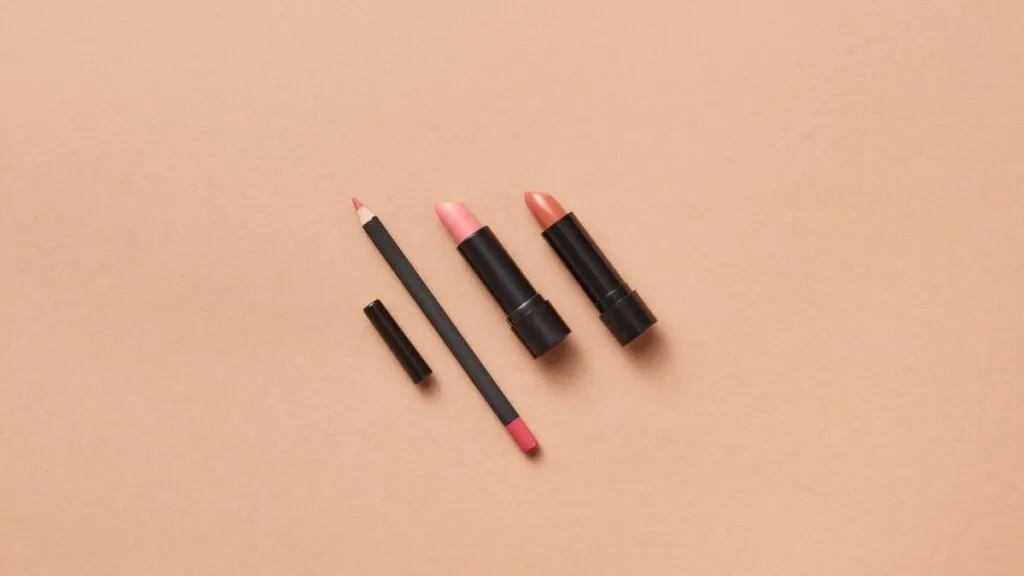
The main lip makeup products are lip liner, lipstick (matte, satin, cream or sheer), liquid lipstick, lip gloss, lip tint or stain, lip balm, lip plumper, and prep products like lip scrub and lip primer. Each one does a different job, so a good lip kit has a few of them that work together. You don’t need all ten.
This guide explains what each type does, who it suits and how to apply it. It also covers picking a finish for Indian heat and humidity and building a small lip kit that covers office days, weddings and lazy weekends. If you want shade picks, we have separate guides for those, linked below.
Lip makeup products at a glance
Use this table to see what each product does before you spend on it.
| Product | What it does | Finish | Wear time | Best for |
|---|---|---|---|---|
| Lip liner | Defines shape, stops feathering, base for colour | Matte to satin | Long | Everyone, especially with bold shades |
| Bullet lipstick | Main colour | Matte, satin, cream or sheer | Medium | Daily wear, easy touch-ups |
| Liquid lipstick | Intense colour that sets | Mostly matte | Long | Weddings, long days, humid weather |
| Lip gloss | Shine and a fuller look | Glossy | Short | Fresh, young looks; topping lipstick |
| Lip tint / stain | Sheer colour that soaks in | Natural, “just-bitten” | Medium to long | No-makeup makeup, college, gym |
| Lip balm | Moisture and protection | Sheer, soft shine | Short | Daily care, under matte formulas |
| Lip plumper | Temporary fuller look | Glossy | Short | Occasional use, photos |
| Lip scrub / primer | Smooths and preps | None | Prep only | Dry, flaky lips; long-wear lipstick |
Types of lip makeup products
Here is each product type in the order you would usually apply it: prep first, then definition, colour and finishing touches.
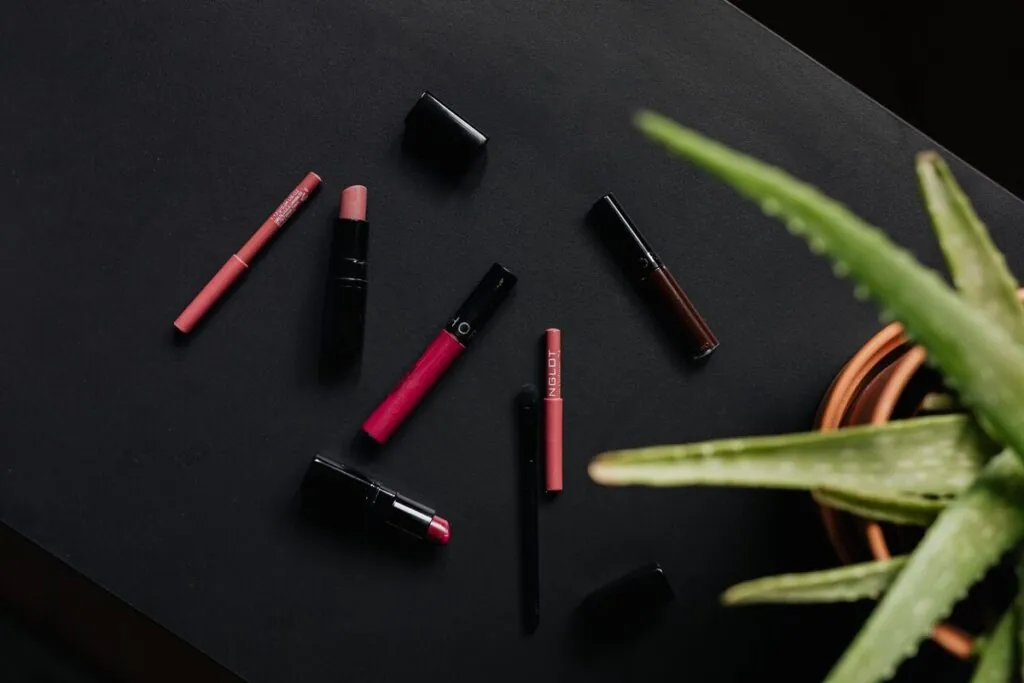
Lip scrub and lip primer
A lip scrub (sugar in an oil or balm base) gently removes flaky skin so colour doesn’t cling to dry patches. Use it once or twice a week, not daily. Our guide to using a lip scrub the right way includes easy DIY versions.
A lip primer is a thin, waxy or creamy layer that evens out the lip surface, helps colour grip and slows feathering. It’s optional. Many people simply use a thin balm and blot it.
- Pros: smoother application, matte formulas look less patchy
- Cons: scrubbing too often makes lips sore and more prone to chapping
Lip liner
Lip liner is a pencil (wooden or twist-up) that outlines your lips. It keeps lipstick from bleeding into fine lines, can balance uneven lips and, used to fill in the whole lip, gives colour something to hold on to so it lasts longer.
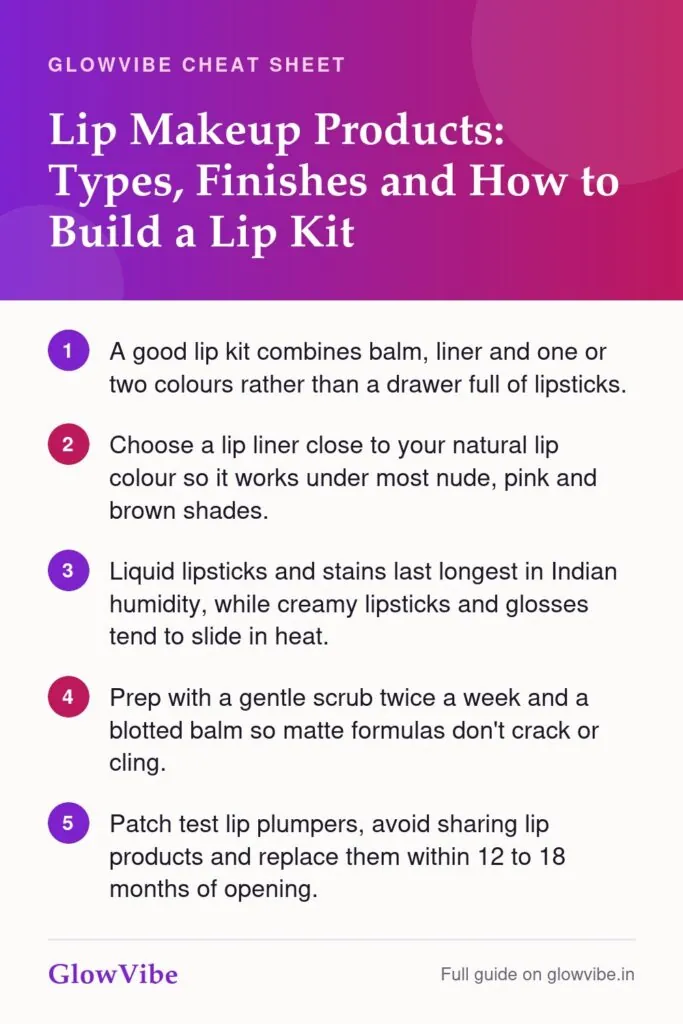
If you buy only one, choose a liner close to your natural lip colour. Many Indian lips are a little darker or more pigmented at the edges, and a lip-toned brown or rosy-brown liner works under almost every nude, pink and brown lipstick.
- Pros: sharper edges, longer wear, fixes uneven lip lines
- Cons: a liner much darker than the lipstick leaves a visible ring as the colour fades
Lipstick finishes: matte, satin, cream and sheer
Bullet lipstick is still the easiest everyday product: quick to apply, easy to touch up and available in every budget. The finish decides how it looks and feels:
- Matte: no shine, high colour, lasts longer. It can feel dry and shows flakes.
- Satin: a soft sheen with good colour. The most forgiving finish for daily wear.
- Cream: creamy and comfortable with a slight shine. It transfers more and may need a touch-up after meals.
- Sheer: balm-like with a wash of colour. Great for dry lips and beginners, but it wears off fast.
For shade ideas for Indian skin tones, see our round-up of the best lipsticks in India, and our red velvet lipstick colour guide if you want a classic deep red.
Liquid lipstick
Liquid lipstick goes on wet with a doe-foot applicator and dries down, usually to a matte finish. Once set, it barely moves. That makes it the go-to for weddings, long workdays and sticky monsoon months. Well-known options in India include Maybelline SuperStay Matte Ink, SUGAR Smudge Me Not and Nykaa Matte to Last.
Apply one thin layer, let it dry fully and add a second only if needed. Thick layers crack and feel heavy. To compare sets and shades, read our guides to choosing a matte liquid lipstick set and the most wearable brown liquid lipstick shades.
- Pros: very long wear, transfer-resistant, intense colour
- Cons: can be drying, hard to touch up neatly, needs an oil-based remover
Lip gloss
Gloss adds shine, which catches the light and makes lips look fuller. Clear gloss works over any lipstick. Tinted gloss, such as Maybelline Lifter Gloss, gives a glassy wash of colour on its own.
- Pros: instant fullness, comfortable, softens a matte lip
- Cons: wears off quickly, some formulas feel sticky, open hair sticks to it on windy days
Lip tint and lip stain
Tints and stains are water- or gel-based colours that sink into the lips instead of sitting on top. They look like your own lips, only brighter, and fade evenly instead of leaving a patchy ring. Many double up as cheek tint, which is handy for travel.
Apply to bare, balm-free lips, blend with a fingertip and work quickly, because they set fast. Add a thin balm on top if your lips feel tight.
Lip balm
Balm is the one lip product everyone needs. Look for ingredients such as shea butter, cocoa butter, beeswax, petrolatum or Vitamin E (tocopherol)An antioxidant and moisturising ingredient. It is often paired with vitamin C to make it more stable.See glossary, and choose one with SPF (sun protection factor)A measure of protection against UVB rays, which cause sunburn. SPF 30 blocks about 97% of UVB and SPF 50 about 98%, if you apply enough and reapply.See glossaryRead the guide for daytime, since lips burn and darken in strong sun too. Nivea, Vaseline Lip Therapy and Lakmé all sell easy-to-find balms. An overnight mask like Laneige Lip Sleeping Mask is a more premium option.
Tinted balms are a good middle ground between care and colour. Strongly fragranced or flavoured balms can irritate sensitive lips, so switch to a Fragrance-freeA product with no added perfume or essential oils for scent. Often the safer pick for sensitive or reactive skin. "Unscented" can still contain masking fragrance.See glossary one if yours sting.
Lip plumper
Plumping glosses use ingredients such as peppermint, menthol, cinnamon or capsicum extracts that cause a tingle and briefly boost blood flow to the lips. The effect is mild and lasts a few hours at most.
Patch testTrying a small amount of a new product behind the ear or on the inner arm for a few days to check for a reaction before using it widely.See glossary it first: dab a little on your inner wrist or a small area of your lip and wait. Skip it if you have cracked lips, cold sores or a history of reactions, and stop if the tingle turns into burning or swelling.
How to choose lip products for Indian skin and weather
The right product depends on your undertone, lip condition, the weather and where you’re going.
By undertone
- Warm (golden, yellow): peach, coral, terracotta, brick red, warm browns
- Cool (pink, rosy): berry, mauve, plum, blue-reds, rose pinks
- Neutral or olive (common in India): rosewood, nude-brown, soft brick and most “true” reds
On medium to deep Indian skin, very pale beige nudes can look chalky. Choose a nude one or two shades deeper than your skin, or line with a brown pencil first.
By lip condition
- Dry or flaky: satin, cream, sheer lipstick, tinted balm; save liquid mattes for occasions
- Pigmented or uneven: a liner or a dab of concealer as a base, then a more opaque shade
- Thin lips: lighter or brighter shades plus gloss in the centre; avoid very dark mattes all over
- Full lips: anything goes; deeper mattes look striking and polished
By climate and occasion
In humid summers and the monsoon, creamy lipstick and gloss slide and settle into lip lines. Liquid lipstick, stains and blotted mattes hold up better. In dry north Indian winters or air-conditioned offices, switch to satin and cream formulas and keep a balm in your bag.
For festivals and weddings, long-wear liquid lipstick in a deeper shade photographs well and survives eating and greeting. Our wedding guest makeup guide shows how to match lip colour to each function.
How to build a lip kit
You don’t need a drawer full of lipsticks. Build in layers and add to it only when you find a real gap.
- Starter kit (3 items): an SPF lip balm, a lip-toned liner and one satin or tinted balm in your “my lips but better” shade.
- Everyday kit (5–6 items): add a long-wear liquid lipstick in a wearable nude-brown or rosewood, a clear gloss and a lip tint for no-makeup days.
- Occasion kit: add one statement shade (a red, berry or deep plum) with a matching liner, and a lip scrub for prep the night before.
Keep the kit simple. A balm, a liner and one lipstick in your handbag covers almost every touch-up. Store lipsticks away from direct sun and car dashboards, as bullets soften and break in Indian summers.
How to apply lip makeup step by step
- Prep: scrub gently if lips are flaky (no more than twice a week), then apply a thin balm.
- Blot: after a few minutes, press a tissue on your lips to remove excess balm so colour doesn’t slide.
- Line: mark the centre of your cupid’s bow and the outer corners, then join the dots with short strokes. Stay on or just outside your natural line.
- Fill: lightly fill the lips with liner for longer wear.
- Colour: apply lipstick from the centre outwards, using a brush for bold shades and sharp edges.
- Set or shine: for bullet lipstick, blot, then reapply for staying power. Or dab gloss on the centre of the lower lip for fullness.
- Clean up: tidy edges with a little concealer on a flat brush.
At night, remove long-wear colour with a cleansing oil or bi-phase remover instead of scrubbing with wipes. Our guide to makeup remover face washes covers the gentlest options. Then apply a thick balm before bed.
Common lip makeup mistakes
- Applying matte on dry lips: it cracks and clings to flakes. Prep and blot first.
- Too many layers of liquid lipstick: one or two thin coats last longer than one thick one.
- Overlining far past your natural edge: it looks obvious in daylight and photos. Go no more than a hair’s width outside.
- Ignoring the expiry date: most lip products are best used within 12–18 months of opening. Toss anything that smells off or changes texture.
- Sharing lip products: it can spread cold sores and infections.
- Licking your lips: saliva dries them out further, especially in winter.
For more fixes beyond the lips, see our list of everyday makeup mistakes.
Frequently Asked Questions
Start with three: an SPF lip balm, a lip liner close to your natural lip colour and one satin lipstick or tinted balm in an easy nude-pink or rosewood. That covers daily wear. Add a liquid lipstick and a gloss once you know which finishes you like.
Yes. Apply your lipstick, then dab clear or tinted gloss on the centre of your lips for shine and a fuller look. Avoid gloss over liquid lipstick that hasn’t fully dried, as it can break down the colour.
Lipstick sits on top of the lips and gives opaque, defined colour. A lip tint or stain is thinner and soaks into the lips for a sheer, natural flush that fades evenly. Tints are better for no-makeup looks; lipstick is better when you want a precise, bold shade.
Exfoliate gently once or twice a week, apply a thin balm before makeup and blot it, then use a thin layer of colour. Reapply balm at night and drink enough water. If your lips stay cracked or peel despite this, try a fragrance-free balm and give matte formulas a break.
Liquid lipsticks that dry to a matte finish last longest in Indian humidity, followed by lip stains. Creamy lipsticks and glosses tend to slide in heat. Filling your lips with liner first also helps any formula stay put.
Most cosmetic lip plumpers are safe for occasional use, but the tingling ingredients can irritate sensitive lips. Patch test first and avoid them on cracked lips or cold sores. If you get swelling, blisters or lasting pain, stop using it and see a dermatologist.
Line and fill your lips with a lip-toned or slightly deeper liner, or pat a little concealer on the darker edges before colour. Opaque satin or liquid formulas cover better than sheer ones. Daily SPF lip balm helps prevent sun darkening. See a dermatologist about sudden or patchy changes in lip colour.
Quick poll
How much do you usually spend on one beauty product?
Final thoughts
A perfect pout starts with knowing what each product does: balm and scrub to prep, liner to define, lipstick or liquid lipstick for colour, tint for a natural flush and gloss for shine. Start with a small kit that suits your undertone and your weather, learn the steps, and add bold shades as you get more confident.