Everyday Makeup Mistakes: 11 Common Errors and How to Fix Them (2026)
The everyday makeup mistakes that make makeup look cakey or melt by noon, from skin prep to removal, with a simple fix for each one.


The most common everyday makeup mistakes are skipping skin prep, using too much product, choosing the wrong concealer shade, over-powdering, working with dirty brushes and sleeping in your makeup. Fix those six habits and your makeup will look smoother, sit better through Indian heat and humidity, and be kinder to your skin.
Below, we walk through the routine from skin prep to removal, with a quick fix for each mistake.
Common Makeup Mistakes at a Glance
If you only have a minute, this table sums up each mistake, how to spot it and the quick fix.
| Mistake | What you notice | Quick fix |
|---|---|---|
| No skin prep | Flaky patches, makeup sliding off by noon | Moisturiser + sunscreen, wait 5 minutes |
| Heavy foundation | Mask-like, cakey finish | One thin layer, spot-conceal the rest |
| Wrong concealer shade | Grey or ashy under-eyes | Peach corrector first, then a shade close to your skin |
| Blocky brows | Harsh, drawn-on look | Light hair-like strokes, spoolie to soften |
| Smudged eyes | Dark rings under the eyes | Smudge-proof kajal, waterproof mascara, set liner |
| Dry lips | Lipstick cracking and settling in lines | Balm 10 minutes before, blot, then colour |
| Blush too low | Face looks dragged down | Apply on the upper cheek, blend up towards the temple |
| Over-powdering | Dull, dry, creased skin | Powder only the T-zone and under-eye crease |
| Dirty tools | Streaks, breakouts | Wash brushes weekly, sponges after every use |
| Expired makeup | Odd smell, separation, irritation | Check the open-jar symbol and bin old mascara |
| Poor removal | Clogged pores, dull skin, lash loss | Oil cleanser or micellar water, then a gentle face wash |
Mistake 1: Skipping Skin Prep Before Makeup
Makeup can only look as smooth as the skin underneath it. On dry skin, foundation clings to flakes; on oily skin with no prep, it slides and separates within a few hours.
Keep prep simple: cleanse, apply a moisturiser suited to your skin type, then sunscreen in the morning. A light gel moisturiser works for oily skin in humid cities, while dry skin may need a richer cream such as Charlotte Tilbury Magic Cream or any hydrating cream with Hyaluronic acidA humectant that holds water in the skin for a plump, hydrated look. Despite the name, it is not an exfoliating acid. Apply on damp skin.See glossaryRead the guide or CeramidesFats that naturally hold skin cells together like mortar between bricks. Moisturisers with ceramides help support a dry or damaged skin barrier.See glossaryRead the guide. If you like a primer, choose it by skin type – our guide on water-based vs oil-based primer explains which one plays well with your foundation.
- Wait 3–5 minutes after sunscreen before foundation, so the layers do not pill.
- Do not over-layer skincare in the morning. Heavy oils and multiple serums make makeup slip.
Mistake 2: Heavy or Wrong-Shade Foundation
Foundation errors usually come down to two things: too much product and the wrong shade or undertone. Start with a thin layer on the centre of the face, blend outwards, and use concealer only where you still need coverage. Always swatch on your jawline and check it in daylight, not under shop lights.
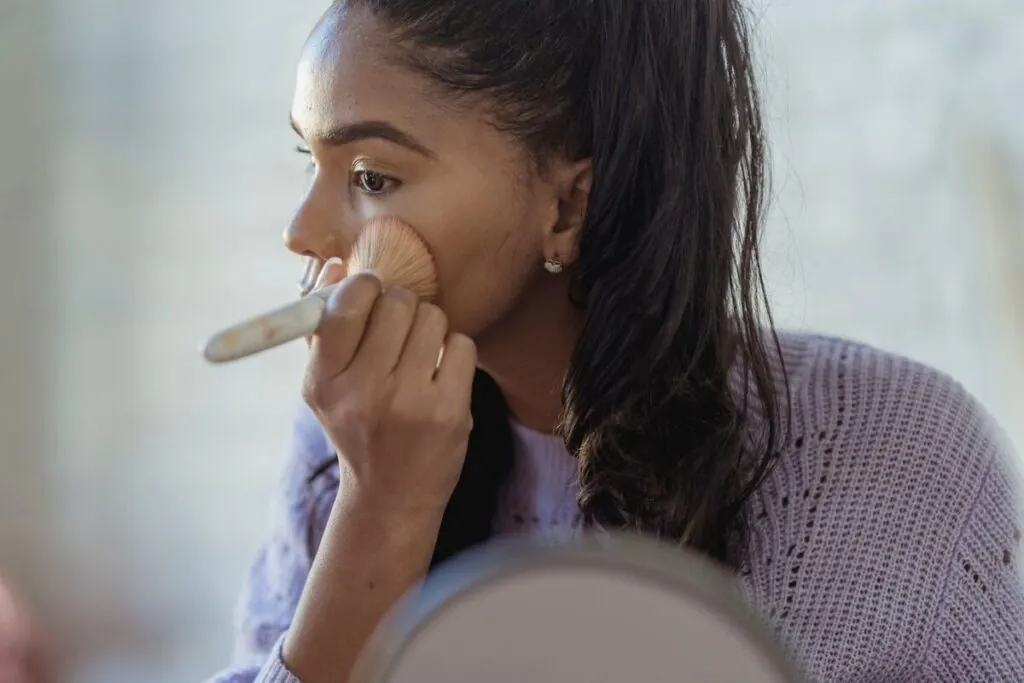
Foundation has enough pitfalls to deserve its own guide, so for undertones, formulas by skin type and oxidation, read 5 mistakes you’re making with your foundation and how to fix them.
Mistake 3: Concealer That Is Too Light, Too Thick or in the Wrong Place
A concealer two or three shades lighter than your skin is the classic cause of grey, ashy under-eyes on Indian skin tones. Darker circles have a brown or bluish tint that pale concealer cannot hide. Go no more than one shade lighter for brightening, and use the exact shade of your skin for spots.
For deeper circles, tap a thin layer of peach or orange colour corrector first, then a small amount of concealer over it. Apply concealer only where the shadow is darkest – usually the inner corner and the outer edge – rather than painting a big triangle down the cheek.
- Tap, don’t swipe with your ring finger, a small brush or a damp sponge.
- Wait a minute before setting, then press a little powder into the crease only.
- Keep the under-eye moisturised; concealer creases far more on dry skin.
Mistake 4: Over-Drawn or Blocky Eyebrows
Harsh, solid brows are noticed immediately. The usual culprits are a pencil that is too dark, a sharp outline drawn first and filled in, or the same heavy pressure from the front of the brow to the tail.
Choose a shade one step lighter than your hair if you have black hair; a soft dark brown usually looks more natural than jet black. Brush the hairs up with a spoolie, then fill gaps with short, light strokes in the direction of growth. Keep the front of the brow softest and add definition towards the tail. Finish with a clear or tinted brow gel so they stay put in humidity.
Mistake 5: Eye Makeup That Smudges by Afternoon
Kajal on the waterline is a staple in India, and it is also the product most likely to migrate in heat and sweat.
- Prep the lids with a little concealer or eyeshadow primer so shadow and liner have something to grip.
- Use smudge-proof kajal and set it by pressing a matching dark eyeshadow over it with a thin brush.
- Do eyeshadow before base if you use a lot of loose or shimmery shadow, so you can clean fallout without ruining your foundation.
- Don’t pump the mascara wand. It pushes air in and dries the formula out faster. Twist it gently instead.
- Pick waterproof or tubing mascara for humid days, long events and the monsoon.
If your eyes water easily or feel itchy after kajal or mascara, stop using that product. Persistent redness, swelling or discharge needs a doctor, not more makeup.
Mistake 6: Applying Lipstick on Dry Lips
Matte lipsticks are hugely popular, but on dry, flaky lips they crack, cling to patches and sink into fine lines. Lip prep takes two minutes and makes even a budget lipstick look smoother.

Apply a lip balm as the first step of your routine so it has time to sink in, then blot off the excess before colour. Use a gentle scrub once or twice a week, not daily – our guide on how to use a lip scrub covers technique and easy DIY options.
- Match the liner to your lipstick or your natural lip colour, not a much darker shade.
- Blot and reapply for longer wear instead of one thick coat.
- Pick shades for your undertone. Our list of the best lipsticks in India for Indian skin tones is a good starting point.
Mistake 7: Blush in the Wrong Place (or Too Much of It)
Blush placed low on the cheek, near the nose or the jaw, can make the face look tired and dragged down. Too much, applied in one go with a dense brush, looks like a stripe rather than a flush.
Smile lightly, find the top of your cheekbone and apply blush there, blending up and back towards the temple. Tap off excess and build in thin layers. On medium to deep Indian skin, peach, coral, rose and berry shades usually show up better than very pale pinks, which can look chalky. Apply cream blush before powder; cream over powder turns patchy.
Mistake 8: Over-Powdering Your Face
In humid weather, it is tempting to powder the whole face heavily to fight shine. The result is often dull, dry-looking skin that creases under the eyes and around the mouth, and the oil comes through anyway within a few hours.
Press a small amount of translucent or finely milled powder only where you get oily – the forehead, sides of the nose and chin – and a whisper under the eyes. Press it in with a puff or sponge rather than rubbing. For touch-ups, blot first, then powder. A setting spray such as Charlotte Tilbury Airbrush Flawless Setting Spray, or a simple face mist, helps melt powder into the skin if it starts to look flat.
Mistake 9: Dirty Brushes and Sponges
Brushes and sponges collect oil, dead skin and old product. Dirty tools blend poorly, leave streaks and can contribute to breakouts and irritation, especially in warm, damp weather when bacteria thrive.
- Foundation and concealer brushes: wash once a week with a gentle shampoo or brush cleanser.
- Makeup sponges: rinse after each use and let them dry fully; replace every few months or when they tear.
- Powder and eye brushes: wash every one to two weeks.
- Dry brushes flat or bristles down, never upright, so water does not loosen the glue.
- Don’t share eye and lip products or tools, particularly if anyone has an eye infection or cold sore.
Use the right tool for the job, too: a flat or dense brush or damp sponge for liquids and creams, a fluffy brush for powder and blush, and a small, firm brush for concealer and liner.
Mistake 10: Using Expired Makeup
Makeup does not last forever once opened. Look for the small open-jar symbol on the pack with a number such as “6M” or “12M” – that is how many months the product is meant to be used after opening.
- Mascara and liquid liner: replace roughly every three months.
- Liquid foundation and concealer: usually within about a year.
- Powders: last longer, but bin them if they turn hard, patchy or smell odd.
- Any product that has separated, changed colour or smells strange should go, whatever the date.
Mistake 11: Sleeping in Makeup or Removing It Roughly
Sleeping in sunscreen, foundation and kajal can, over time, mean clogged pores, dullness and irritated eyes. Scrubbing with a dry wipe is not much better; it tugs at skin and lashes.
Melt makeup first with a cleansing oil, balm or micellar water such as Garnier Micellar Cleansing Water. Hold a soaked cotton pad on closed eyes for a few seconds so waterproof mascara loosens before you wipe. Then follow with a gentle face wash to remove residue – here are some options in our guide to makeup remover face washes. Finish with moisturiser so your skin is ready for tomorrow.
How to Stop Makeup Melting in Indian Heat and Humidity
Many “mistakes” are really climate problems: products that behave in an air-conditioned room can slide off in Mumbai humidity or a Delhi summer.
- Go lighter in summer and the monsoon: gel moisturiser, light sunscreen, a skin tint or thin foundation, and spot concealing.
- Use long-wear and waterproof formulas for eyes and brows.
- Do your makeup in daylight or near a window. Yellow bulbs hide patches and make you over-apply.
- Carry blotting paper, a cotton bud and a small powder rather than piling on more foundation.
- In dry winters, swap to a richer moisturiser and a more hydrating base, and powder even less.
The Right Order to Apply Makeup
Applying products in a sensible order prevents many of the mistakes above. Liquids and creams go on first; powders go on last.
- Cleanse, moisturise and apply sunscreen; put on lip balm.
- Primer, if you use one.
- Eyeshadow first if you are doing a heavy or shimmery eye look.
- A thin layer of foundation or skin tint.
- Colour corrector and concealer where needed.
- Cream blush or bronzer.
- Light powder on oily areas and the under-eye crease.
- Brows, kajal or liner and mascara.
- Powder blush or highlighter.
- Blot the balm, then lip liner and lipstick.
- Setting spray to finish.
Made a slip mid-routine? A cotton bud dipped in micellar water cleans up liner and lipstick edges, and a damp sponge pressed over cakey patches softens them without starting again.

Frequently Asked Questions
Using too much product on unprepped skin is the most common one. It makes even good makeup look cakey and causes it to crease or slide. Start with moisturised skin and thin layers, and add coverage only where you need it.
Cakiness usually comes from dry skin underneath, too many layers, or too much powder. Skincare that has not absorbed before foundation can also cause pilling. Moisturise well, wait a few minutes, use less foundation and powder only the oily areas.
The concealer is probably too light or too pink for your skin, so it sits over brown or bluish circles and turns ashy. Use a peach or orange corrector first, then a concealer close to your skin tone, at most one shade lighter.
Choose a smudge-proof or long-wear kajal, keep the area under the eye lightly powdered, and set the kajal by pressing a matching dark eyeshadow over it. Avoid heavy eye cream just before applying it.
Wash brushes used for liquid and cream products about once a week, and powder brushes every one to two weeks. Rinse makeup sponges after every use and let them dry completely before the next one.
Check the open-jar symbol for how many months it lasts after opening. Replace mascara about every three months, and throw out anything that smells odd, separates, changes colour or irritates your skin.
An occasional night won’t ruin your skin, but making it a habit can clog pores, cause dullness and irritate your eyes. Remove makeup with an oil cleanser or micellar water, then wash your face gently before bed. If you have frequent breakouts or eye irritation, see a dermatologist.
Quick poll
How much do you usually spend on one beauty product?
The Bottom Line
Most everyday makeup mistakes have simple fixes: prep your skin, use less product, match shades to your undertone, keep your tools clean and always take your makeup off properly. Pick the one or two mistakes you recognise most and fix those first – you will see the difference within a week.