Best Korean Mascara Remover: 5 Gentle Picks for Indian Skin (2026)
The best Korean mascara removers for waterproof mascara and sensitive eyes, how bi-phase removers, oils and balms differ, and a gentle routine that won't tug your lashes.


The best Korean mascara remover for most people is a bi-phase eye remover for waterproof mascara, or a cleansing oil or balm if you want to take off your whole face of makeup in one step. Pick the format that matches your mascara and your skin, press it onto your lashes for a few seconds, and let it dissolve the pigment instead of scrubbing.
Mascara is the most stubborn thing most of us wear. Waterproof and tubing formulas are built to survive humidity, sweat and tears, which is great at a Mumbai monsoon wedding and less great at midnight when you just want to sleep. This guide covers the Korean removers worth buying in India, how each one works, and a routine that gets every last smudge off without tugging your lashes.
Best Korean mascara removers at a glance
- Best for waterproof mascara: Innisfree Apple Seed Lip & Eye Makeup Remover (bi-phase)
- Best cleansing balm: Banila Co Clean It Zero Cleansing Balm Original
- Best for sensitive skin: Heimish All Clean Balm
- Best cleansing oil for daily use: Ma:nyo Pure Cleansing Oil
- Best budget-friendly oil: Etude House Real Art Cleansing Oil
Comparison table
| Product | Type | Best for | Price range |
|---|---|---|---|
| Innisfree Apple Seed Lip & Eye Makeup Remover | Bi-phase liquid | Waterproof and tubing mascara, eyeliner, long-wear lipstick | Mid-range |
| Banila Co Clean It Zero Cleansing Balm Original | Cleansing balm | Full-face makeup, travel, heavy festive looks | Mid-range |
| Heimish All Clean Balm | Cleansing balm | Sensitive and dry skin, everyday mascara | Mid-range |
| Ma:nyo Pure Cleansing Oil | Cleansing oil | Daily Double cleansingCleansing twice at night: an oil or balm first to dissolve sunscreen and makeup, then a gentle face wash to clean the skin.See glossaryRead the guide, normal to oily skin | Mid-range |
| Etude House Real Art Cleansing Oil | Cleansing oil | Light everyday makeup on a budget | Budget |
Types of Korean mascara removers and how they work
Mascara is made of waxes, film-forming polymers and pigment. Water alone barely touches it, which is why a regular face wash leaves those grey panda rings under your eyes. Korean brands mostly rely on three formats, and each one breaks mascara down differently.
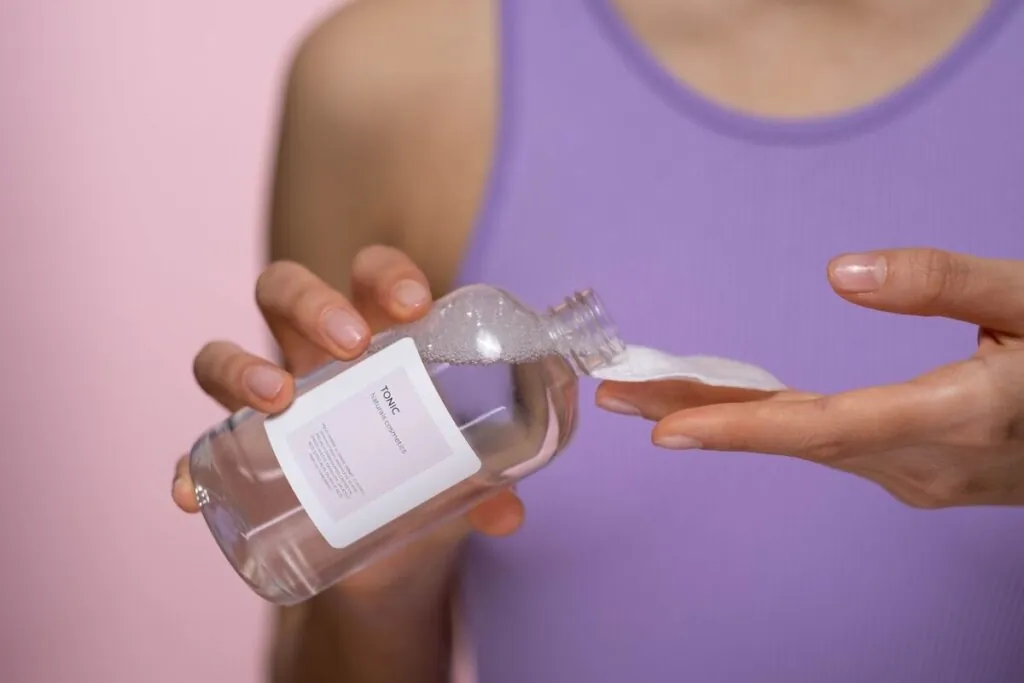
- Bi-phase (dual-layer) removers: an oil layer floats on a watery layer. You shake to mix them, and the oil dissolves waterproof formulas while the water phase keeps the feel light. These are the most targeted option for eyes and lips.
- Cleansing oils: liquid oils blended with emulsifiers, so they melt makeup on dry skin and then turn milky and rinse off with water. Good for the whole face.
- Cleansing balms: a solid sherbet-like texture that melts into an oil on contact. Less messy than oil, easy to carry, and very good at shifting heavy makeup.
- Micellar water: tiny cleansing molecules suspended in water. Fine for regular mascara, but it usually struggles with waterproof formulas unless you hold the pad on for a long time.
What K-beauty does well here is texture. The oils and balms are designed to emulsify cleanly, so you don’t get the heavy, blurry-eyed film that some older removers leave behind. For a deeper look at oil formats, see our guide to the best Korean oil cleanser for sensitive skin.
The best Korean mascara removers, reviewed
1. Innisfree Apple Seed Lip & Eye Makeup Remover
This is a classic bi-phase eye and lip remover from Innisfree, one of the most widely available Korean brands in India. It is the one to reach for when you wear waterproof mascara, smudge-proof kajal or a long-wear liquid lipstick. A soaked cotton pad held on the lashes loosens the formula so it slides off in one or two gentle swipes.
Suits: anyone wearing waterproof eye makeup; people who prefer to keep eye removal separate from the rest of the face.
- Pros: targeted and quick, works on lips too, light watery feel
- Cons: must be shaken every time; can leave a slight oily film, so follow with a face wash
2. Banila Co Clean It Zero Cleansing Balm Original
Clean It Zero is probably the best-known Korean cleansing balm, and for good reason. You scoop a small amount with the spatula, warm it between your fingers and massage it over dry skin, including closed eyelids and lashes. It melts foundation, kajal and mascara together, then turns milky when you add water.
Suits: full-face makeup days, festive and wedding looks, travel (a solid tub won’t leak in your bag).
- Pros: removes everything in one step, no spills, a tub lasts a long time
- Cons: the Original version is fragranced; can sting if it gets into open eyes
3. Heimish All Clean Balm
Heimish’s balm is a softer, more cushiony take on the same idea and is a favourite with people whose skin gets tight or red after cleansing. It handles everyday and most waterproof mascaras well with a slightly longer massage. It rinses clean and doesn’t leave skin feeling stripped.
Suits: dry, sensitive or easily irritated skin; winters in North India when skin is already dehydrated.
- Pros: gentle feel, comfortable after rinsing, easy to emulsify
- Cons: needs more massaging for heavy waterproof mascara; not the cheapest option
4. Ma:nyo Pure Cleansing Oil
Ma:nyo’s oil is a widely sold K-beauty staple in India and a go-to for daily double cleansing. It is thin and spreads easily over the face and lashes, and it is often praised for helping loosen the gunk in pores along with makeup. Use two or three pumps on dry skin and give your lashes a few extra seconds.
Suits: normal, combination and oily skin; daily sunscreen plus light makeup. If oiliness is your main concern, our list of the best Korean oil cleansers for oily skin goes deeper.
- Pros: rinses cleanly, good for everyday use, pump bottle is hygienic
- Cons: runny texture can drip; pumps can leak if packed loosely for travel
5. Etude House Real Art Cleansing Oil
Etude House was one of the first Korean brands many Indian buyers tried, and Real Art is its long-running cleansing oil line. It is a sensible budget pick for removing regular mascara, BB cream and sunscreen. For heavy waterproof mascara, pair it with a bi-phase remover on the eyes.
Suits: light daily makeup, students, first-time double cleansers.
- Pros: affordable, easy to find, simple to use
- Cons: slower on waterproof formulas; check the variant suits your skin type
Holika Holika and Innisfree also make cleansing oils, so if you already like a brand, look within its range first. The format matters more than the logo.
How to choose a Korean mascara remover
By mascara type
- Regular (washable) mascara: any cleansing oil, balm or even micellar water will do.
- Waterproof mascara: a bi-phase remover or a balm, held on the lashes before you wipe.
- Tubing mascara: these form little tubes around each lash that slide off with warm water and gentle pressure. A light oil helps, but you rarely need anything strong.
By skin and eye needs
- Sensitive eyes: look for Fragrance-freeA product with no added perfume or essential oils for scent. Often the safer pick for sensitive or reactive skin. "Unscented" can still contain masking fragrance.See glossary or ophthalmologist-tested labels and Patch testTrying a small amount of a new product behind the ear or on the inner arm for a few days to check for a reaction before using it widely.See glossary on your inner arm or jawline first.
- Contact lens wearers: take lenses out before removing makeup; oil on a lens blurs vision and is hard to clean off.
- Lash extensions: many lash adhesives break down with oil, so ask your lash technician which remover is safe before using oils or balms.
- Acne-prone or oily skin: choose a light oil that rinses clean and always follow with a gentle face wash.
Indian climate considerations
In humid cities, many people switch to waterproof mascara to stop smudging, which means a stronger remover becomes non-negotiable. Hard water can leave cleansers feeling squeaky or filmy, so a final rinse with lukewarm (not hot) water helps. In hot weather, balms soften in the tub, so store them away from a sunny window.
How to remove mascara with a Korean remover
The trick is patience, not pressure. Give the product time to dissolve the mascara, and the wiping part takes seconds.

- Wash your hands and remove contact lenses.
- Shake a bi-phase remover until the layers mix, then soak a cotton pad (don’t just dampen it).
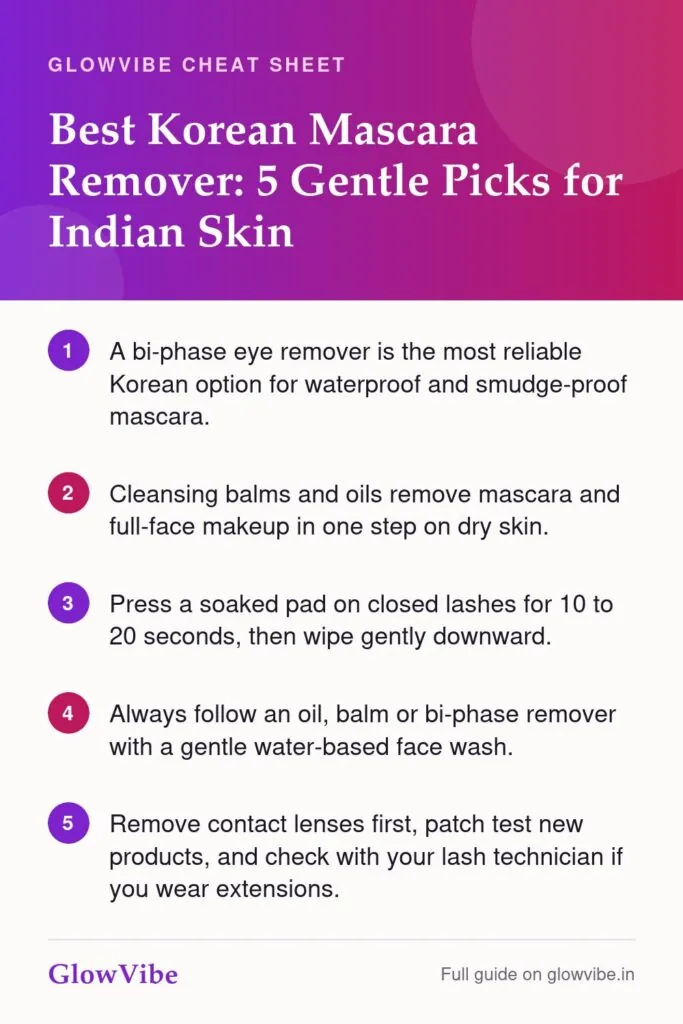
- Close your eye and press the pad on your lashes for 10 to 20 seconds.
- Wipe downward and outward in one gentle stroke. Fold the pad and repeat rather than rubbing back and forth.
- Clean the lash line with a cotton bud dipped in remover to catch any leftover flecks and kajal.
- Using an oil or balm instead? Massage it over the dry face and closed eyes, add a splash of water to emulsify, then rinse well.
- Follow with a gentle water-based cleanser to remove the oily residue, then carry on with your usual cleanser, toner and moisturiser routine.
That second cleanse is the core of the Korean double-cleansing method. A low-pH gel such as the COSRX Low pH Good Morning Cleanser works well as the follow-up. If you would rather skip the two-step routine on light-makeup days, a makeup remover face wash can be enough.
Common mascara removal mistakes
- Scrubbing: rubbing pulls out lashes and stresses the thin skin around your eyes. Press, wait, then wipe.
- Using face wash alone on waterproof mascara: it leaves residue that can flake into your eyes overnight.
- Forgetting to shake bi-phase removers: you only get the watery layer and wonder why it isn’t working.
- Skipping the second cleanse: leftover oil can feel heavy and may clog pores on oily skin.
- Sleeping in mascara: it can irritate eyes and make lashes brittle. Our post on everyday makeup mistakes covers more habits worth breaking.
- Pushing through stinging: if a product burns or your eyes turn red, rinse with clean water and stop using it.
Frequently Asked Questions
Yes, as long as you choose the right format. Bi-phase removers like the Innisfree Apple Seed Lip & Eye Makeup Remover and cleansing balms like Banila Co Clean It Zero are designed to dissolve waterproof formulas. Hold the product on your lashes for a few seconds so it can work before you wipe.
Most cleansing oils and balms are meant to be massaged over closed eyelids. Keep your eyes shut while you massage and rinse, because getting oil in the eye can blur vision or sting. If you have very sensitive eyes, a dedicated eye remover may feel more comfortable.
Many are gentle, but “Korean” on its own doesn’t guarantee that. Look for fragrance-free options, patch test first, and remove contact lenses before use. If you get ongoing redness, itching or watering, stop using the product and see an eye doctor.
No remover makes lashes grow. What a good remover does is reduce rubbing and tugging, which helps you avoid losing lashes during cleansing. If you notice sudden lash loss, check with a dermatologist.
Yes, especially after bi-phase removers and oils. A gentle water-based cleanser removes the leftover oily film and any loosened pigment. This two-step approach is what Korean skincare calls double cleansing.
Plain Coconut oilA common Indian hair oil that can soak into the hair shaft, which may reduce protein loss during washing. It can feel heavy on fine hair.See glossary can loosen mascara, but it doesn’t rinse off with water the way a cleansing oil does, so it tends to leave a greasy film around the eyes. Formulated cleansing oils contain emulsifiers that let them wash away cleanly. If you do use a kitchen oil, follow with a face wash.
Be careful here. Oils and balms can weaken many extension adhesives, so ask your lash technician which remover they recommend. Usually an oil-free option applied lightly with a cotton bud is safest.
Quick poll
What does your everyday makeup look like?
The bottom line
Choose a bi-phase remover if you wear waterproof mascara, and a cleansing balm or oil if you want one step for your whole face. Whatever you buy, press and wait instead of scrubbing, and finish with a gentle face wash. Your lashes, and your pillowcases, will thank you.