Makeup Brush Pouch Guide: Types, Buying Tips & Care (2026)
How to choose a makeup brush pouch, roll or holder, pack brushes for travel, and keep them clean and dry in humid Indian weather.

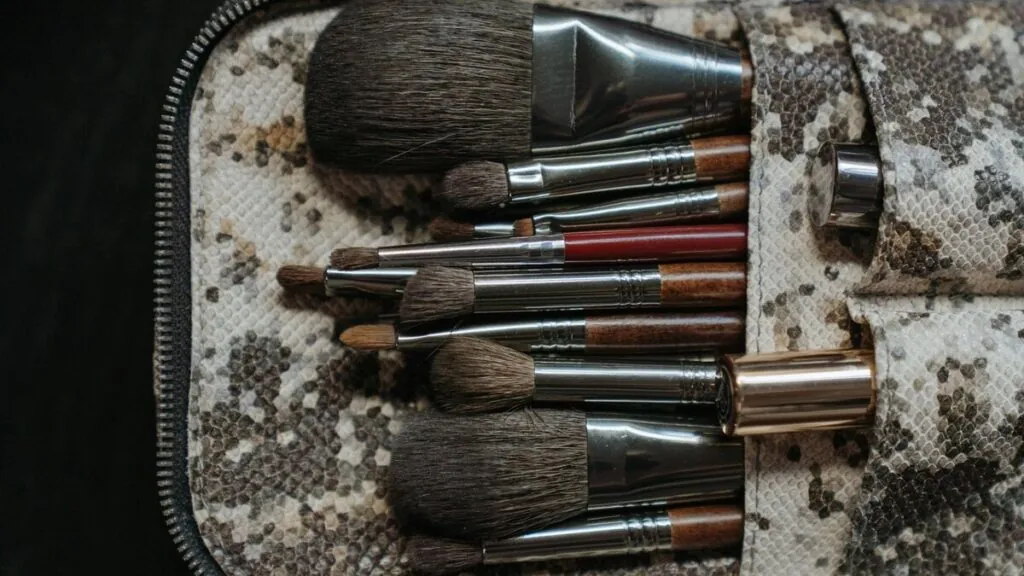
A good makeup brush pouch keeps your brushes clean, separated and in shape, whether they live on your dresser or travel in your handbag. The right one depends on how many brushes you own, how often you travel, and how well it lets damp bristles breathe in Indian humidity.
This guide walks you through the main types of brush pouches, rolls and holders, what to check before you buy, how to pack brushes for a trip, and a simple cleaning schedule that keeps both your brushes and your skin happy.
Why your brushes need a proper pouch
Brushes tossed loose into a makeup bag rub against compacts, lipsticks and pencils. The bristles splay, the tips pick up stray product, and dust settles into the brush heads. Over time a fluffy blending brush can turn flat and scratchy.
There is a hygiene side too. Brushes collect oil, dead skin and leftover makeup every time you use them. Store them in a cramped, closed space and that mix sits against other brushes. A pouch with separate slots and a washable lining keeps each brush to itself and makes the whole kit easier to keep clean.
- Protects bristle shape, so brushes apply and blend the way they should.
- Keeps dust and grime off clean brushes between uses.
- Saves time, because you can see every brush at a glance.
- Makes travel easier, with nothing rolling around loose in your bag.
Types of makeup brush pouches, rolls and holders
“Brush pouch” covers several quite different designs. Each one suits a different routine, so it helps to know the options before you start shopping.
| Type | Best for | Main plus | Watch out for |
|---|---|---|---|
| Brush roll (fold-and-tie or snap) | Small to medium kits, travel | Individual slots, packs flat | Short brushes can slip out of tall slots |
| Zip-around organiser case | Travel, handbags | Fully enclosed, holds extras | Traps moisture if brushes go in damp |
| Stand-up brush pouch | Daily use at home or on a trip | Opens into an upright holder | Bulkier than a roll |
| Drawstring bucket bag | Large collections at home | Roomy, quick to grab from | Brushes knock together |
| Open brush holder or cup | Dresser storage | Best airflow, easy access | Collects dust if left uncovered |
| Hard-shell or tube case | A few brushes in a handbag | Crush-proof protection | Limited space |
Brush rolls
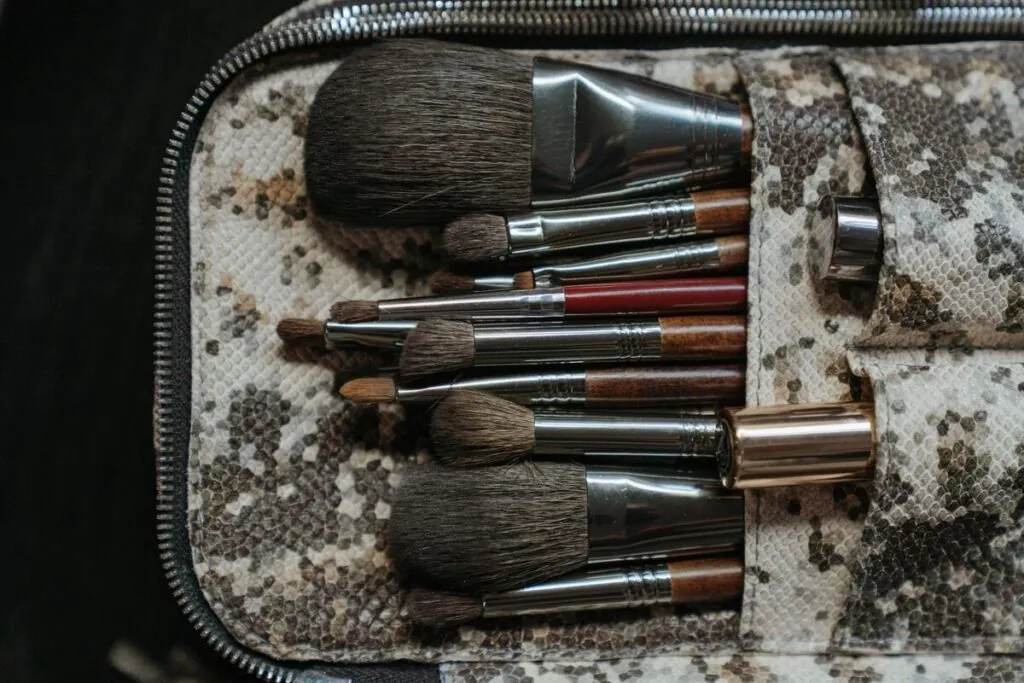
A brush roll is a flat strip of fabric or faux leather with a row of elastic or stitched slots. You slide each brush in, fold the top flap over the bristles and roll it up. It is the classic choice for makeup artists and anyone with eight to twenty brushes.
- Pros: every brush has its own slot, packs slim, easy to open out and air.
- Cons: a missing top flap leaves bristles exposed; ties can come loose in a crowded suitcase.
Zip-around organiser cases
These open like a book, with brush slots on one side and mesh or zip pockets on the other. They are handy if you want brushes, a sponge, a small mirror and travel sizes in one place.
- Pros: fully closed, nothing falls out, room for extras.
- Cons: poor airflow, so brushes must be bone dry before they go in.
Stand-up brush pouches
A stand-up pouch looks like a pencil case when closed. Open it, fold the top section down and it turns into a cup that holds your brushes upright. It is ideal for hotel rooms or a busy morning, because you are not hunting through a flat roll.
- Pros: brushes stand up, bristles do not touch the surface, quick to use.
- Cons: takes more room in a bag; brushes can rub together inside.
Bucket bags, open holders and hard cases
A drawstring bucket bag suits a big collection that mostly stays at home. An open holder or cup on your dresser gives the best airflow, which matters in humid cities, but add a lid or keep it inside a cupboard to block dust. A small hard case or brush tube is the simplest way to carry two or three brushes in a handbag for touch-ups.
What to look for when buying a brush pouch
You will find brush pouches in every price band, from budget fabric rolls to premium faux-leather cases. Price matters less than these practical details.
Size and slot fit
Count your brushes and measure the longest one before you buy. Look for slots in a mix of widths: wide ones for powder and kabuki brushes, narrow ones for eye and lip brushes. Short brushes sink into tall slots, so a pouch with graded slot heights or a fold-over flap works better for mixed kits.
Material
- PU or faux leather: smart and wipeable, but it does not breathe. Fine for travel if brushes go in dry.
- Canvas or cotton: breathes well and is often washable, though it stains more easily.
- Nylon or polyester: lightweight and water-resistant, quick to wipe clean. A good all-rounder.
- Clear PVC or TPU: lets you see everything and suits airport security, but traps moisture completely.
- Genuine leather: durable and premium, but it can develop mould in damp storage if not aired.
Closure, lining and build
Zips are the most secure for travel; drawstrings and ties are quicker but less reliable in a packed bag. Check that the inside is wipeable or the pouch is washable, because powder and foundation will get on it. Tug the elastic slots in the shop, or read reviews about them online, since loose elastic is the first thing to fail.
Ventilation
Mesh panels, breathable fabric or a design that opens fully flat all help air reach the bristles. In coastal cities and during the monsoon, this one feature does more to keep brushes fresh than any other.
Keeping brushes dry and hygienic in humid Indian weather
Mumbai, Chennai, Kolkata and Kerala stay humid for much of the year, and the monsoon brings damp air almost everywhere. Brushes that never quite dry can start to smell musty, and mould may appear on the bristles or inside the pouch. A few habits prevent most of this.
- Dry brushes completely before packing. After washing, squeeze out water, reshape the head and lay brushes flat or angled slightly downward. Never stand wet brushes upright, as water runs into the ferrule and loosens the glue.
- Give them time. In humid weather, dense brushes can take a day or more to dry fully. Wash at night near a fan, not in a closed bathroom.
- Skip direct heat. Hair dryers and harsh sun can frizz synthetic bristles and dry out natural hair.
- Store the pouch open at home. Unroll or unzip it on the dresser so air can circulate, and close it only when you travel.
- Use a silica gel sachet. Tuck one into a closed travel pouch and replace it when it stops working.
- Keep the kit out of the bathroom. Steam from showers is the fastest way to make a brush pouch damp.
If a brush smells sour or shows black or green spots that do not wash out, replace it. And if you notice frequent breakouts or irritation, look at your brushes along with your products; dirty tools are a common culprit, as covered in our guide to everyday makeup mistakes. See a dermatologist if irritation or acne persists.
How often to clean your makeup brushes and pouch
A clean pouch is pointless if the brushes inside are dirty, and the reverse is also true. The American Academy of Dermatology advises washing makeup brushes every 7 to 10 days, so treat that as the outer limit for every brush below, and clean more often if you have oily or acne-prone skin.
| What | How often | How |
|---|---|---|
| Foundation, concealer and cream brushes | Once a week | Deep wash with mild shampoo or brush cleanser |
| Powder, blush and bronzer brushes | Every 7 to 10 days | Deep wash; spot-clean in between |
| Eye brushes | Every 7 to 10 days | Deep wash; wipe after dark shades |
| Lip and eyeliner brushes | After each use | Wipe, then wash weekly |
| Brush pouch (fabric) | Once a month | Hand-wash in mild detergent, air-dry fully |
| Brush pouch (PU, nylon, PVC) | Every 1–2 weeks | Wipe inside and out with a damp cloth and mild soap |
Quick brush-washing routine
- Wet only the bristles under lukewarm water, keeping the tip pointing down.
- Swirl the brush in your palm with a drop of mild shampoo or a dedicated brush cleanser.
- Rinse until the water runs clear. Foundation brushes may need two rounds.
- Squeeze gently with a clean towel, reshape the head and lay flat to dry.
Hard water, common in much of north India and Bengaluru, can leave brushes feeling stiff. A final rinse in filtered or boiled-and-cooled water helps, and a tiny drop of conditioner on natural-hair brushes keeps them soft. Clean brushes also help base makeup go on smoothly, one of the easy fixes in our list of foundation mistakes.
Travel tips for packing makeup brushes
Weddings, festivals and work trips are when most people pull out a brush pouch. A little planning keeps the kit light and the bristles in shape.
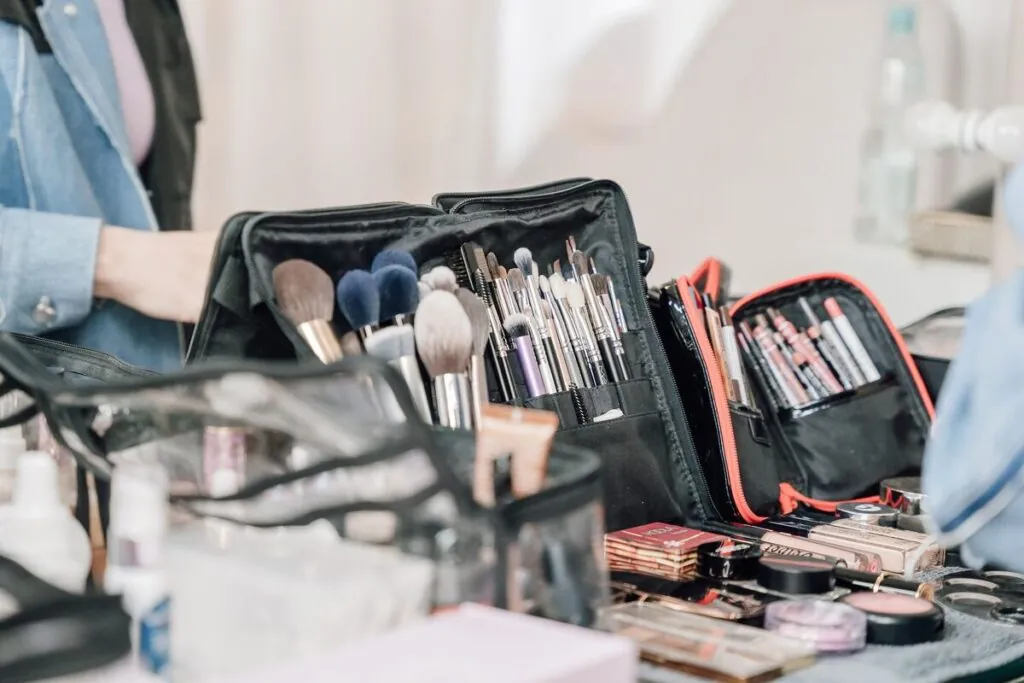
- Edit the kit. Most looks need five or six brushes: foundation, concealer, powder, blush, one or two eye brushes and a spoolie. Plan around the looks you will wear, such as our wedding guest makeup looks.
- Use brush guards. These mesh sleeves slide over bristles and hold their shape in transit.
- Wash before, not during. Clean brushes a couple of days before you leave so they are fully dry when packed.
- Keep liquids separate. Pack foundation, setting spray and cleanser in a different zip bag so a leak does not soak your brushes.
- Carry a solid cleanser or wipes. Spot-clean the foundation brush in the evening on longer trips.
- Air the pouch on arrival. Open it in your room each night, especially in hill stations or coastal resorts where the air is damp.
If you also carry eyeshadows, depotting them into one magnetic case saves a lot of room; our guide to the empty makeup palette explains how.
Common mistakes with brush pouches
- Packing damp brushes into a closed PU or PVC case, which invites mildew within days in humid weather.
- Cramming too many brushes into one slot, which bends bristles out of shape.
- Never washing the pouch, so powder and old foundation transfer back onto clean brushes.
- Storing brushes bristles-down in a cup, which crushes the tips.
- Keeping the kit in the bathroom, where steam keeps everything damp.
- Sharing brushes, especially eye and lip brushes, which can pass on infections.
Frequently Asked Questions
If you own more than three or four brushes, yes. Loose brushes in a makeup bag get bent, dusty and coated in other products. A pouch with individual slots keeps them in shape and makes cleaning your kit much simpler.
A brush roll packs flatter and suits suitcases and larger kits. A stand-up pouch is quicker to use because it turns into an upright holder, which is handy in hotel rooms. Many people keep a roll for travel and an open holder at home.
Breathable canvas or a pouch with mesh panels is the safest choice for daily storage in humid cities. PU, PVC and other closed materials are fine for travel, as long as brushes are completely dry and you open the pouch to air it regularly.
Empty it, shake out loose powder, then wipe PU, nylon or PVC pouches with a damp cloth and a little mild soap. Fabric pouches can usually be hand-washed in mild detergent. Always let the pouch dry fully, open and in a ventilated spot, before you put brushes back.
No. Damp bristles in a closed pouch are the main cause of musty smells and mould, especially during the monsoon. Let brushes dry flat until they feel completely dry at the base of the bristles, then pack them.
There is no fixed rule. Replace it when the elastic slots go slack, the zip fails, or stains and smells stay after washing. A well-made pouch that you clean and air regularly can last several years.
Quick poll
What does your everyday makeup look like?
The bottom line
Pick the makeup brush pouch that matches how you actually use your brushes: a roll or zip case for travel, an open or stand-up holder for everyday use at home. Check slot sizes, choose an easy-to-clean material and favour ventilation if you live somewhere humid.
Then pair it with a simple habit: wash brushes on schedule, dry them fully before packing and air the pouch often. Your brushes will last longer, and your makeup will go on more smoothly.