How to Remove Makeup Properly: Step-by-Step for Every Skin Type (2026)
How to remove makeup the right way: eyes first, double cleanse, moisturise. Plus micellar water vs cleansing balm, waterproof mascara tips and picks by skin type.

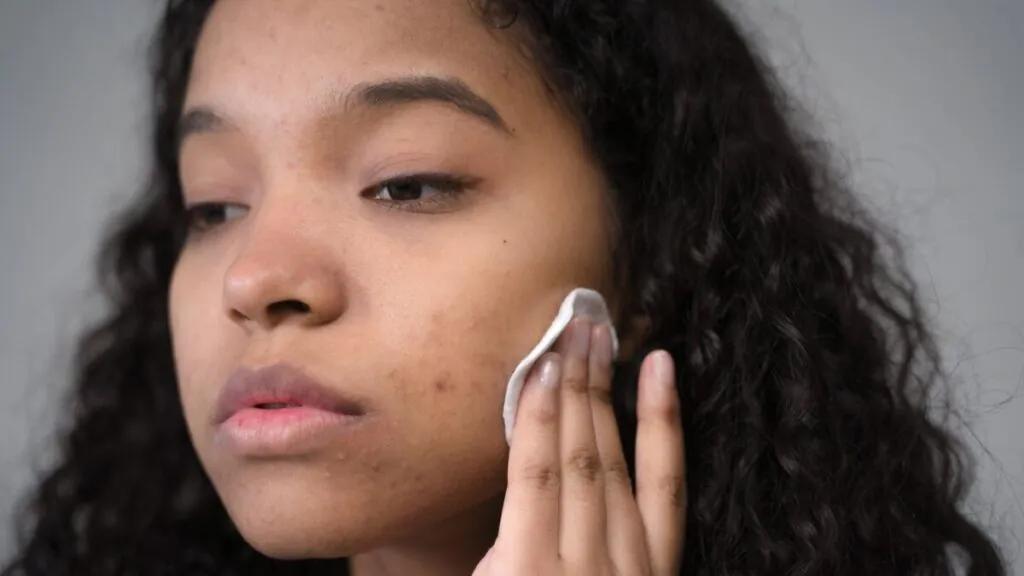
To remove makeup properly, take off eye and lip makeup first with a dedicated remover, then dissolve face makeup with micellar water, a cleansing balm or a cleansing oil, and finish with a gentle face wash and moisturiser. That two-step “Double cleansingCleansing twice at night: an oil or balm first to dissolve sunscreen and makeup, then a gentle face wash to clean the skin.See glossaryRead the guide” gets everything off, including sunscreen and waterproof formulas, without rubbing or stripping your skin.
This guide covers which remover suits your skin type, how to handle waterproof mascara and heavy bridal or HD makeup, the tools worth using, and the habits that quietly cause breakouts and irritation.
Quick answer: the best makeup remover for you
- Light, everyday makeup: Garnier Micellar Cleansing Water or Simple Kind to Skin Micellar Water, followed by your usual face wash.
- Sensitive or reactive skin: Bioderma Sensibio H2O, then a mild cleanser such as Cetaphil Gentle Skin Cleanser.
- Full coverage, sunscreen and long-wear foundation: Banila Co Clean It Zero cleansing balm.
- Oily skin and heavy makeup: The Face Shop Rice Water Bright Cleansing Oil, which rinses off cleanly with water.
- Waterproof mascara, kajal and liquid lipstick: Maybelline Lip & Eye Makeup Remover, a bi-phase formula you shake before use.
Why removing makeup properly matters
Foundation, compact, sunscreen and the day’s sweat and pollution form a film on your skin. Left overnight, that film mixes with SebumThe natural oil your skin and scalp make. Some is essential for a healthy barrier; too much can feel greasy and clog pores.See glossary and can clog pores, which shows up as blackheads, tiny bumps and breakouts, especially on the nose, chin and forehead. In humid Indian summers, when you sweat under your base all day, this happens faster.
Half-removed makeup also causes irritation. Pigments and fragrance sitting on the skin for hours can leave it red, itchy or dull, and the usual “fix” of scrubbing harder only makes it worse. Gentle, complete removal is what keeps your Skin barrierThe outermost layer of skin that keeps water in and irritants out. A damaged barrier feels tight, stings and reacts more easily.See glossaryRead the guide calm.
Your eyes need the most care. Old mascara and kajal flakes can get into the eye and along the lash line, raising the chance of irritation, styes and eye infections. Pulling and rubbing the thin eyelid skin every night also adds up over the years. If you notice persistent redness, swelling or discharge around the eyes, stop eye makeup and see a doctor.
Types of makeup remover compared
There is no single best makeup remover in India for everyone. The right one depends on how much makeup you wear and how your skin behaves. Here is how the main types stack up.
| Type | Best for | Removes waterproof? | Downsides |
|---|---|---|---|
| Micellar water | Light makeup, sensitive skin, quick cleanups | Partly (bi-phase versions do better) | Needs several pads for full coverage; can leave residue if not followed by a wash |
| Cleansing balm | Full coverage, long-wear foundation, sunscreen, dry or normal skin | Yes | Messy to scoop; must be emulsified and rinsed well |
| Cleansing oil | Heavy makeup, oily and combination skin, bridal and HD makeup | Yes | Can sting if it gets in the eyes; pick a formula that rinses clean |
| Bi-phase eye and lip remover | Waterproof mascara, kajal, liquid lipstick | Yes | Oily film on lids; not meant for the whole face |
| Makeup wipes | Emergencies, travel | Rarely fully | Need rubbing, smear makeup around, often contain fragrance and alcohol, leave residue, create waste |
Micellar water
Micellar water contains tiny clusters of mild cleansing agents (micelles) suspended in water. They attach to makeup and oil, so you can lift them off with a cotton pad without rinsing. It is the gentlest option and perfect for light makeup, a no-makeup day or a quick cleanse before bed.
- Garnier Micellar Cleansing Water: a budget, widely available pick for everyday makeup. The oil-infused bi-phase version handles waterproof eye makeup better.
- Bioderma Sensibio H2O: a premium, Fragrance-freeA product with no added perfume or essential oils for scent. Often the safer pick for sensitive or reactive skin. "Unscented" can still contain masking fragrance.See glossary classic that dermatologists often suggest for sensitive and reactive skin.
- Simple Kind to Skin Micellar Cleansing Water: a mid-range, fragrance-free option that feels like plain water on the skin.
Pros: no rinsing needed, very gentle, good for travel. Cons: struggles with heavy or waterproof makeup, and you still need to follow it with a face wash so the cleansing agents don’t sit on your skin overnight.
Cleansing balm
A cleansing balm is a solid oil-based cleanser that melts into an oil when you massage it on dry skin. Add a little water and it turns milky (emulsifies), then rinses away with the makeup. Banila Co Clean It Zero is the best-known Korean balm in India and comes in versions for different skin types.
Pros: melts long-wear foundation, sunscreen and mascara with very little rubbing; comfortable on dry skin. Cons: you need clean, dry hands to scoop it, and it must be rinsed thoroughly.
Cleansing oil
Cleansing oils work on the “like dissolves like” principle: oil breaks down oily makeup, SiliconesIngredients like dimethicone that coat hair (and skin) for slip, shine and frizz control. Heavier ones can build up and need a clarifying wash.See glossaryRead the guide primers and water-resistant sunscreen. Modern formulas contain emulsifiers so they rinse off with water instead of leaving a greasy layer. The Face Shop Rice Water Bright Cleansing Oil is a popular, lightweight choice. Our guide to the Korean oil cleanser for sensitive skin covers gentler oils if your skin reacts easily.
Pros: excellent for heavy, bridal and HD makeup; suits oily skin when it rinses cleanly. Cons: can blur vision or sting if it gets in the eyes; not every oil suits acne-prone skin.
Bi-phase eye and lip remover
Bi-phase removers have an oil layer and a water layer that you shake together. The oil dissolves waterproof mascara and long-wear lipstick while the water phase keeps it light. Maybelline Lip & Eye Makeup Remover is easy to find in Indian stores and online. If you love Korean formulas, see our piece on Korean mascara removers.
Makeup wipes: why they should be a backup only
Wipes mostly push makeup around rather than dissolving it, so you rub harder, irritating skin and eyes. Many contain fragrance and alcohol, leave residue and create waste. Keep a pack for travel or exhausted nights only.
How to remove makeup: step by step
This five-minute routine works for everyday makeup and a full party look. Tie your hair back and start with clean hands.

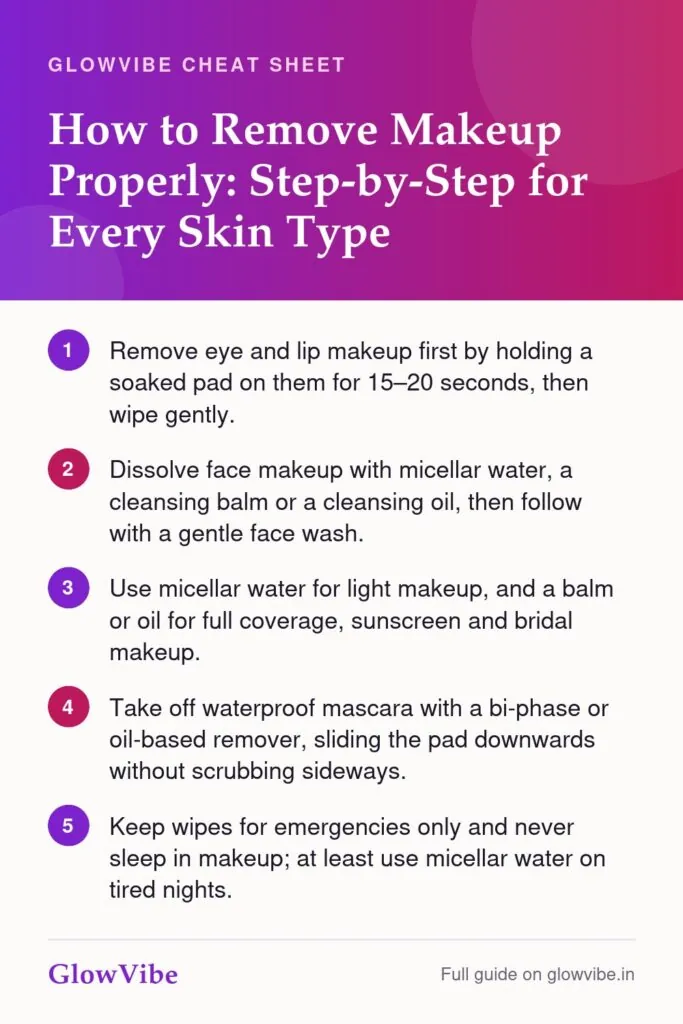
- Eyes first. Soak a cotton pad in eye makeup remover or micellar water. Close your eye and hold the pad on your lid for 15–20 seconds so the product can dissolve mascara and liner. Then gently sweep downwards and outwards. Use a cotton bud dipped in remover along the lash line and waterline for kajal.
- Lips next. Press a soaked pad on your lips for a few seconds, then wipe from the corners towards the centre. Liquid and matte lipsticks may need a bi-phase remover or a drop of cleansing oil.
- First cleanse: oil, balm or micellar water. On dry skin, massage a cleansing oil or balm over your face for 30–60 seconds, paying attention to the nose, jawline and hairline. Wet your fingertips and keep massaging until it turns milky, then rinse with lukewarm water. For light makeup, wiping with micellar water is enough for this step.
- Second cleanse: a gentle face wash. Wash with a water-based cleanser that suits your skin to clear any remaining residue. Our roundup of the best face wash for women in India has picks by skin type.
- Pat dry and moisturise. Pat (don’t rub) with a clean towel, then apply toner or serum if you use them and finish with a moisturiser while your skin is slightly damp. Don’t forget your neck and ears if you applied makeup there.
On a light day with just kajal and lip balm, micellar water on the eyes and one face wash is enough. Save the double cleanse for foundation and water-resistant sunscreen.
How to remove waterproof mascara
Waterproof mascara is designed to resist water, so regular micellar water or a face wash will leave black smudges and clumps on your lashes. You need oil.
- Shake a bi-phase remover well and soak two cotton pads.
- Place one pad under the lower lashes and press the other over the closed upper lid for 20–30 seconds.
- Slide the top pad gently down the lashes. Don’t scrub sideways.
- Clean the roots with a cotton bud dipped in remover, then follow with your normal double cleanse.
Tubing mascaras come off with warm water instead. For volumising formulas like the one in our Maybelline Sky High Mascara review, a soaked pad and patience save your lashes.
Removing heavy bridal, party or HD makeup
Bridal and HD makeup usually involves primer, full-coverage foundation, concealer, setting spray, false lashes, glitter and long-wear lipstick. After a long function, skip the wipe and go step by step.
- Lashes and bindi first: press a pad soaked in bi-phase remover on the lash band for 30 seconds to soften the glue, then peel from the outer corner. Never yank.
- Glitter: dab it off with a piece of tape or a pad soaked in oil before cleansing, so it doesn’t spread or scratch.
- Use more oil than usual: massage a cleansing oil or balm for a full minute, rinse, and repeat the oil step if the base hasn’t shifted.
- Finish with a gentle wash and a rich moisturiser: skin is often dehydrated after hours under heavy makeup, AC and stage lights.
Best makeup remover by skin type
Makeup remover for sensitive skin
Choose fragrance-free formulas and keep rubbing to a minimum. Bioderma Sensibio H2O or Simple Kind to Skin Micellar Water work well for the first step, followed by a soap-free cleanser. Our Cetaphil face wash review explains which variant suits sensitive skin. Patch testTrying a small amount of a new product behind the ear or on the inner arm for a few days to check for a reaction before using it widely.See glossary any new remover on your jawline for a couple of days, and see a dermatologist if you get stinging, rashes or swelling.
Oily and acne-prone skin
Oil cleansers are not off-limits; a well-formulated cleansing oil that emulsifies and rinses fully can actually help shift sunscreen and sebum. Try The Face Shop Rice Water Bright Cleansing Oil, then follow with a gel or foaming face wash. Avoid heavy, unrinsable oils and thick creams that sit on the skin.
Dry and mature skin
Cleansing balms such as Banila Co Clean It Zero feel cushiony and don’t leave skin tight. Follow with a creamy, non-foaming cleanser and moisturise straight away, especially in winter or air-conditioned rooms.
Combination and normal skin
Rotate: micellar water on light days, a balm or oil on full-makeup days. Oils often feel better in summer, balms in winter.
Micellar water vs cleansing balm: which should you choose?
Micellar water is better for light makeup, sensitive skin and no-rinse convenience. A cleansing balm is better for full coverage, long-wear foundation and water-resistant sunscreen because it dissolves them with less rubbing. Many people keep both: micellar water for eyes and weekdays, a balm for weekends and functions.
If you want a single product that removes makeup and cleanses in one go on light days, read our guide to makeup remover face wash options.
Tools that make removal gentler
- Reusable cotton or bamboo pads: soft, washable and less wasteful than disposable pads. Wash them after each use and dry them fully, especially in humid weather.
- A soft muslin or microfibre cloth: useful for wiping off a cleansing balm. Press, don’t scrub, and use a fresh one each night.
- Cotton buds: for the lash line, waterline and inner corners.
Common makeup removal mistakes
- Rubbing your eyes: this stretches delicate skin and pulls out lashes. Let the remover sit, then wipe gently.
- Sleeping in makeup: even one night can leave pores congested and eyes irritated. If you’re exhausted, at least use micellar water on your face and eyes.
- Using Coconut oilA common Indian hair oil that can soak into the hair shaft, which may reduce protein loss during washing. It can feel heavy on fine hair.See glossary on acne-prone skin: it removes makeup but is heavy and is known to clog pores for many people. Choose a cleansing oil designed to rinse off instead.
- Relying only on wipes: they leave residue and require friction. Use them as an emergency backup.
- Skipping the second cleanse: leftover residue can trap dirt and cause bumps. Use lukewarm, not hot, water, especially if your area has hard water.
- Forgetting the jawline, hairline and neck: foundation and sunscreen collect here and cause breakouts along the edges of the face.
Frequently Asked Questions
Micellar water is the easiest place to start. Garnier Micellar Cleansing Water is budget-friendly and easy to find, while Bioderma Sensibio H2O suits sensitive skin. Add a cleansing balm or oil later if you start wearing full-coverage makeup.
Yes, ideally. Micellar water lifts makeup well, but a quick wash with a gentle cleanser removes the leftover cleansing agents and any remaining residue. This matters most if you have acne-prone or sensitive skin.
Use an oil-based or bi-phase remover, hold a soaked pad on your closed eye for 20–30 seconds, then slide it down the lashes. Avoid rubbing side to side. Finish the roots with a cotton bud.
A cleansing oil that emulsifies and rinses off completely is generally fine for oily skin, and follow it with a water-based face wash. Avoid plain kitchen oils such as coconut oil, which can clog pores. If you notice new breakouts, switch products and consult a dermatologist.
Occasional use is fine, but daily use isn’t ideal. Wipes need friction, often contain fragrance, leave residue and rarely remove waterproof makeup fully. Treat them as a travel or emergency option.
Yes. Sunscreen and powder build up through the day along with sweat and pollution. A single gentle cleanse is usually enough, or a double cleanse if your sunscreen is water-resistant.
Quick poll
What is your biggest skin concern right now?
The bottom line
Good makeup removal comes down to the right product for the job and a light touch: eyes and lips first, an oil, balm or micellar water to dissolve makeup, a gentle face wash, then moisturiser. Pick your remover by skin type, keep wipes for emergencies, and never go to bed in a full face. Your skin will look clearer and calmer for it.