Importance of Yoga for Students: Benefits + 15-Minute Routine (2026)
Why yoga matters for students, from posture and focus to exam stress, with a 15-minute beginner routine and simple breathing practices for study days.

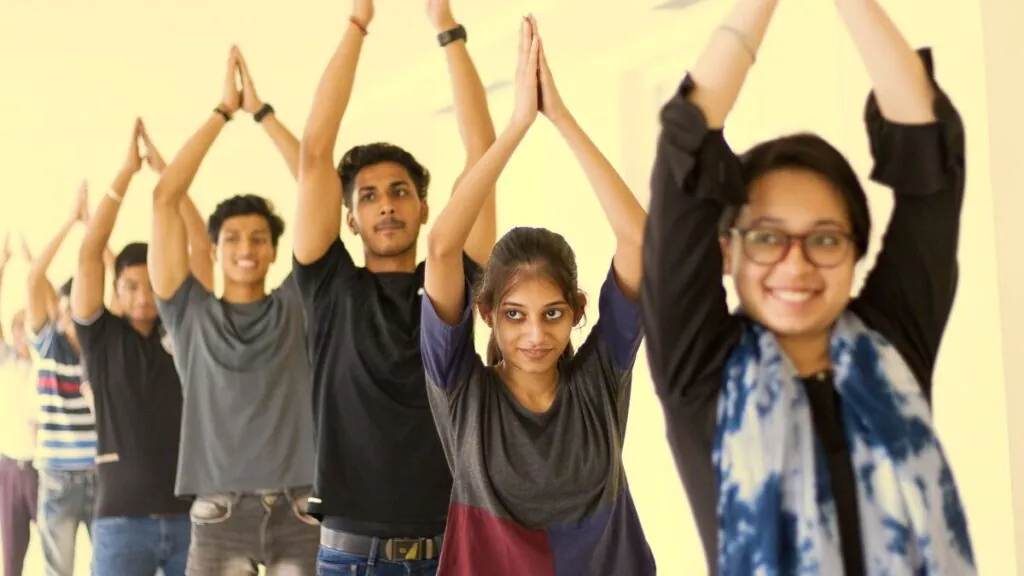
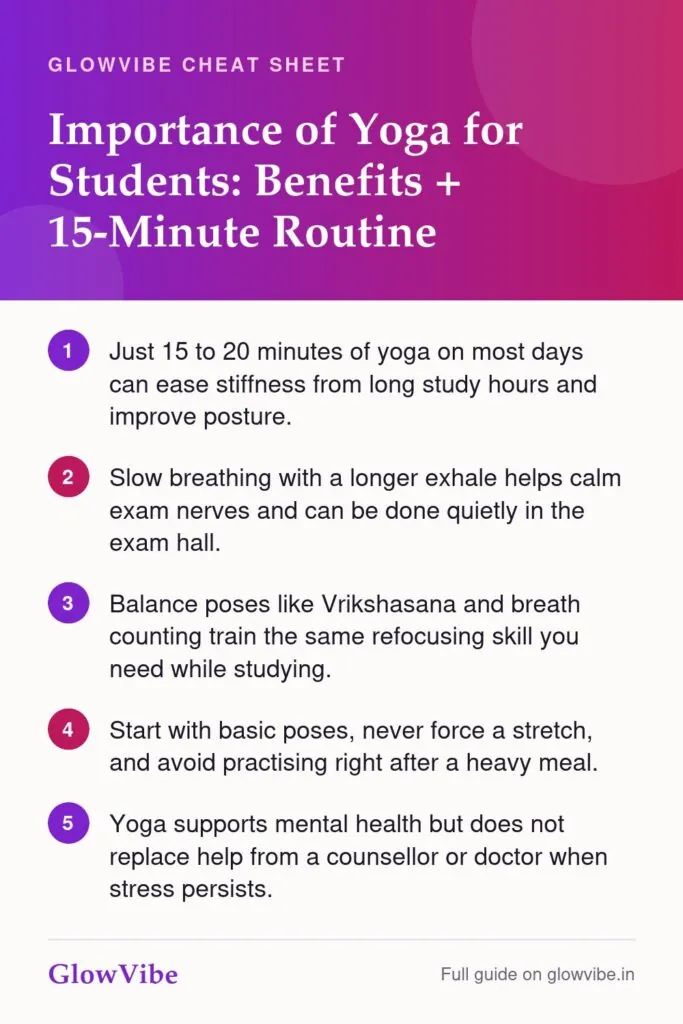
Yoga matters for students because it trains the three things studying wears down: your body, your attention and your ability to stay calm under pressure. Just 15–20 minutes a day of simple poses and slow breathing can ease the stiffness of long study hours, help you settle before exams and support better sleep.
This guide explains the real benefits of yoga for students in plain language, then gives you a beginner-friendly routine you can do in a hostel room or a corner of your home. You’ll also find breathing practices for exam days, mistakes to avoid and answers to common questions.
Why Yoga Is Important for Students: The Quick Answer
- Undoes long sitting: gentle stretches and backbends counter the rounded shoulders and tight hips that come from hours at a desk or on a phone.
- Calms exam stress: slow, controlled breathing helps your body shift out of “panic mode” so you can think clearly.
- Trains focus: holding a balance pose or counting breaths is practice in bringing a wandering mind back, the same skill you need while reading.
- Supports sleep: a short wind-down routine at night can make it easier to switch off after late study sessions.
- Costs almost nothing: you need a mat or a folded bedsheet, a little floor space and no equipment.
Benefits of Yoga for Students at a Glance
| Student problem | How yoga helps | Practices to try |
|---|---|---|
| Stiff neck, back and hips from studying | Mobilises the spine and opens the chest and hips | Cat-cow, Bhujangasana, Balasana |
| Exam anxiety and racing thoughts | Slows breathing and steadies the mind | Anulom Vilom, Bhramari, long exhales |
| Poor concentration | Builds the habit of returning attention to one point | Vrikshasana, breath counting |
| Low energy and afternoon slump | Gets blood moving without exhausting you | Surya Namaskar (a few slow rounds) |
| Trouble falling asleep | Signals the body to wind down | Viparita Karani, Shavasana |
| Poor posture | Builds awareness and back strength | Tadasana, Setu Bandhasana |
Physical Benefits of Yoga for Students
Most students sit for six to ten hours a day between classes, coaching, self-study and screens. Over time, that sitting shortens the hip flexors, rounds the upper back and pushes the head forward. Yoga works directly against this pattern by moving the spine in every direction and lengthening the muscles that tighten up.
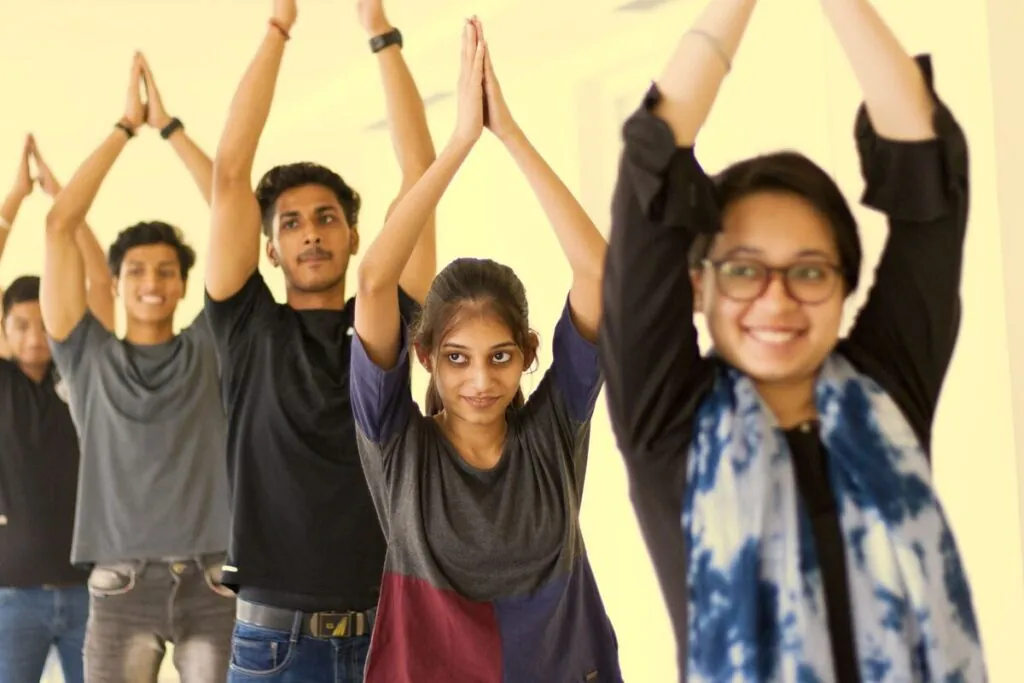
- Flexibility: regular practice gradually improves your range of movement, especially in the hamstrings, hips and shoulders.
- Posture and strength: poses like Bhujangasana (cobra) and Setu Bandhasana (bridge) strengthen the back and glutes, which help you sit upright without strain.
- Balance and coordination: standing poses build stability, useful for sport and everyday movement.
- Energy: a few rounds of Surya Namaskar wake the body up without the fatigue of an intense workout.
Yoga is not a replacement for all other exercise, though. For heart health and strength, pair it with walking, sport or simple bodyweight training. Our guide to the benefits of exercise and how to start explains how to build a balanced week.
Mental Benefits: Yoga for Concentration and Exam Stress
This is where yoga earns its place in a student’s day. Research on yoga and mindfulness generally suggests they can help reduce perceived stress and improve mood, and many students notice the difference within a few weeks. The reason is simple: when you deliberately slow your breathing, especially the exhale, your nervous system gets the message that you are safe.
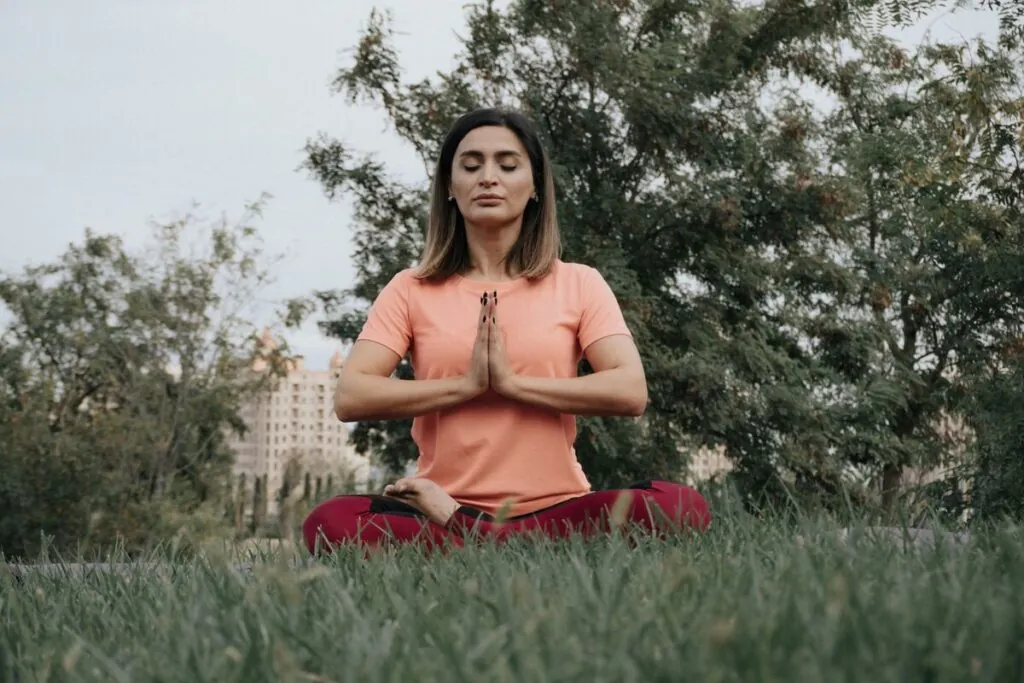
Concentration improves in a similar way. Holding Vrikshasana (tree pose) or counting ten slow breaths forces you to notice when your mind drifts and bring it back. That is exactly the skill you use when you catch yourself rereading the same paragraph and refocus.
- Before studying: two minutes of slow breathing helps you settle into a session instead of reaching for your phone.
- Before an exam: long exhales in the exam hall can take the edge off nervousness.
- After a bad result: a regular practice gives you a steady routine to lean on when things feel shaky.
Yoga supports your mental health but does not treat anxiety or depression on its own. If stress is affecting your sleep, appetite or daily life for weeks, talk to your college counsellor, a doctor or a mental health professional.
A 15-Minute Yoga Routine for Students
This sequence suits complete beginners and needs about two metres of floor. Do it in the morning before class or in the evening after studying, ideally on an empty stomach or two to three hours after a heavy meal. Move slowly, breathe through your nose and stop any pose that causes pain.
- Tadasana (mountain pose), 1 minute: stand tall, feet together, shoulders relaxed. Take slow breaths and notice your posture.
- Surya Namaskar, 3–5 slow rounds (4 minutes): warms the whole body. Beginners can bend the knees in the forward fold and lower the knees in the plank.
- Vrikshasana (tree pose), 30 seconds each side: place one foot on the inner calf or thigh (never on the knee) and fix your gaze on one point.
- Marjariasana–Bitilasana (cat-cow), 1 minute: on hands and knees, arch and round the spine with your breath. Excellent for a stiff back after studying.
- Bhujangasana (cobra), 3 holds of 15 seconds: lie on your stomach and lift the chest gently, keeping elbows bent and shoulders away from the ears.
- Balasana (child’s pose), 1 minute: sit back on your heels and rest your forehead down. Breathe into your back.
- Setu Bandhasana (bridge), 3 holds of 20 seconds: lie on your back, knees bent, and lift the hips to strengthen the back and glutes.
- Paschimottanasana (seated forward bend), 1 minute: fold forward from the hips with a long spine. Bend the knees if your hamstrings are tight.
- Viparita Karani (legs up the wall), 2 minutes: a restful pose that is ideal after long hours sitting.
- Shavasana (relaxation), 2–3 minutes: lie still and let your breath slow down before getting up.
Want to add strength work on other days? Try this core exercise routine at home, which pairs well with yoga for posture.
Breathing Practices for Exam Days
You don’t always have time or space for poses during exam season, but you can always breathe. These three practices take two to five minutes and can be done sitting at your desk.
Long-exhale breathing
Breathe in through the nose for a count of four and out for a count of six to eight. Repeat for two minutes. This is the easiest one to use quietly in an exam hall before you open the paper.
Anulom Vilom (alternate nostril breathing)
Close the right nostril with your thumb and breathe in through the left. Close the left with your ring finger, release the right and breathe out. Breathe in through the right, switch, and breathe out through the left. Keep it slow and gentle for three to five minutes.
Bhramari (humming bee breath)
Breathe in through the nose, then hum softly like a bee as you breathe out. Five to seven rounds are usually enough to feel calmer. It works well before bed when your mind is still replaying the day’s chapters.
Keep forceful techniques like Kapalbhati for when you’ve learned them from a qualified teacher. They are not suitable for everyone, including people with high blood pressure, heart conditions or during pregnancy.
How to Fit Yoga Into a Student Schedule
The best routine is the one you actually do. Consistency matters far more than duration, so start small and tie yoga to something you already do every day.
- Morning: 10–15 minutes before college or coaching. Mornings are cooler, which helps in Indian summers.
- Study breaks: after every 45–60 minutes, stand up and do two minutes of cat-cow, a forward fold and a few shoulder rolls.
- Night: Viparita Karani, Balasana and Bhramari for five minutes before sleep, phone kept away.
- Hostel or shared rooms: a mat beside your bed is enough. Practise with a roommate for accountability.
- Hot, humid weather: practise in a ventilated room, keep water nearby and choose slower sequences on very hot days.
If you like having a weekly structure, our free workout plans include a busy-day option you can alternate with yoga.
Common Yoga Mistakes Students Make
- Copying advanced poses from reels: headstands and deep backbends need proper progression. Stick to the basics for the first few months.
- Forcing flexibility: a stretch should feel strong but never sharp. Pain is a signal to back off.
- Holding the breath: beginners often tense up in poses. If you can’t breathe smoothly, ease out a little.
- Practising right after a meal: twists and forward bends on a full stomach feel uncomfortable. Wait a couple of hours.
- Doing an hour once a week: 15 minutes on most days gives you more benefit than one long, irregular session.
- Skipping Shavasana: the relaxation at the end is where much of the calming effect settles in.
If you have an injury, back problem, asthma, a heart condition or any other health concern, check with a doctor first and learn from a qualified yoga teacher. Many colleges and local centres run beginner classes, especially around International Yoga Day on 21 June.
Frequently Asked Questions
Yoga helps students handle the physical and mental load of studying. It eases stiffness from long sitting, improves posture and flexibility, and teaches breathing skills that help with stress and focus. Because it needs no equipment, it is easy to keep up through exams and hostel life.
15 to 20 minutes on most days is plenty to start. You can split it into a morning routine and a short wind-down at night. As it becomes a habit, you can extend it to 30 minutes if you enjoy it.
Balance poses like Vrikshasana and calm breathing like Anulom Vilom are good choices because they train you to hold attention on one thing. Ending with a few minutes of quiet sitting or Shavasana also helps. No pose is a shortcut, but regular practice builds the habit of refocusing.
Many students find that slow breathing and gentle yoga make exam stress feel more manageable. Long-exhale breathing is especially handy because you can do it quietly in the exam hall. If anxiety is severe or constant, speak to a counsellor or doctor as well.
Both work. Morning practice with Surya Namaskar helps you feel alert for the day, while a slow evening routine with restful poses and Bhramari helps you wind down. Choose the time you can stick to consistently.
Yes, simple poses and breathing games are suitable for most children when taught by a teacher or supervised by an adult. Keep sessions short and playful, avoid forcing flexibility and skip advanced inversions. Children with health conditions should get a doctor’s go-ahead first.
You can start the basic poses in this guide at home. A few classes with a qualified teacher are still worth it, because they correct your alignment early and help you progress safely to harder poses.
Start Small and Stay Consistent
Yoga is one of the simplest ways for students to look after their body and mind at the same time. You don’t need flexibility, a studio or an hour a day, just a mat, 15 minutes and the willingness to show up on most days.
Begin with the routine above for two weeks, use the breathing practices on stressful days and notice how your back, focus and sleep respond. Small, steady practice is what turns yoga from a one-off stretch into a habit that carries you through exams and beyond.